
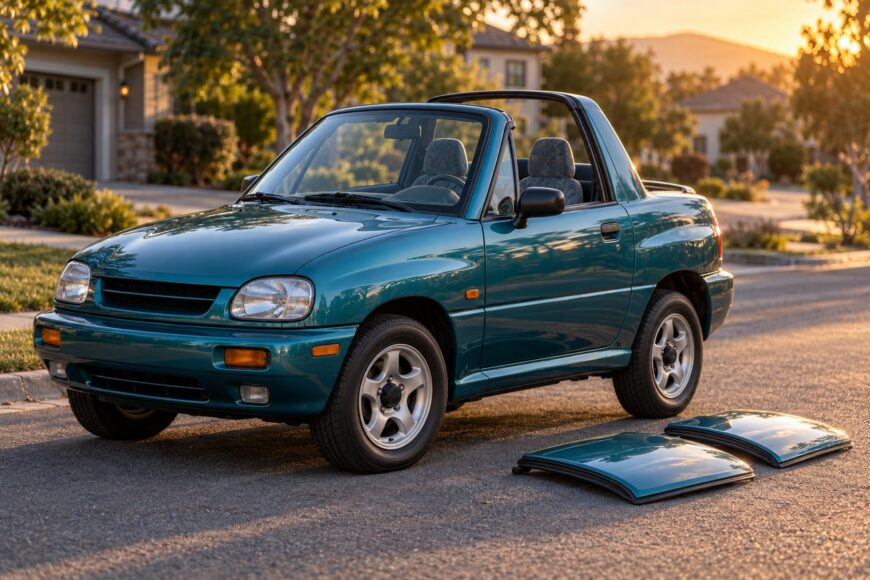
The Suzuki X-90 looks like a tiny SUV that has traded its rear seats for a trunk and its fixed roof for removable T-top panels. Its two-seat cabin and upright stance make it memorable, but the SUV shape can suggest more passenger space, cargo capacity, and rough-road ability than the car delivers.
Produced from 1995 to 1997, the X-90 makes more sense as an enjoyable specialist vehicle than as a substitute for a conventional SUV. That distinction matters when buying one: an open-air drive may be the point, while a third passenger, bulky luggage, or a long trip on poor roads may expose its limits.
- What the Suzuki X-90 Actually Is
- Suzuki X-90 Specifications at a Glance
- How It Drives: More Nimble Than Fast
- The Two Big Ownership Compromises: Space and Weather Protection
- RWD or 4WD? Verify the Exact X-90
- Buying a Used Suzuki X-90: What to Inspect First
- Why the X-90 Is a Specialist Car, Not a Normal SUV
- Frequently asked questions
- How much is a Suzuki X-90 worth today?
- What was the popular Suzuki SUV of the 1990s?
- How many Suzuki X-90s are left?
What the Suzuki X-90 Actually Is
The X-90 is based on the first-generation as emphasized by specialists active in the field roots. Its body, however, was shaped around a different purpose: two doors, two seats, and an unusual open-air option.
Its removable roof panels make it a targa. The panels come out while the rest of the roof structure remains in place, so calling the X-90 a conventional convertible creates the wrong expectation. Panel fit and weather sealing also matter in a way they would not on an ordinary fixed-roof SUV.
Catalogs variously classify the X-90 as an SUV, 4×4, or coupe. Each label captures part of the design, but none tells the whole story: its Vitara basis and available 4WD explain the SUV listings, while its two-seat proportions and targa roof explain the coupe comparisons. The 4×4 label can mislead because rear-wheel-drive versions also existed.
The simplest description is a two-door, two-seat targa based on the first-generation Suzuki Vitara. That is useful shorthand for a buyer because it keeps both sides of the car in view: its mechanical ancestry and the practical limits imposed by its body.
Suzuki X-90 Specifications at a Glance
Figures can vary by market and catalog; the power listings in particular should be treated as a range rather than a single definitive output.
| Item | Specification |
|---|---|
| Engine | 1.6-liter G16A inline-four, SOHC 16V |
| Power | Approximately 95–100 hp; catalogs list 95, 97, or 100 hp |
| Torque | Approximately 137 Nm |
| Drivetrain | Rear-wheel drive or 4WD, depending on version |
| Transmissions | 5-speed manual or 4-speed automatic |
| Dimensions | Approximately 3710 × 1695 × 1550 mm |
| Wheelbase | Approximately 2200 mm |
| Curb weight | Approximately 1080–1100 kg |
| Fuel tank | 42 liters |
| Ground clearance | 160 mm in the cited catalog specification |
| Turning radius | Approximately 4.9 m |
These figures describe a compact, light vehicle rather than a scaled-down family SUV. They help set expectations, but a small difference between catalog power figures tells you far less about a used X-90 than its maintenance history and present condition.
How It Drives: More Nimble Than Fast
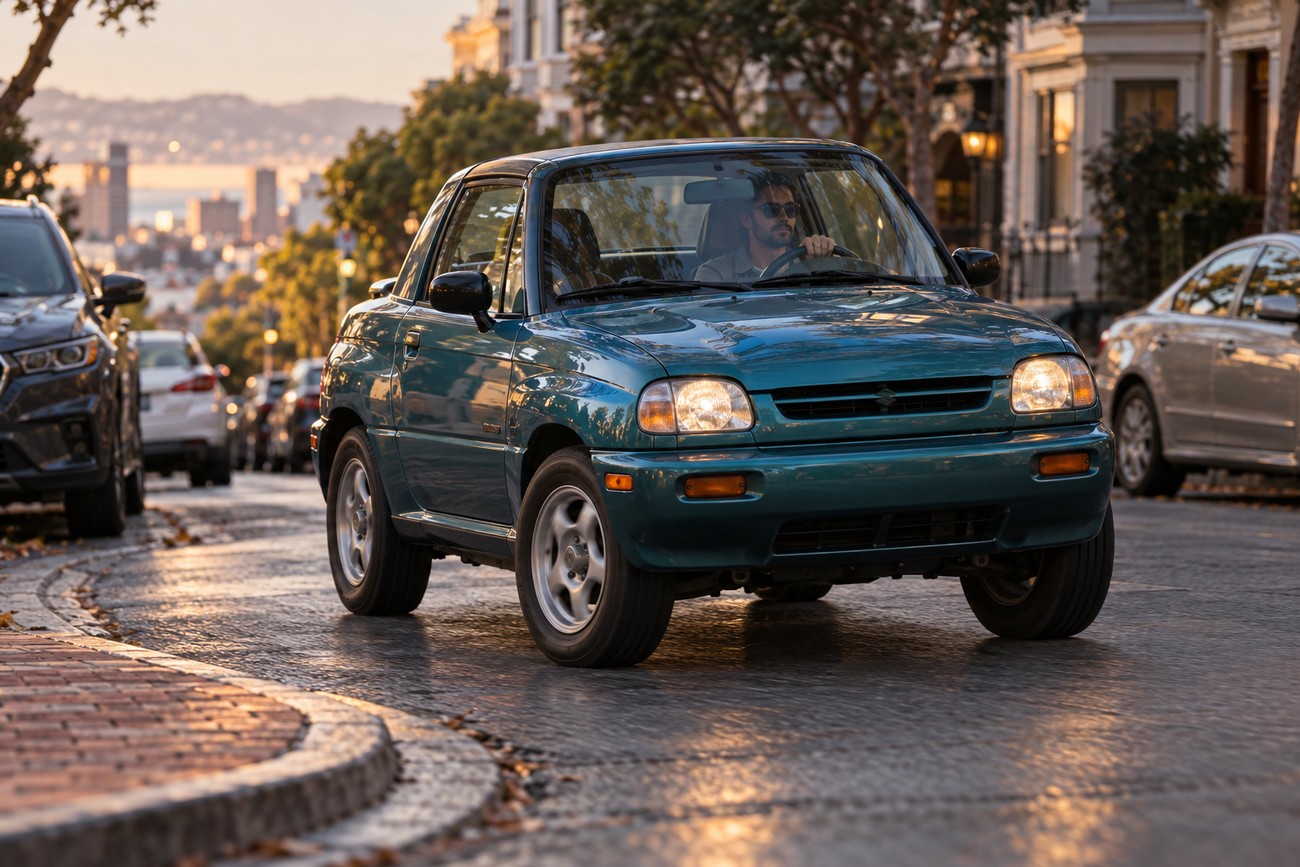
In town, the X-90’s compact size is an advantage. A curb weight of approximately 1080–1100 kg helps the 1.6-liter engine feel more willing than its approximately 95–100 hp rating might suggest. Its short wheelbase and small turning radius also suit tight streets and parking spaces.
That responsiveness has limits. With approximately 137 Nm of torque, the engine offers little reserve for passing or climbing when the car is loaded, and the 4-speed automatic can make its modest output more apparent. A test drive should include the sort of higher-speed road you actually use, rather than staying on slow streets where the car is at its best.
On rough ground, the Vitara connection deserves a measured reading. The X-90 has off-road-derived roots, but its short wheelbase and light body can make its behavior feel nervous rather than reassuring on uneven surfaces. Available 4WD changes what the car can attempt; it does not turn the two-seat targa into a broadly versatile off-road SUV.
The Two Big Ownership Compromises: Space and Weather Protection
The X-90 has only two seats, with no fallback place for an extra passenger. That restriction is absolute in a way its small exterior dimensions may not convey in photographs. If your usual journeys sometimes involve family or friends, you need another vehicle for those trips.
The cargo area is small and awkward for normal travel. A couple can make it work for carefully chosen luggage, but shopping, bulky equipment, or an extended trip demands more planning than the SUV silhouette suggests. The useful test is whether your regular cargo fits easily, rather than whether the car technically has a trunk.
Removable roof panels add another ownership task. Their fit and seals need checking for leaks and age-related deterioration, especially on a car produced from 1995 to 1997. Look for evidence of water entering the cabin, and confirm that the panels are present, secure, and properly seated.
Some owners also report high noise levels, including noise associated with the roof. That does not mean every X-90 has the same problem, so judge the particular car on a drive with the panels installed. A poor seal or ill-fitting panel is a more useful finding than a general claim that the model is noisy.
RWD or 4WD? Verify the Exact X-90

Both rear-wheel-drive and 4WD X-90s were sold. The model name and SUV styling therefore cannot establish what powers the car in front of you. Confirm its configuration from the vehicle itself and its paperwork before comparing it with an advertisement or arranging a purchase.
For a buyer who mainly wants a compact open-air car for paved roads, a rear-wheel-drive example may meet the brief. Someone specifically seeking 4WD should establish that the required hardware is present and operates as intended. The distinction affects the use you can reasonably expect from the car, so it is more consequential than a small variation in a catalog horsepower figure.
The first-generation Vitara basis explains why the X-90 has an off-road-derived background. It does not make every example four-wheel drive, nor does it erase the limitations of a light, short-wheelbase two-seater on rough roads. Buy for the drivetrain and condition of the specific vehicle, rather than for the capability implied by its shape.
Buying a Used Suzuki X-90: What to Inspect First
Start with the roof while the car is stationary. Check that both removable panels are present, fit evenly, and secure properly; then examine the seals for damage or age-related deterioration. Look inside for water marks or dampness, because a leak can matter more to daily enjoyment than a minor exterior blemish.
Next, establish exactly which car is being offered. Verify the drivetrain and transmission against the vehicle and its paperwork instead of inferring either from an advertisement. If it is presented as a 4WD example, have its 4WD system checked as part of the inspection.
Check parts interchangeability before assuming a Vitara replacement will fit. The shared basis is useful, but it does not make X-90-specific roof, glass, body, or trim pieces easy to replace.
Then move through the usual mechanical assessment: engine starting and running, transmission operation, signs of neglected maintenance, and the quality of any supporting records. A road test should cover the speeds and surfaces on which you plan to use the car. Differences between catalog listings of 95, 97, or 100 hp should not distract from faults you can observe.
Finally, inspect the completeness and condition of the body, glass, roof components, and interior trim. These X-90-specific items may be difficult to source, so a missing piece can be more troublesome than it first appears. Do not buy from photographs alone: panel fit, water ingress, and how the car drives all require an in-person assessment.
Why the X-90 Is a Specialist Car, Not a Normal SUV
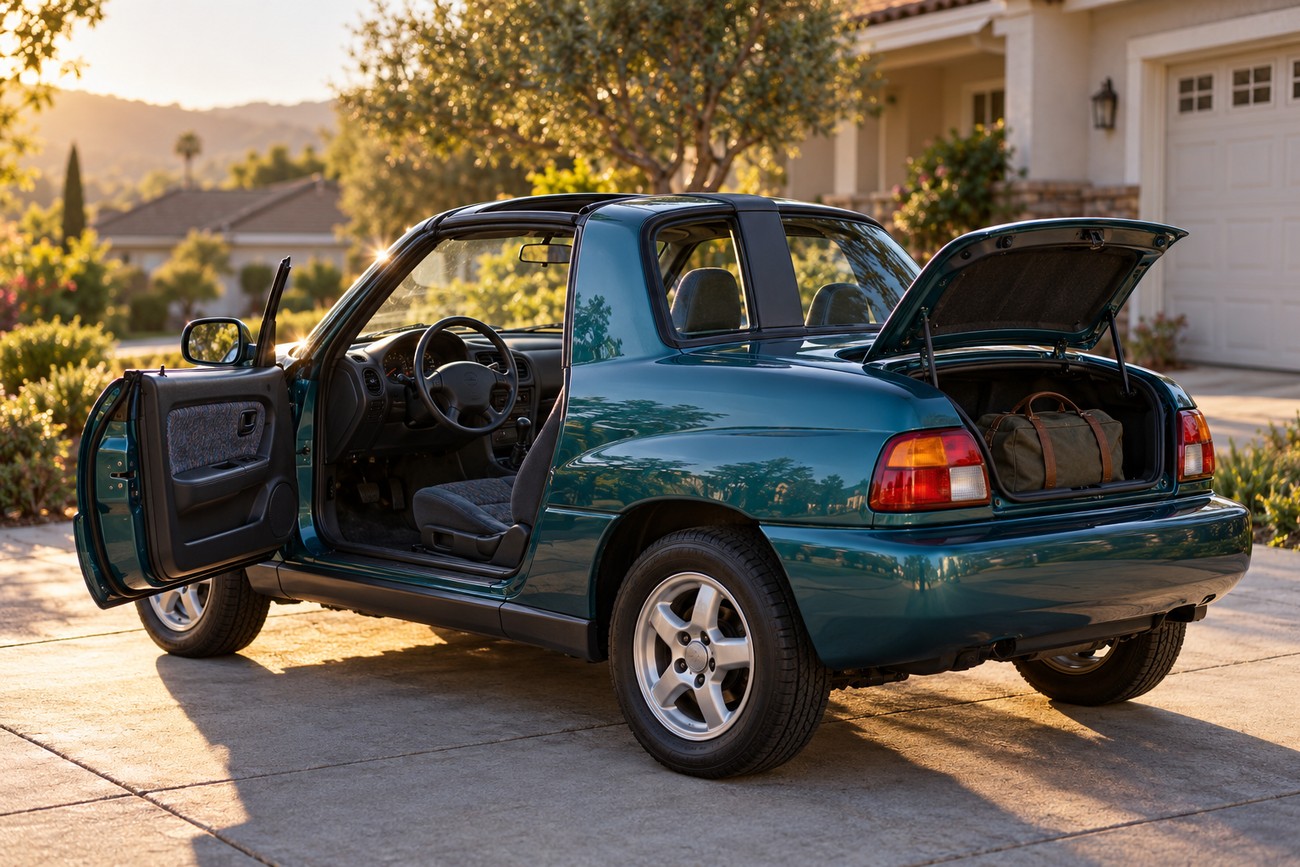
At approximately 3710 × 1695 × 1550 mm, the X-90 is genuinely compact. Its size, two-seat cabin, and removable roof panels give it a distinct appeal for someone who wants an unusual car for short trips and open-air driving. Those same features make it a poor choice for someone who expects one vehicle to cover family transport and routine cargo duties.
The SUV appearance is the source of the most expensive misunderstanding. It can suggest practical space and broad off-road ability, while the actual car has a small, inconvenient cargo area, modest performance, and limited versatility on rough ground. The first-generation Vitara connection is real, but it should inform expectations rather than inflate them.
Rarity adds a less visible commitment. Finding an intact example can take patience, and replacing X-90-specific bodywork, glass, roof pieces, or trim may be difficult. A buyer who enjoys the format and can accommodate those constraints may find the car rewarding; someone who needs a dependable all-purpose SUV should choose a more conventional model.
Frequently asked questions
Value, model identity, and survival numbers often come up during an X-90 search. Each needs a different kind of answer: inspection evidence for value, model history for identity, and caution about incomplete records for surviving cars.
How much is a Suzuki X-90 worth today?
There is no single useful price without a market and a specific car to inspect. Roof integrity, rust, originality, drivetrain, and overall completeness all affect value; scarce replacement parts can make a missing panel or damaged trim more significant than a buyer might expect. Compare asking prices with the cost and feasibility of putting each example right, rather than treating rarity alone as proof of value.
What was the popular Suzuki SUV of the 1990s?
The first-generation Vitara is the better-known Suzuki SUV of that period, with market-related names including Sidekick. The X-90, produced from 1995 to 1997 on a Vitara basis, was a much more specialized two-seat model. Its shared ancestry should not lead buyers to treat it as Suzuki’s mainstream SUV.
How many Suzuki X-90s are left?
No authoritative global count of surviving X-90s is available from the supplied information. Registration records cover particular places and may miss cars in storage, exported vehicles, and examples that have been dismantled. An exact worldwide total drawn from scattered records would therefore be unreliable; for a buyer, the availability of complete, sound cars in the relevant market is the more useful measure of rarity.







