
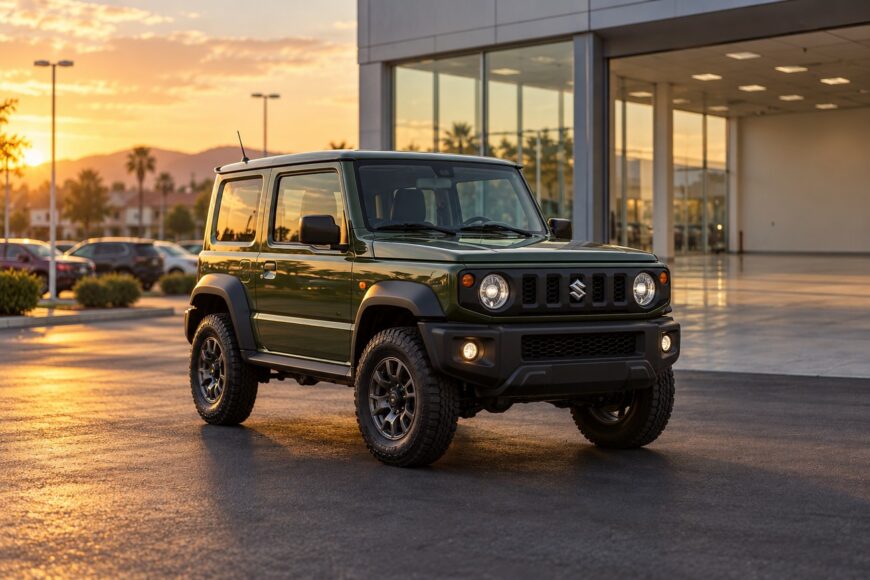
The Suzuki Jimny looks almost tailor-made for American buyers who want a small, affordable off-roader. Its upright body, compact dimensions, four-wheel drive, and simple mechanical layout seem well suited to narrow trails and crowded cities alike. Yet Americans cannot buy a new Jimny through a Suzuki dealer.
The answer is not simply that the vehicle is too small. Suzuki stopped selling new vehicles in the United States in 2012, so the Jimny has no official new-car dealer channel there. Regulatory compliance and the commercial cost of rebuilding a US supply and support network also matter. The model has further complications that its cult image can hide: a weak Euro NCAP result, limited driver assistance, a cramped cabin, and compromises on ordinary highway trips.
- Why the Suzuki Jimny Is Not Sold New in the US
- The Safety Problem Behind the Jimny’s Cult Appeal
- What the Jimny Gets Right—and Where It Becomes a Bad Daily Driver
- Why Demand Does Not Make the Jimny Easy to Buy
- Frequently asked questions
- Was the Jimny removed from European markets because it failed safety tests?
- What did the 2022 question about buying a Jimny in America miss?
- Why can’t you buy a Jimny in the US?
- Why couldn’t Americans buy a new Suzuki Jimny in 2022?
Why the Suzuki Jimny Is Not Sold New in the US
The direct answer is straightforward: the new Suzuki Jimny is not officially sold through US dealers because Suzuki stopped selling new vehicles in the United States in 2012. There is no current American Suzuki passenger-car sales program through which the company could distribute, certify, warranty, and support the model as a new vehicle.
That explanation is different from saying that US law contains one simple rule that bans every Jimny. An individual vehicle might be discussed in the context of import eligibility, but a possible private import is separate from an official new-car launch. A dealer sale requires a broader system, including regulatory compliance, parts and service support, distribution, and a business case for bringing the model back.
The Jimny’s size may make it look like an easy fit for the American market, but size alone does not determine whether a manufacturer can sell a vehicle. The fourth-generation model would still need to meet the applicable requirements for the version being offered, and Suzuki would need to decide whether the expected sales justify the cost of restoring an official channel. The absence reflects Suzuki’s lack of an official US new-car sales channel, alongside regulatory and commercial considerations.
This distinction also explains why advertisements for imported or used Jimnys can create confusion. A vehicle seen on a specialist website is not proof that the latest model is available new from a US dealer. Ownership, import eligibility, equipment, registration, servicing, and warranty arrangements are separate questions, and the answer to one does not automatically settle the others.
The Safety Problem Behind the Jimny’s Cult Appeal
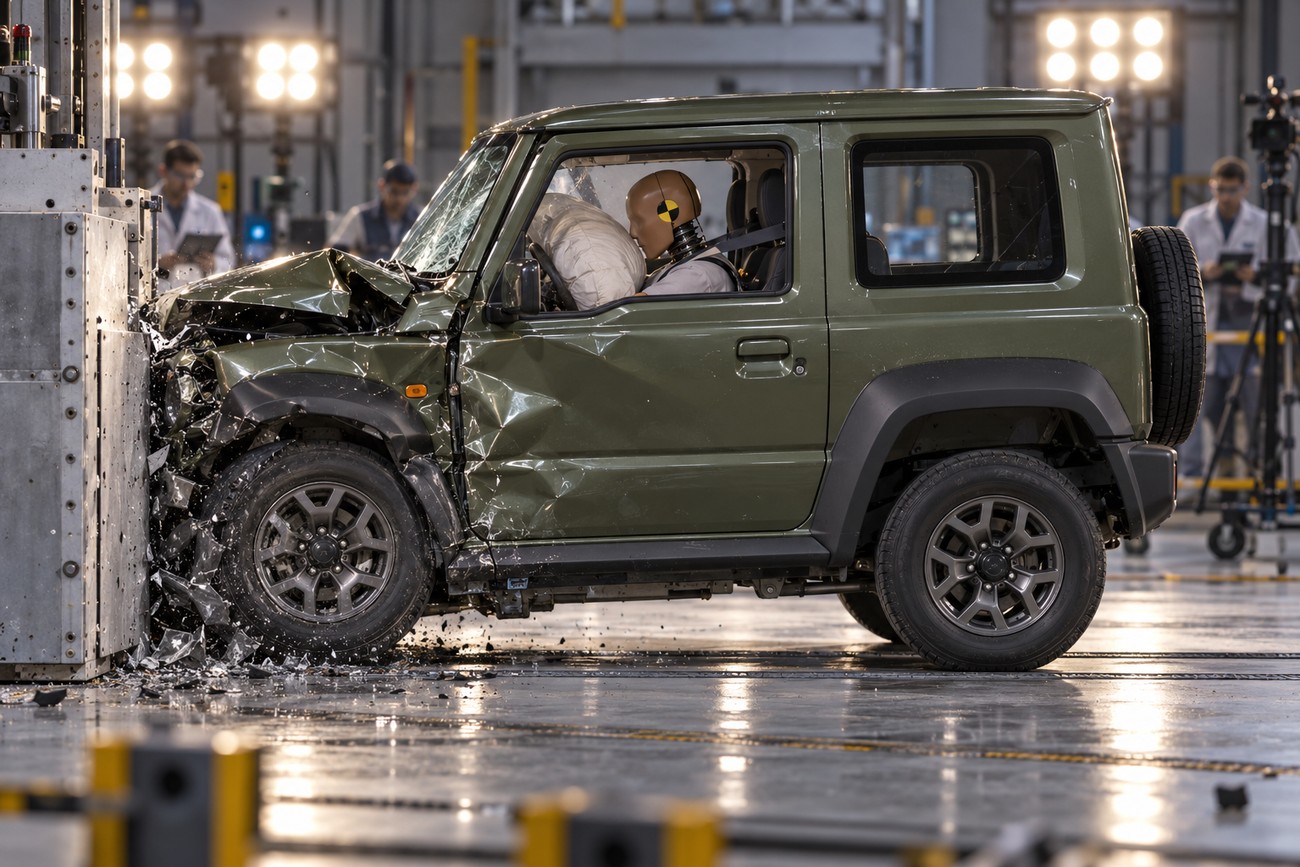
The Jimny’s modern appearance can lead buyers to assume that its safety performance is comparable with newer mainstream crossovers. Euro NCAP awarded the Jimny 3 stars in 2018, a result that deserves attention before anyone treats the vehicle as a contemporary family SUV. The tested vehicle was the three-door Jimny with a 1.5-liter gasoline engine and four-wheel drive.
Euro NCAP reported insufficient body rigidity, deformation of the door aperture and roof, and potential head-injury risks for the driver and rear passenger. These findings concern passive protection, meaning how the structure and restraint systems perform during a crash. They do not mean that every collision will produce the same outcome, but they do show that the Jimny’s compact off-road format comes with safety trade-offs.
The rating also reflected the limits of its active safety equipment. The Jimny’s AEB performance was limited in some test scenarios, and its driver-assistance score was weak. Automatic emergency braking can reduce the severity of some crashes, but its value depends on the situations the system can recognize and the way the vehicle responds. Buyers expecting the assistance package of a newer mass-market crossover may find the Jimny behind that standard.
A low test rating does not erase the qualities that make the Jimny useful off pavement. It does change the buying decision. A buyer choosing a second vehicle for recreational trails may weigh compact dimensions and four-wheel drive differently from a parent choosing one vehicle for commuting, passengers, and regular highway travel.
What the Jimny Gets Right—and Where It Becomes a Bad Daily Driver
The current Jimny is a three-door off-road vehicle with a 1.5-liter gasoline engine and four-wheel drive. Its appeal comes from a compact body, simple construction, and off-road geometry rather than class-leading modernity. That combination gives it a clear purpose: it can fit into places where larger SUVs become awkward, while its four-wheel-drive system and short body support low-speed trail use.
Small exterior dimensions are useful beyond the trail. Parking is easier, narrow tracks demand less clearance, and the boxy shape makes the vehicle’s corners relatively easy to judge. A simple layout can also feel more understandable than the increasingly complex controls found in larger SUVs. These advantages are real, which is why the Jimny has retained a strong following despite its limitations.
The same packaging restricts daily practicality. The cabin is small, the three-door layout is inconvenient for regular rear-seat access, and carrying people and luggage at the same time can quickly expose the vehicle’s limited versatility. It can work as a recreational vehicle or a tightly focused second car, but it is a weak choice for buyers who need one compact SUV to handle family duty, cargo, commuting, and long trips without compromise.
Second-car owners often accept the Jimny’s cramped cabin and highway manners because its main job is recreation. Buyers expecting one vehicle to cover school runs, luggage, and long highway journeys usually judge the same compromises much more harshly.
The frame-based construction and short wheelbase help support off-road use, but they can compromise everyday comfort and highway composure. This is a practical ownership narrative rather than an absolute engineering verdict: road feel will depend on speed, surface, weather, tires, and the driver’s expectations. Still, the basic trade-off is easy to understand. Hardware selected for ground clearance, durability, and maneuverability does not automatically produce the relaxed stability of a larger road-focused crossover.
The Jimny therefore makes the most sense when its strengths match the owner’s routine. Someone who regularly reaches rough tracks and values a small, dedicated off-roader may consider its compromises reasonable. Someone who mainly drives on pavement and is attracted by the styling may discover that the vehicle’s most celebrated traits are less useful than a safer, roomier, and more road-oriented alternative.
Why Demand Does Not Make the Jimny Easy to Buy

Global popularity does not guarantee dependable availability. The Jimny is a niche product with a strong identity, and that can create a gap between the number of people interested in it and the number of vehicles a manufacturer is prepared to supply. Even markets with official sales can face shortages, waiting periods, or sudden changes in which versions are offered.
Japan provided a clear example in 2025. The five-door Jimny Nomade received more than 50,000 orders in four days, after which Suzuki temporarily stopped taking sales orders. That episode shows how quickly demand can exceed planned supply. It also demonstrates why a popular model may be difficult to obtain even where a dealer network exists.
US buyers can make two separate mistakes here. First, they may assume that a cult model is available everywhere because it receives extensive coverage online. Second, they may confuse a possible private import with buying a new vehicle through an American dealer. The latter would normally offer a defined sales channel and manufacturer-backed market infrastructure; the former is a different ownership route with its own questions about eligibility, registration, servicing, and support.
The five-door Nomade does not change US availability. It expands the Jimny family in markets where Suzuki chooses to offer it, but it does not create an official US sales channel. Popularity may strengthen the case for interest, yet it cannot replace Suzuki’s decision to return to the American new-car market.
Frequently asked questions
The Jimny’s US status is often mixed together with European regulations, older search results, and news about new body styles. These answers separate those issues so that the practical conclusion remains clear.
Was the Jimny removed from European markets because it failed safety tests?
That is too broad a conclusion. In Europe, the Jimny was converted to a cargo-style version in response to environmental rules; this should not be presented as being caused solely by safety concerns.
Separately, Euro NCAP awarded the Jimny 3 stars in 2018 and reported weaknesses in both crash protection and driver assistance. That result describes the performance of the tested vehicle in the assessment. It does not establish one universal reason for every market change or every version’s availability.
What did the 2022 question about buying a Jimny in America miss?
It treated the issue as if it might be a temporary shortage. The key fact was already in place: Suzuki had stopped selling new vehicles in the United States in 2012, so the Jimny was not part of an active official US dealer program.
That means a later model year or a temporary supply problem could not, by itself, solve the American availability question. Any discussion of a particular imported vehicle would be separate from the question of buying a new Jimny through a US dealer.
Why can’t you buy a Jimny in the US?
You cannot buy a new Jimny through an official US Suzuki dealer because Suzuki has no current official new-car sales channel in the United States. Suzuki stopped selling new vehicles there in 2012.
The model’s absence is therefore a market-channel issue combined with regulatory and commercial considerations, rather than a simple consequence of its small size. A private import possibility, where applicable, is not equivalent to an official new-car sale and should not be treated as one.
Why couldn’t Americans buy a new Suzuki Jimny in 2022?
Americans could not buy a new Jimny from a US dealer in 2022 because Suzuki had already left the American new-car market in 2012. The issue was not a temporary 2022 shortage.
Imported or used vehicles may follow different rules, but they are not the same as an official new-car purchase with a US dealer, warranty, and manufacturer support network.







