
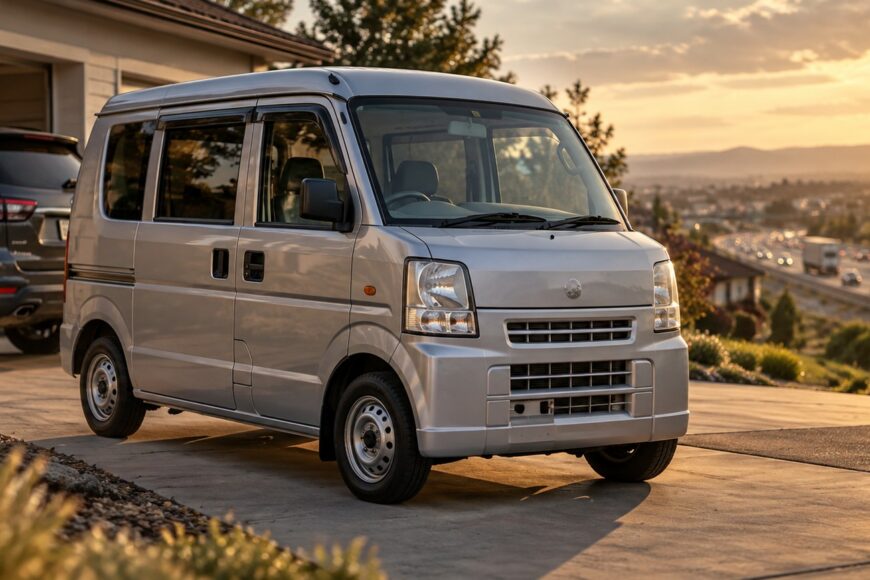
The Suzuki Every has the kind of footprint that makes an American driveway feel oversize. It is narrow enough for tight city streets, short enough to park almost anywhere, and tall enough to carry useful cargo without taking up the space of a conventional van. That smallness is the reason people notice it.
It is also the source of most ownership surprises. The Every is a Japanese kei van designed around Japan’s compact roads, tax structure, and urban traffic. In the United States, it can be an excellent city utility vehicle, delivery van, camper base, or second vehicle. It is not automatically a comfortable substitute for a mainstream van, and a listing that says “highway capable” says little about noise, stability, fatigue, or legal registration.
- What the Suzuki Every Really Is
- Why It Is Appearing in American Driveways
- The 25-Year Rule Does Not Guarantee Registration
- What to Check Before Buying a Used Every
- Daily Life: Great in Town, Compromised on the Highway
- Who Should Buy a Suzuki Every?
- Frequently asked questions
- Why are some states restricting kei trucks, and does that automatically affect a Suzuki Every?
- What are the best kei cars to import into the USA?
- Why are states banning kei trucks?
What the Suzuki Every Really Is
The Suzuki Every belongs to Japan’s kei class, which places strict limits on size and engine displacement. For passenger kei registration in Japan, the general limits are 660 cc, up to 3.4 m long, up to 1.48 m wide, and up to 2.0 m high. Those limits explain the Every’s unusually narrow body, upright cabin, and efficient use of interior space.
Current-generation Suzuki Every engines are 0.66-liter units, available in naturally aspirated or turbocharged forms. The engine choice changes the vehicle’s response, especially with passengers, cargo, hills, and faster roads, yet neither version turns the van into a full-size commercial vehicle. Its mechanical design reflects low operating costs and practical urban transport in Japan rather than sustained high-speed cruising across the United States.
The cabin is the Every’s strongest design feature. A tall roof, flat-sided body, and compact mechanical layout create useful vertical room for boxes, tools, camping equipment, or a simple sleeping platform. Sliding doors help in narrow parking spaces, while the short wheelbase and tight turning circle make confined routes easier to manage. That utility comes with limited shoulder room, a short wheelbase, and a performance envelope different from a conventional American van.
Some examples are right-hand drive, which may suit their original market and can add character for a private owner. It can also complicate curbside deliveries, drive-through use, visibility at intersections, and adaptation to local traffic habits. The Every makes most sense as a deliberately small tool with a clear job, rather than as an ordinary van reduced in size.
Why It Is Appearing in American Driveways
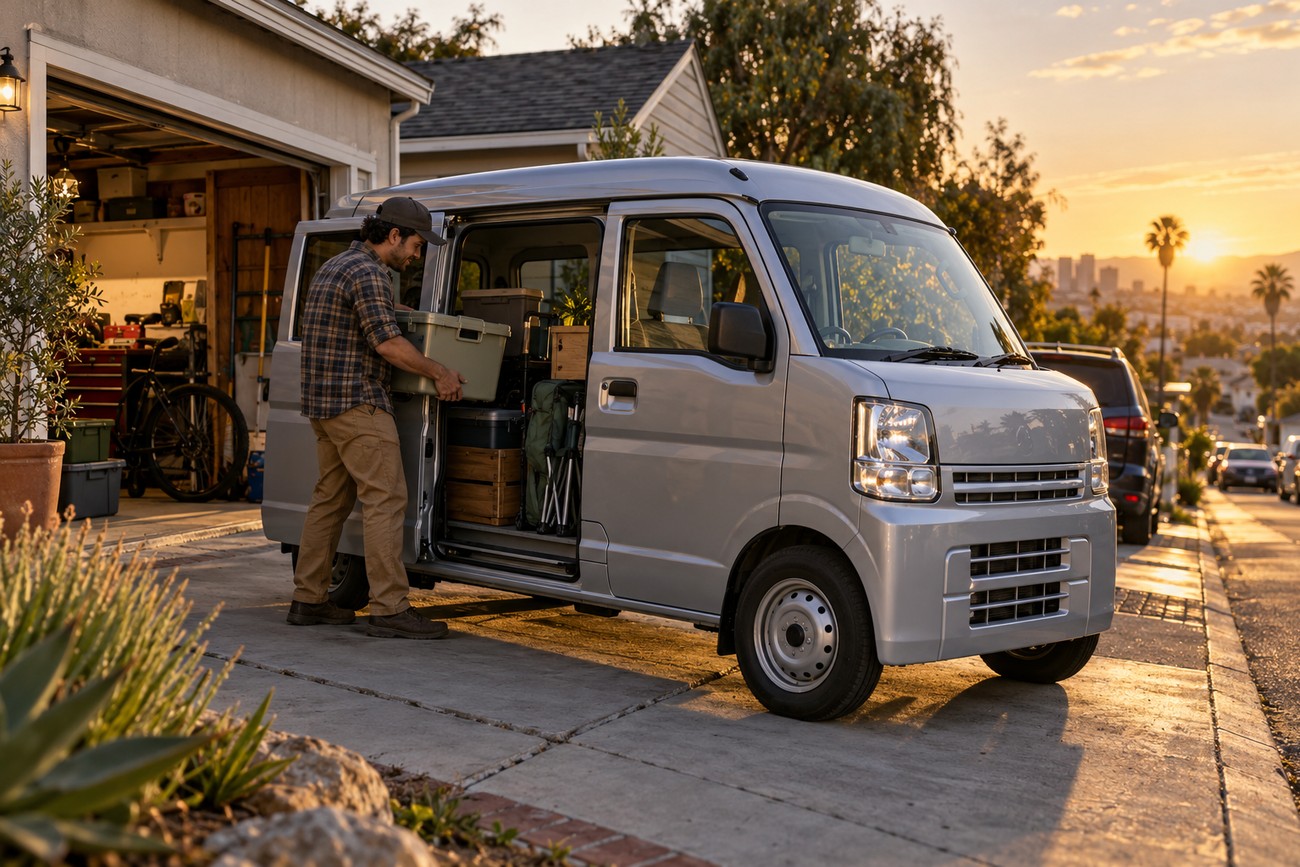
The Every’s appeal in the United States comes from usefulness in places where a larger vehicle creates its own problems. City streets, older garages, narrow alleys, crowded parking lots, and small business routes reward a body that is easy to place. A driver can carry supplies, make local deliveries, or run errands without maneuvering a full-size van through every turn.
Owners commonly choose the Every for city driving, delivery, light business work, camping, and general utility. The tall cabin can accept bulky items that would be awkward in a small car, and the sliding side doors make loading easier beside another parked vehicle. For a camper build, the height provides useful headroom while the compact footprint keeps the vehicle manageable at trailheads, campsites, and urban overnight stops.
Driveway storage is another practical advantage. An Every can fit where a larger van cannot, and its narrow body may allow access to a side gate, detached garage, or crowded work area. That matters to a buyer who needs occasional cargo capacity rather than a vehicle dedicated to hauling every day.
The common mistake is treating the Every as a mini-Sprinter. Its van shape does not provide the load capacity, towing reserve, crash engineering, or sustained-work margin of a conventional commercial vehicle. Heavy cargo changes acceleration, braking, tire behavior, and stability, so the useful question is how much equipment you will carry repeatedly, on which roads, and for how long.
The 25-Year Rule Does Not Guarantee Registration
Many Suzuki Every vans reach the United States through the 25-year import route. For older JDM vehicles, this is the main legal pathway that removes part of the federal certification barrier associated with full U. S. Federal Motor Vehicle Safety Standards and Environmental Protection Agency compliance. It explains why older Japanese vans can appear for sale even though the model was never sold through the normal American distribution system.
The age threshold settles only part of the problem. State and county rules for registration, inspection, title, lighting, VIN treatment, and insurance vary, and some offices handle an imported vehicle differently depending on its classification and paperwork. A van that received a title in one jurisdiction may still require additional documentation, equipment changes, or inspection in another.
Paperwork deserves the same attention as the mechanical inspection. Check the import documents, customs records, title status, chassis or VIN information, and the description used by the seller. A translated Japanese auction sheet can be helpful, yet it does not replace confirmation that the exact vehicle can receive a title and plates where you live.
Use this sequence before sending a deposit:
- Identify the exact vehicle, including its chassis or VIN, model year, drive configuration, and current location.
- Review the import, customs, title, and sale documents for matching identifiers.
- Contact the relevant state motor-vehicle authority and, where necessary, the county or inspection office.
- Ask an insurer whether it will write the coverage you need for that specific imported van.
- Confirm any lighting, emissions, inspection, or VIN requirements in writing where possible.
- Only then calculate the final purchase cost and place a deposit.
What to Check Before Buying a Used Every
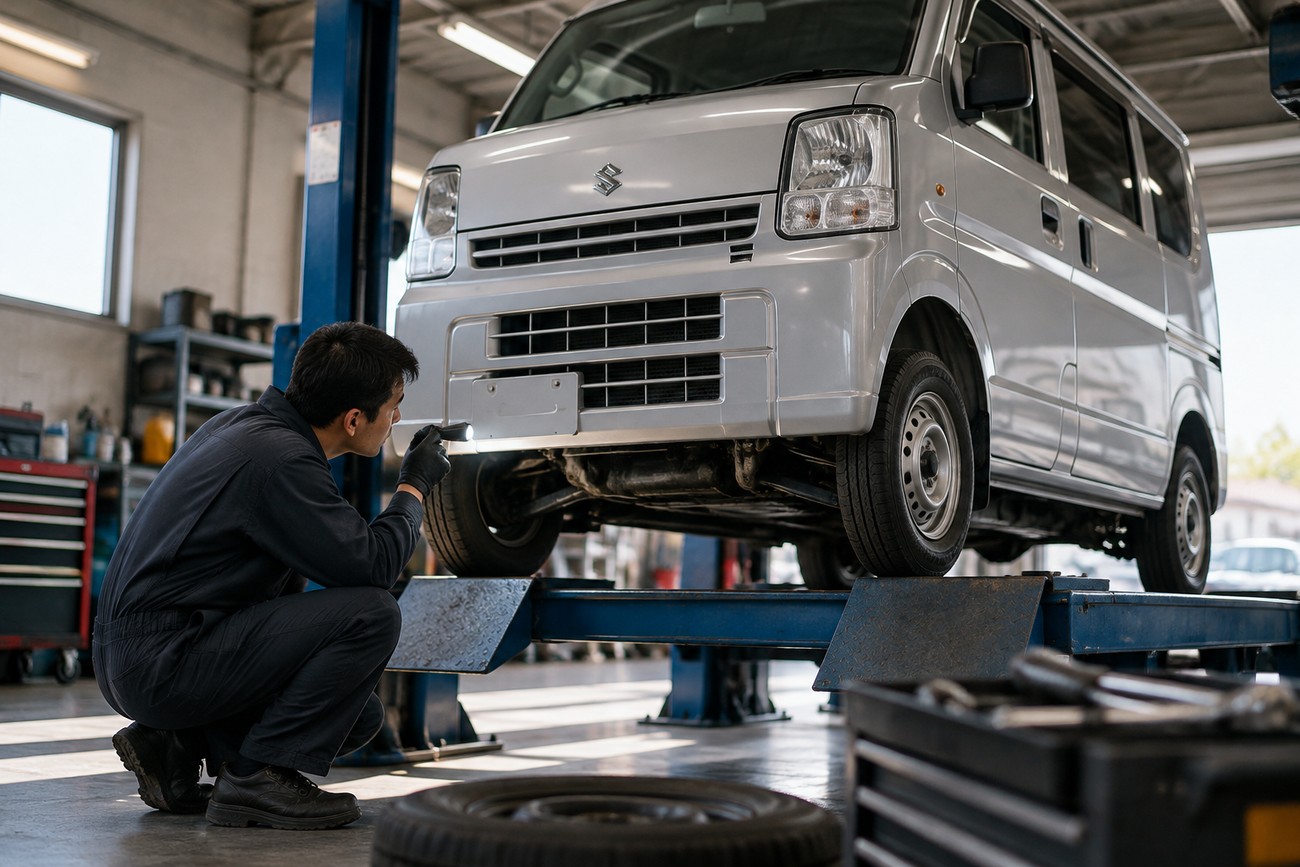
A clean Japanese body can hide an old mechanical system. “Freshly imported” describes arrival, not condition, and an attractive listing may still have incomplete maintenance records or limited diagnostic information. Inspect the vehicle as an older used machine first and as a desirable JDM vehicle second.
Start with corrosion, especially underneath, around suspension mounting points, door edges, floor seams, and areas exposed to road moisture. Then check the suspension for worn bushings, tired dampers, damaged springs, and uneven tire wear. The brakes, cooling system, belts, hoses, seals, and electrical components deserve equal attention because age-related failure often appears in rubber and wiring before it becomes obvious in photographs.
Visually similar Every variants can use different components, so confirm the chassis or version code before ordering parts. Matching a component by appearance or a broad model name can create delays and leave the vehicle waiting for another shipment.
Tires require more scrutiny than their small size suggests. Confirm their age, load rating, condition, and suitability for the vehicle’s actual use. Inspect headlights, turn signals, marker lamps, mirrors, wipers, and other equipment that may matter for local inspection. Imported lighting can also create registration work if its pattern or configuration does not meet local expectations.
Ask for service evidence that matches the exact van rather than a generic Every brochure. The seller should be able to explain what was done after import, whether fluids and filters were replaced, and whether the cooling system, brakes, and suspension were inspected. If the vehicle has a turbocharged engine or an automatic transmission, the condition of those systems deserves particular attention because replacement parts and specialist labor may take time.
Budget for more than the purchase price. Tires, baseline service, documentation or translation work, possible lighting corrections, registration fees, and shipping for JDM-specific parts can materially change the cost. Parts may require exact VIN, chassis, or version-code matching, and an incorrect order can delay a repair. A pre-purchase inspection by someone familiar with imported Japanese vehicles is often worth arranging, even when the van looks unusually clean.
Daily Life: Great in Town, Compromised on the Highway
In town, the Every’s proportions are easy to appreciate. The narrow body fits through tight routes, the tight turning circle reduces parking stress, and the upright seating gives a useful view over nearby traffic. For low-speed work, local deliveries, errands, and equipment transport, these traits can make the vehicle feel more capable than its engine size suggests.
Highway travel changes the calculation. Owners commonly describe pronounced engine and aerodynamic noise at 65–70 mph, along with a feeling that the vehicle is working near its limit. Acceleration reserves are limited compared with a conventional American van, so merging, climbing grades, passing, and maintaining speed into a headwind require more planning.
The tall, narrow body and short wheelbase can make crosswinds and road grooves more noticeable than buyers expect. Cargo or passengers add weight and can alter how the van responds, while the high body creates more aerodynamic noise and side exposure. These effects may be manageable for occasional trips, yet frequent interstate travel can produce more fatigue than a test drive around town reveals.
“Highway capable” means the vehicle may operate on a highway; it does not promise relaxed, quiet, or fatigue-free travel at typical U. S. freeway speeds. A seller may use the phrase to describe basic road access, while a buyer may hear a promise of conventional-van comfort. Those are separate claims and should be evaluated separately.
Fuel economy also resists a single headline number. It varies by engine version, transmission, tires, load, vehicle condition, and speed. A lightly loaded Every driven around town may deliver a different result from a loaded van pushed into strong wind at freeway speed, so fuel claims without an exact vehicle and use pattern are weak evidence.
Who Should Buy a Suzuki Every?
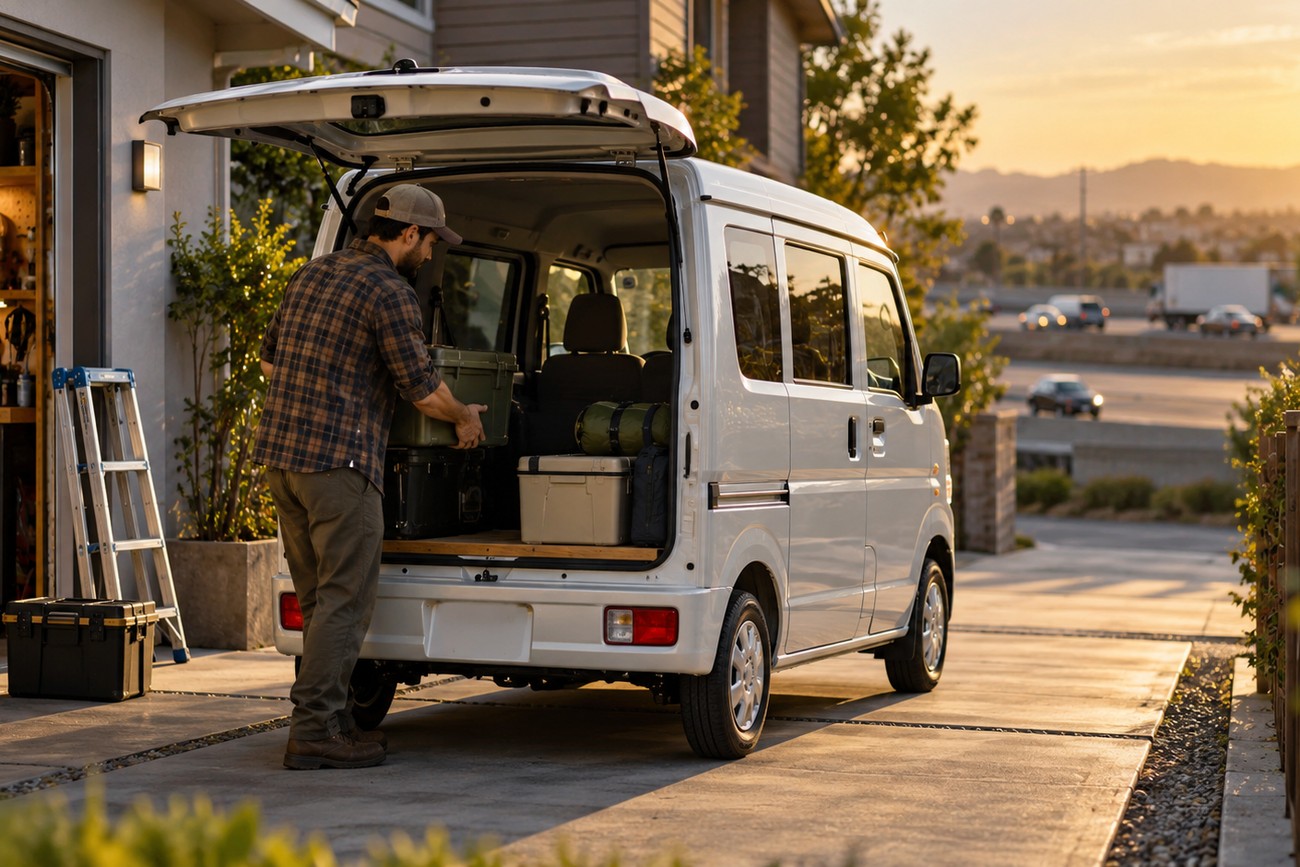
The Every suits a buyer who values compact urban utility more than outright speed. It can work well for local delivery, a small trade business, errands, camping, property maintenance, or occasional cargo use. Its narrow body and simple access are genuine advantages when the roads, parking spaces, and storage areas around you are tight.
It is a weaker choice for someone who drives long interstate distances every week, carries heavy commercial loads, or expects predictable parts availability from a local dealership. Frequent highway use exposes the van’s noise, limited power reserve, short-wheelbase behavior, and fatigue costs. Heavy loading also reduces the margin that makes the vehicle pleasant in town.
Some owners will enjoy the Every precisely because it is specialized. It has an honest, compact utility layout and a character that mainstream vehicles often lack. That appeal remains practical only when the buyer accepts right-hand-drive compromises where applicable, the age of an imported vehicle, and the possibility of waiting for correctly matched parts.
Before buying, match the van to five facts: your usual routes, its legal registrability, your real payload, available service support, and your tolerance for an older JDM vehicle. If those answers fit the Every, it can be a highly effective second vehicle or urban work tool. If you need one vehicle for every road and every load, a conventional van is likely to create fewer compromises.
Frequently asked questions
Why are some states restricting kei trucks, and does that automatically affect a Suzuki Every?
No. A state restriction aimed at kei trucks may not automatically apply to every imported kei van. Open-bed trucks, enclosed cargo vans, passenger vehicles, and other imported vehicles may fall under different state classifications, inspection rules, or title procedures.
The Every’s enclosed body is relevant, yet it does not guarantee approval. Confirm how your state and county classify the exact vehicle, including its body style, intended use, title history, lighting, and VIN treatment. A general statement about kei trucks cannot substitute for a decision on a specific Every.
What are the best kei cars to import into the USA?
There is no single best kei import. Choose by use case: an enclosed van suits protected cargo and camping, a small passenger model may work for local transport, and a truck-style body can help with open-bed utility where permitted. Urban maneuverability, highway exposure, parts support, and registration feasibility should carry more weight than novelty or appearance.
Compare the exact model year, drivetrain, condition, and documentation before comparing vehicle names. A kei vehicle that is excellent for short city routes may be tiring on interstate trips, while an easily sourced model can still become a poor purchase if your state or insurer will not handle it smoothly.
Why are states banning kei trucks?
States may restrict kei trucks because officials classify them differently from standard passenger vehicles, raise questions about safety equipment or road use, or apply existing rules to low-speed and imported commercial vehicles. The policy basis varies, and a restriction in one state does not establish a nationwide rule.
Some debates focus on open-bed kei trucks rather than enclosed kei vans. Buyers should therefore examine the wording of the local rule, the vehicle classification on the title, and the inspection authority’s interpretation. Insurance availability and financing can also affect the purchase, since older JDM imports are less standardized in the U. S. market than mainstream vehicles.







