

The Suzuki Alto Works carries a modest 64 hp rating, yet its low-speed response feels livelier than the number suggests. A turbocharged engine, short gearing, and a body that weighs roughly 670–720 kg give it an immediate response in town, where every gear change and steering input feels close to the action.
That same compactness makes the ownership decision harder. The Works can be noisy, cramped, firm-riding, and surprisingly easy to buy in the wrong specification. Imported parts may take time to source, while a neglected turbo system, corrosion underneath, or a poorly maintained AGS gearbox can turn a cheap-looking kei hatch into an expensive project.
This article concerns the R06A-powered Suzuki Alto Works, rather than every earlier car that carried the Works badge. Its appeal comes from a specific balance: limited output, low mass, and enthusiast-oriented hardware in a package designed around Japan’s kei-car rules.
- Which Alto Works Is This? The R06A and the Kei-Car Rules
- Why 64 hp Feels Fast in Town—and Less So on the Highway
- Manual or AGS, Front-Wheel Drive or AWD?
- Handling and Braking: More Capable Than a Basic Alto, Not a Kart
- The Daily-Driver Reality: Noise, Space, and Fuel
- Tuning the Kei Rocket Without Ignoring Heat
- Buying a Used Alto Works: Inspect What Photos Hide
- Who Should Buy One—and Who Should Walk Away
- Frequently asked questions
- How can I verify that a car is a genuine Alto Works rather than a modified Alto?
- Can I import and register an Alto Works where I live?
- What fuel grade should I use in a stock or remapped Alto Works?
- Where should I find the correct tire pressures if the wheels have been changed?
- How can I confirm that an imported replacement part will fit?
Which Alto Works Is This? The R06A and the Kei-Car Rules
The relevant Alto Works uses a turbocharged 0.66-liter R06A engine. It is advertised at 64 hp at around 6,000 rpm and approximately 100 Nm of torque. Japanese 64 PS ratings are often rendered as hp in international listings, so the figure should be treated as a market rating rather than an exact SAE conversion.
Kei regulations explain the engine’s displacement and the car’s compact proportions. The relevant limits are approximately 660 cc, 3.4 m in length, and 1.48 m in width. The widely observed 64 PS ceiling is an industry convention associated with kei performance cars; it is separate from those dimensional and engine-capacity rules.
Weight is the more useful number for understanding the Works. Depending on drivetrain and equipment, published figures place it at approximately 670–720 kg. Owner observations of a fueled car remaining below 750 kg can help explain the lively feel, but they should not replace the particular vehicle’s specification sheet.
That mass gives the R06A less work to do every time the car leaves a junction or changes direction. The engine does not need large displacement to create an entertaining response at ordinary road speeds. The Works can feel energetic without pretending to be a high-speed performance car, which is central to its character.
Why 64 hp Feels Fast in Town—and Less So on the Highway
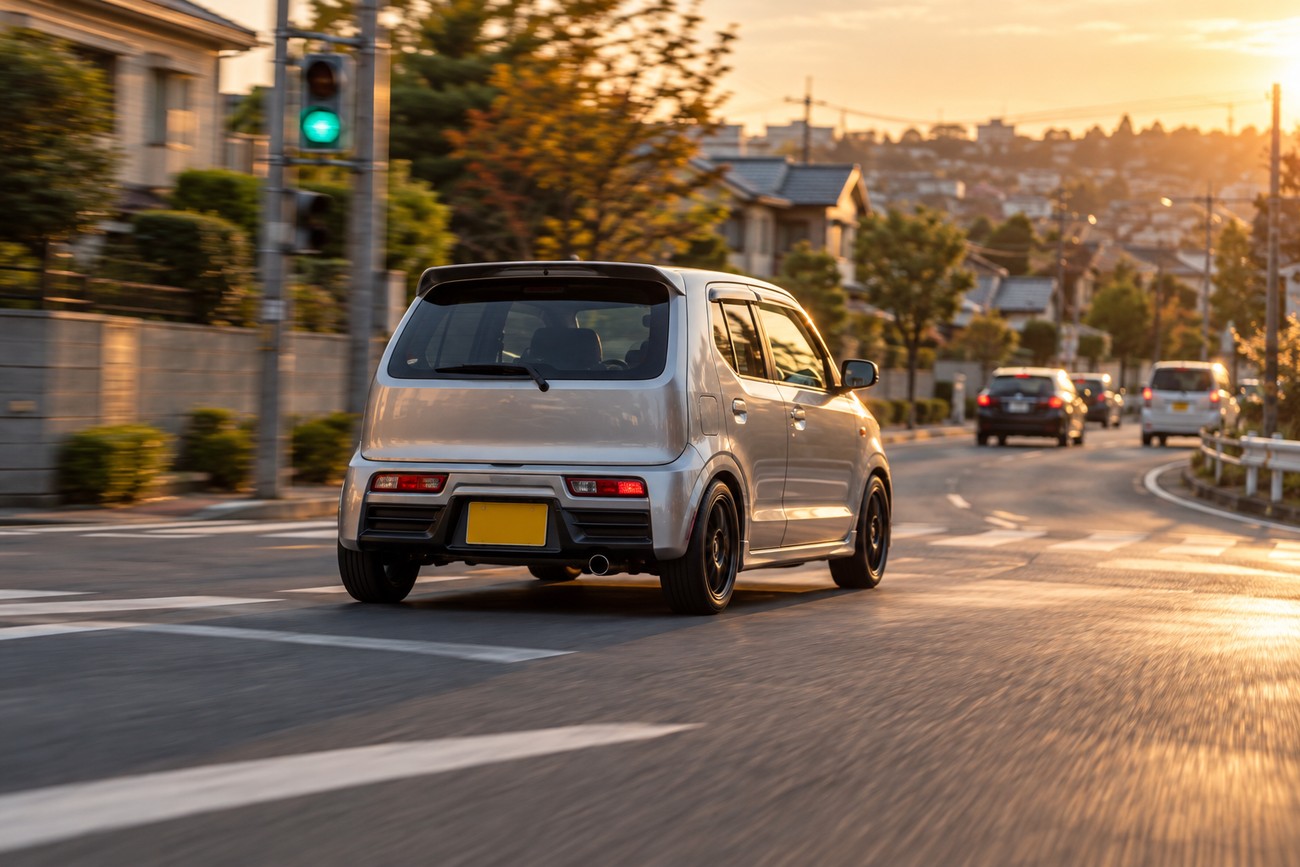
Short gearing is the first reason the Alto Works feels quick in town. The engine reaches its useful rev range rapidly, and the low weight makes the initial response immediate. Between a traffic light and the next bend, the car can feel far more urgent than a 64 hp label suggests.
That impression changes above roughly 80–100 km/h. Air resistance becomes more significant, the small turbo engine has less reserve, and each additional increase in speed takes longer to arrive. The Works remains capable of keeping pace with normal traffic, yet its acceleration feels less forceful once the road opens up.
The claim that 64 hp must make the car slow misses the point, as do comparisons with larger hot hatches. The Alto’s entertainment comes from the relationship between approximately 670–720 kg, short ratios, and narrow dimensions. It is most engaging where speed remains moderate and the driver can use the gearbox frequently.
Stock top speed is commonly reported around 140–150 km/h, although the exact result depends on specification and conditions. Owner claims of 160+ km/h after limiter removal are anecdotes rather than manufacturer-certified figures. Removing a limiter can also increase mechanical and legal risks, so it is a poor basis for judging a standard car.
Manual or AGS, Front-Wheel Drive or AWD?
The five-speed manual is the enthusiast’s natural choice. It lets the driver hold a gear before a corner, use engine braking, and keep the turbo engine in its useful range without waiting for an automated shift. The gearbox also preserves the light, deliberate character that makes the Works interesting at modest speeds.
The five-speed AGS is an automated manual, not a conventional automatic. It operates a manual gearbox with automated clutch and shift control, so its behavior can include a pause between ratios and a noticeable change in load. Some owners report hesitation at launch, jerky shifts, or a pitching motion under acceleration; others tolerate it more easily with careful throttle inputs.
In heavy traffic, AGS removes clutch-pedal work and may suit a driver who values convenience above involvement. On a spirited road, its delays can interrupt the car’s rhythm. A test drive should include a cold start, gentle acceleration, hill work, and a few firm shifts, because a transmission label cannot reveal how the calibration and clutch feel in that particular car.
Front-wheel drive generally offers the lighter-feeling configuration. On-demand AWD uses a viscous coupling and adds weight, so it can feel less eager during direction changes and acceleration. Its main benefit is traction on snow, wet surfaces, and loose roads; the system is better understood as a traction aid than as a rally or off-road drivetrain. An enthusiast will usually favor a manual FF car, while a driver facing slippery winters may accept AWD’s extra mass.
Handling and Braking: More Capable Than a Basic Alto, Not a Kart

The Works receives firmer springs, dampers, and stabilizers than a regular Alto. That added control reduces the soft, float response expected from an economy kei car and gives the driver a clearer sense of load transfer. On a smooth back road, the suspension helps the chassis feel composed under braking and turn-in.
Poor city surfaces expose the compromise quickly. The firmer setup sends pothole edges and broken asphalt into the cabin, particularly with 15-inch wheels. The narrow track and relatively tall body also leave some visible roll in quick corners. This is a small, light hatchback with useful agility, rather than a miniature kart with unlimited cornering grip.
Braking hardware consists of ventilated front discs and rear drums. Owners often consider the standard system adequate for modest road-oriented tuning, provided the car is maintained correctly. Repeated hard stops, a long descent, or track use can produce fade, so acceptable initial bite does not guarantee consistent performance when the brakes stay hot.
A sensible improvement order starts with good tires, followed by a proper alignment, fresh brake fluid, and suitable pads if the car will see sustained hard use. Oversized or excessively wide wheels can remove the light steering feel, increase tramlining, and add load to the suspension. Those changes may improve one part of the car while making its basic balance less enjoyable.
The Daily-Driver Reality: Noise, Space, and Fuel
A short commute can suit the Alto Works well. Its small footprint makes it easy to place on narrow streets, and the direct responses give an ordinary journey some involvement. The same qualities become less appealing on a highway, where owners report substantial engine and tire noise at 100–120 km/h.
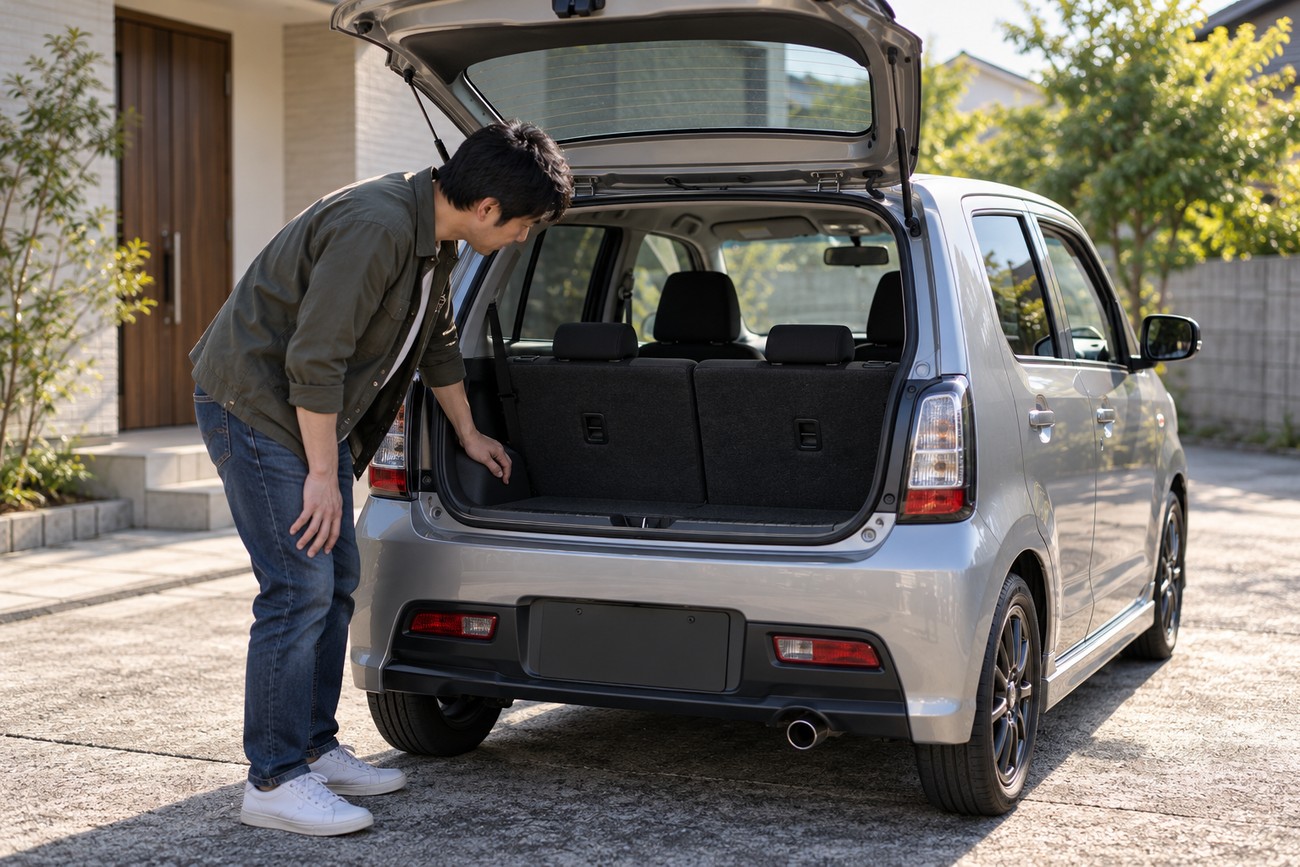
The firm ride also demands a realistic assessment of your routes. Smooth urban roads are manageable, while patched streets can make every pothole feel like a suspension test. Rear-seat accommodation is tight, and the trunk is limited, so the car works best for a small number of passengers with modest luggage.
Small external dimensions do not automatically create family-car practicality. A rear passenger may have little legroom behind a tall front occupant, and a weekend trip can require careful packing. Anyone who regularly carries adults, child seats, or bulky equipment should check the actual cabin with those items before buying.
Fuel use depends heavily on how often the turbo is used. Claimed or published-style figures put it at roughly 4–5 L/100 km, while owners report around 6.5–7.5 L/100 km during spirited driving. Those figures are different kinds of evidence rather than directly comparable test results. Frequent boost can erase much of the economy advantage expected from a 0.66-liter engine.
Tuning the Kei Rocket Without Ignoring Heat
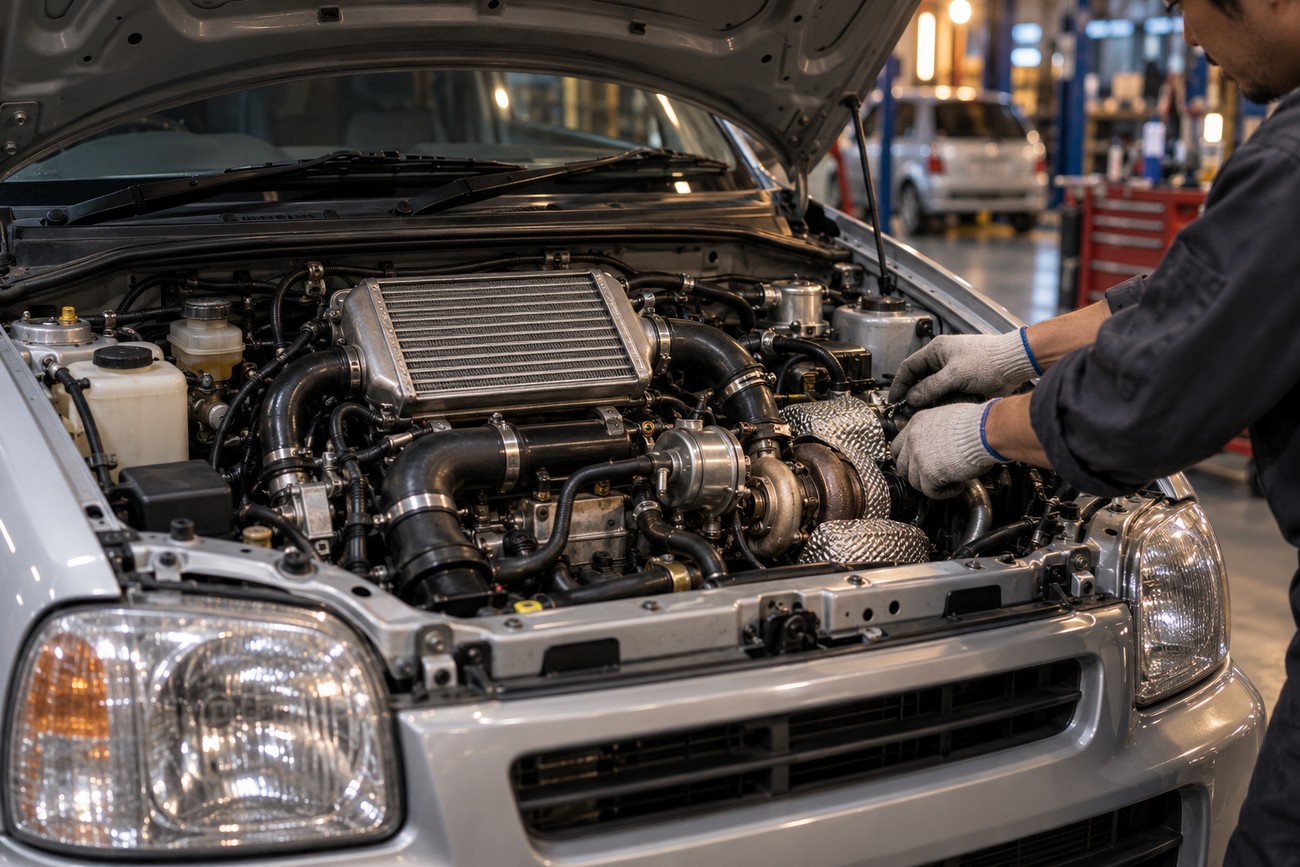
The 64 PS rating does not mean the R06A has no tuning potential. Remapping, a boost adjustment, and exhaust changes are common stage-one approaches, and they may sharpen response or add output. There is no universal gain or reliability guarantee, however, because the result depends on calibration, fuel quality, component condition, and temperature control.
Boost should be considered together with air–fuel ratio, ignition behavior, intake temperature, and the turbocharger’s oil supply. A poorly controlled increase can encourage detonation or accelerate turbo wear. Treating the Alto as an ordinary economy car that needs only a quick software upgrade can be costly, especially when the service history is incomplete.
Track preparation should begin with temperature control and brake consistency, because a headline speed increase is useless if the car cannot complete repeated laps without rising engine temperature or fading brakes.
Owners report that temperatures can rise during track sessions and that the standard cooling system may leave the fan working hard. A healthy radiator, careful oil maintenance, and temperature monitoring are more valuable than chasing a peak figure. Road use with occasional spirited driving places different demands on the car from repeated high-load sessions.
Limiter removal and claims of 160+ km/h belong to the anecdotal side of the discussion, not to manufacturer-certified performance data. Before increasing the top-speed target, prepare tires, alignment, brakes, cooling, and the engine’s basic health. Stage-one tuning can make the Works more rewarding, but calibration quality matters more than a generic promise of extra power.
Buying a Used Alto Works: Inspect What Photos Hide
Begin by confirming the exact specification. Match the chassis identifier, drivetrain, gearbox, and factory equipment against the registration or export paperwork. This helps prevent a buyer from paying Works money for a modified Alto carrying cosmetic badges, and it establishes whether the car is the R06A-powered version covered here.
Next, inspect the underside before judging the paint. Look at the floor, suspension mounting areas, brake lines, subframes, and exhaust for corrosion, impact damage, or fresh underseal hiding repairs. Japanese auction photographs can make a car appear clean while omitting the areas most exposed to road salt and standing moisture.
Before bidding, request clear photographs of the floor, exhaust, suspension mounts, and spare-wheel area, together with oil-service invoices and turbo-system records; missing underside evidence should lead to an in-person inspection rather than a confident guess.
Service evidence matters because the turbocharged R06A needs proper oil and cooling-system care. Some owners report problems around 80,000–100,000 km, but that range is a prompt to inspect rather than a fixed failure interval. Look for regular oil changes, evidence of cooling-system attention, unusual smoke, oil leaks, boost inconsistency, and signs of neglected intercooler or intake maintenance.
An AGS car deserves a deliberate road test. Check launch behavior, low-speed crawling, reverse selection, hill starts, and shifts under both light and firm throttle. Outside Japan, replacement parts may require costly or slow special orders, so identify a realistic supply route and budget before assuming that every Alto component is locally available.
Who Should Buy One—and Who Should Walk Away
The Alto Works suits a driver who values low-speed involvement, compact dimensions, and the sense of operating a specialized machine. The manual version can serve as an engaging road car or a starting point for a light local track project. Its rewards come from momentum, gear choice, and responsiveness rather than high-speed acceleration.
It is a weaker choice for a family, a frequent highway traveler, or anyone expecting an effortless automatic. Noise at 100–120 km/h, a firm ride, tight rear seating, and minimal luggage space remain part of the package after careful maintenance. AGS may ease traffic duties, yet its automated-manual behavior does not deliver the smoothness of a conventional automatic.
AWD can make sense where snow and wet roads dominate, while FF preserves more of the lightweight feeling. Either way, a buyer should accept that this is a niche enthusiast car with practical compromises. Resale demand outside Japan is also niche and market-dependent, so the purchase should be based on intended use rather than an assumption of easy future sale.
The best example is a correctly identified, well-documented manual car with a sound underside, healthy turbo system, and sensible tires. That combination lets the Works do what it does well: make ordinary roads feel active without requiring extreme speed. Buyers who need quiet cruising, flexible seating, or low-risk parts supply should choose a different type of car.
Frequently asked questions
The questions below cover checks that matter before buying, importing, or maintaining an Alto Works. Documents help establish a car’s identity and registration prospects, while the handbook and vehicle-specific details guide fuel and tire choices. For replacement parts, the exact chassis and specification matter more than the Alto name alone.
How can I verify that a car is a genuine Alto Works rather than a modified Alto?
Use the chassis identifier and factory specification, then match them to the registration, export certificate, auction record, or other official vehicle documents. Badges, wheels, seats, bumpers, and engine swaps can be changed, so exterior appearance is weak evidence of identity.
Ask for documentation showing the original drivetrain and model code, and compare the recorded gearbox and driven wheels with the car in front of you. If the records conflict, treat the vehicle as a modified Alto until an independent inspection establishes what it is.
Can I import and register an Alto Works where I live?
Eligibility depends on the laws of the jurisdiction where the car will be registered. Before paying a deposit, check local age, emissions, steering-position, safety, and vehicle-approval requirements with the relevant authority or a qualified import specialist.
Also confirm that the documents supplied with the specific car are acceptable and that any required inspection can be completed. Registration rules can differ even between neighboring markets, so a seller’s claim that a similar car was registered previously is not proof for your vehicle.
What fuel grade should I use in a stock or remapped Alto Works?
For a stock car, follow the fuel requirement in that vehicle’s handbook and factory documentation. A remapped car may have a different requirement set by the calibration, so check the tuner’s written instructions alongside the original handbook.
Do not assume that a higher grade automatically makes an unsuitable calibration safe. Keep records of the software version and supporting hardware, and use the specified fuel consistently while monitoring for signs of poor running or detonation.
Where should I find the correct tire pressures if the wheels have been changed?
Use the vehicle’s tire-pressure placard and handbook as the stock baseline. The placard may be located on the door frame, door pillar, or another manufacturer-designated area, depending on the car’s market and configuration.
Changed wheels and tires require a suitability check for the replacement size, load rating, and actual vehicle load. Do not copy another owner’s pressure setting, because wheel width, tire construction, passengers, and luggage can change the appropriate result.
How can I confirm that an imported replacement part will fit?
Match the part number against the car’s chassis identifier, drivetrain, transmission, and production specification before ordering. “Alto” alone is insufficient because different generations and configurations can share a name without sharing the same component.
Ask the supplier to confirm compatibility in writing and provide dimensions or cross-reference details where possible. This is especially important for drivetrain, AGS, AWD, turbo, cooling, and brake parts, which can create expensive returns if ordered from a generic listing.







