
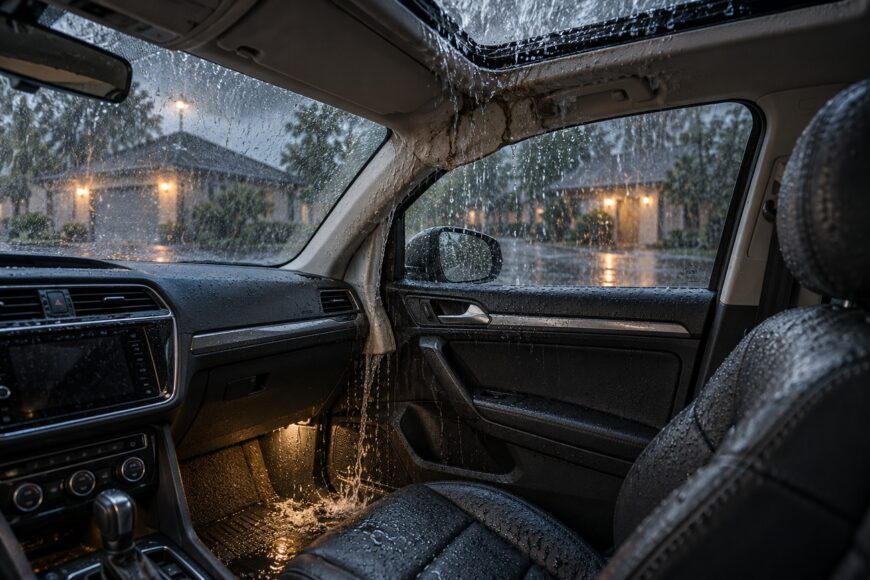
After a heavy rainstorm or car wash, a Volkswagen Tiguan can be left with wet carpets, water near the passenger footwell, or a persistent musty smell. The water may appear under the glovebox or near the passenger air vent, even though the actual entry point is higher in the roof or pillar.
A panoramic sunroof is not fully watertight. Water entering the sunroof area should be routed away through drainage channels, and a blocked or restricted drain is a typical Tiguan leak scenario. The seal may still be damaged, and the cowl at the base of the windshield can create similar symptoms, so the source should be confirmed before you remove trim or replace parts.
- Why a Tiguan Sunroof Can Flood the Footwells
- How to Confirm Where the Water Is Coming From
- What to Do Immediately After the Footwells Get Wet
- How to Inspect and Clear the Sunroof Drains Safely
- Common Repair Mistakes That Make the Leak Return
- When to Repair, Escalate, and Prevent Another Flood
- Frequently asked questions
- What are some common sunroof issues with Volkswagen Tiguans?
- What is the claim in the class action lawsuit against the VW Tiguan?
- What is the warranty period for a sunroof leak in a Volkswagen?
Why a Tiguan Sunroof Can Flood the Footwells
The sunroof assembly is designed to manage controlled water entry. Rain can reach the channels around the glass, where it should flow into drain tubes and leave the vehicle through outlets near the body. The rubber seal reduces the amount of water entering the assembly, but it is not the only part responsible for keeping the cabin dry.
A blocked sunroof drain allows water to collect in the channel until it overflows or finds a path around the tray. On a Tiguan with a panoramic roof, that water may run behind the headliner, along a pillar, and beneath interior trim. It can then reach a front or rear footwell some distance from the original entry point.
This explains why a wet carpet does not automatically identify the roof as the source. Water near the passenger footwell may come from above the glovebox, along the passenger-side pillar, or from the cowl and water channel at the base of the windshield. A leak can also remain invisible during dry weather and appear only after a heavy storm or a wash.
The idea that a panoramic roof should exclude every drop of water leads to unnecessary seal replacement. Drainage blockage is often the first suspect, while the seal, frame, glass alignment, and other water-entry points still require inspection when the test results point in that direction.
How to Confirm Where the Water Is Coming From
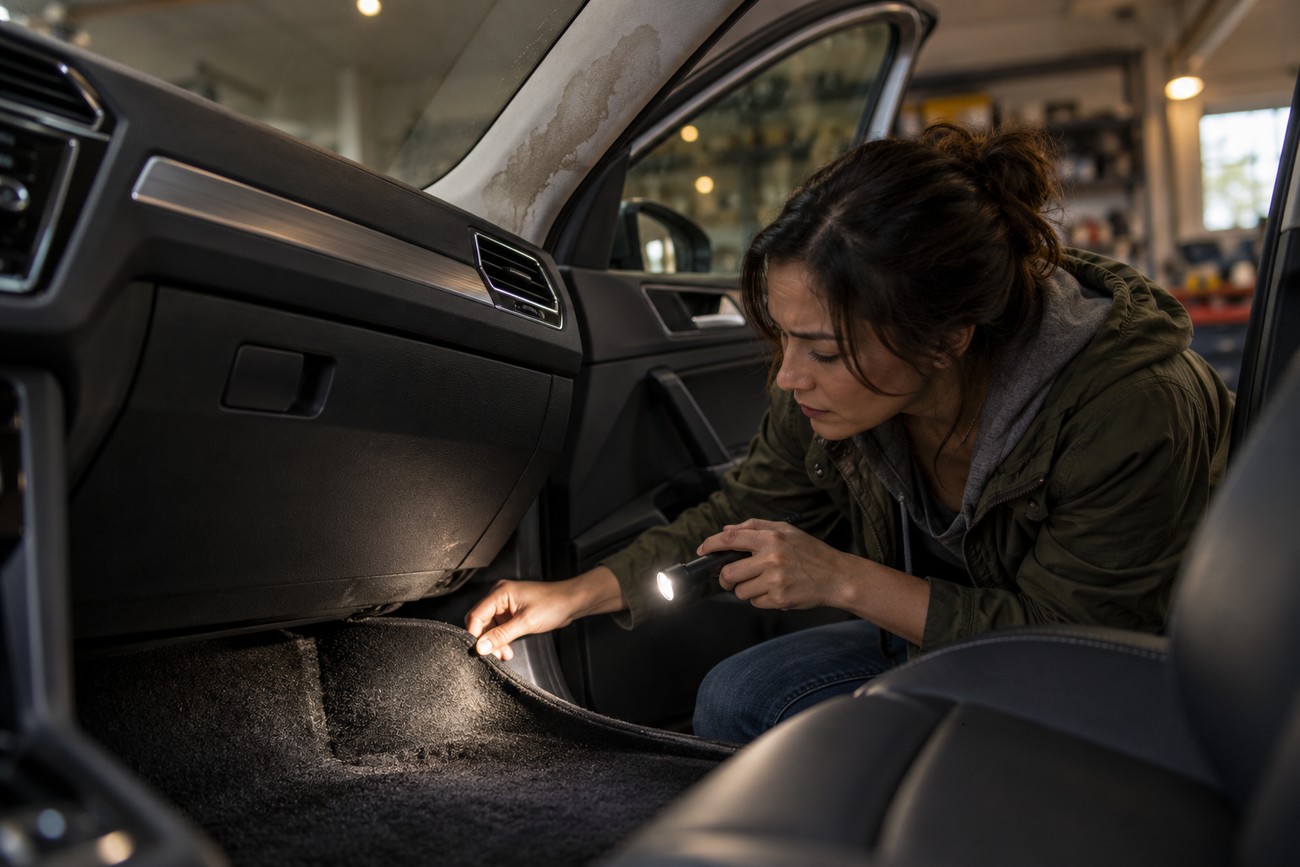
Start with the earliest evidence rather than the largest wet area. A damp carpet, musty smell, or stain on the headliner or pillar may show that water has been present for some time. Check both the front and rear footwells, because water can move underneath the carpet and emerge away from the original leak.
Water near the passenger air vent or under the glovebox is easily mistaken for air-conditioning condensation. Condensation from the climate system normally has a different path and timing, while roof water often follows trim, wiring, or the back of the dashboard. The location alone is not enough to distinguish the two systems.
Inspect the cowl and water channel at the base of the windshield as a separate possibility. Leaves and dirt in that area can restrict drainage and send water toward the cabin, producing symptoms that resemble a sunroof leak. Checking this area prevents you from dismantling the roof when the actual fault is lower down.
Use a gradual, localized water test. Dry the suspected areas first, then add a small amount of water to one part of the sunroof channel or the cowl at a time while watching inside the vehicle. Flooding the whole roof at once can create several wet paths and make the result harder to interpret.
What to Do Immediately After the Footwells Get Wet
Remove standing water as soon as possible and lift the carpet edge where access allows. The visible carpet can feel nearly dry while the underlay beneath it remains saturated. Use absorbent towels or a suitable wet vacuum, then provide steady ventilation with the doors open in a safe, dry location.
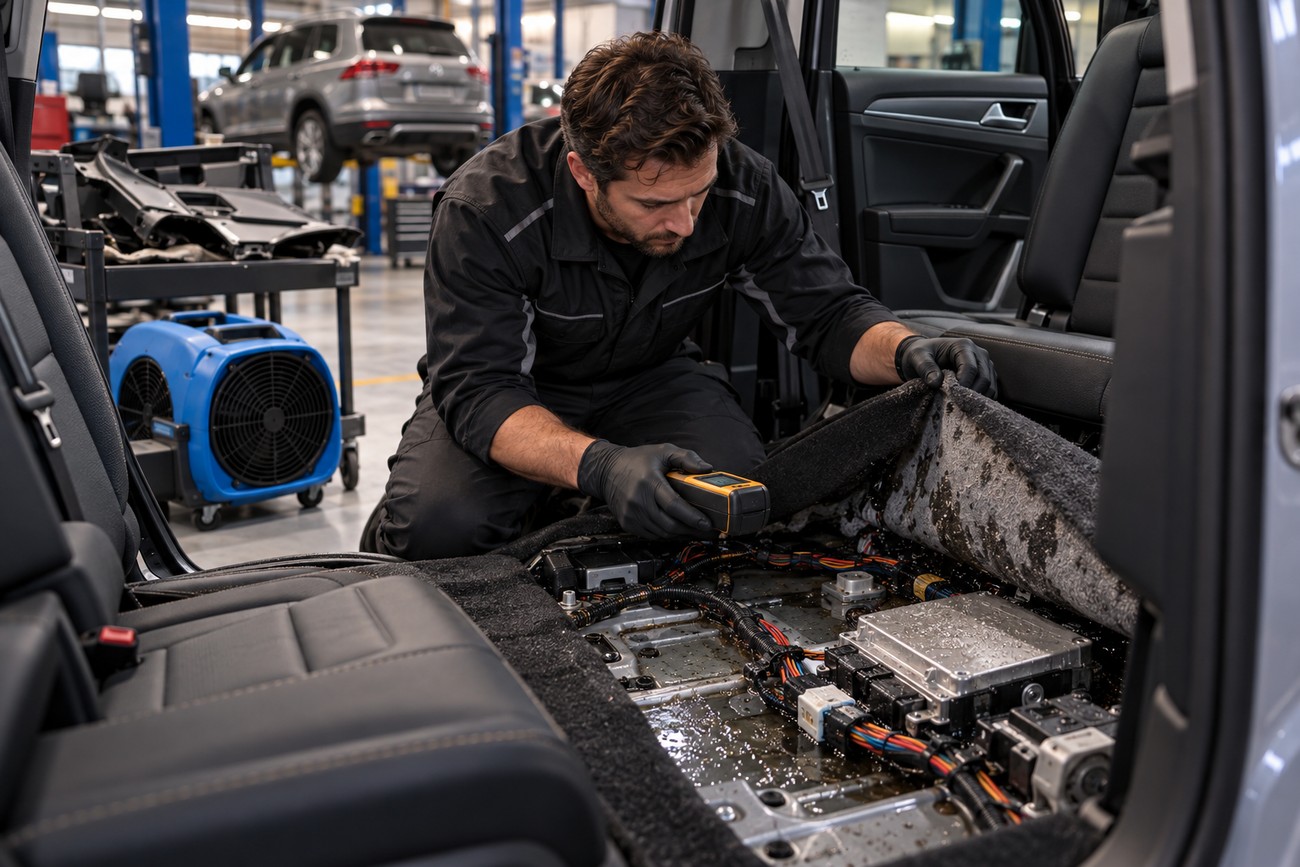
Keep the vehicle from remaining closed and damp. Moisture trapped under the carpet can affect wiring, modules, audio equipment, and interior trim. It can also promote corrosion at hidden fasteners and electrical contacts, particularly where water has collected beneath insulation or around floor-mounted components.
A musty smell after rain is evidence that moisture may still be present below or behind the visible carpet. Surface drying alone does not prove that the underlay, wiring, or concealed electrical areas are dry. If several footwells are wet, or the water has reached connectors and modules, arrange an inspection before using affected systems repeatedly.
Record when the water appeared and what caused it: rainfall, a wash, use of the air conditioner, or no obvious event. This simple detail helps separate an intermittent roof-drain problem from a climate-system or windshield-base drainage issue.
How to Inspect and Clear the Sunroof Drains Safely
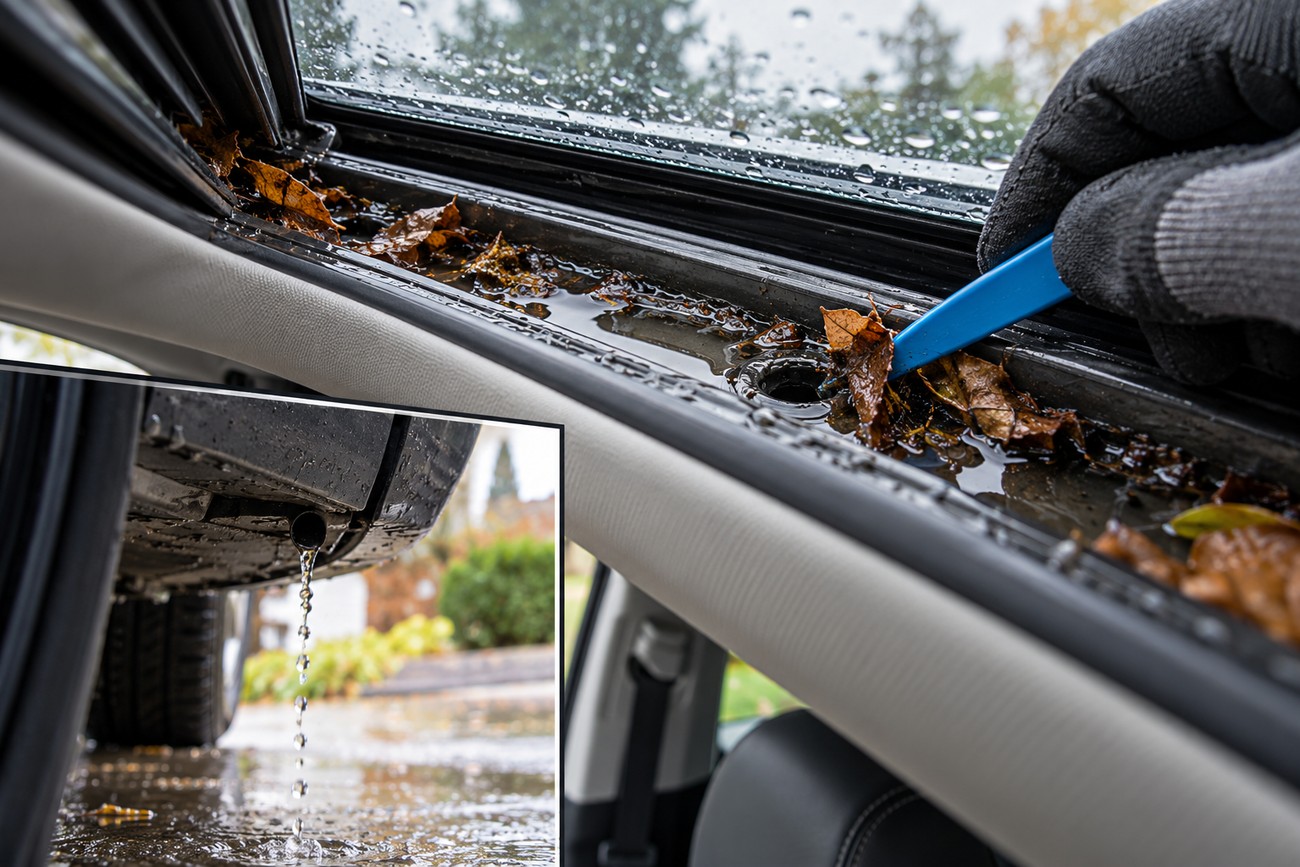
Begin by inspecting the visible channels around the panoramic roof. Remove loose leaves and dirt carefully, without pushing debris farther into the drain openings. The next check is flow: add a small amount of water to the suspected channel and confirm that it reaches the appropriate drain outlet rather than collecting or entering the cabin.
Drain outlets and tubes should be checked before replacing the sunroof seal. An outlet may be restricted by dirt, while a tube may be displaced, kinked, or unable to discharge water properly. Confirming the result at the outlet is more useful than assuming the opening is clear because water disappears from the roof channel.
Rigid wire can puncture, stretch, or dislodge a drain tube, creating a second fault that is harder to find. If a flexible clearing method is used, proceed gently and stop if resistance is firm. Never force an obstruction deeper into the system or treat a blocked outlet as proof that the entire tube is clear.
Check where debris is coming from and inspect the outlet condition after clearing. A drain can clog again when leaves and dirt continue entering the channel, or when the outlet remains restricted. The drainage system should be checked at every service, with preventive cleaning recommended at least twice a year.
Common Repair Mistakes That Make the Leak Return
A common mistake is replacing the rubber seal before checking the drains and their outlets. A seal may be defective, but drainage blockage is often the first suspected cause. A controlled water test should decide whether the seal, drain, frame, or another water path needs repair.
Another error is treating water under the glovebox as air-conditioning condensation without testing the roof and cowl. Climate-system drainage and roof drainage can leave water in nearby areas, so the timing and entry path matter. Water that appears after rain or a car wash deserves a water-ingress investigation even if it is found beside an air vent.
Hard tools can damage the tube during an attempted cleaning. A superficial rinse can also give false confidence if the blockage remains farther down the line or the outlet is still restricted. When the original source of debris is not addressed, the problem can return soon after the first cleaning.
Removing trim without tracing the water path often produces a collection of damp parts rather than a diagnosis. Water may travel behind the headliner or along a pillar, and the first visible stain may be downstream from the entry point. The leak should be reproduced gradually and locally before extensive interior disassembly.
When to Repair, Escalate, and Prevent Another Flood
A careful owner check may be reasonable when the carpet is only slightly damp, the drain openings are accessible, and no electrical symptoms are present. Stop if the tubing cannot be reached safely, if resistance is excessive, or if trim must be removed in a way that could damage clips and airbags. The vehicle should be assessed professionally when the leak keeps returning.
Professional diagnosis is also preferable when modules, wiring, audio equipment, or several areas of the cabin have become wet. Electrical faults can develop after the visible water has been removed, and hidden corrosion may take time to appear. A technician can inspect the water path, dry affected areas properly, and verify the repair under controlled conditions.
Prevention is straightforward: include the panoramic-roof drainage system in every service inspection and clean it at least twice a year. Keep leaves and dirt away from the roof channels and check that water exits at the drain outlets. Cleaning the visible opening alone is insufficient if the outlet or the source of recurring debris remains untreated.
The sound decision rule is simple: confirm the water path, dry the cabin fully, and repair the demonstrated fault. Automatic seal replacement can waste time when the drain is restricted, while ignoring a damaged seal can leave the leak unresolved. The evidence from a gradual test should determine the parts and labor required.
Frequently asked questions
A wet Tiguan footwell does not always indicate a failed sunroof seal. The drainage channels, cowl, windshield-base water channel, and the interior water path all need to be considered. The vehicle should be dried thoroughly, and the repair should be based on a controlled test rather than on the location of the visible water alone.
What are some common sunroof issues with Volkswagen Tiguans?
Common concerns include blocked or restricted panoramic-roof drains, a damaged or poorly sealing sunroof seal, frame or glass alignment problems, and faults around the roof drainage channels. Water can also enter through the cowl or water channel at the base of the windshield, which may imitate a sunroof leak.
These possibilities do not affect every Tiguan in the same way. The useful distinction is between a drainage problem, a seal or frame problem, and a separate body water channel. A controlled test should identify which area is actually allowing water into the cabin.
What is the claim in the class action lawsuit against the VW Tiguan?
Any class-action claim must be checked against the court record for the relevant jurisdiction. The alleged defect, affected Tiguan vehicles, model years, legal status, and any proposed remedy can vary between cases. Allegations in a filing are not the same as proven findings or a final judgment.
For that reason, there is no single universal claim that can safely describe every Tiguan sunroof case. Owners should verify the official case documents and their vehicle details before relying on statements about eligibility, settlement terms, or responsibility for a leak.
What is the warranty period for a sunroof leak in a Volkswagen?
There is no safe universal warranty period for a Volkswagen sunroof leak. Coverage depends on the market, model year, warranty terms, exclusions, vehicle history, and whether the fault is treated as a manufacturing defect or a maintenance-related drainage problem.
Check the warranty booklet and obtain a written assessment from an authorized repairer or the relevant Volkswagen representative. Keep service records, photographs, and diagnostic findings, since the documented cause may matter more than the fact that water was found in the footwell.







