
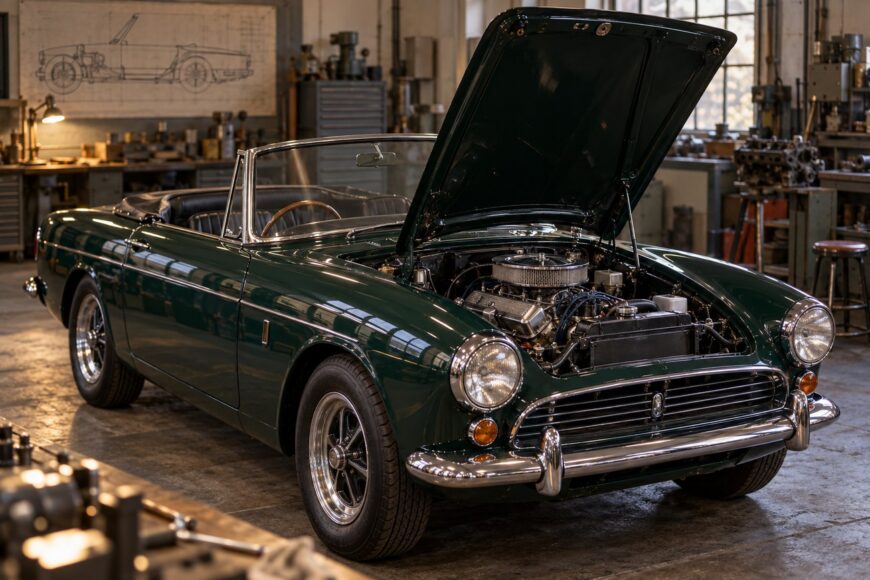
A compact British roadster with an American V8 has an appeal that is easy to understand: modest dimensions, open-air driving, and power that feels substantial in a small car. The Sunbeam Tiger delivered that combination in a production model rather than a one-off conversion.
Carroll Shelby helped develop it, yet the Tiger remained a distinct Rootes car, not a Cobra in Sunbeam bodywork. Its engine is only part of the story. The Alpine-based chassis shapes how it drives, while the difference between a factory Tiger and a later V8 conversion shapes what a buyer should pay for.
- How Shelby and Rootes created the Sunbeam Tiger
- Tiger I vs. Tiger II: engines and factory specifications
- What a V8 Tiger is like to drive
- Cooling, brakes, and body: the compromises owners face
- How to distinguish a genuine Tiger from an Alpine conversion
- Buying a Sunbeam Tiger without inheriting costly mistakes
- Frequently asked questions
- How much is a Sunbeam Tiger worth today?
- How rare is the Sunbeam Tiger?
- What was Carroll Shelby’s most expensive car?
How Shelby and Rootes created the Sunbeam Tiger
The Tiger began with the Sunbeam Alpine, an established British roadster that Rootes adapted for Ford V8 power. Carroll Shelby and his team participated in development, helping turn the compact-V8 idea into a workable car. Rootes brought the Tiger into series production and remained responsible for the production model.
That division of roles matters. Calling the Tiger a Shelby Cobra in a Sunbeam body confuses two distinct cars, even though both follow the appealing formula of a small roadster with an American V8. The Tiger retained an Alpine-based body and chassis rather than receiving a platform designed from scratch around its engine.
Produced from 1964 to 1967, the Sunbeam Tiger had an approximate production total of 7,085 cars. Its short run and Shelby connection draw attention, but neither tells you how an individual example was built, maintained, or altered. Those details have greater bearing on the experience of owning one.
Tiger I vs. Tiger II: engines and factory specifications
The two factory versions differ in engine size and rarity. Their quoted power figures are SAE gross ratings, and published figures for the Tiger I vary.
| Specification | Tiger I | Tiger II |
|---|---|---|
| Engine | Ford 260 cu in (4.3 L) V8 | Ford 289 cu in (4.7 L) V8 |
| Commonly cited power | Approximately 164 hp SAE gross; published figures vary | Approximately 200 hp SAE gross |
| Typical transmission | Four-speed Ford manual | Four-speed Ford manual |
| Relative rarity | More common factory version | Rarer factory version |
What a V8 Tiger is like to drive
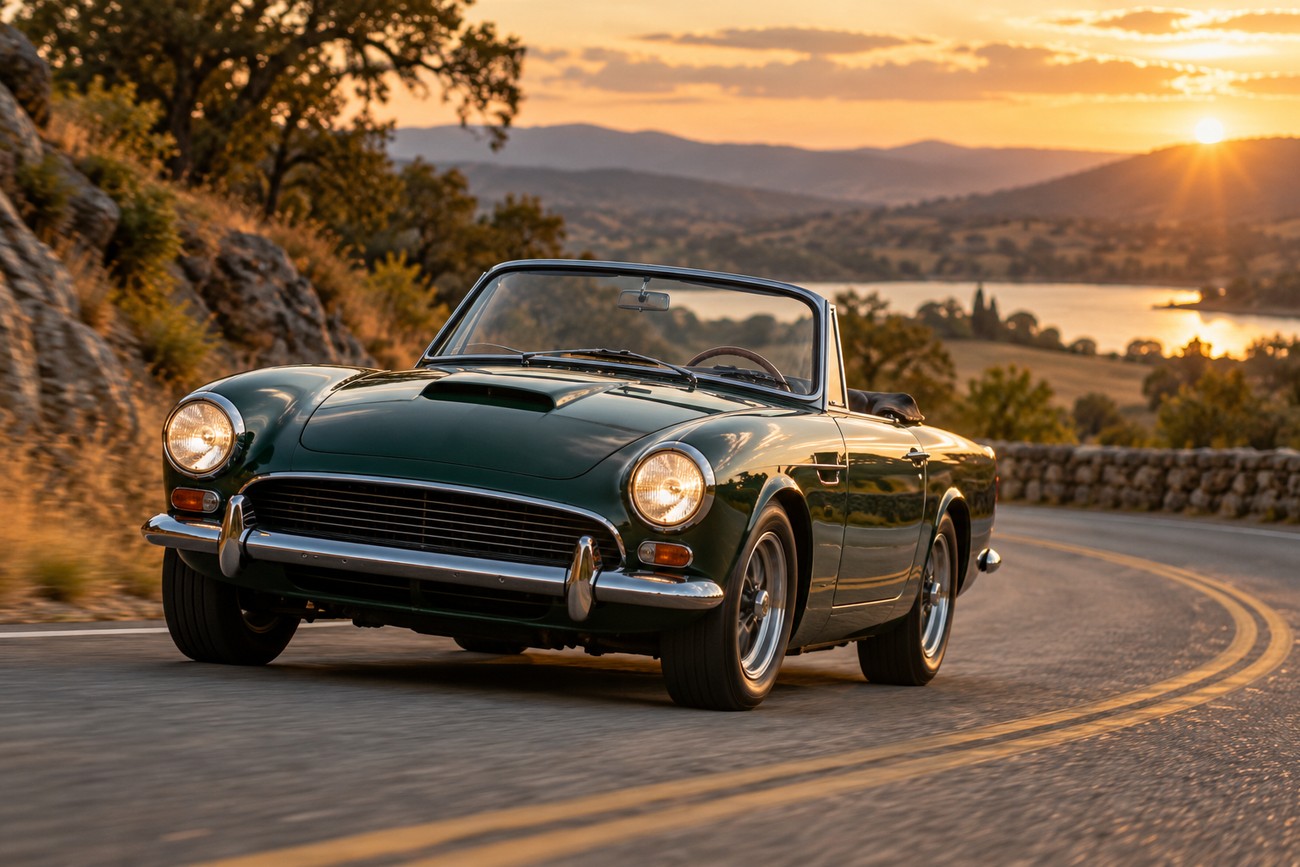
The V8 gives the Tiger an eager response without requiring the driver to chase high engine speeds. In a small, open roadster, that torque is the defining attraction. The car feels compact around its driver, so changes in throttle and road surface are readily apparent.
Its heavier front end also changes the balance familiar to an Alpine driver. The Tiger retains the Alpine-based platform, and the short wheelbase calls for measured inputs, particularly when accelerating out of a bend. A sound, well-set-up example can be rewarding; extra power alone will not make a tired chassis feel composed.
Period brakes set another boundary. Repeated hard use can expose their limitations, making brake condition and adjustment more important than an engine specification on a sales sheet. The Tiger is best enjoyed with an understanding of its roadster proportions and mechanical limits, rather than expectations borrowed from a modern performance car.
Cooling, brakes, and body: the compromises owners face
The V8 occupies a tight engine bay. Access to ignition parts, the exhaust, starter, and cooling components can turn routine work into a more involved job. Heat has less room to escape, so the condition and arrangement of the cooling system deserve close attention.
Traffic overheating is a recurring owner complaint, particularly where maintenance has been neglected or modifications work poorly together. That does not mean every well-maintained Tiger inevitably runs hot. A replacement radiator or fan may help, but its effect depends on the rest of the system, including airflow, ignition settings, and the way exhaust heat is managed.
Brakes and suspension need the same joined-up assessment. Fresh engine work is little consolation if the car pulls under braking or its suspension joints are worn. Before planning more power, establish that the existing hardware lets you use the car predictably.
Body condition is equally consequential because the Alpine-based structure was not designed from scratch for V8 power. Corrosion around structural members, suspension mounting areas, and earlier repairs can compound flex or fatigue. Inspect cracks and reinforcement work carefully: a stiff-feeling car on a short test drive may still conceal poor metalwork.
Changes that solve one problem can create another. An altered exhaust might improve access or change heat distribution, while electrical work for an added fan needs to be dependable in traffic. Assess modifications as a system, with their installation quality and service history in view.
How to distinguish a genuine Tiger from an Alpine conversion
Start with chassis identity and a continuous paper trail. Check identifiers against the car’s records, and look for documents that account for major repairs or changes of specification. A Ford V8, Tiger badges, or a single identification plate cannot establish that an Alpine left the factory as a Tiger.
Next, examine construction details associated with a factory Tiger, including engine and transmission mountings, engine-bay fittings, cooling arrangements, and exhaust routing. Individual parts can be replaced, so no one feature should carry the entire verdict. The aim is to see whether the physical car and its recorded history tell the same story.
Fresh paint can conceal altered mounting points. Cross-check structural and mounting details against chassis records before treating badges or a tidy V8 installation as proof of factory identity.
Then reconcile departures from factory specification with dated evidence. A changed radiator, later engine components, or repaired metalwork need not rule out a genuine Tiger, but unexplained work makes originality harder to establish. If records are thin, seek a knowledgeable inspection rather than relying on a seller’s description.
Alpine V8 conversions can be enjoyable cars in their own right. They should, however, be represented as conversions unless factory identity is supported by corroborating evidence. Originality materially affects collector value, which makes a careful authentication worthwhile before purchase or an authenticity-focused restoration.
Buying a Sunbeam Tiger without inheriting costly mistakes
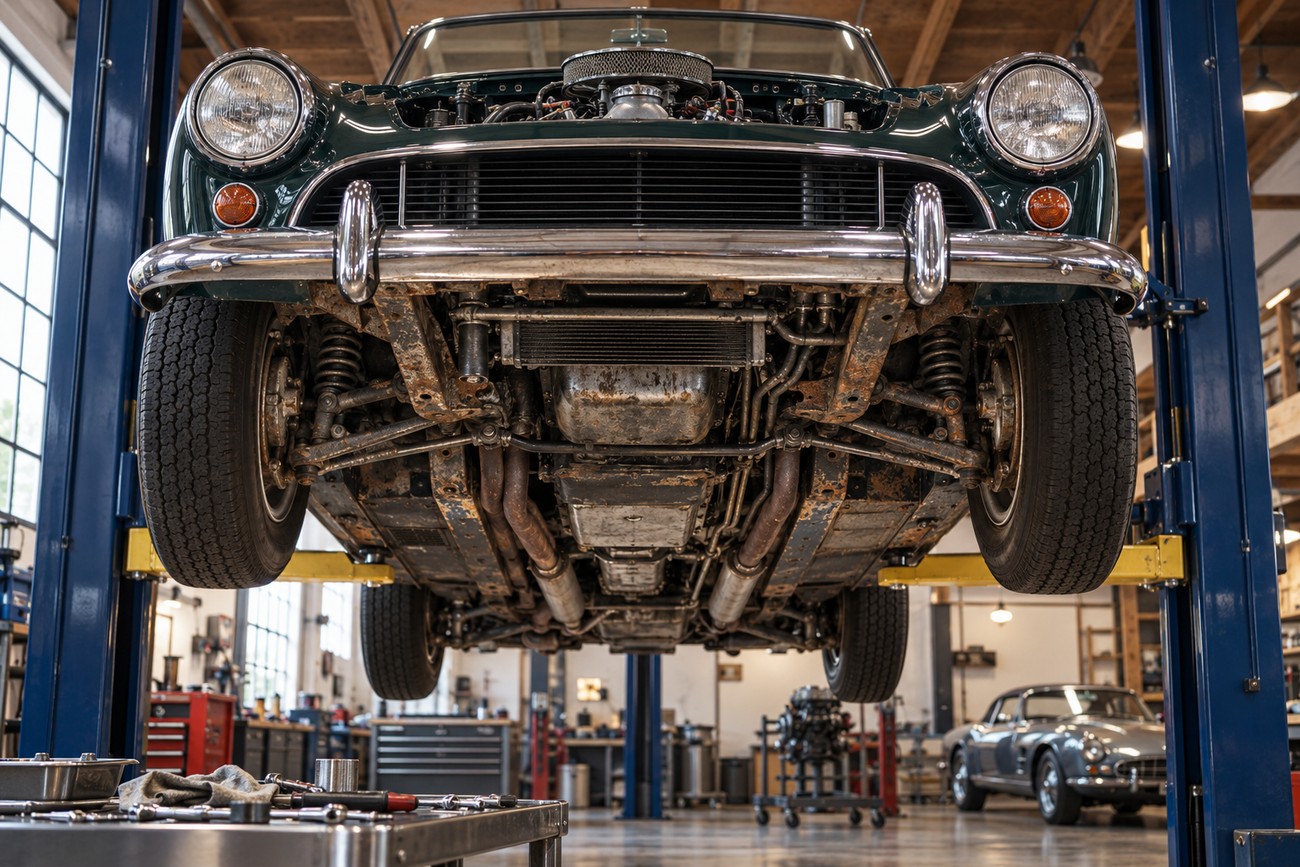
Inspect the body before being persuaded by a strong-running V8. Corrosion in structural areas, suspension mounting points, and previous reinforcement work can demand more effort than ordinary engine service. A car that starts and drives well may still have expensive metal repairs ahead of it.
On a test drive, watch the temperature in slow traffic, assess braking after normal use, and listen for signs of loose or tired suspension. Ask what was changed in the cooling, ignition, exhaust, and electrical systems, then check whether the work is documented and neatly installed. An automatic transmission is rare or uncharacteristic for a production Tiger and warrants particular verification.
Allow for specialist assessment and for the difference between common Ford V8 components and Tiger-specific parts, which may be harder and costlier to source. Decide whether your priority is period correctness or regular driving before authorizing upgrades. Sympathetic, documented changes may improve use, while irreversible alterations can weaken collector appeal.
Frequently asked questions
These questions concern value and rarity, where a model-wide figure tells only part of the story. They also separate the Tiger’s Shelby connection from records associated with other Shelby cars.
How much is a Sunbeam Tiger worth today?
There is no reliable single current value for every Sunbeam Tiger. Compare recent completed sales, rather than asking prices, for the same factory version and broadly similar condition. Check whether each result includes documented factory identity, original Tiger-specific components, and evidence of structural repairs; differences in those areas can make a headline sale price a poor comparison.
How rare is the Sunbeam Tiger?
Approximately 7,085 Sunbeam Tigers were built from 1964 to 1967, with the Tiger II the rarer factory version. Production is not a survival count: cars may have been lost, stored, converted, or simply kept off the market. Availability in any particular country also changes, so a current sales listing cannot establish how many remain.
What was Carroll Shelby’s most expensive car?
The original Shelby Cobra, chassis CSX2000, is widely cited as the highest-priced Shelby car sold at public auction. That is an auction distinction, not a reliable ranking of every car Carroll Shelby personally owned or every privately sold Shelby car. The Sunbeam Tiger’s connection to Shelby does not make it the same model as that Cobra.







