
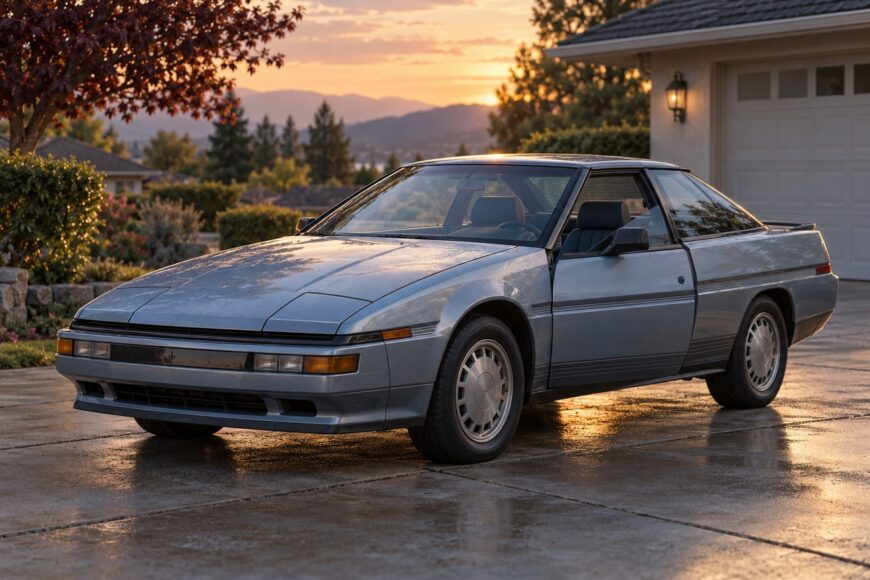
The Subaru XT still looks like a wedge-shaped sketch that escaped the drawing board. Its low nose and joystick-like cabin control make it instantly recognizable; finding a replacement switch, trim piece, or body panel can be a much less glamorous exercise. Age has made the unusual details that attract owners some of the hardest to preserve.
That tension is central to enjoying an XT. This two-door coupe rewards an interest in original design, but a badge or photograph tells you little about the engine, drive layout, or equipment of a particular car. The Japanese-market Alcyone name widens the search for information, while differences between years and markets make careful identification essential.
- What the XT and Alcyone actually are
- The wedge: shape, packaging and visibility
- Inside the cockpit: what the joystick shifter really does
- Engine, gearbox and drive: why the figures disagree
- How it drives versus how it looks
- Buying one: inspect the car, not the legend
- Frequently asked questions
- Why did Subaru discontinue the XT?
- How can I check whether an XT’s joystick-style interior is original?
- What details should I provide when requesting Alcyone parts from overseas?
What the XT and Alcyone actually are
The Subaru XT is a two-door coupe produced from approximately 1985 to 1991. In Japan, the same model family was sold as the Alcyone. Those names refer to a shared identity, although individual cars can differ in specification according to where and when they were sold.
For an owner, the naming matters beyond trivia. A search under XT may turn up export-market literature, while Alcyone may lead to Japanese-market references or parts listings. Neither name alone guarantees that a pictured component will fit the car in front of you; the year, market, and equipment still need checking.
The later Subaru SVX is a different coupe, not an XT trim level or a source of XT performance figures. It is easy to blur the two in accounts of Subaru’s unusual coupes, especially when discussing their distinctive styling. Keeping them separate makes it easier to judge what an XT actually offered and to order parts for the right car.
The wedge: shape, packaging and visibility
The XT’s appeal begins with its low, angular profile. The long, clean lines give it a stronger concept-car character than its modest footprint might suggest. That shape is the reason many enthusiasts notice the car, though a dramatic outline does not tell you how comfortably it will fit into ordinary use.
Catalogue dimensions vary by version: length is approximately 4,450–4,511 mm, width 1,660–1,689 mm, and height 1,335–1,336 mm. The wheelbase is listed at approximately 2,464 mm. These are useful guides when assessing storage space or comparing listings, rather than measurements to assume for every surviving car.
From the driver’s seat, the low body and distinctive cabin arrangement may require acclimatization. Spend time checking sightlines in traffic and while parking, particularly if you are used to a more upright car. A brief drive is more revealing here than photographs: the XT’s shape is constant, but your ease with its seating position is personal.
Inside the cockpit: what the joystick shifter really does
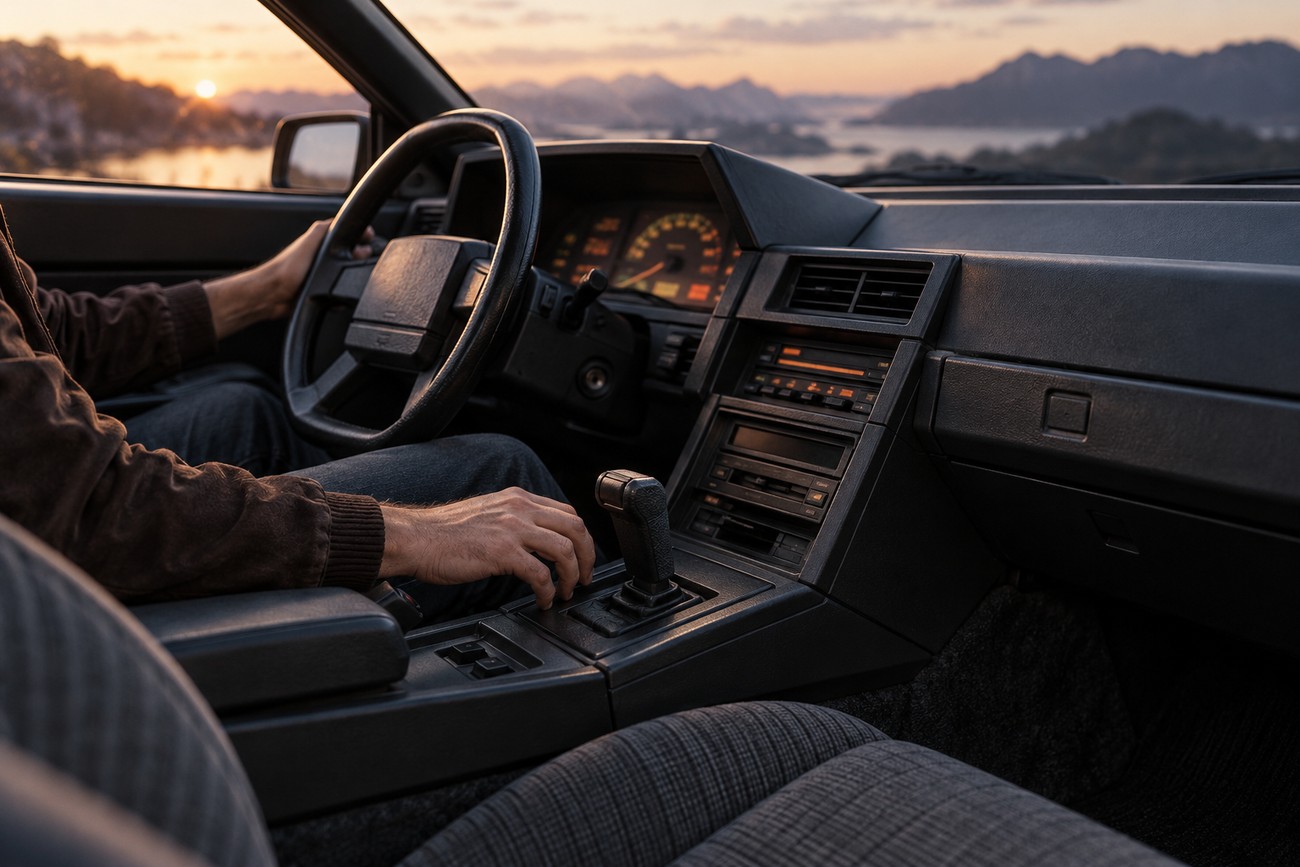
The XT carries its angular thinking indoors. Its joystick-like shifter or selector helps give the cockpit an identity of its own, and the unconventional arrangement changes where your hand and attention go while driving. It is a working control, rather than a piece of decoration added to make the dashboard look futuristic.
The control’s appearance should not be mistaken for evidence of an electronic or shift-by-wire transmission. XT/Alcyone listings include a five-speed manual and a four-speed automatic, familiar gearbox types beneath the unusual presentation. Before forming an opinion from a photograph, identify the transmission fitted to the particular car.
Learning the layout can be part of the pleasure, provided its controls operate as intended. Sit in the car and use each switch and lever before a test drive; an awkward control is different from a broken one. Check the condition of the surrounding plastics, too, since aged interior pieces can be difficult to replace without compromising the original look.
Cabin photographs also need context. Trim and equipment can vary by year and market, so a difference from an online example does not automatically mean that an interior has been altered. Period material for the correct specification is a better reference than a single well-preserved XT from elsewhere.
Engine, gearbox and drive: why the figures disagree
XT/Alcyone engine listings include 1.8-litre units and, in later versions, a 2.7-litre engine. Quoted output across versions and markets spans approximately 97–150 hp. A single power figure attached to every XT therefore says more about an oversimplified listing than about the car you may be considering.
Some 1.8-litre turbo listings quote 135–136 hp and approximately 196 Nm. A lower 112 hp US-specification turbo rating appears in a single source; it should not be treated as the rating for all US cars or all turbo XTs. For a useful comparison, match any quoted figure to an engine, model year, and market.
Drive layout varies as well. Both front-wheel-drive and all-wheel-drive versions are listed, alongside five-speed manual and four-speed automatic transmissions. Check the actual vehicle and its paperwork rather than assuming that an XT badge guarantees all-wheel drive, or that a joystick-like control determines the gearbox underneath.
These combinations affect more than a specification sheet. They change which components need inspecting and which parts you must locate later. Correctly identifying a car before discussing performance or ordering a repair item can save a long search for a component that was never fitted to that version.
How it drives versus how it looks
The XT’s styling promises a more radical machine than its period-appropriate drivetrains necessarily deliver. A five-speed manual or four-speed automatic sits within a package whose published outputs, across versions and markets, run from approximately 97–150 hp. Those figures are a useful check on expectations, rather than a complete account of how a sound example feels.
The 1.8-litre turbo is especially vulnerable to inflated expectations. Its presence may make a car more appealing to an enthusiast, yet even the higher quoted turbo figures do not justify assuming modern sports-car acceleration. Mechanical condition and the way power reaches the road deserve more attention than the shape of the bodywork.
Descriptions of the XT range from sports coupe to unusual everyday show car. Both capture something about it: the two-door form and distinctive controls invite enthusiastic use, while the hardware remains recognizable for its era. For a surviving example, age and parts scarcity often make occasional enthusiast or collector use more realistic than effortless daily transport.
Buying one: inspect the car, not the legend
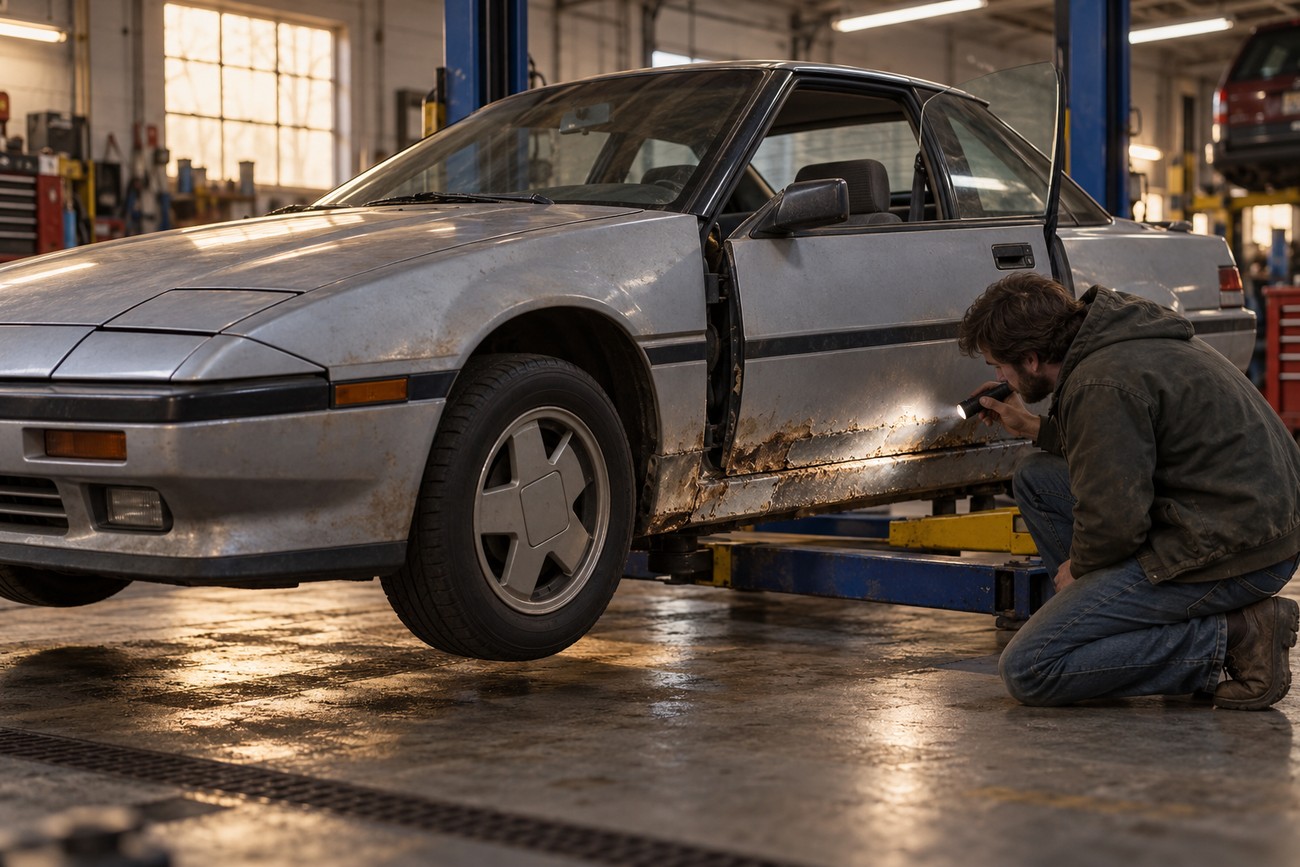
Begin with the structure and visible bodywork. Look for corrosion, mismatched repairs, and damage that has been hidden rather than resolved. An appealing engine or rare trim designation loses much of its value if the shell needs extensive work or a model-specific panel is missing.
Next, check the wiring and operate every cabin control. Note intermittent functions, damaged plastics, and alterations made by previous owners. A tidy-looking cockpit can still contain improvised repairs, and restoring an original appearance may require pieces that are harder to find than routine mechanical service parts.
Confirm that small cabin controls and trim pieces are present, working, and correct for the car’s year and market before pricing mechanical work. A missing detail can be more difficult to source than a familiar service item.
Only then move through the drivetrain systematically. Assess the gearbox’s operation and, where all-wheel drive is fitted, have its associated components inspected; a front-wheel-drive XT has a different checklist. A test drive is useful, but maintenance records and a careful examination help distinguish an age-related fault from a problem already repaired poorly.
Parts searches should start with the vehicle’s year, market, and identification details, using both XT and Alcyone as search terms. Similar-looking components need a fit check rather than an assumption that another Subaru part will interchange. Budget time as well as money: sourcing scarce body and interior pieces can delay a project even when the underlying car is sound.
Frequently asked questions
With the XT, the most useful answer usually depends on identifying the exact car. These checks help separate a plausible listing or parts offer from one that needs more evidence.
Why did Subaru discontinue the XT?
XT production ended approximately in 1991, but the available information does not establish one definitive reason for its discontinuation. The later SVX was a different Subaru coupe, not an XT trim with a new name. Treat claims about a single cause cautiously unless they are supported by period documentation.
How can I check whether an XT’s joystick-style interior is original?
Compare the car’s controls and trim with period photographs, brochures, or literature for its specific year and market. Then check its paperwork and look closely at how the pieces fit: mismatched finishes or altered wiring merit further investigation. A difference from another XT online is a clue to verify, not proof of a modification.
What details should I provide when requesting Alcyone parts from overseas?
Give the seller the year, original market, chassis identification, engine, transmission, and front- or all-wheel-drive layout. Include clear photographs of the existing part, its mounting points, and any markings. Ask the seller to confirm compatibility with those details before ordering, even if the listing uses the Alcyone name.







