
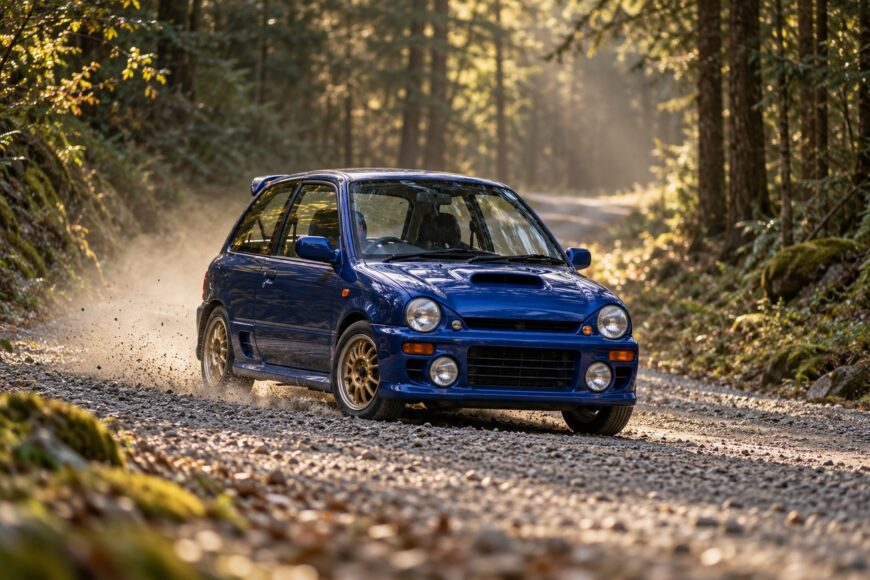
A supercharged kei hatchback with a rally reputation has an appeal that a horsepower figure alone cannot explain. The Subaru Vivio RX-R combines a small four-cylinder engine with the compact proportions of a Japanese kei car, and typical published specifications pair it with a manual transmission and all-wheel drive. It is an unusual recipe for a road car.
The badge, however, is only the start of a buyer’s investigation. Similar-looking Vivios can differ in specification, and decades of repairs or modifications can change what remains beneath apparently stock bodywork. On an RX-R, identifying the exact car and inspecting its structure matter more than accepting a rally-themed description.
- Why the RX-R stands out among kei cars
- Subaru Vivio RX-R specifications: fixed figures and changing torque
- What the supercharged EN07 does—and what the badge cannot tell you
- The rally-car label has limits
- How to identify the RX-R you are actually buying
- Pre-purchase inspection: rust, boost, cooling, and all-wheel drive
- Living with one: parts, comfort, and modifications
- Frequently asked questions
- What is the average price of a Subaru Vivio RX-R?
- What is the top speed of a Subaru Vivio RX-R?
- How can I find the correct RX-R-specific replacement part?
- What evidence should support a seller’s claimed rally history?
Why the RX-R stands out among kei cars
The Vivio family was produced from March 1992 to October 1998, with the RX-R among its sportiest variants. Those dates describe the family as a whole; they should not be read as a separately verified RX-R production span. For buyers, that distinction is a reminder to use the individual car’s year and identifying details rather than a broad model summary.
At the heart of the RX-R is a mechanically supercharged 658 cm³ inline-four. Its intercooled, fuel-injected layout makes the engine more distinctive than the capacity suggests, while its compactness remains central to the car’s character. The attraction is the combination of small-car dimensions and an unusually involved powertrain.
Typical published RX-R specifications list a five-speed manual transmission and all-wheel drive. Together, they help explain why the car attracts enthusiasts, although the specification of any prospective purchase needs checking against its year and factory records. A familiar badge is no substitute for confirming what is actually fitted.
The rally association adds interest, yet the road-going RX-R remains a production kei hatchback. Its configuration may make it an appealing basis for competition use, but neither the badge nor the shape proves that a particular car was built, homologated, or used as a factory competition machine.
Subaru Vivio RX-R specifications: fixed figures and changing torque
These catalogue figures describe the engine and commonly listed configuration, while the qualifications identify details that must be matched to an individual car.
| Item | Published figure | Buyer’s qualification |
|---|---|---|
| Vivio family production | March 1992 to October 1998 | Not an independently verified RX-R-only production span. |
| Engine | 658 cm³ inline-four; DOHC 16-valve; mechanically supercharged, intercooled, and fuel-injected | Confirm the engine execution on the individual car. |
| Bore × stroke; compression ratio | 56.0 × 66.8 mm; 9.0:1 | Catalogue engine figures, not a substitute for a mechanical inspection. |
| Rated power | 64 PS (47 kW) at 7,200 rpm | 64 PS was the period Japanese kei-class power ceiling. |
| Torque, early catalogues | 88.3 N·m at 4,400 rpm | Match the figure to the year and variant. |
| Torque, later specifications | 105.9 N·m at 3,600 rpm | Do not apply this figure to every RX-R. |
| Typical published drivetrain | Five-speed manual transmission; all-wheel drive | Check the car’s identifying details and year-specific factory specification. |
| Fuel tank | 32 L | Figure listed in the cited catalogues. |
| Reported weight | Approximately 750 kg (1,653 lb) in one listing | Trim and weighing method are unconfirmed; this is not a verified universal curb weight. |
What the supercharged EN07 does—and what the badge cannot tell you
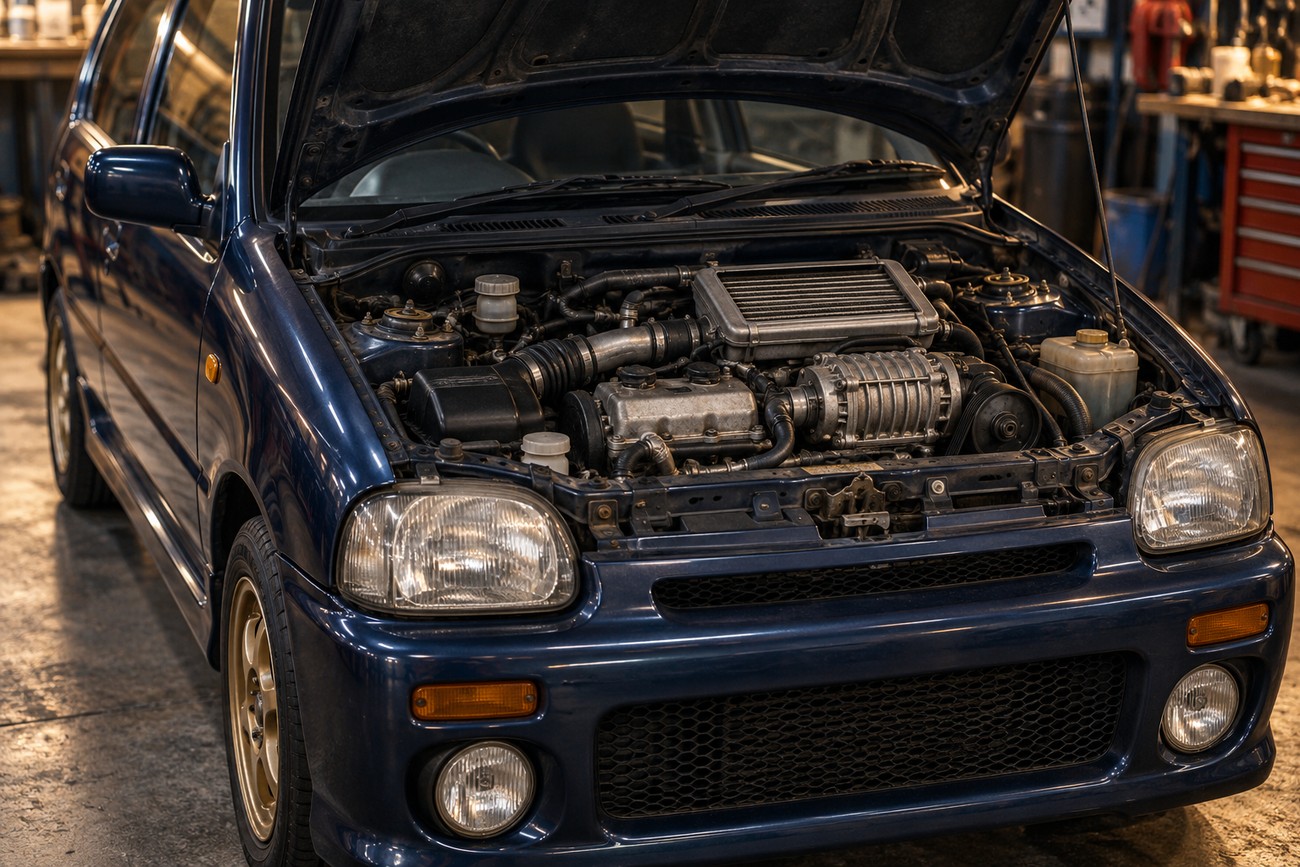
The RX-R’s rated 64 PS (47 kW) arrives at 7,200 rpm, the period Japanese kei-class power ceiling. That peak figure identifies the published output, but it says little by itself about how a particular car delivers power. The mechanical supercharger and the engine’s condition deserve more attention than the headline number.
The published torque figures show why year-specific specifications matter. Early catalogues list 88.3 N·m at 4,400 rpm, while later specifications list 105.9 N·m at 3,600 rpm. Those are meaningfully different catalogue claims; assigning either one to an unidentified RX-R risks describing the wrong variant.
EN07 names an engine family rather than a sufficiently precise RX-R specification. References to supercharged executions include EN07X and EN07Z, so a listing that says only “EN07” leaves an important question unanswered. Match the engine execution to the car’s year and factory documentation before using a suffix to infer its output or original equipment.
Mechanical condition can further separate two cars with identical badges. Compression, oil pressure, supercharger operation, and cooling behavior tell a buyer more about the engine being offered than a brochure rating does. A modified engine may also need careful checks of its fueling and tune, regardless of how standard the car looks.
The rally-car label has limits
The RX-R’s rally-flavored identity is part of its appeal, but the road-going RX-R is a production kei hatchback. Its 64 PS rating describes a road-car specification and does not, on its own, establish factory competition homologation. A seller’s use of “rally car” therefore needs a clearer meaning before it can add anything to an assessment.
Decals, auxiliary equipment, and an assertive stance can be added long after a car leaves the factory. They may reflect enthusiasm or genuine competition preparation, but they do not document who built the car or where it competed. Treat a claimed history as a claim about the specific chassis, not as a property inherited from the RX-R badge.
Evidence of competition use also changes the inspection priorities. Look closely for cracks, welding, impact repairs, and signs that the chassis geometry has changed, particularly around stressed mounting areas. A car can have an interesting past and still require substantial structural work.
Documentation and physical condition should support each other. If records identify the chassis but the shell shows unexplained repairs, investigate those repairs; if the seller has only a story and stickers, value the car on its present condition. Rally provenance cannot make a damaged shell sound.
How to identify the RX-R you are actually buying
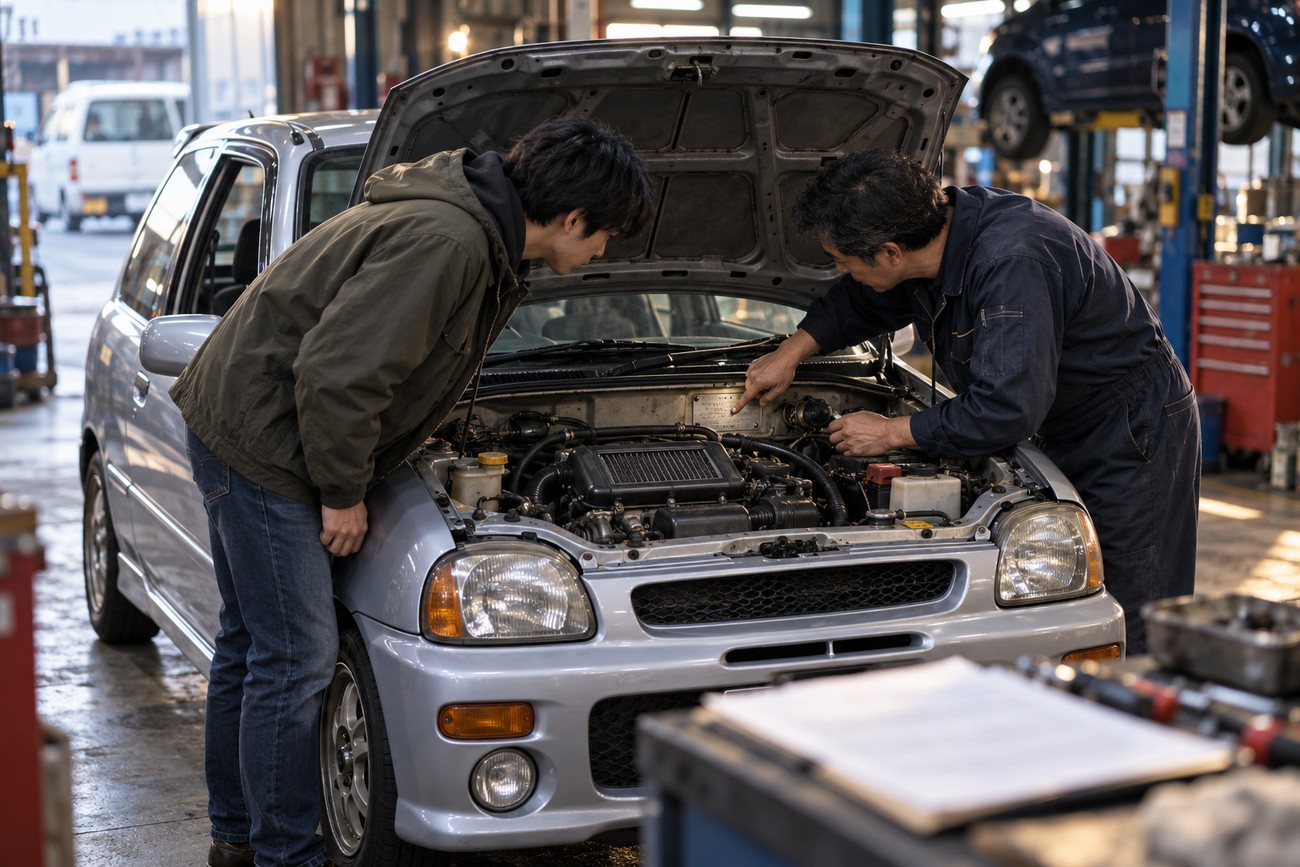
Start with the car’s VIN and body code, then compare them with documentation and a factory specification appropriate to its year. Check the engine execution, drivetrain, and equipment against those records rather than relying on a badge or an online description. This sequence is especially useful when a car has been imported or altered during its life.
A supercharger alone does not prove that a Vivio is an RX-R. EN07 is a broad engine-family designation, and references distinguish supercharged executions including EN07X and EN07Z. Identification should follow the car’s records and fitted components together, without assigning an engine suffix from appearance alone.
Typical published RX-R specifications list a five-speed manual transmission and all-wheel drive. References to a CVT elsewhere in the Vivio range do not establish a standard RX-R CVT specification, but a sweeping claim about every year or market is equally unhelpful. If a car differs from the expected layout, resolve the discrepancy through its identifying details and year-specific factory information before buying.
Finally, compare the paperwork with the mechanical evidence. Stock-looking bodywork can conceal changed engine parts, altered boost settings, or improvised wiring. An accurate model identification tells you what the car started as; an inspection tells you what you would own now.
Pre-purchase inspection: rust, boost, cooling, and all-wheel drive
Put structural condition ahead of paint and odometer readings. Inspect the underside, sills, wheel arches, and suspension mounting points for corrosion, concealed repairs, and weakened metal. Fresh cosmetic work deserves a closer look where it prevents you from seeing the seams or previous welding.
Arrange to see the engine start cold, then drive it under load and inspect it again once warm. Inconsistent starting can involve aging wiring or sensors, so replacing spark plugs without diagnosis may miss the cause. Compression and oil-pressure checks, alongside an examination of the cooling system, give a firmer basis for judging engine health than a brief idle.
Inspect the supercharger belt for cracking, glazing, and loss of tension, then check its tensioner and pulleys as part of the same job. A recently fitted belt does not establish that the complete drive system is sound. Confirm the supercharger’s actual operation rather than treating the presence of hardware as proof that it works correctly.
Take particular care with modified engines. Poor tuning can bring overheating or lean running, and standard-looking bodywork cannot rule out altered boost or fuel-system work. Examine hoses, vacuum lines, and wiring for changes that need explanation, and seek a proper diagnosis if the car behaves inconsistently under load.
On an all-wheel-drive example, budget inspection time for the prop shaft, differentials, CV joints, and bearings. Listen and feel for drivetrain faults during the road test, then have suspect areas checked underneath. These additional aging components are part of the cost of that mechanical appeal, even on a car that starts and accelerates well.
Living with one: parts, comfort, and modifications
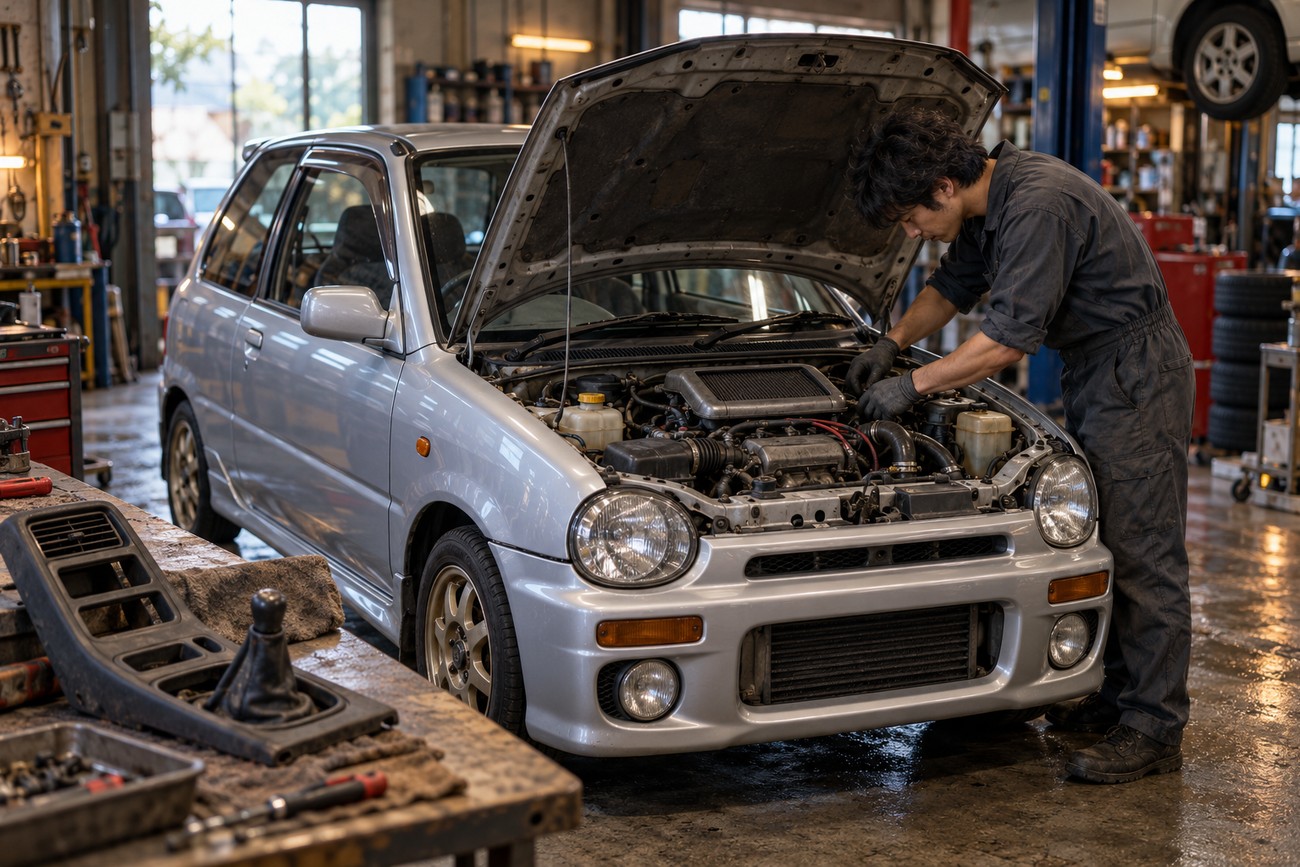
Body, interior, and RX-R-specific parts can be harder to source than parts for modern mass-market kei cars. Before buying a car with missing trim or damaged panels, establish whether suitable replacements can actually be found. A mechanically healthy example with hard-to-replace cosmetic damage may still demand patience.
Age also affects the less visible parts. Hoses, seals, vacuum lines, and coolant pipes can require substantial work soon after purchase, even when the engine seems strong on a short drive. A documented history of maintenance helps distinguish preventive care from problems merely postponed.
Small exterior dimensions do not guarantee a spacious or quiet cabin. Noise, limited room, and modest sound insulation can become more noticeable on long trips than on an enthusiastic test drive. Use the car in conditions resembling your intended journeys before deciding whether its character suits you.
Sound brakes and tires deserve priority over extra power. Wheel and suspension changes need attention to offset, load, clearance, and the condition of aging hub components; a fashionable fitment is little consolation if it compromises how the car drives or wears. For many buyers, a largely original RX-R with credible records is a clearer proposition than one with unknown boost settings and improvised wiring.
Frequently asked questions
Published specifications help narrow a search, but they cannot settle every question about a particular RX-R. Prices, parts, and competition claims all depend on evidence tied to the car in front of you. These checks can make a listing easier to evaluate before money changes hands.
What is the average price of a Subaru Vivio RX-R?
No reliable market-wide average RX-R sale price is established by the available information. A general Vivio asking-price average is a poor proxy because it mixes different variants and says little about an RX-R’s identity, condition, or documentation. Compare documented RX-R sales in similar condition instead, and account separately for any import, repair, and registration costs relevant to your purchase.
What is the top speed of a Subaru Vivio RX-R?
The available facts do not establish a dependable model-wide RX-R top-speed figure. A verified factory claim would carry different weight from a speedometer reading or a report about a modified car, and neither can be inferred reliably from the 64 PS rating alone. Check the source and the exact vehicle specification before repeating any quoted speed.
How can I find the correct RX-R-specific replacement part?
Start with the car’s VIN, body code, year, and relevant engine or drivetrain details. Match the required part number in a year-appropriate parts catalogue, then confirm any claimed interchange with the supplier before ordering. This matters especially for RX-R-specific components and for parts that look alike across Vivio variants but may differ in fitment.
What evidence should support a seller’s claimed rally history?
Look for period entry records, competition paperwork, and dated repair history that can be connected to the specific chassis. Compare identifying numbers and dates across the records, then inspect the shell for repairs consistent with the account. Decals and a seller’s recollection may prompt further research, but they cannot establish provenance on their own.







