
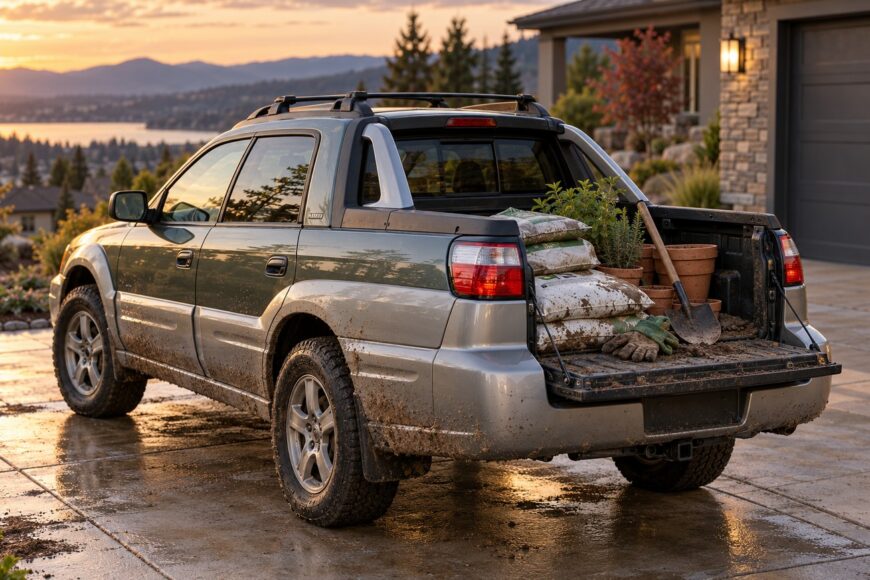
An Outback-like Subaru with an open bed has an appeal that is easy to understand. The Baja gives you a four-door cabin, all-wheel drive, and a place to put muddy gear or a small load you would rather keep out of the passenger area. It suits a particular kind of use: everyday driving with occasional open-air cargo.
That usefulness has limits. The bed is short, towing ability is limited, and a surviving Baja may need expensive work even if it looks tidy and has modest mileage. The buying decision rests less on its unusual shape than on whether its capacity fits your plans and whether its body and mechanical condition withstand a close inspection.
- What the Subaru Baja Actually Is
- What the Bed Can—and Cannot—Do
- Engines, Transmissions, and the Cost of an Aging Subaru
- Rust Hiding Behind the Baja’s Cladding
- A Pre-Purchase Inspection That Goes Beyond the Engine
- When the Baja Is Worth Buying—and When It Isn’t
- Frequently asked questions
- How can I tell whether a particular bicycle or other awkward item will fit in the bed?
- What should a head-gasket repair invoice show?
- What is the Subaru with a bed called?
- How big is the bed of a Subaru Baja?
- Which Subaru model has a truck bed?
What the Subaru Baja Actually Is
The Subaru Baja was sold in the U. S. for the 2003–2006 model years. Based on the second-generation Subaru Outback, it is a four-door pickup-wagon with a passenger cabin and a short open bed. All Baja versions have all-wheel drive.
Its Outback roots explain much of its character. You get a vehicle shaped around carrying people and everyday belongings, with an open area for items that are dirty, damp, or awkward to carry inside. The bed adds a useful option without turning the Baja into a conventional pickup.
That distinction matters before you shop. Someone who occasionally carries tools or outdoor equipment may find the layout more useful than an enclosed wagon. Someone who regularly needs a large cargo floor, substantial payload, or a heavy trailer should start with a vehicle designed for those jobs.
What the Bed Can—and Cannot—Do
The Baja’s short open bed is well suited to modest loads such as tools, bicycles, or firewood. It keeps grit and moisture away from the cabin and makes some awkward items easier to carry. Fit still depends on the particular load, how it sits in the bed, and whether you can secure it properly.
Limited bed space becomes apparent with bulky materials or several large items at once. A load that fits within the bed may still exceed the vehicle’s permitted weight, so available space alone is no measure of capacity. The Baja should not be treated as a midsize pickup substitute.
Towing calls for the same restraint. The Baja’s towing ability is limited, and you should not assume it is suitable for regularly towing a car trailer. If a trailer is central to your plans, establish the allowable limit before buying rather than relying on the presence of a hitch.
Generic advertisements and reviews can give conflicting payload or towing figures. Check factory documentation for the particular VIN, model year, engine, transmission, and configuration. That is more useful than applying a single published number to every Baja.
Engines, Transmissions, and the Cost of an Aging Subaru
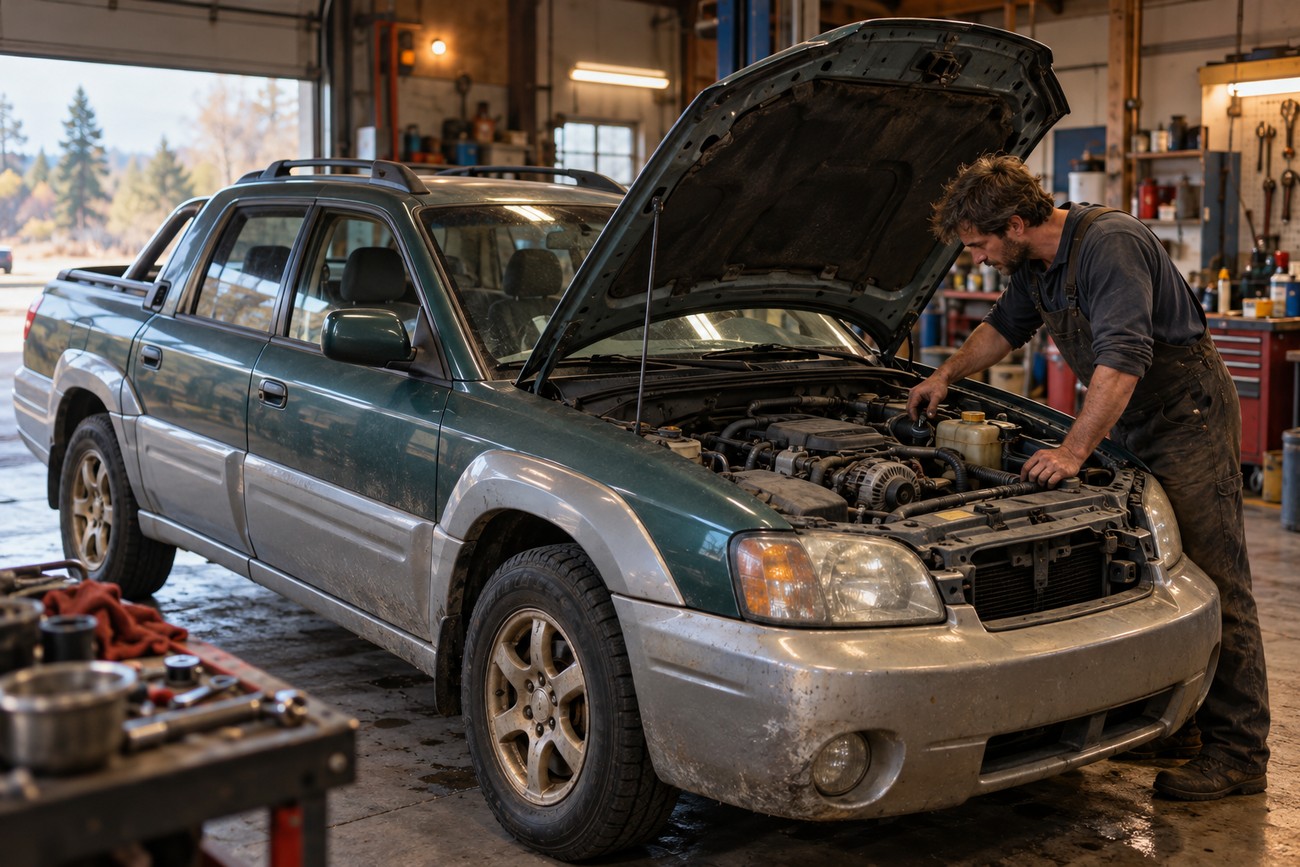
Baja engine choices include the naturally aspirated 2.5-liter EJ25 and the turbocharged 2.5-liter EJ255. Five-speed manual and four-speed automatic transmissions exist. The turbo adds performance, along with greater potential expense if the engine, turbocharger, or cooling system needs attention.
Head-gasket and cooling-system condition deserve scrutiny, particularly on an older EJ25-powered example. Look for evidence of coolant loss and ask for records of any gasket repair. A replaced gasket is encouraging only when the work was properly done and any underlying overheating problem was addressed.
Timing-belt history matters regardless of how little a seller says the vehicle has been driven. Ask for documentation covering the belt, rollers, and water pump; if it is missing, regard that maintenance as unresolved. When major engine and cooling work is overdue together, an inexpensive purchase can become costly quickly.
Test the transmission rather than assuming one type is the safe choice. A manual can develop serious problems, so listen for unusual noises and check shifting and clutch operation; an automatic also needs to shift properly during a thorough drive. Assess all-wheel-drive operation at the same time.
Condition and repair history carry more weight than an odometer claim. A lower-mileage Baja can still have aged components or neglected service, while a well-used one may come with useful records. For a turbocharged car in particular, leave room in your budget for diagnosis and repairs rather than paying for performance alone.
Rust Hiding Behind the Baja’s Cladding
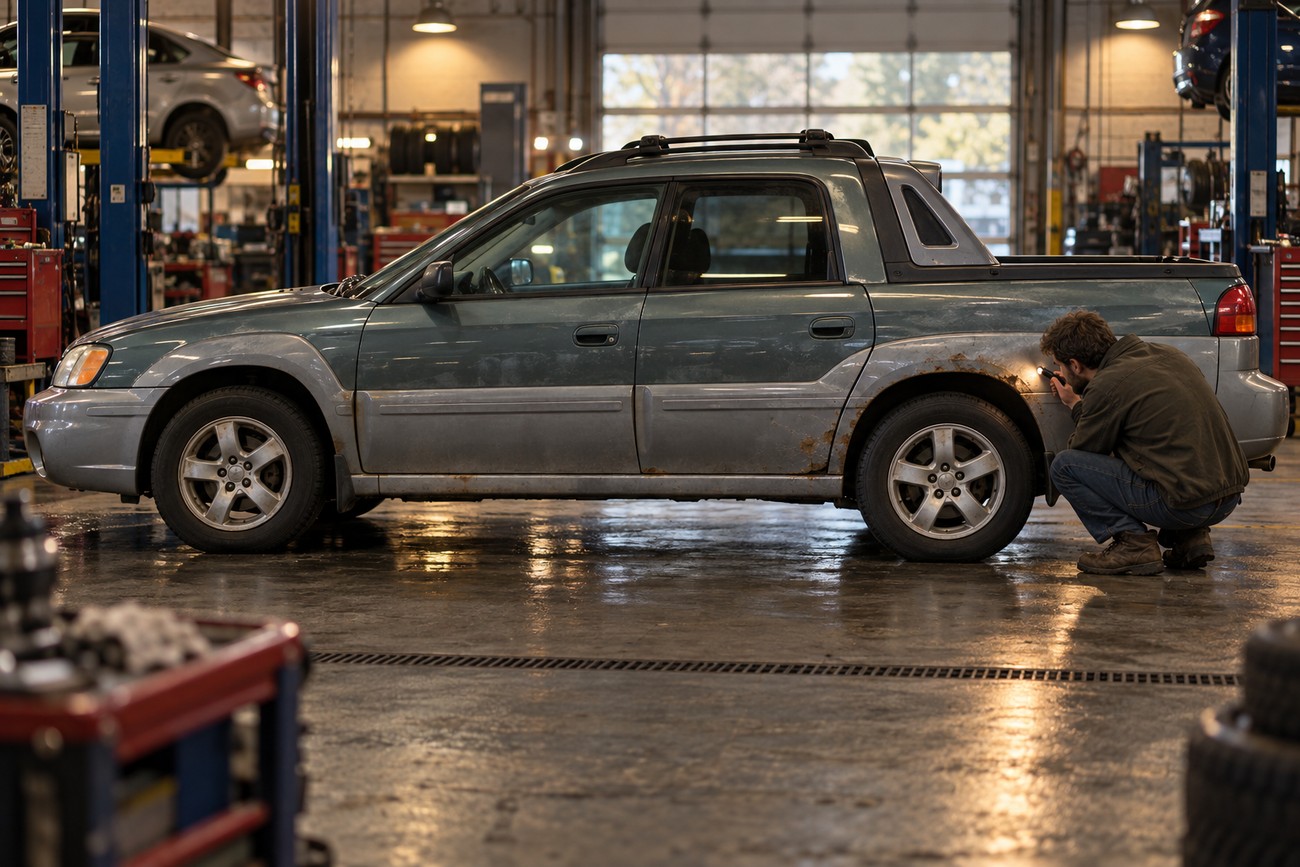
Corrosion is a recurring Baja concern, especially toward the rear of the vehicle. Plastic cladding, liners, sealant, and accumulated dirt can keep damage out of sight while the visible paint looks sound. Photographs cannot establish whether rust is superficial or affects the structure.
Inspect the rear subframe and body, wheel arches, sills, lower rear door openings, dogleg areas, and bed surrounds. Suspension attachment areas also need close attention. These locations matter more to a buying decision than a small blemish on an easily visible outer panel.
Clearing packed dirt and looking behind accessible rear plastic trim can reveal corrosion that an inspection of exposed seams and painted surfaces misses.
Access may require the seller’s permission and the help of an inspector familiar with older vehicles. If corrosion is extensive or appears near mounting points, have a qualified professional assess its structural significance before discussing price. A tidy exterior is no substitute for that assessment.
A Pre-Purchase Inspection That Goes Beyond the Engine
Begin with access, not a drive around the block. Arrange to see the underside and the concealed rear body areas, including the rear subframe and the spaces beneath accessible cladding. If a seller will permit only photographs or a quick walk-around, you cannot adequately judge one of the Baja’s most consequential risks.
Next, compare the service records with the vehicle in front of you. Confirm whether the timing belt, rollers, and water pump were replaced, and when. If that work cannot be documented, its maintenance status remains unknown and should be allowed for in your decision.
Read a head-gasket invoice for the work actually performed rather than accepting a verbal assurance that the problem was “fixed.” Ask about overheating, inspect the cooling system’s present condition, and check whether related faults were addressed. A previous repair does not guarantee that coolant loss cannot return.
On the road, check for transmission noise, poor shifts, clutch trouble where applicable, and signs that the all-wheel-drive system is not operating properly. The test drive should cover more than a smooth stretch near the seller’s home. An engine that starts and idles well does not establish the condition of the rest of the drivetrain.
Finish with the hubs, brakes, brake lines, steering components, exhaust, and suspension mounts. Age and corrosion can affect each of these even when the engine feels healthy. Have a qualified inspector assess questionable structural rust rather than treating it as a bargaining point you can safely repair later.
When the Baja Is Worth Buying—and When It Isn’t
A sound Baja makes sense if you want Subaru-like road manners, four doors, all-wheel drive, and occasional open-bed utility. Its best role is carrying modest, sometimes messy loads while remaining useful for ordinary passenger trips. It is a poor match for routine heavy hauling or towing.
Rarity can support the asking price of a well-kept example, but it does not make age-related repairs disappear. Hidden corrosion, incomplete timing-belt history, or unresolved cooling problems can outweigh the appeal of low mileage. A turbocharged Baja also warrants a realistic reserve for potentially more expensive mechanical work.
Parts availability is another reason to judge the whole vehicle carefully. Many mechanical service parts are shared with more common Subarus, while Baja-specific body, trim, and bed parts can be harder to source. Damage to a unique panel may therefore be more troublesome than a routine brake repair.
Buy the example whose condition, records, and permitted capabilities suit your actual use. Walk away if structural rust cannot be properly assessed or if you need the Baja to perform like a conventional pickup. Its appeal is real, provided you value what this unusual Outback derivative can do rather than what its bed merely suggests.
Frequently asked questions
These answers address details worth settling for the particular Baja you are considering. Cargo fit, repair evidence, and the identity of the model are more useful buying facts than a generic description of its shape.
How can I tell whether a particular bicycle or other awkward item will fit in the bed?
Measure the item in the form you intend to carry it, then measure the usable space in the actual bed. Account for parts that protrude, the position in which the item will rest, and any equipment already occupying the space. Before relying on that fit, check that you can secure the load without obstructing your view or leaving loose components.
What should a head-gasket repair invoice show?
Look for an itemized description of the work, rather than a line that says only “head gaskets.” The record should help you establish what was done about any overheating cause and whether related cooling-system and timing-belt work was completed. Match the invoice to the vehicle and have its current cooling-system condition checked; paperwork alone cannot prove the repair remains sound.
What is the Subaru with a bed called?
The four-door Subaru with an open bed is called the Baja. If you are searching listings, use the model name and confirm that the vehicle shown is a Baja, since sellers may also describe it informally as an Outback with a bed.
How big is the bed of a Subaru Baja?
The Baja has a short bed intended for modest loads. For a precise fit, measure the usable bed of the vehicle you are considering rather than relying on a generic dimension: the space available to your load may depend on its shape and any fitted accessories. Check the vehicle’s factory documentation separately for its applicable load limit.
Which Subaru model has a truck bed?
The Subaru Baja is the Outback-derived model with a short open bed. It combines a four-door cabin with all-wheel drive, so search specifically for a Baja if that is the layout you want. Its bed does not give it the cargo or towing capabilities of a conventional pickup.







