

A stuck accelerator is an immediate control emergency. Prioritize slowing and steering the Avalon to safety before trying to identify the fault. Keep both hands available for steering, watch for traffic, and use the vehicle’s emergency procedure rather than waiting for the pedal to return.
Shift to neutral and apply firm, continuous brake pressure. Move away from the travel lane, stop completely, and then shut the engine off. Do not turn the ignition fully to LOCK while moving: you may lose brake and steering assist, and the steering column may lock. Floor mats, model-year differences, intermittent mechanical faults, and pedal confusion can all complicate what happens afterward.
- What to Do Immediately if Your Toyota Avalon Accelerator Sticks
- Why a Toyota Avalon Accelerator Can Stick
- Why Neutral and Firm Braking Are the Critical Safety Moves
- Avalon Brake Override and Model-Year Limits
- After You Stop: Inspect, Document, and Get the Right Diagnosis
- Common Mistakes and How to Prevent Another Incident
- Frequently Asked Questions
- What should I do if a 2018 Toyota Avalon accelerator sticks?
- How can I prove an intermittent sticky accelerator to a dealer?
- What is the most common cause of a stuck accelerator in a Toyota Avalon?
What to Do Immediately if Your Toyota Avalon Accelerator Sticks
- Press and hold the brake firmly. Do not rely on light, repeated taps, and do not release the brake to see whether the accelerator has freed itself. A properly functioning Avalon braking system is designed and tested to stop the vehicle against full engine throttle.
- Shift the automatic transmission from D to N while the vehicle is moving. An Avalon automatic transmission permits shifting from D to N at any working speed. Neutral removes engine drive, although the engine may continue to rev until you shut it off.
- Keep braking while steering toward a safe area, such as the shoulder or another place away from moving traffic. Once the vehicle has stopped completely, shut the engine off. This is Toyota’s official stuck-accelerator sequence: shift to N, apply the brake, move off the travel lane, and shut the engine off after stopping.
Do not turn the ignition fully to LOCK while moving. Loss of brake and steering assist can make the vehicle harder to control, and the steering column may lock. If your Avalon uses a push-button start, follow the vehicle’s emergency shutoff procedure; a sustained press may be required, but only after you have maintained control and moved toward a stop.
Why a Toyota Avalon Accelerator Can Stick
Start with physical interference. Avalon documentation specifies using only the correct floor mat and securing it with the retaining clips. Thick universal mats, doubled mats, or an unsecured mat can obstruct accelerator-pedal return, particularly if the mat has shifted forward.
A slow-returning pedal can also involve dirt, wear, or binding around the pedal and throttle assembly. Owner reports sometimes associate sticky pedal feel with throttle-area contamination or insufficient lubrication at appropriate pedal hinges. These reports do not prove a universal defect, and cleaning or lubrication should not replace a proper inspection.
Intermittent behavior deserves careful handling. A pedal may feel normal during a short inspection and become sticky only after warm-up, under load, or at a particular temperature. The throttle, pedal-return mechanism, cables where fitted, position sensors, and related data may require testing rather than a quick visual check.
Investigations associated many Toyota and Avalon unintended-acceleration reports with pedal misapplication, meaning the accelerator was pressed when the driver intended to press the brake. That finding does not rule out floor-mat interference or an intermittent mechanical or sensor fault. It does mean that every acceleration complaint should be separated into observable pedal behavior, physical obstruction, and possible pedal identification error.
Why Neutral and Firm Braking Are the Critical Safety Moves

Some drivers hesitate to select N at speed because they fear damaging the transmission. Avalon automatic transmissions are designed to permit an emergency shift from D to N while moving. Selecting neutral is the recommended way to remove engine drive during a stuck-accelerator event.
Keep strong, steady pressure on the brake until the vehicle stops. Repeated pumping can reduce the time and force available for stopping, while continuous pressure gives the braking system the best chance to overcome engine thrust. Do not release the brake simply because the engine remains loud or the vehicle still moves briefly.
Toyota and NHTSA testing and calculations indicate that a properly functioning Avalon braking system can stop the vehicle against full engine throttle. A single emergency stop is not normally equivalent to prolonged brake abuse. Extended heavy braking, poor maintenance, or an already compromised system can still overheat the brakes, so the vehicle should be recovered and inspected after the incident.
Once in N, keep steering toward a safe stopping area and avoid returning to D. If the engine remains running, stop it only after the vehicle is stationary. A transmission concern can be assessed later; maintaining control of the vehicle takes priority during the emergency.
Avalon Brake Override and Model-Year Limits
Brake Override is intended to reduce or cut engine propulsion when the brake and accelerator are pressed together. After the 2009–2010 safety campaigns, the system was widely installed on Avalon and other Toyota models. Its purpose is to reduce the effect of conflicting pedal inputs, not to replace the driver’s emergency actions.
Brake Override availability and logic vary by Avalon model year and market. Confirm the equipment and applicable campaigns by VIN rather than relying on generic advertising or an online statement about all Avalon vehicles. The same model name does not guarantee identical control logic across markets and production years.
The system also cannot prevent every physical problem. A displaced floor mat, a slow-returning pedal, contamination, a sensor fault, or pedal misapplication may still create a loss-of-control event. Modern safety systems reduce risk, but they do not eliminate these possibilities.
If a vehicle was built before or around the campaign period, ask for the VIN-specific campaign and equipment history in writing. For a later Avalon, a VIN check remains useful because equipment, software, and market specifications can differ from general model-year descriptions.
After You Stop: Inspect, Document, and Get the Right Diagnosis
Do not immediately recreate the event on a public road. Photograph the driver’s mat, its retaining clips, the space around the accelerator, and the pedal position before moving or replacing anything. Preserve dashcam footage, and write down the date, outside temperature, warm-up time, speed, warning lights, and exactly what the pedal did.
Record whether the pedal stayed down, returned slowly, felt rough, or moved normally while the engine continued to accelerate. Note whether the mat had shifted, whether the vehicle was cold or fully warmed, and whether the event occurred during acceleration, cruising, or braking. These details can distinguish physical interference from a control or identification problem.
Compare pedal clearance and return behavior with the vehicle cold and fully warmed, then check throttle and position-sensor data under the conditions that produced the complaint. Removing a floor mat alone does not close an intermittent fault investigation.
A basic service inspection may stop at the floor mats and a visual pedal check without fully testing the throttle, cables, sensors, or pedal-return mechanism. An intermittent sticky-pedal problem may depend on temperature or load and may not reproduce during a short dealership visit. Ask what was tested, under which conditions, and whether the diagnostic results support the proposed repair.
Cleaning the throttle area or lubricating appropriate pedal hinges may help in some owner-reported cases, but these actions require correct parts, procedures, and a safe diagnosis. Replacing the complete accelerator-pedal assembly can cost more than cleaning or adjustment, so the recommendation should match documented test results rather than a guess.
Common Mistakes and How to Prevent Another Incident
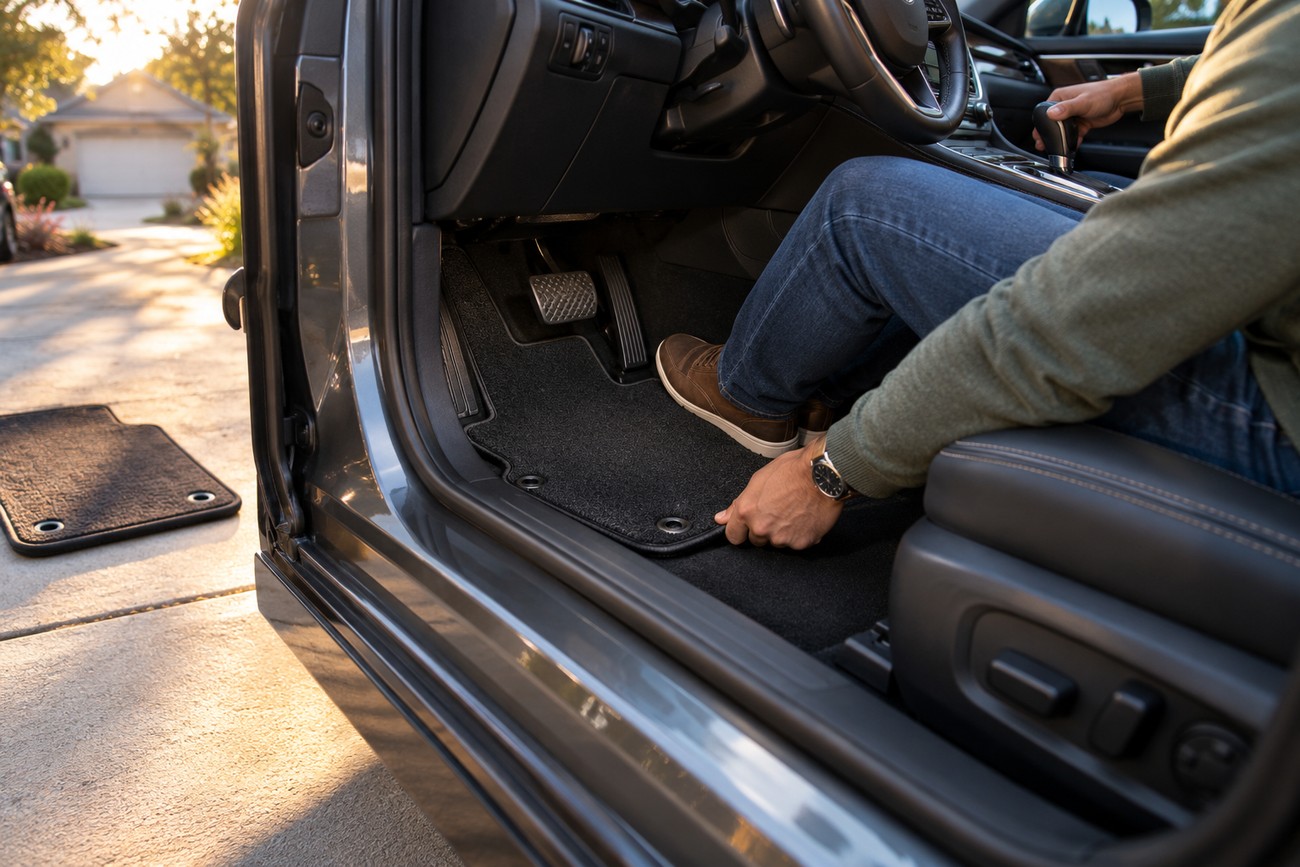
Use one correct Avalon floor mat, secure it to the retaining clips, and never stack mats. Check that the mat cannot move toward the pedals before driving, especially after cleaning the interior or installing a replacement mat. A mat that looks harmless can still restrict pedal travel if it is the wrong shape or thickness.
During an accelerator event, tentative braking is a dangerous compromise. Apply firm, continuous pressure and shift to N instead of waiting for the pedal to self-correct. The fear of damaging the transmission should not delay the emergency neutral selection.
Never turn the ignition fully to LOCK while the vehicle is moving. Do not wait for a sticky pedal to disappear before arranging diagnosis, particularly if the sensation changes after the vehicle warms up. Preserve evidence before cleaning, replacing, or discarding a suspected mat when it is safe to do so.
Before driving, make a short inspection of mat placement, retaining clips, and pedal clearance. Owners can also practice locating the selector’s N position while parked and, where safe and lawful, become familiar with the movement in a controlled setting. Familiarity reduces hesitation without requiring a risky road test.
Frequently Asked Questions
What should I do if a 2018 Toyota Avalon accelerator sticks?
Use the same emergency response: shift to N, brake firmly, steer away from traffic, stop completely, and then shut the engine off. Do not assume that every 2018 Avalon has identical Brake Override hardware or logic.
After the emergency, verify applicable equipment and safety campaigns by VIN and market. Give the repair facility the vehicle identification number, event details, and any preserved video or photographs rather than relying on the model year alone.
How can I prove an intermittent sticky accelerator to a dealer?
Provide a dashcam clip if available, photographs of the mat and pedal clearance, the outside temperature, warm-up time, road speed, warning lights, pedal position, and whether the mat had moved. Describe whether the pedal stayed down, returned slowly, or felt normal while the engine response remained abnormal.
Ask the technician to compare the pedal cold and fully warmed and to check relevant throttle and position-sensor data. A short inspection may miss a fault that depends on temperature or load, so a precise record can be more useful than a general statement that the pedal “felt sticky.”
What is the most common cause of a stuck accelerator in a Toyota Avalon?
There is no single cause for every Avalon complaint. Investigations associated many Toyota and Avalon unintended-acceleration reports with pedal misapplication, while a physically obstructed mat, a slow-returning pedal, contamination, or an intermittent sensor fault remains possible.
A physically stuck pedal usually has an observable obstruction or abnormal return movement. If the pedal moves normally but the vehicle accelerates unexpectedly, the diagnosis must also consider pedal identification, throttle control, and sensor data instead of assuming a universal electronic defect.







