
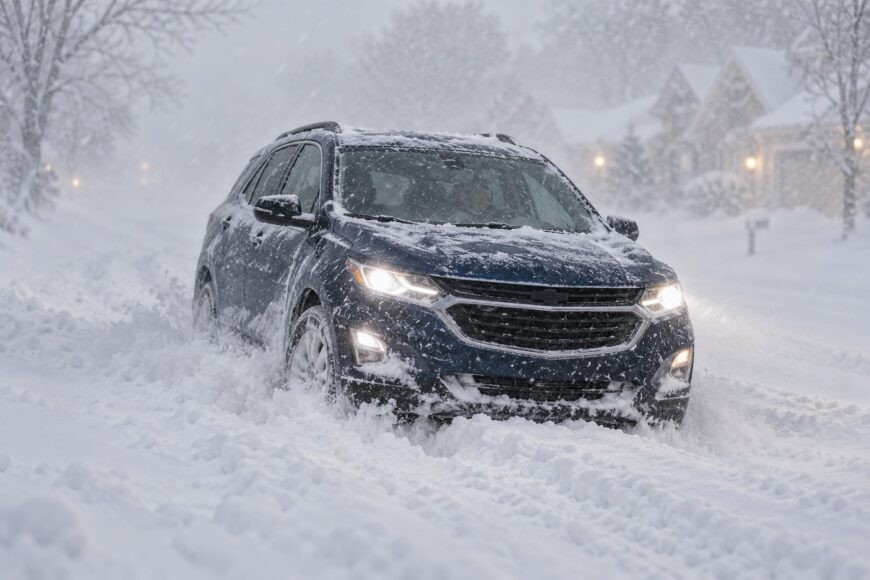
A Chevy Equinox can be useful on ordinary snowy roads, yet its AWD system cannot overcome poor tires, ice, deep snow, limited clearance, or unsafe decisions. Versions with front-wheel drive and all-wheel drive exist, and the difference matters, but neither drivetrain turns the Equinox into a dedicated snow-rescue vehicle.
Being stranded in a blizzard is a safety problem before it is a vehicle-review problem. The Equinox may provide shelter, warmth, visibility, and a way to contact help, provided you manage fuel, exhaust safety, ventilation, and exposure carefully. Preventing the slide or snowbank remains easier than recovering from one.
- How well does a Chevy Equinox handle snow?
- Why AWD may not save an Equinox in a blizzard
- What to do if your Chevy Equinox gets stuck in a blizzard
- How to get an Equinox moving without making the situation worse
- Winter weaknesses and mistakes Equinox owners overlook
- The blizzard-ready Equinox checklist
- Frequently asked questions
- Should traction control be turned off when an Equinox is stuck in snow?
- How can I tell whether my Equinox has the winter safety features I need?
- How does a Chevy Equinox handle in snow?
- What to do if your car gets stuck in a blizzard?
- What is the biggest issue with Chevy Equinox?
How well does a Chevy Equinox handle snow?
The Chevy Equinox is a compact/midsize crossover, with dimensions varying by generation and market. Depending on the generation, trim, and market, it may use front-wheel drive or all-wheel drive. That specification should be confirmed for the individual vehicle rather than assumed from the model name.
On plowed roads, snowy streets, and cleared parking lots, an Equinox with suitable tires can provide predictable winter transport. AWD can help the vehicle start moving and maintain forward motion when the surface is slippery. It does not create additional grip for braking or cornering, where tire condition and road surface remain decisive.
Deep, loose snow changes the problem. Snow can build beneath the vehicle, overwhelm the available ground clearance, or leave the tires with too little contact to move the vehicle forward. The Equinox AWD system is designed primarily for poor weather, snowy roads, and slippery everyday surfaces, not serious off-road driving.
Speed and road geometry also matter. A slow approach to a shallow, cleared rise may be manageable, while a sharp dip, unplowed shoulder, or snow ridge can stop the same vehicle quickly. Treat the AWD badge as assistance with traction management, not as permission to enter terrain where clearance and recovery access are uncertain.
Why AWD may not save an Equinox in a blizzard
AWD is often misunderstood as a complete winter-safety system. It can distribute drive force to help the Equinox pull away or keep moving, but it cannot improve the friction available when you brake on ice or turn across packed snow. A vehicle that accelerates confidently can still slide past a stop or leave the road in a corner.
Winter-rated tires provide the essential grip on snow and ice. Worn tread, hardened rubber, or summer tires can leave an AWD Equinox with limited traction even when the drivetrain is operating correctly. Tire pressure also deserves attention because cold weather changes pressure and an underinflated tire responds poorly during steering and recovery.
Equinox AWD operation and selectable modes vary by version. Some drivers may need to confirm a setting or understand how the system manages torque, while others may have a different control layout altogether. Read the owner’s manual before a storm and learn what the dashboard indicators mean instead of experimenting after the vehicle is already stuck.
Deep snow exposes another limit: the Equinox does not have the low-range off-road capability associated with serious 4WD vehicles. Repeated throttle, wheel spin, or aggressive rocking can bury the tires and place additional strain on the drivetrain. Once the underbody is resting on packed snow, more drive force usually cannot solve the problem.
What to do if your Chevy Equinox gets stuck in a blizzard
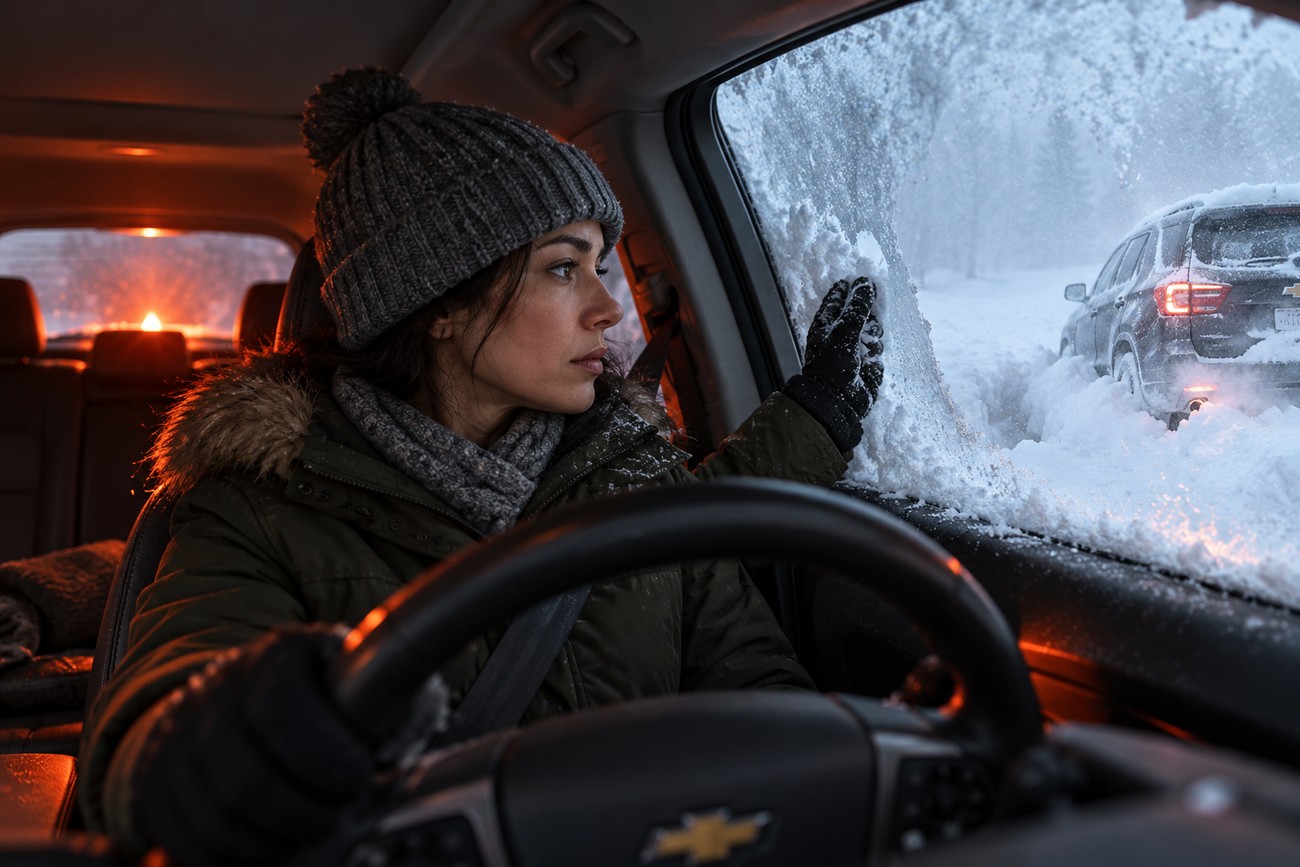
First, stop and assess the risk. A stranded vehicle is shelter and a visibility aid, so staying with it is usually safer than walking through a whiteout toward a destination that may be farther away than it appears. Call emergency services or roadside assistance, share your location, and give useful details such as the road, direction of travel, nearby landmarks, and number of occupants.
Make the Equinox easier to find without exposing yourself unnecessarily. Turn on hazard lights when appropriate, keep the phone charged, and use any available emergency signaling equipment. Clear snow from the exterior lights and, if conditions permit, create a visible marker near the vehicle without wandering into traffic or losing sight of the car.
Before running the engine for heat, clear snow from the exhaust area and check it repeatedly as wind-driven snow accumulates. Keep a safe air path around the vehicle and avoid creating conditions in which exhaust can enter the cabin. Use the heater and defroster in controlled periods, while retaining enough fuel for further waiting and eventual movement.
Clear the exhaust first, then keep the area around the vehicle clear before using the engine for heat. Repeated throttle or rocking attempts often pack snow harder beneath the vehicle and turn a recoverable situation into a more difficult one.
Fuel consumption rises in cold weather and snow compared with warm-season or stated average use. Limit unnecessary electrical loads, keep warm clothing and blankets in use, and avoid exhausting yourself with repeated digging. If the vehicle is in immediate danger from traffic, flooding, or another hazard, follow emergency instructions and leave only when a safe, clearly defined route is available.
How to get an Equinox moving without making the situation worse
Begin by removing your foot from the accelerator and allowing the tires to stop spinning. Wheel spin polishes snow into a harder, more slippery surface and can dig the Equinox deeper. Check that the wheels are pointed as straight as practical, because a sharp steering angle increases resistance while you are trying to move forward.
Clear snow from around the drive wheels and from beneath the front and rear edges of the vehicle. Remove packed snow that is pressing against the underbody, but do not crawl beneath a vehicle supported only by snow or an unstable surface. If the Equinox is resting on its underbody, traction at the tires may no longer matter until that load is removed.
Use a low, steady throttle input and allow the vehicle’s systems to work without sudden commands. Suitable traction material, such as a purpose-made traction aid, may help when placed where the tires can use it safely. Keep people clear of the tires and avoid standing in the vehicle’s likely path.
Stop the attempt if the vehicle sinks farther, the tires spin continuously, warning lights appear, or the snow is packed tightly beneath the chassis. Repeated rocking can damage components and rapidly deplete fuel. Professional recovery is the safer choice when clearance, visibility, or traction has become the limiting factor.
Winter weaknesses and mistakes Equinox owners overlook
Cold weather increases demands on the battery, starting system, heater, and defroster. A battery that starts the vehicle reliably in mild weather may perform poorly during a prolonged cold spell. Check battery condition before winter travel and take warning signs such as slow cranking or dimming lights seriously.
Preparation also includes winter-rated tires with usable tread, suitable washer fluid, working wipers, and clear lamps. Inspect door seals and locks because frozen moisture can prevent entry or leave a door imperfectly closed. Keep enough fuel for delays, since cold weather and snow generally increase consumption.
Driver-assistance equipment is version-dependent. Automatic emergency braking and forward-collision warning are available on some Equinox versions, but the equipment is not identical across every trim or market. These systems may also be limited by snow, ice, or blocked sensors, so clean the relevant sensor areas and continue driving at a speed that allows you to respond manually.
Local or isolated reports describe moisture-related electronic warnings or glitches in winter. That possibility should be treated as a qualified risk, not evidence of a universal Equinox defect. If a warning remains after the vehicle is clear and dry, consult the owner’s manual and arrange an inspection rather than assuming the message is harmless.
A single owner’s report of completing four winters without major complaints can be reassuring, but it is not statistical evidence. Winter results depend on the vehicle’s age, maintenance, tires, drivetrain, climate, and the roads it uses. Generic claims about the model are less useful than checking the exact vehicle before a storm.
The blizzard-ready Equinox checklist
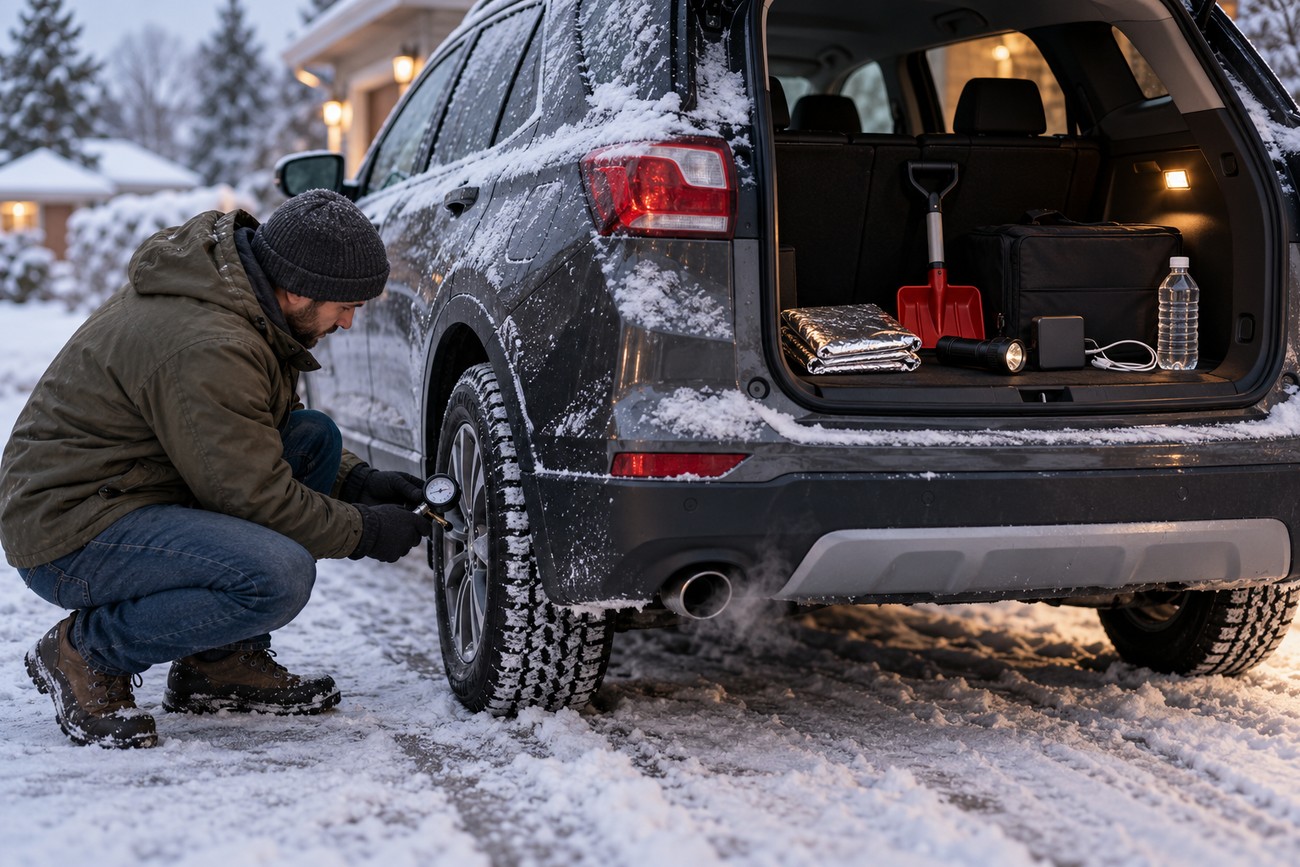
Start with the parts that determine traction and mobility. Confirm that the vehicle has winter-rated tires, inspect their condition and pressure, and verify whether your Equinox is FWD or AWD. Check the actual year, trim, and market specification because AWD behavior, controls, and safety equipment can vary.
- Test the battery and check for slow cranking.
- Keep a meaningful fuel reserve before entering a storm area.
- Fill the washer reservoir with cold-weather fluid.
- Clear headlights, taillights, mirrors, windows, and driver-assistance sensors.
- Carry warm clothing, gloves, blankets, water, and food.
- Pack a shovel and suitable traction aid.
- Carry a charged phone, vehicle charger, and backup way to contact help.
Inspect the exhaust area whenever snow is accumulating around the vehicle. Keep the cabin ready for a delay by storing emergency supplies where they can be reached without unloading the vehicle. A folded rear seat may provide a more level place to wait, but occupants still need ventilation and careful engine-use practices.
Airbags and crash-test performance concern crash protection; they do not demonstrate snow traction or the ability to escape a snowbank. Likewise, a favorable fuel-economy figure does not predict how long the vehicle can provide heat while stationary in a blizzard. Plan around fuel, battery capacity, visibility, and communication rather than brochure specifications.
Frequently asked questions
The Equinox’s winter performance depends on its drivetrain, tires, clearance, and equipment. Safe recovery also depends on careful decisions, visibility, and knowing when to stop. The answers below address traction control, winter safety features, snow handling, and blizzard recovery.
Should traction control be turned off when an Equinox is stuck in snow?
The answer depends on the recovery maneuver and how the vehicle responds. Traction control is generally useful for preventing uncontrolled wheel spin, but a carefully controlled attempt to climb out of a shallow rut may require following the specific guidance in the owner’s manual if the system reduces wheel movement too aggressively.
Do not switch systems off as a general rule or use deactivation to justify high throttle. If the tires are digging deeper, stop, clear snow, improve traction, and reassess. The correct setting cannot compensate for packed snow beneath the underbody or inadequate tires.
How can I tell whether my Equinox has the winter safety features I need?
Check the vehicle’s window sticker, owner’s manual, trim equipment list, and dashboard controls for the exact model year and market. Search the manual for automatic emergency braking, forward-collision warning, AWD controls, sensor locations, and system limitations. A dealer or manufacturer build record can help resolve differences between similarly named trims.
Test the dashboard behavior only in safe conditions, and do not assume that an icon proves the feature is active. Snow or ice can obstruct sensors, and some functions may be optional or unavailable on a particular version. Driver assistance remains a supplement to clear visibility, winter tires, and attentive driving.
How does a Chevy Equinox handle in snow?
An Equinox with good winter-rated tires can handle ordinary snowy roads and cleared lots in a controlled manner. AWD may improve starts and forward motion where available, while FWD versions can also perform adequately when tire grip and speed are appropriate.
Its limits appear in deep snow, on ice, and where snow contacts the underbody. The Equinox is intended for poor-weather travel rather than serious off-road use, so reduce speed, increase following distance, and avoid routes where recovery would be difficult.
What to do if your car gets stuck in a blizzard?
Stay with the vehicle unless remaining there presents an immediate danger, call for help, and share your precise location. Make the Equinox visible, clear snow from the exhaust before running the engine, and use heat carefully with safe ventilation. Keep warm clothing on and conserve fuel because cold-weather consumption is higher.
Attempt recovery only if visibility and conditions allow it safely. Clear snow around the tires and underbody, use gentle inputs, and stop if the vehicle sinks farther or the tires spin. Walking away through a whiteout can expose you to cold, disorientation, traffic, and a search problem.
What is the biggest issue with Chevy Equinox?
For winter use, the biggest practical mistake is treating the Equinox as more capable than its tires, clearance, and drivetrain allow. AWD availability varies by version, and even AWD cannot provide extra braking or cornering grip on ice. Deep snow can exceed the vehicle’s clearance and traction limits.
Winter readiness also depends on battery condition, fuel reserve, defrost performance, sensors, and the exact safety equipment fitted to the vehicle. Isolated reports of cold- or moisture-related electronic warnings deserve attention, but they do not establish a universal defect across all Equinox vehicles.







