

A truly locked steering column is a serious mechanical failure, but a VW Jetta that has stalled or lost electric power assist can feel similar from the driver’s seat. A stalled engine may leave the wheel much harder to turn, while the steering mechanism itself remains mechanically connected and controllable.
Keep both hands on the wheel, slow down smoothly, and move to a safe location. Do not remove the key while the vehicle is moving. The Jetta owner guidance warns that the steering lock may engage after the key reaches LOCK/OFF and is removed, making steering impossible.
Repeated ignition-switch warnings, recurring loss of steering control, or uncertainty about whether the wheel is physically moving should be treated as a reason to stop driving and arrange professional diagnosis. Continuing to test an intermittent fault in traffic can turn a confusing symptom into a loss-of-control event.
- What “Locked Steering” Usually Means in a VW Jetta
- What to Do If the Wheel Feels Locked While Driving
- Why the Key and Wheel Lock After Parking
- The 2019–2020 Jetta Ignition-Switch Recall
- How to Separate a Steering-Lock Warning from a Real Lock
- Common Mistakes, Diagnosis, and When to Tow
- Frequently asked questions
- How do I unlock a locked VW Jetta steering wheel?
- Why is my Jetta steering wheel suddenly locked while driving?
- How do I get a VW steering wheel out of lock mode?
What “Locked Steering” Usually Means in a VW Jetta
A mechanical steering lock is a physical mechanism in the steering column. It can engage after a conventional key reaches LOCK/OFF and is removed. That condition is different from a heavy steering wheel caused by loss of electric power assist, and both are different from an engine shutdown.
If the engine stops unexpectedly while the key remains in RUN, the mechanical steering lock usually does not activate. The steering wheel may become substantially harder to turn because the electric assist is no longer operating, but the front wheels normally remain connected to the steering wheel through the mechanical steering system.
An engine stall can also make several warning lamps appear at once and may create the impression that the entire vehicle has “locked up.” The correct diagnosis depends on whether the wheel is completely immovable, whether the engine stopped, whether steering effort suddenly increased, and whether the key stayed in RUN.
The key position matters for safety. Never attempt to remove the key during movement or while the Jetta is coasting. If the steering column is genuinely locked, forcing the wheel will not restore control; the vehicle needs immediate roadside assistance.
What to Do If the Wheel Feels Locked While Driving

Keep both hands on the steering wheel and avoid sudden steering inputs. If the engine has stalled, maintain the vehicle’s direction as smoothly as possible while applying steady braking. Steering effort may increase when assist is lost, so allow more physical effort without jerking the wheel.
Reduce speed in a controlled manner and move toward a safe shoulder, turnout, or other suitable location. Use the hazard lights when conditions allow and when doing so does not distract you from maintaining control. Do not remove the key, switch randomly between ignition positions, or continue driving to see whether the symptom clears.
Once stopped, keep clear of moving traffic and request roadside assistance if the engine will not restart, the warning returns, or steering control remains uncertain. A restart may temporarily restore assist or electrical operation, but that does not establish that the fault is repaired.
A Jetta that has lost assist can usually still be steered mechanically, while a genuinely immovable wheel requires urgent help. Either situation is unsafe to investigate in a live traffic lane. Repeated ignition-switch messages or repeated loss of steering control should lead to towing rather than another test drive.
Why the Key and Wheel Lock After Parking
A parked Jetta can be difficult to unlock when the front wheels are turned sharply or pressed against a curb. That position can place side load on the steering-lock mechanism, preventing the key from turning normally. The symptom often appears after parking and may disappear as soon as the load is released.
With the vehicle stationary, keep the key in the ignition and apply light turning pressure. At the same time, gently move the steering wheel toward the side where it has a small amount of movement. Continue only with low force until the key turns and the lock releases.
Do not twist the key harder or use the steering wheel as a lever. Excessive force can damage the key, the lock cylinder, or the surrounding trim. If gentle, coordinated movement does not release the mechanism, stop manipulating it and arrange service rather than risking a broken key or damaged cylinder.
A problem that occurs after curbside parking points toward mechanical loading of the lock mechanism. That pattern is different from a warning that appears on a hot vehicle while driving, particularly a message referring to the ignition switch. The two symptoms should not automatically be treated as the same fault.
The 2019–2020 Jetta Ignition-Switch Recall
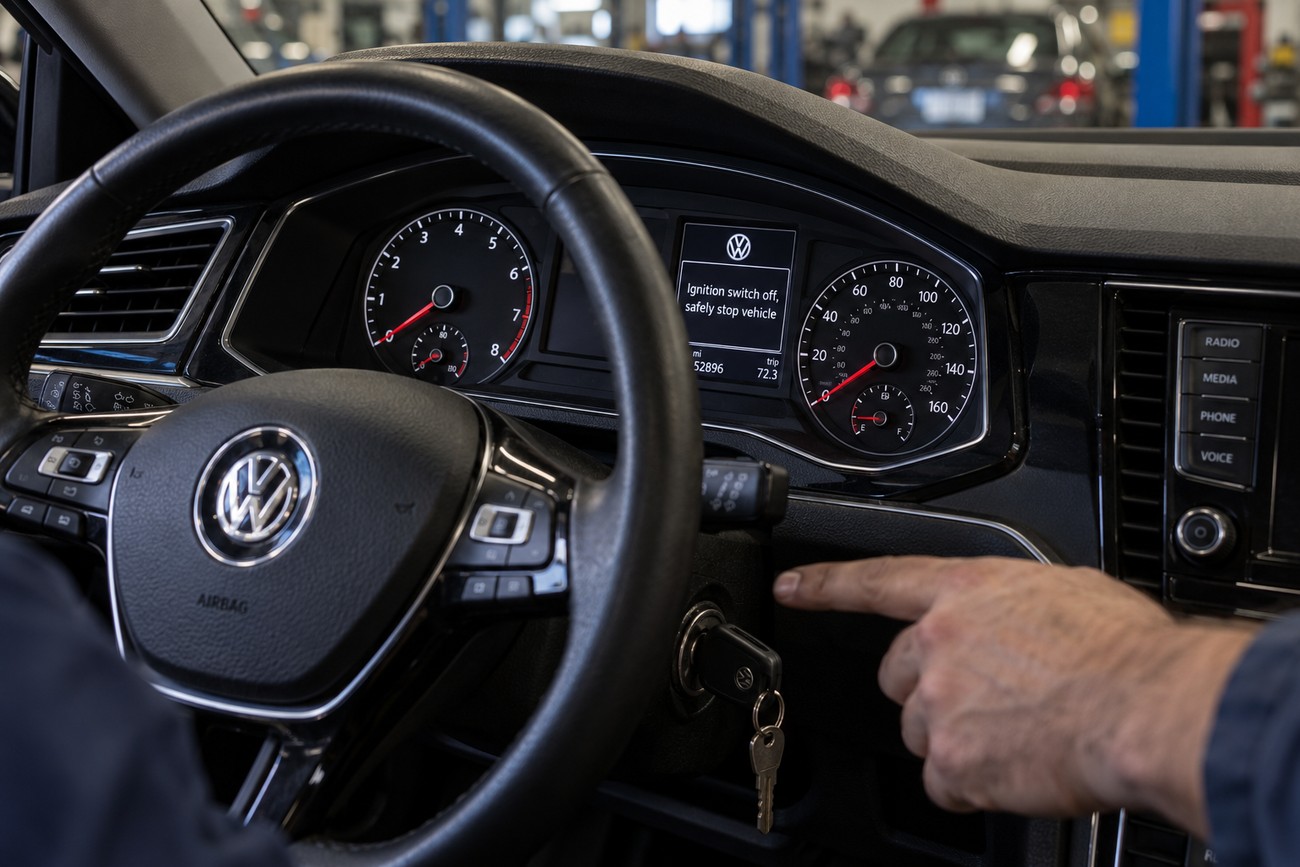
NHTSA recall 23V-604 covers certain 2019–2020 VW Jettas equipped with a conventional key. The affected vehicles were produced approximately from September 2018 through December 2019. The issue involves a polyfuse in the ignition switch that may overheat, potentially causing engine shutdown and loss of electrical systems.
Possible warning messages include “Ignition switch off, safely stop vehicle” and “Starter system faulty, please service vehicle.” An engine shutdown can remove electric steering assist and create a heavy-wheel complaint, which is why this defect may be described by an owner as a locked steering problem even when the mechanical column lock has not engaged.
Recall coverage depends on the actual starting system. Jettas with push-button starting are not included in recall 23V-604, and the same model year may contain vehicles with different equipment. Check the VIN and confirm whether the car uses a conventional key; model year alone is insufficient.
The recall remedy is free replacement of the ignition switch by a dealer. If the relevant warning has appeared, stop safely and arrange the VIN check and repair rather than relying on a battery replacement, a cleared warning, or a successful restart.
How to Separate a Steering-Lock Warning from a Real Lock
Start with the physical symptom. If the wheel still turns, even with much greater effort, the problem may be loss of electric power assist. If the engine has stopped and the key remains in RUN, that combination generally points away from activation of the mechanical steering lock.
Next, record the exact warning and the conditions in which it appeared. A steering-lock warning can indicate an electronic fault without proving that the wheel is physically locked. Some owner reports for 2015 Jettas describe a flashing steering-lock indicator without actual lockup, but that limited anecdotal information is not confirmed as applying to all Jetta years.
Technicians compare the exact warning with the engine state, steering effort, key position, and temperature history. A dashboard message alone cannot reliably distinguish a physically engaged lock from an electronic fault or a loss of steering assist.
Temperature and timing are useful clues. An ignition-switch fault may disappear after the vehicle cools, which can make the Jetta seem normal before the next episode. A warning that appears mainly on a hot vehicle, especially with an engine shutdown, deserves a focused ignition-switch and recall investigation.
Do not treat a replacement battery or temporarily cleared fault codes as a repair. Those actions may change the symptoms or erase useful evidence while leaving the defective ignition switch, wiring, steering-lock system, or power-assist fault untouched. A proper scan and mechanical inspection are needed to separate these systems.
Common Mistakes, Diagnosis, and When to Tow
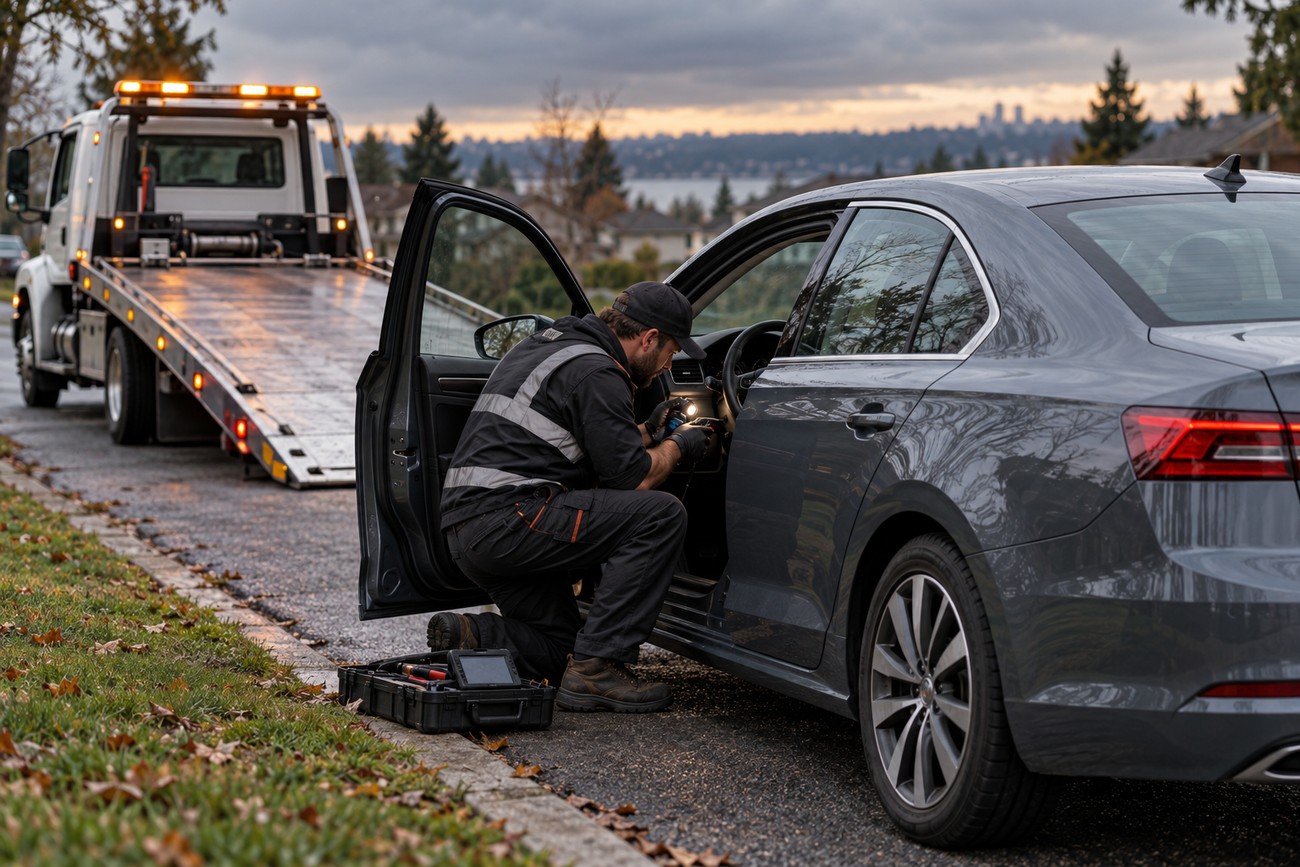
The most damaging first response is often excessive force. Owners may twist the key, pull on the wheel, or repeatedly cycle the ignition, only to damage the cylinder or obscure the original symptom. Use the low-force release method only when the vehicle is parked and the steering lock is loaded after parking.
Do not continue driving after a repeated ignition-switch warning or recurring loss of steering control. An intermittent fault may disappear when the vehicle cools and return under the same conditions later. Temporary normal operation is evidence that the symptom is intermittent, not evidence that the vehicle is safe.
A useful next-step record includes the exact dashboard message, whether the engine stalled, whether the wheel was immovable or merely heavy, the key position, outside temperature, and whether the car had been parked against a curb. These details help a technician choose the correct diagnostic path instead of treating every complaint as a steering-column lock.
- Verify recall eligibility by VIN and confirm whether the Jetta uses a conventional key or push-button starting.
- Request a complete vehicle scan, including ignition, steering-lock, engine, and power-assist systems.
- Have the mechanical lock and key cylinder inspected if the problem occurs after parking with the wheels turned.
- Tow the vehicle if the warning repeats, the engine shuts down, or steering control is uncertain.
A physical steering lock, an engine stall, and loss of steering assist require different repairs. Separating them early prevents both unsafe driving and unnecessary parts replacement.
Frequently asked questions
The answers below focus on the distinction between a warning, a heavy steering wheel, and confirmed mechanical lock engagement. Recall eligibility also depends on the Jetta’s VIN and starting configuration.
How do I unlock a locked VW Jetta steering wheel?
With the Jetta fully parked, insert the conventional key and apply light turning pressure while gently moving the steering wheel toward the side with a small amount of free movement. This relieves side load on the steering-lock mechanism and may allow the key to turn.
If gentle movement in either direction does not release the key, stop manipulating the cylinder. Do not force the key or wheel; arrange professional service, especially if the problem is recurring or the key feels damaged.
Why is my Jetta steering wheel suddenly locked while driving?
First determine whether the wheel is truly immovable or simply very heavy. A stalled engine or lost electric power assist can greatly increase steering effort while mechanical control remains available. If the engine stopped and a conventional key stayed in RUN, the mechanical steering lock usually did not activate.
Keep both hands on the wheel, slow down smoothly, and stop in a safe place. A warning indicator alone does not confirm physical lockup, but repeated warnings, an ignition-switch message, or uncertain steering control warrants towing and diagnosis.
How do I get a VW steering wheel out of lock mode?
For a parked car, relieve steering load by gently moving the wheel toward the side with slight movement while turning the key with light pressure. Repeatedly cycling the key is not a repair and can worsen a worn or damaged lock cylinder.
If the problem returns after parking against a curb, mechanical loading is a likely direction for inspection. A warning that appears on a hot vehicle, particularly with engine shutdown, requires a different diagnostic path involving the ignition switch, electrical systems, and VIN-based recall check.







