

A Honda Civic that steered normally a moment ago can suddenly feel heavy, or the wheel can briefly resist a small correction. Most modern Civics use electric power steering (EPS). If assistance fails, the mechanical connection to the steering rack usually remains, but the effort needed to turn the wheel can rise sharply.
Being able to turn the wheel does not mean the car is safe to keep driving. A brief sticky sensation may also return without warning. Your immediate priority is to slow down and find a safe place to stop, rather than test whether you can manage the rest of the trip.
- What to Do When a Honda Civic Suddenly Loses Steering Assist
- How a Civic Steers Without Power Steering
- Why the Steering Gets Heavy, Sticky, or Intermittent
- The 2022–2025 Civic Steering Issue: What VIN Checks Can and Cannot Prove
- Common Mistakes That Make a Civic EPS Problem Worse
- How a Shop Should Diagnose and Repair the Fault
- Frequently asked questions
- How much does it cost to fix power steering in a Honda Civic?
- What does it mean if a Honda Civic has no power steering?
- Why can the steering feel normal again before the car reaches the shop?
What to Do When a Honda Civic Suddenly Loses Steering Assist
Hold the wheel firmly, ease off the accelerator, and reduce speed without making abrupt steering inputs. Switch on the hazard lights when safe to do so, then pull over where you have room to stop. If the wheel feels as though it is binding, allow extra space for the maneuver and avoid forcing a sudden turn.
When EPS assistance is lost, the mechanical connection to the steering rack usually remains. Steering is especially heavy while stationary and at low speed, so a turn into a parking space may take more effort than the preceding stretch of road. Quick evasive maneuvers, turnarounds, and parking can also become less precise.
After a sudden or severe loss of assistance, towing is preferable to continuing the drive. Unpredictable effort is particularly concerning: the wheel may move normally, then resist the next correction. Do not treat the fact that you can still steer as proof that the car is fit for traffic.
If a warning disappears or the steering feels normal after a restart, report the event anyway. A temporary return of assistance does not establish that the fault has cleared. Note where and when it happened before arranging an inspection.
How a Civic Steers Without Power Steering
Most modern Honda Civics use electric power steering (EPS), not a hydraulic power-steering pump. The electric system adds assistance to the driver’s steering input. Losing that assistance does not necessarily break the mechanical steering path to the rack and front wheels.
Without EPS assistance, the wheel is hardest to turn when the car is stationary or moving slowly. Effort usually decreases once the vehicle moves, but it remains above normal. That difference can be misleading if a car seems manageable on an open road and becomes difficult to turn at the next junction.
There is also a difference between an EPS system that stops assisting and a steering mechanism that develops internal resistance. In the latter case, the driver may feel a catch or uneven effort rather than steady, predictable heaviness. Neither condition should be judged solely by whether the wheels still respond.
Why the Steering Gets Heavy, Sticky, or Intermittent
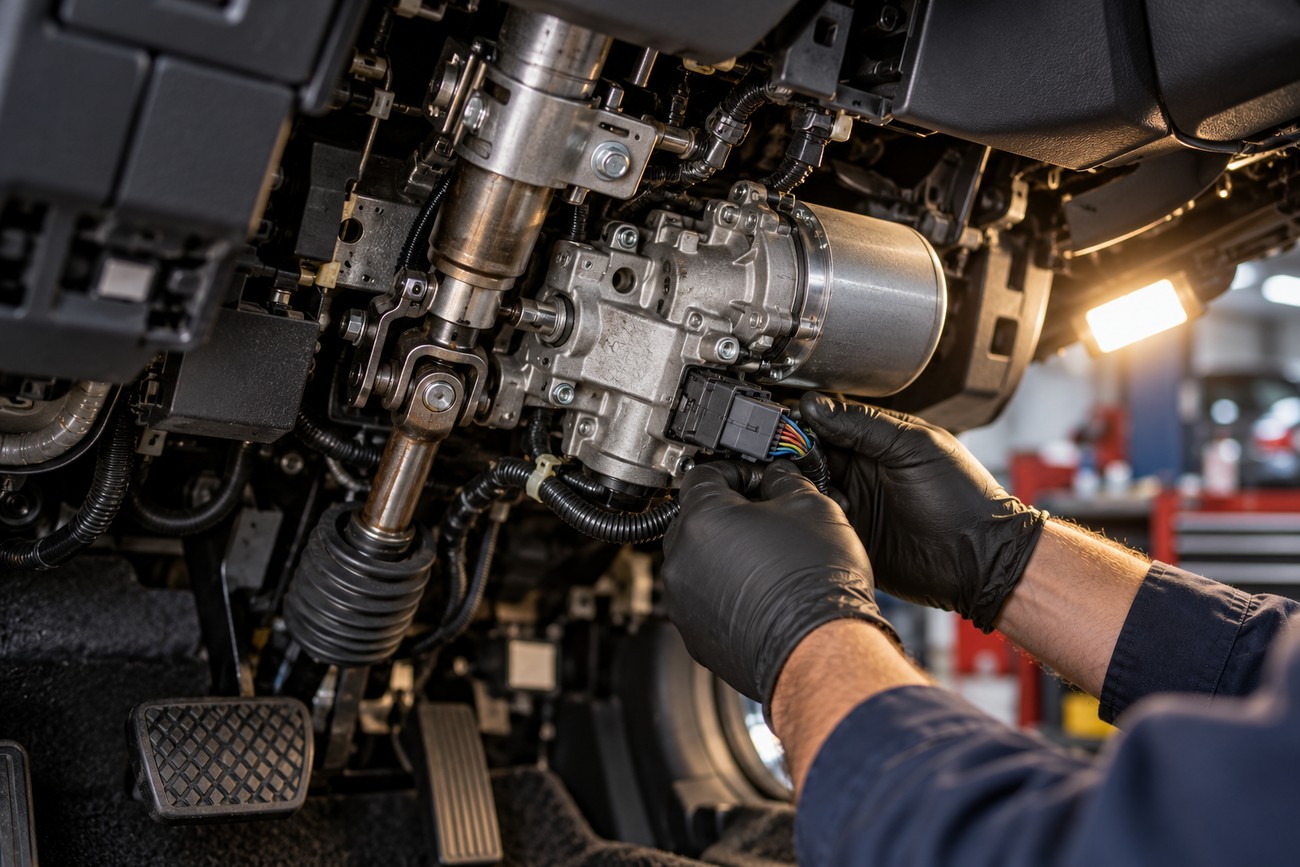
A complete loss of EPS assistance can make the wheel consistently heavy, sometimes with a steering warning light. Possible electrical causes include a torque-sensor fault, an electric-motor fault, a power or ground problem, or damaged wiring and connectors. The symptom alone does not identify which part has failed.
Sticky steering can have a different feel. Excessive internal friction in the EPS gearbox, insufficient lubrication, or excessive worm-gear spring preload can make a small correction require extra force. This added resistance is distinct from the ordinary heaviness of steering without electric assistance.
Intermittent faults deserve the same attention as persistent ones. An issue with a sensor signal, motor circuit, or wiring may appear and disappear; a short test drive may therefore feel normal. A warning light that goes out is useful information, not confirmation of a repair.
Record the conditions as closely as you can: whether the problem appeared at a cold start, after prolonged highway driving, over bumps, or mainly when turning in one direction. Those details help a shop reproduce the complaint and separate an electrical interruption from a mechanical source of resistance.
The 2022–2025 Civic Steering Issue: What VIN Checks Can and Cannot Prove
NHTSA recorded sticky-steering cases involving Civic model years 2022–2025. The reported increase in effort occurred mainly on highways after prolonged driving. That pattern matters if the car feels normal during a brief trip to the shop but resisted small steering corrections on a longer drive.
In tested warranty parts, the worst recorded increase in steering effort was 2.4 pounds. That figure describes those measurements; it is not a universal limit for every Civic, fault, or driving condition. A driver experiencing sudden severe heaviness should respond to the actual loss of control margin, not compare it with that test result.
Some Honda corrective actions involved replacing the EPS gearbox or repairing the worm-gear mechanism. Check the vehicle identification number (VIN) through Honda or NHTSA records to establish which campaigns or repairs apply to the individual car. Model year alone cannot confirm eligibility.
A completed campaign repair is worth documenting, but it does not prove that every later EPS symptom has the same cause or coverage. A subsequent motor, sensor, or wiring fault needs its own diagnosis.
Common Mistakes That Make a Civic EPS Problem Worse
Repeatedly turning the wheel lock-to-lock while the car is stationary, particularly with the engine off, demands high steering effort and tells you little about how the fault behaves on the road. Avoid using a parking maneuver as a prolonged steering test. If the wheel has become suddenly difficult to control, arrange recovery instead.
Continuing at highway speed after the wheel starts to stick is another risky choice. A brief catch may vanish, then recur during a lane correction. Reduce speed and stop safely even if the next steering input feels normal.
Looking for a power-steering fluid top-up also sends diagnosis in the wrong direction on an EPS-equipped Civic. EPS assistance does not use a conventional hydraulic power-steering fluid reservoir. Check the system fitted to the vehicle rather than assuming an older hydraulic layout.
Replacing a motor or rack before reading EPS codes and checking power, grounds, connectors, and wiring can mean paying for a part that was not at fault. A used rack adds further questions: confirm VIN compatibility, part version, calibration requirements, and open campaigns before fitting it.
How a Shop Should Diagnose and Repair the Fault
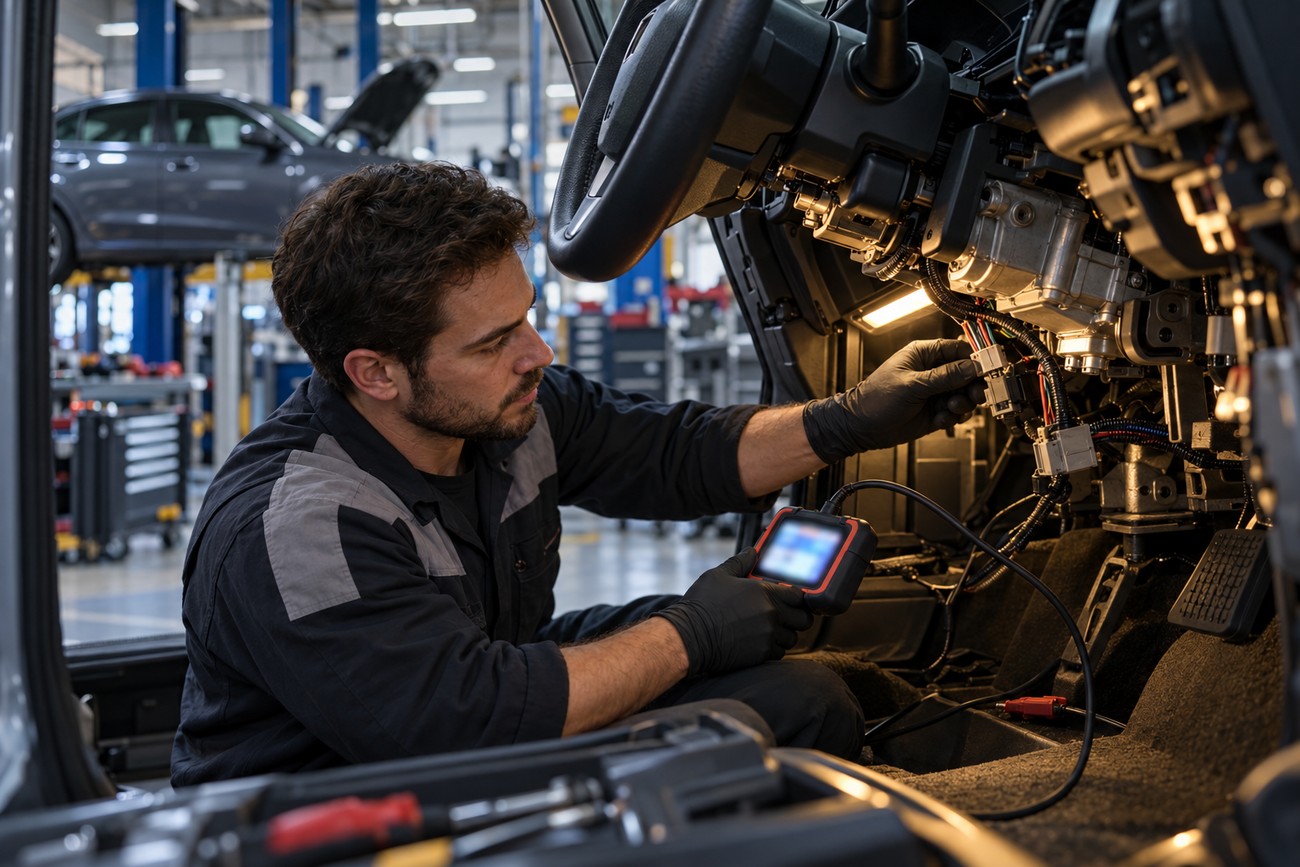
Diagnosis should begin with the driver’s account and a scan for current and stored EPS diagnostic trouble codes (DTCs). Codes can help distinguish a torque-sensor, motor, wiring, or engine-speed-signal problem. They need to be interpreted alongside the symptom, rather than used as an automatic instruction to replace a part.
The next checks should cover battery-related power supply, grounds, connectors, and the relevant wiring. Only then should testing narrow toward the sensor, motor, and mechanical friction in the steering assembly. This order can prevent a rack replacement when the actual problem lies in a circuit or connection.
For an intermittent fault, document the temperature, road speed, drive duration, and steering direction before parts are removed. Those conditions give the technician a better chance of reproducing a symptom that has disappeared by the time the car reaches the workshop.
If testing points to internal gearbox resistance, the shop should check the applicable Honda repair information and the car’s VIN-specific coverage. A confirmed electrical fault may call for a different repair. The decision should follow the evidence, including any campaign records, rather than the general description “heavy steering.”
After EPS parts are repaired or replaced, calibration procedures may be required, and a wheel-alignment check may be needed after steering-system work. The final check should confirm both that warnings and codes have been addressed and that steering effort behaves normally under the conditions that originally exposed the fault.
Frequently asked questions
How much does it cost to fix power steering in a Honda Civic?
There is no reliable single price without identifying the fault. An estimate should separate diagnostic labor from the proposed repair and list any calibration or alignment work. VIN-specific coverage may change what the owner pays, but it should be confirmed for that vehicle rather than assumed from its model year.
What does it mean if a Honda Civic has no power steering?
It usually means the electric steering assistance has stopped working, while the mechanical connection to the rack remains. The wheel can still turn, especially once the car is moving, but effort may become severe or unpredictable. If the change is sudden or substantial, slow down, stop safely, and prefer towing over continued driving.
Why can the steering feel normal again before the car reaches the shop?
An intermittent EPS fault or sticky-steering symptom may depend on temperature, driving time, or the particular steering input. Record whether it happened after a cold start or a long highway drive, the approximate road speed, the direction of the turn, and any warning lights. Give those details to the technician even if the steering feels normal on arrival.







