
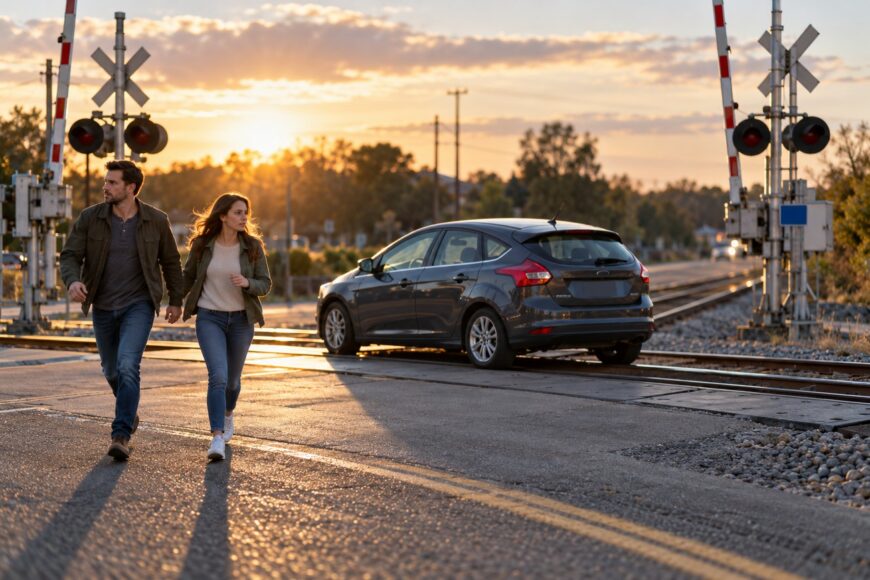
A Ford Focus that stops on a railroad crossing creates an immediate evacuation problem, even if the engine appears to need only another start attempt. Time spent turning the key, changing gears, or checking a dashboard message leaves the vehicle in the path of a train.
Leave the immobilized vehicle immediately, move everyone away from the tracks, and only then call for help from a safe location. Use the blue railroad Emergency Notification System sign to contact the railroad, and call 911 as well. Do not delay those calls to repeatedly restart or push the car.
- Your Ford Focus stops on the tracks: what to do first
- Call the railroad using the blue ENS sign
- Why a Focus may not restart the way you expect
- A stalled engine is not the only way to get stuck
- The mistakes that cost time at a crossing
- After the immediate danger has been reported
- Frequently asked questions
- What if I cannot read or find the blue ENS sign?
- Are magnets why cars get stuck on railroad tracks?
- What is the most common Ford Focus problem?
Your Ford Focus stops on the tracks: what to do first
Get out of the Focus immediately, taking all occupants with you. Move at least 15 feet away from the tracks under the cited FRA guidance, then continue to a location that gives you as much separation from the crossing as practical. That distance is a minimum from the guidance, not a universal guarantee against a vehicle, debris, or other material being thrown during a collision.
Do not remain in the car because no train is visible. A train may be approaching from a direction or distance that is difficult to judge, and the crossing may not provide enough warning for a driver to troubleshoot safely. Once outside, move away from the tracks before using your phone or examining the vehicle.
Do not spend time making repeated ignition attempts, shifting through gears, or trying to push the Focus before everyone is clear. A restart may fail because of the transmission position, a system message, battery condition, or a mechanical problem. None of those possibilities justifies keeping people on the crossing.
After reaching safety, report the stopped vehicle to the railroad and emergency services. Give the crossing location, explain that a vehicle is on the tracks, and follow the operator’s instructions. If the car moves later, update the railroad and emergency services so they have the latest information.
Call the railroad using the blue ENS sign
Look for the blue Emergency Notification System, or ENS, sign at the crossing. It provides a railroad contact number and a unique DOT crossing identifier. The identifier helps the dispatcher locate the exact crossing faster than a general description alone.
From a safe location, call the railroad using the ENS number and call 911. Tell the railroad operator the DOT crossing identifier, the road or crossing name if known, and that a Ford Focus is stopped or immobilized on the tracks. State whether anyone remains in danger and describe any visible damage or obstruction.
The ENS call is intended to reach the railroad dispatcher directly. The dispatcher can warn trains operating on the affected section and involve police. A 911 call is also necessary for emergency assistance, but relying only on 911 may not deliver the crossing information to the railroad as directly or as quickly.
If the sign is damaged or difficult to read, do not return to the tracks to inspect it. Use the information you can safely obtain, call 911, and provide the road, nearby landmarks, and crossing direction. The FRA identifies Rail Crossing Locator as an alternative for finding crossing information, but searching for it must not delay evacuation or an emergency call.
Why a Focus may not restart the way you expect
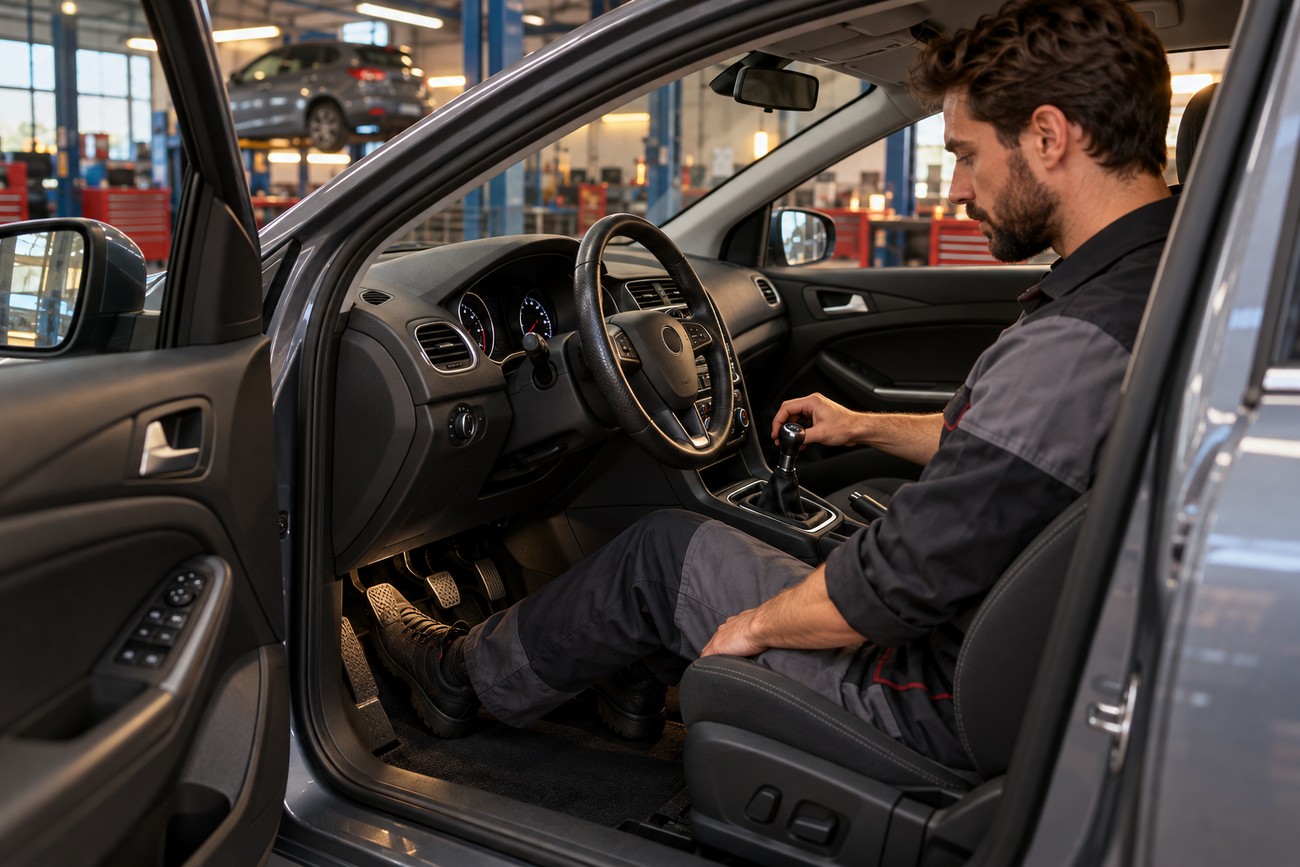
Restart checks come only after everyone is away from the tracks and the railroad and emergency services have been notified. The exact procedure depends on the Focus model year, transmission, and equipment. The available information does not establish which version is involved here.
In a manual-transmission Focus, starting generally requires selecting neutral and fully depressing the clutch. A start attempt while the car remains in gear may be inhibited. On some configurations, fully pressing the clutch can also trigger an Auto Start-Stop restart, but that behavior is not guaranteed.
A Focus may display “Manual Restart Required” or “Select Neutral To Start Engine.” Those messages indicate that a manual restart is needed or that neutral must be selected before starting. They do not make it safe to stay on the crossing while you work through the procedure.
Auto Start-Stop is not a promise that the engine will restart in every situation. A depleted battery, a system error, an engine fault, or another condition may prevent automatic operation. If the car remains in danger, evacuate rather than relying on a pedal press or repeated ignition attempts.
A stalled engine is not the only way to get stuck
A vehicle can be immobilized even when the engine is capable of running. Low clearance, wheel damage, the shape of the crossing, a rail-related surface problem, or an obstruction between the rails can prevent the Focus from moving.
That distinction matters because a restart procedure cannot free a car that is physically hung up. Applying power may worsen wheel or underbody damage, and a driver concentrating on movement may overlook a more immediate danger from approaching rail traffic.
The available details do not identify the cause. The specific Focus model year, transmission, and reason it stopped or became stuck are unknown. There is no sound basis for labeling this incident as a typical Focus engine defect at railroad crossings.
Once emergency personnel make the area safe, a technician can determine whether the problem involved the engine, transmission controls, battery, wheels, underbody, or crossing conditions. Until then, treat an immobile vehicle as a crossing obstruction regardless of whether the engine appears to have stalled.
The mistakes that cost time at a crossing
Remaining inside to diagnose the stall is the most dangerous priority error. Repeatedly attempting a restart can feel sensible, especially when the dashboard suggests a familiar Auto Start-Stop condition, but evacuation and calls from safety take priority.
No visible train means only that you cannot see one at that moment. It does not confirm that the track is clear, that a train is not approaching from another direction, or that the vehicle can be moved before one arrives. Leave first and do not return to the car to retrieve items.
Pushing the Focus alone can consume valuable time and expose you to the tracks. It may also fail if the car has wheel, clearance, or underbody damage. Move people away from danger, then let railroad and emergency personnel coordinate any vehicle removal.
Calling only 911 when the ENS number is available creates an avoidable communication gap. Use the blue sign’s railroad number as well as 911, and do not assume Auto Start-Stop will always restart the Focus.
After the immediate danger has been reported
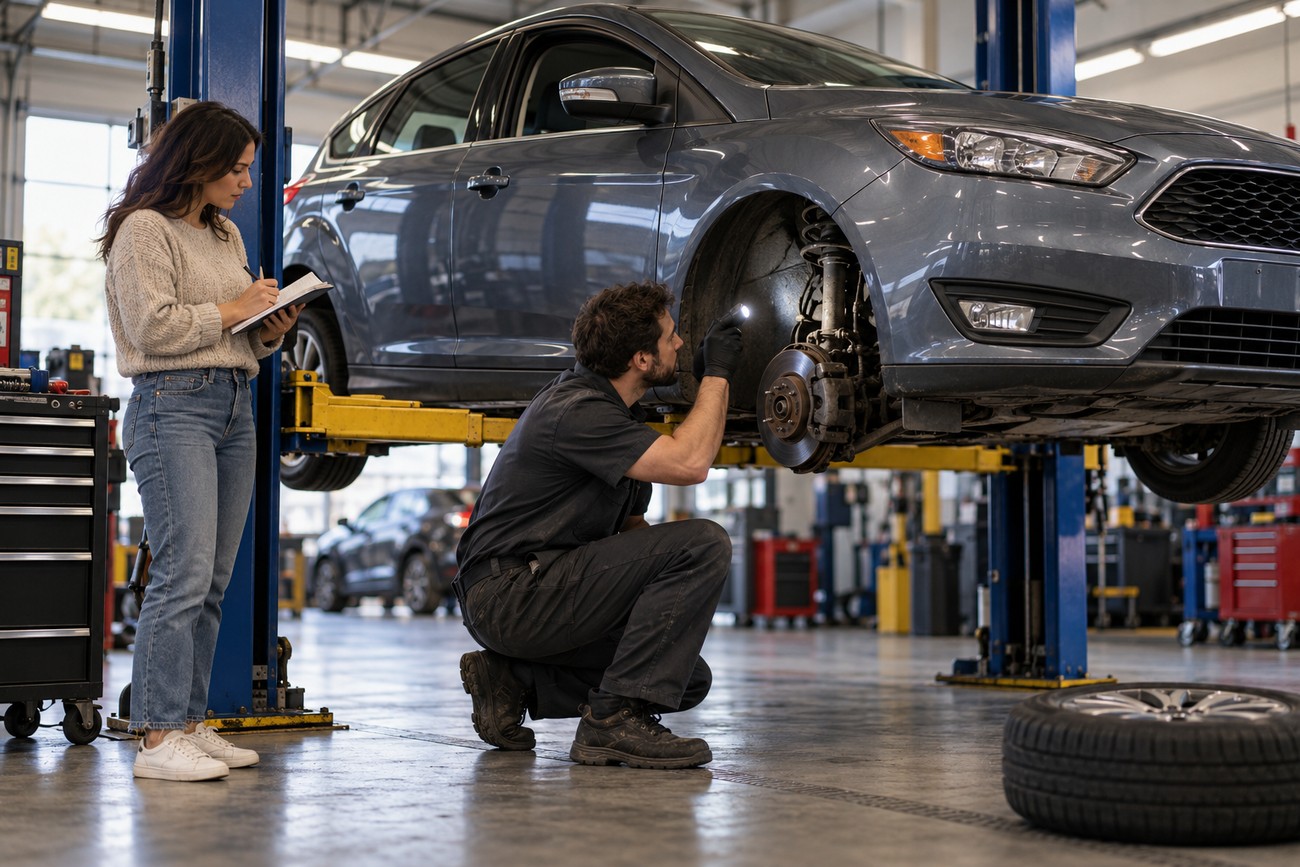
Diagnosis begins only after all occupants are safely away and the railroad and emergency services have been alerted. Do not return to the crossing because the engine seems ready to run or because the warning system has not yet produced a visible train.
For a later inspection, record the Focus model year, transmission type, dashboard message, and sequence of events. Note whether the engine stopped while the vehicle could still roll, or whether the car physically could not move. These details help separate a starting-system issue from a traction, clearance, wheel, or obstruction problem.
Use the applicable owner’s manual for model-specific starting instructions. Manual-transmission starting conditions and Auto Start-Stop behavior vary by model year, transmission, and equipment, so a procedure for one Focus should not be treated as universal.
The available information does not establish a confirmed defect, a failure rate, or a typical cause for this incident. A qualified inspection is needed before assigning blame to the engine, transmission, or crossing.
Frequently asked questions
The questions below cover how to report a crossing without a readable ENS sign, what might keep a Focus from moving, and what this incident can tell you about the vehicle. In each case, leave the tracks and call for help before investigating the cause. The model year and cause remain unknown, so any later diagnosis must be vehicle-specific.
What if I cannot read or find the blue ENS sign?
Call 911 from a safe location and describe the crossing using the road name, nearby landmarks, direction of travel, and any visible railroad details. Do not go back onto the tracks or delay the emergency call while searching for the sign.
The FRA identifies Rail Crossing Locator as an alternative way to find crossing information. Use it only from safety and only after evacuation and the 911 call are underway.
Are magnets why cars get stuck on railroad tracks?
No. A magnet is not a supported explanation for a stranded Ford Focus. Mechanical problems, wheel damage, limited clearance, crossing geometry, or an obstruction are more relevant categories to inspect, although the cause of this particular incident is unknown.
Regardless of the cause, the response is the same while the vehicle is on the tracks: evacuate, move away from the rails, and report the obstruction to the railroad and emergency services.
What is the most common Ford Focus problem?
No single problem can responsibly be named across all Ford Focus model years, transmissions, and equipment levels. This incident does not establish a recurring Focus fault, and the available information does not identify the vehicle’s year, transmission, or cause of immobilization.
A later inspection should use the dashboard message and the vehicle’s behavior to narrow the diagnosis. The applicable owner’s manual and a qualified technician are more reliable than applying a general fault description to every Focus.







