
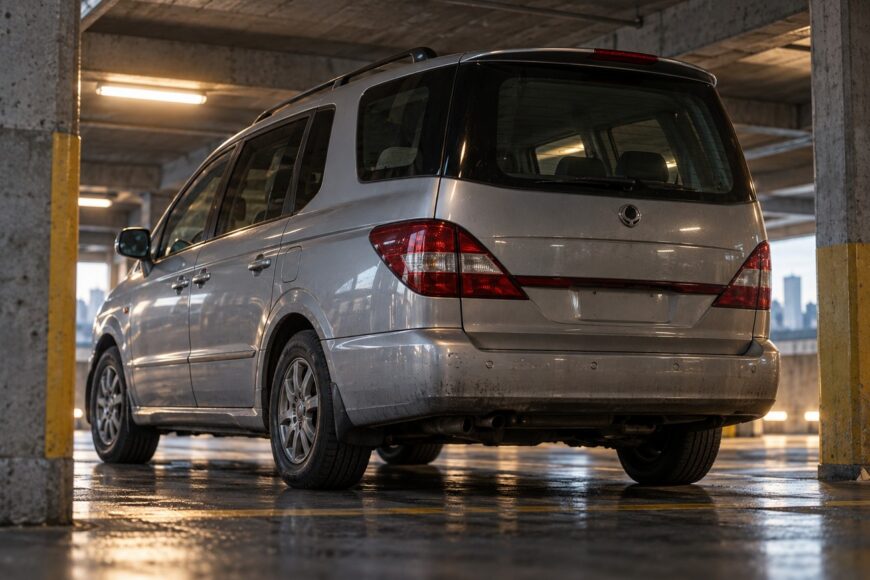
The SsangYong Rodius is famous for a shape that seems to have been assembled from several different vehicles. Its long body, tall roof, and visually detached rear section give it an awkward presence that has made it a regular fixture on lists of unusual-looking cars. That reputation is understandable, although styling alone says little about whether a used example is sound.
The more useful question concerns the individual vehicle beneath the design controversy. The Rodius is large, heavy, and available in several engine, transmission, drivetrain, and seating configurations. Its unusual ownership risks also include scarce parts, chassis corrosion, and expensive diesel or automatic-transmission faults. A cheap purchase can make sense for the right buyer, provided the specific car is checked rather than judged by generic catalogue figures.
- Why the Rodius Looks So Strange—and Why Its Size Matters
- The Rodius Is Not One Single Specification
- Seven Seats on Paper, Several Different Realities Inside
- The Used-Rodius Ownership Reality: Parts, Rust, and Running Costs
- The Inspection Points That Matter More Than a Short Test Drive
- Rodius Myths That Can Turn a Cheap MPV Into an Expensive One
- Frequently asked questions
- Why is the Rodius often called one of the weirdest cars ever made?
- What is considered the ugliest car of all time?
- What was voted the ugliest car?
- What is considered the weirdest car of all time?
Why the Rodius Looks So Strange—and Why Its Size Matters
The first-generation Rodius is about 5.13 m long, 1.915 m wide, and built on a wheelbase of about 3.0 m. That makes it larger than most conventional MPVs, especially in parking spaces designed around shorter family vans. The tall body and extended rear overhang add to its visual oddness while creating a vehicle that needs more room than its passenger-car driving position may suggest.
Its dimensions affect ordinary journeys immediately. Narrow streets, multi-storey car parks, and reversing into a tight bay demand more planning, while the rear view depends heavily on a functioning camera and parking sensors where fitted. A long wheelbase can help provide a stable ride, yet it also increases the turning space required during low-speed manoeuvres.
Weight brings another practical penalty. The Rodius combines an MPV body with frame-like or off-road-oriented technical solutions associated with related SsangYong models, so it carries more mass than many compact MPV buyers expect. That mass affects braking, tyre wear, suspension load, and the effort required from the engine and transmission.
The shape also creates substantial aerodynamic resistance. Fuel consumption can therefore be noticeably higher than expected from a people carrier, particularly with an automatic transmission, four-wheel drive, a full passenger load, or frequent urban driving. A test drive that feels perfectly adequate at low speed may conceal higher running costs once the vehicle is used as its size encourages.
The Rodius Is Not One Single Specification
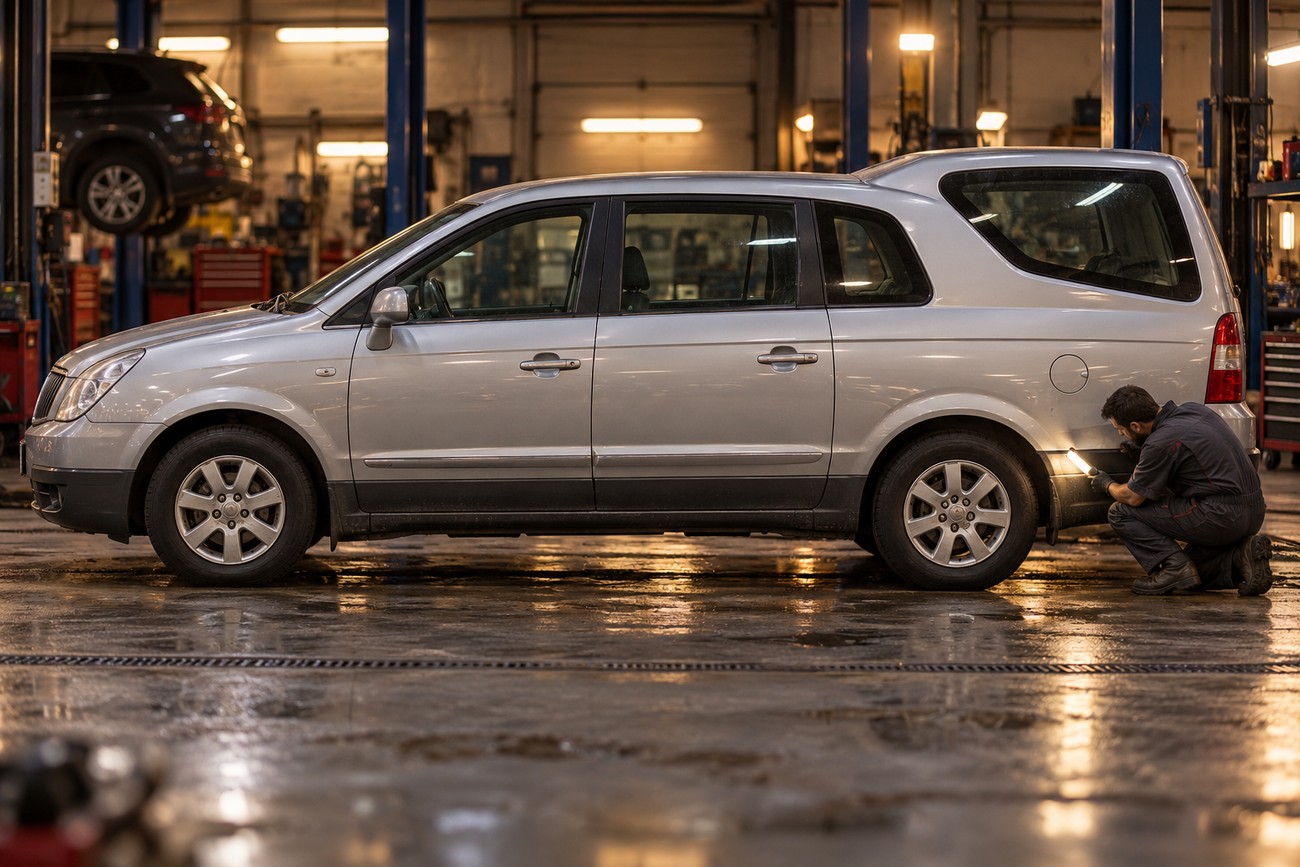
Rodius specifications vary by market, year, trim, and vehicle identification number. Early versions used a 2.7-litre diesel producing about 163 hp and 345 Nm, while later European versions used a 2.0-litre e-XDi producing about 155 hp. Those figures describe different powertrains and should not be treated as interchangeable descriptions of the entire model range.
Drivetrain choices add another layer of variation. Rear-wheel drive and four-wheel drive existed, depending on market and version, and manual and automatic transmissions were also available. A description that calls every Rodius a diesel 4×4 with an automatic gearbox is therefore too broad to guide a purchase.
The difference matters on the road. A heavier four-wheel-drive automatic may feel and consume differently from a rear-wheel-drive manual, even when both vehicles carry the same badge. Engine output alone cannot predict acceleration, towing behavior, fuel use, or the likely cost of transmission repairs.
Before inspecting a car, confirm its engine, gearbox, driven wheels, emissions equipment, and original market from the VIN and service documentation. Check the exact powertrain code before ordering parts or fluids. Some components are related to Rexton systems, but that relationship does not guarantee compatibility without a catalogue-number check.
Seven Seats on Paper, Several Different Realities Inside
Seven-seat configurations appear in advertising and catalogue data, yet the label does not describe one universal interior. Seat layouts, luggage capacity, rear access, and the arrangement of the second and third rows depend on market, year, and specification. Two vehicles advertised with the same number of seats can offer different levels of usable space.
Inspect the cabin with the seats in every position. Check how easily passengers reach the rear, whether the seat rails move smoothly, and how much luggage remains behind the occupied rows. A seven-seat layout can work well for children and occasional passengers while proving restrictive for adults on longer journeys.
The rear mechanisms deserve attention because they are easy to overlook in photographs. Seat hinges, rails, folding hardware, latches, and trim can suffer from years of heavy family use. A clean exterior gives little information about whether the rear seats have been moved regularly or left seized in one position.
Measure the practical load area rather than relying on the advertised seating count. If the vehicle will carry seven people, luggage space may become the limiting factor. If it will transport equipment, confirm that the seats fold, slide, or remove in the way you need before treating the Rodius as a bargain people carrier.
The Used-Rodius Ownership Reality: Parts, Rust, and Running Costs
Low model prevalence can make body, suspension, and electronic parts slower or more expensive to source. A component may exist through a related SsangYong system, yet the correct catalogue number still needs confirmation. Delays matter more with an older family vehicle that is relied on for daily transport, especially if the repair involves a body panel, suspension assembly, or control module.
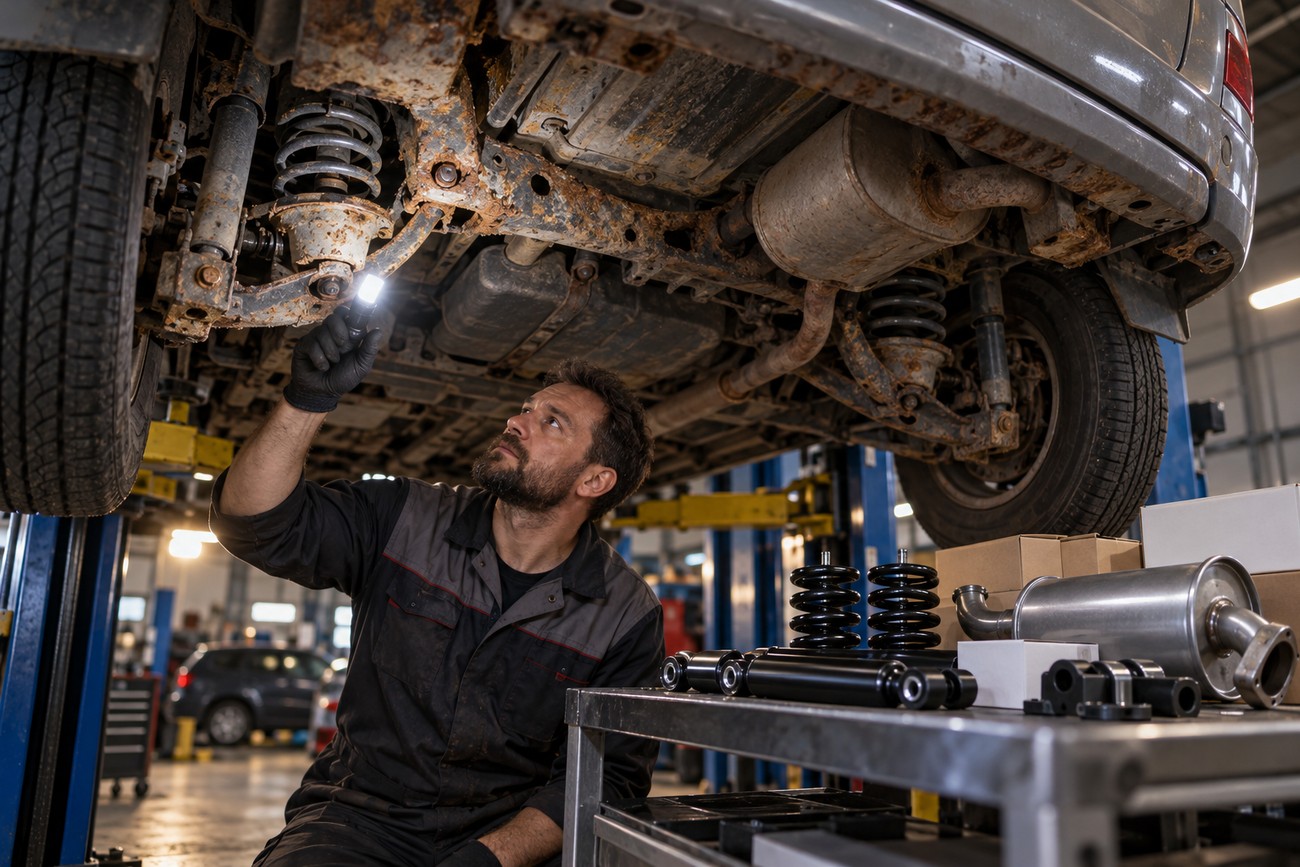
Owner discussions commonly mention corrosion affecting chassis elements, springs, mounts, and exhaust components. Surface rust on a visible bracket is a cosmetic concern; corrosion around structural mounting points, subframes, suspension attachments, brake lines, or spring seats deserves much more caution. The latter can affect safety, repair scope, and whether the vehicle is economically viable.
Analysis of approximately 31,000 UK MOT checks repeatedly identified steering joints, suspension, brakes, tyres, and springs as issue areas. That evidence is useful for deciding where to look first, although it describes vehicles inspected in one market and should not be treated as a universal failure rate for every Rodius. The pattern supports a thorough mechanical inspection rather than confidence based on a clean-looking body.
Owners also discuss automatic-transmission problems and the importance of using the correct fluid and following the service schedule. Fluid compatibility must match the exact transmission and powertrain code; a generic assumption can turn an overdue service into a source of further trouble. Electrical complaints include instrument illumination, fog lights, and other systems, so a complete function check is more valuable than a quick glance at the dashboard.
Fuel use is another ownership adjustment. The Rodius’s size, mass, and aerodynamics can produce consumption higher than buyers expect from a compact MPV, especially in urban driving. Later diesel versions also require attention to the fuel system, turbocharger, EGR, and DPF or CDPF where fitted, since emissions equipment can add repair complexity.
The Inspection Points That Matter More Than a Short Test Drive
Start with a lift inspection, not the paintwork. Examine the underbody, subframes, suspension mounting points, springs, spring seats, mounts, brake lines, steering joints, and exhaust. Structural corrosion is more serious than cosmetic surface rust, and dirt or underseal can hide defects that are impossible to judge from an online listing.
Suspension and steering deserve a deliberate check because the vehicle’s weight places substantial demands on them. Look for worn joints, damaged springs, uneven tyre wear, loose mounts, and alignment problems. Inspect all four tyres for condition and matching specifications; tyre quality, alignment, and spring condition directly influence stability and braking distance.
Inspecting subframe and suspension mounting points first can save more time than debating paint thickness or interior trim. Structural corrosion determines whether the rest of the vehicle is worth evaluating.
On the road, prioritize smooth gear engagement under load, reverse operation, and any vibration through the drivetrain. Check for driveshaft vibration, hesitation, harsh shifts, or delayed engagement, particularly on an automatic. Subjective impressions of engine power matter less than whether the gearbox and driveline behave consistently during acceleration, manoeuvring, and hill work.
A diesel should be started from cold if possible. Observe starting behavior, idle quality, smoke, warning lights, and response under load, then arrange diagnostic checks for the fuel system, injectors, turbocharger, EGR, and DPF or CDPF where fitted. A warm engine can conceal starting problems and reduce the value of a short demonstration drive.
Confirm every fluid against the handbook and the exact powertrain code. This applies especially to the automatic transmission, where an apparently suitable fluid may still be wrong for the unit. Test the rear camera, parking sensors, instrument illumination, fog lights, switches, seat mechanisms, and other electrical equipment before negotiating, because rare electronic parts can be inconvenient to locate.
Rodius Myths That Can Turn a Cheap MPV Into an Expensive One
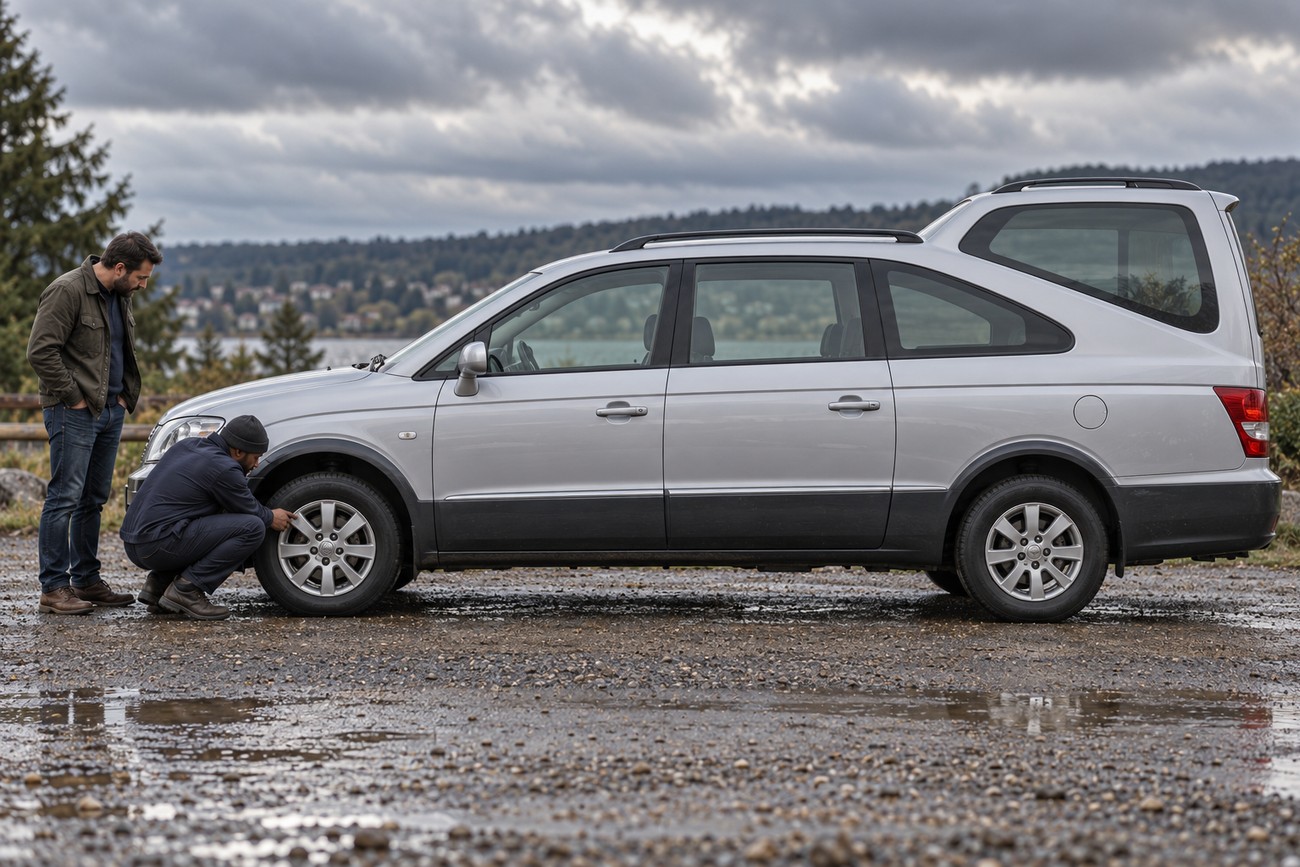
The first myth is that every Rodius is a seven-seat diesel 4×4. Seven-seat configurations were advertised, but layouts vary, and rear-wheel-drive and four-wheel-drive versions both existed depending on market and version. Engine, transmission, seating, and driven wheels must be confirmed on the individual vehicle.
The second myth treats the Rodius as an off-roader that is unaffected by poor roads. Its related technical solutions may give it a more rugged engineering background than some compact MPVs, yet rough surfaces still stress suspension, steering joints, brakes, springs, and structural mounting points. A capable-looking stance does not protect an aging chassis from corrosion or wear.
Catalogue economy and performance figures also travel badly between versions. The 2.7-litre diesel, later 2.0-litre e-XDi, manual gearbox, automatic gearbox, rear-wheel drive, four-wheel drive, vehicle load, and tyre choice can all change the real result. Use published data as a guide to the version being considered, rather than as a promise applying to the entire model family.
Finally, the later 2.0-litre diesel is not automatically trouble-free. Its CDPF and other emissions-related systems may improve compliance for its market and period while adding further potential repair costs. Marketing claims about practicality or capability cannot replace a lift inspection, diagnostic scan, and review of maintenance history.
Frequently asked questions
The Rodius attracts strong opinions because its styling is unusually memorable. These answers separate that cultural reputation from the mechanical decisions that matter when buying one used.
Why is the Rodius often called one of the weirdest cars ever made?
The reputation comes from its unusually long body, high roof, and rear proportions that appear visually disconnected from the front section. The result is an MPV with a silhouette that many people find awkward or unfamiliar, especially beside more conventionally shaped family vans.
That judgment is subjective and says nothing conclusive about reliability. The same unusual proportions create useful interior volume, while the long and heavy body also affects parking, manoeuvrability, fuel use, and braking. Its appearance is memorable; the buying decision still depends on condition and specification.
What is considered the ugliest car of all time?
There is no universally accepted ugliest car. Lists and public polls have named different models over time, and the result depends on the voters, country, period, and definition of unattractive design.
The Rodius is often included in such discussions because its proportions are unusually controversial, rather than because it holds an objective worldwide title. Treating a styling poll as a mechanical assessment would be a serious category error.
What was voted the ugliest car?
Several vehicles have been described as the ugliest in different polls, publications, and online votes. Those results are editorial or popular opinions rather than a single authoritative award covering every car ever made.
The Rodius’s frequent appearance in these conversations reflects its distinctive design and cultural notoriety. It does not establish that every Rodius is unreliable, and it does not make every other unusual-looking MPV a better purchase.
What is considered the weirdest car of all time?
No single car officially owns that title. The label can refer to styling, engineering, packaging, or an unusual combination of all three, so candidates vary widely between markets and enthusiast communities.
The Rodius is a credible candidate on styling and packaging grounds because its long, tall body and rear proportions are so distinctive. Its mechanical specification is less mysterious: it is a family of vehicles with market-dependent engines, transmissions, drivetrains, and equipment that must be checked individually.







