
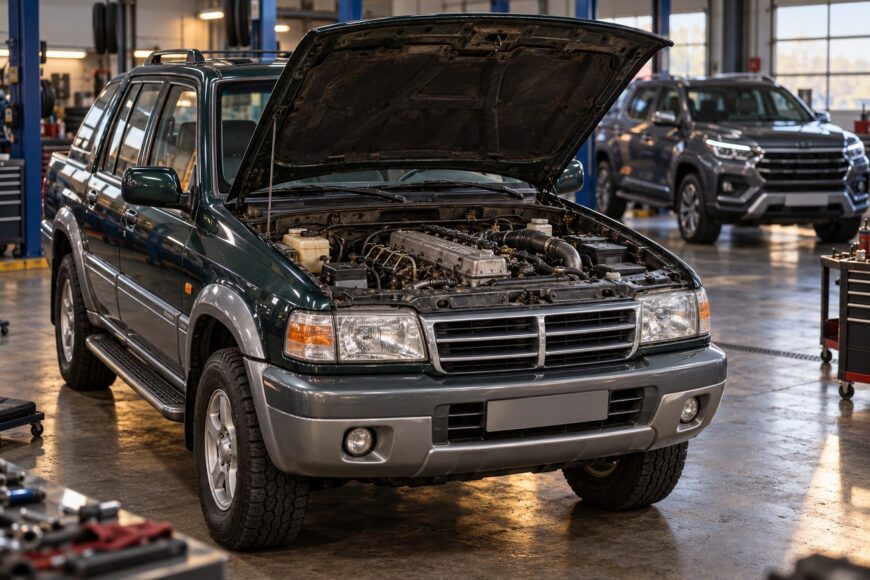
The “Mercedes-powered” label is broadly fair for early SsangYong Musso FJ models, yet it is misleading when applied to the modern Q200. The FJ was developed through cooperation between SsangYong and Daimler-Benz, while the Q200, sold since 2018, uses SsangYong powertrain architecture. Treating every Musso as a German-engineered SUV can therefore lead a buyer toward the wrong engine, the wrong parts, and the wrong expectations.
The sensible choice depends on generation, engine or component code, diesel-use pattern, towing demands, and documented servicing. A badge in an advertisement cannot establish which automatic transmission is fitted, whether a Mercedes-related component is present, or whether a replacement part is compatible. The vehicle identification number and a proper diagnostic inspection matter more than the phrase “Mercedes engine.”
That distinction also changes the ownership risks. An early FJ and a modern 2.2-liter diesel Q200 have different mechanical backgrounds, different likely failure points, and different support requirements. The following guide treats reported faults as inspection risks rather than universal defects.
- Which SsangYong Musso Is Actually Mercedes-Powered?
- FJ Versus Q200: Two Very Different Musso Generations
- FJ and Q200 Powertrains: What the Mercedes Label Really Means
- Common Musso Problems: Diesel, Cooling, and Transmission Risks
- Used Musso Inspection: What to Check Before Buying
- Is a Musso Right for Short Trips, Towing, and Daily Use?
- Frequently Asked Questions
- How much will the price of the SsangYong Musso increase in 2026?
- How can I check whether a used Musso has an open cooling-fan campaign?
- What should a healthy Musso diesel do after a cold overnight start?
Which SsangYong Musso Is Actually Mercedes-Powered?
The first Musso, known as the FJ, arrived in 1993 through cooperation between SsangYong and Daimler-Benz. That relationship explains the model’s long-standing Mercedes association, but it does not mean the complete vehicle was built by Mercedes-Benz. The body, frame, suspension, electronics, interior, and much of the supporting hardware remained SsangYong work.
Early engines included Mercedes-Benz M111 and M104 gasoline units, together with OM601 and OM602 diesels. The range covered 2.3-liter and 2.9-liter diesels, plus 2.3-liter, 2.8-liter, and 3.2-liter gasoline engines. The early 2.9-liter diesel is associated with the Mercedes OM602, a useful fact for identifying the powertrain, but it does not turn the whole SUV into a Mercedes product.
Transmission sourcing also needs careful wording. Early versions used a five-speed manual and a four-speed automatic, with the early automatic associated with Mercedes-related drivetrain sourcing. That connection may help with research, yet it does not guarantee that every internal part, control module, mount, or service procedure is interchangeable with a Mercedes passenger car.
The practical conclusion is narrow but important: “Mercedes-powered” is primarily accurate for selected early FJ powertrain components. It is not a reliable description of every Musso generation, and it should never replace checking the actual engine, transmission, market specification, and VIN.
FJ Versus Q200: Two Very Different Musso Generations
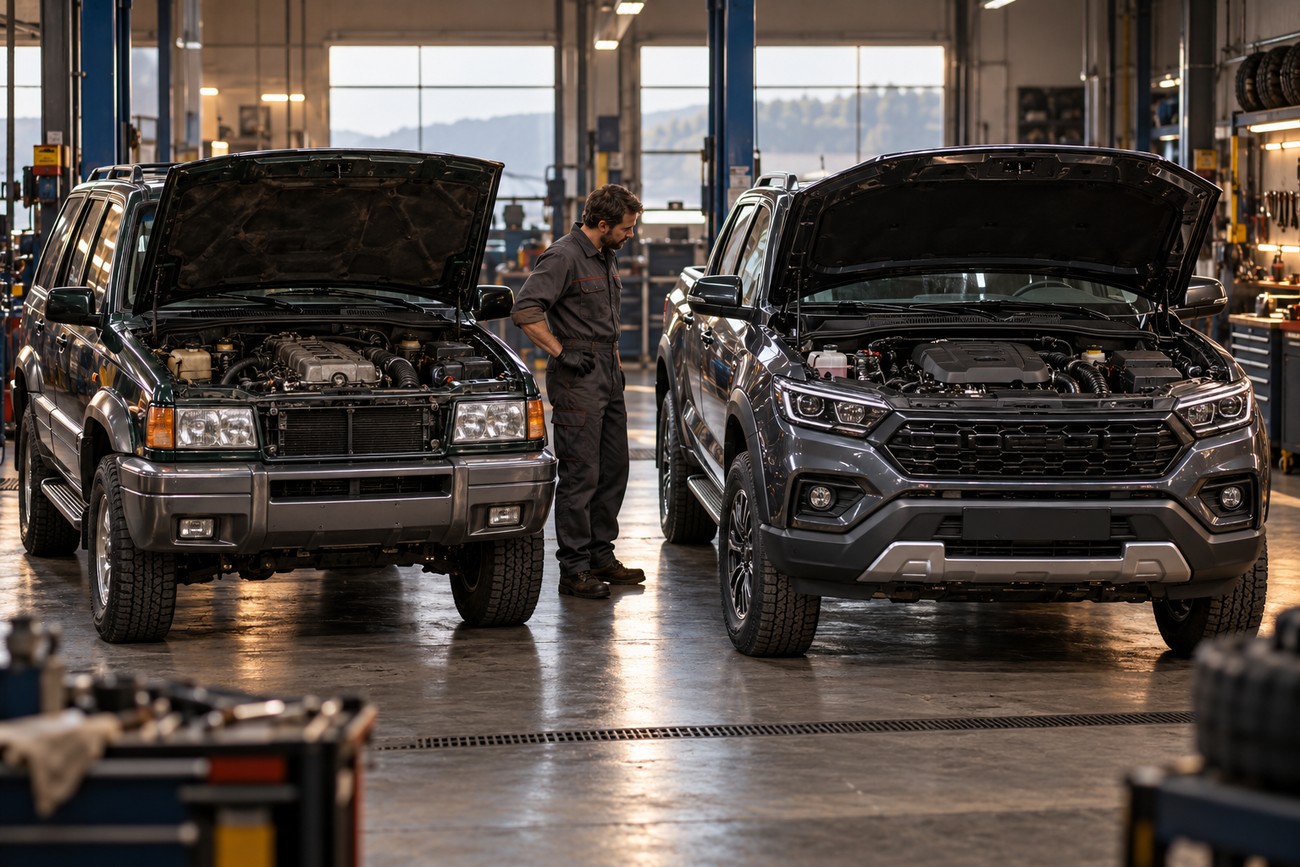
The modern Musso Q200 has been sold since 2018 and belongs to a different engineering era. It uses a body-on-frame platform related to the second-generation Rexton, preserving the truck-like layout that attracts buyers who need ground clearance, load-carrying ability, or towing capacity. Its typical powertrain is a 2.2-liter SsangYong turbo-diesel with six-speed transmission options.
That 2.2-liter engine is not part of the early Mercedes engine family. The continued Mercedes reputation comes largely from the FJ’s history and from advertising language that can blur generations. A Q200 may be a useful diesel utility vehicle, but its diagnosis, servicing, and parts research must follow SsangYong-specific information.
Generation checks should come before any discussion of reliability. Confirm the production period, engine code, transmission type, and VIN, then compare those details with the seller’s description. A listing that says only “Mercedes diesel” may describe an early FJ accurately, describe a component loosely, or simply repeat an outdated marketing claim.
This difference affects buying decisions in practical ways. An FJ buyer may be investigating age-related issues in a Mercedes-related engine and older drivetrain, while a Q200 buyer must focus on diesel emissions equipment, turbocharger control, cooling protection, and modern automatic-transmission behavior. The same model name covers substantially different mechanical risks.
FJ and Q200 Powertrains: What the Mercedes Label Really Means
This comparison separates the historical Mercedes connection from the modern SsangYong powertrain. “Associated with” is deliberate: exact fitment and interchangeability still depend on the vehicle specification.
| Musso generation | Production context | Engine origin and examples | Transmission context | Buying implication |
|---|---|---|---|---|
| FJ | Introduced in 1993 through SsangYong and Daimler-Benz cooperation | Mercedes-related M111, M104, OM601, and OM602 units; early 2.3-liter and 2.9-liter diesels | Five-speed manual and four-speed automatic; the automatic is associated with Mercedes-related drivetrain sourcing | Verify the exact engine and gearbox. Mercedes-related components do not make every vehicle system Mercedes-built. |
| Q200 | Sold since 2018 on a body-on-frame platform related to the second-generation Rexton | Typically a 2.2-liter SsangYong turbo-diesel | Six-speed transmission options | Investigate DPF, EGR, cooling, turbo, and transmission condition using SsangYong-specific records and diagnostics. |
The table also explains why parts searches based on the Mercedes name can become expensive. A component may share an origin or a design relationship without being a direct replacement. Generation, component code, transmission, and VIN must establish compatibility before a part is ordered.
For an older FJ, the Mercedes connection can still be useful when tracing an engine or transmission. It should be treated as a research lead rather than a guarantee of availability or interchangeability. For a Q200, the label has little diagnostic value because the typical 2.2-liter powertrain follows a different SsangYong architecture.
Common Musso Problems: Diesel, Cooling, and Transmission Risks
Owners of the modern 2.2-liter diesel have reported DPF and EGR symptoms including frequent regeneration, warning messages, power loss, and increased fuel consumption. These complaints are especially relevant when the vehicle is used for short urban trips, where the exhaust system may struggle to complete regeneration. A scan, service record, and evidence of how the vehicle was driven are more informative than a clean dashboard during a short test drive.
Hard starting after an overnight stop or in cold weather has also been reported. Glow plugs are one possible cause, but air entering through the fuel pickup system can create a similar symptom. Loss of power, smoke, and turbo whistling during acceleration raise further questions around the turbocharger, intercooler, variable-geometry control, or timing chain. A reported turbo failure range of 40,000–70,000 miles comes from a single source and is not independently confirmed in the available evidence.
Oil appearing near the engine–gearbox joint may indicate a reported rear main seal leak, although that symptom requires inspection rather than an automatic diagnosis. On some 2020–2024 vehicles, a reported 60-amp cooling-fan fuse issue may lead to overheating, power loss, or short-circuit risk. It is therefore more serious than an ordinary blown fuse, and campaign status should be checked for the specific market and VIN.
Transmission complaints include overheating during towing or hard acceleration, along with delayed, harsh, or unavailable shifts in automatic manual mode. Manual mode may sometimes help manage load temporarily, but it is not a dependable cure for excessive transmission temperature. These are owner-reported problems and inspection priorities, not proof that every Musso has the same defect.
Used Musso Inspection: What to Check Before Buying
Start with a genuinely cold engine. Ask the seller not to warm the vehicle before arrival, then observe cranking duration, initial smoke, idle stability, and any repeated priming. If the engine starts poorly, test the glow-plug system, but also investigate possible air entering through the fuel pickup system before replacing parts automatically.
Use a suitable scan tool to check stored and pending faults, regeneration history where available, DPF loading, EGR operation, and live temperature data. A warning light that has recently been cleared proves little. Ask for invoices showing what was diagnosed and repaired, because a generic “computer check” does not establish that an emissions problem has been resolved.
During acceleration, listen for abnormal turbo whistling and watch for smoke or a sudden loss of power. Inspect the intercooler and its connections for signs that warrant further testing, and ask whether turbocharger control or timing-chain work has been documented. Look beneath the vehicle at the engine–gearbox joint for oil, while remembering that a reported rear main seal issue requires VIN-specific and market-specific verification.
Check the cooling fan under conditions in which it should operate, inspect the 60-amp fuse on applicable 2020–2024 vehicles, and verify whether the relevant repair or campaign has been completed. A road test should include temperature monitoring during sustained acceleration or a safe towing simulation. For the automatic transmission, assess delayed engagement, harsh shifts, manual-mode availability, and temperature behavior rather than relying on a smooth first few minutes.
Finally, compare every claim with the VIN and service history. An importer’s incomplete diagnosis, delayed repair, or vague assurance should not be treated as proof of a healthy vehicle. The best purchase evidence is a cold-start inspection, a complete scan, documented maintenance, and confirmation that market-specific campaigns have been addressed.
Is a Musso Right for Short Trips, Towing, and Daily Use?
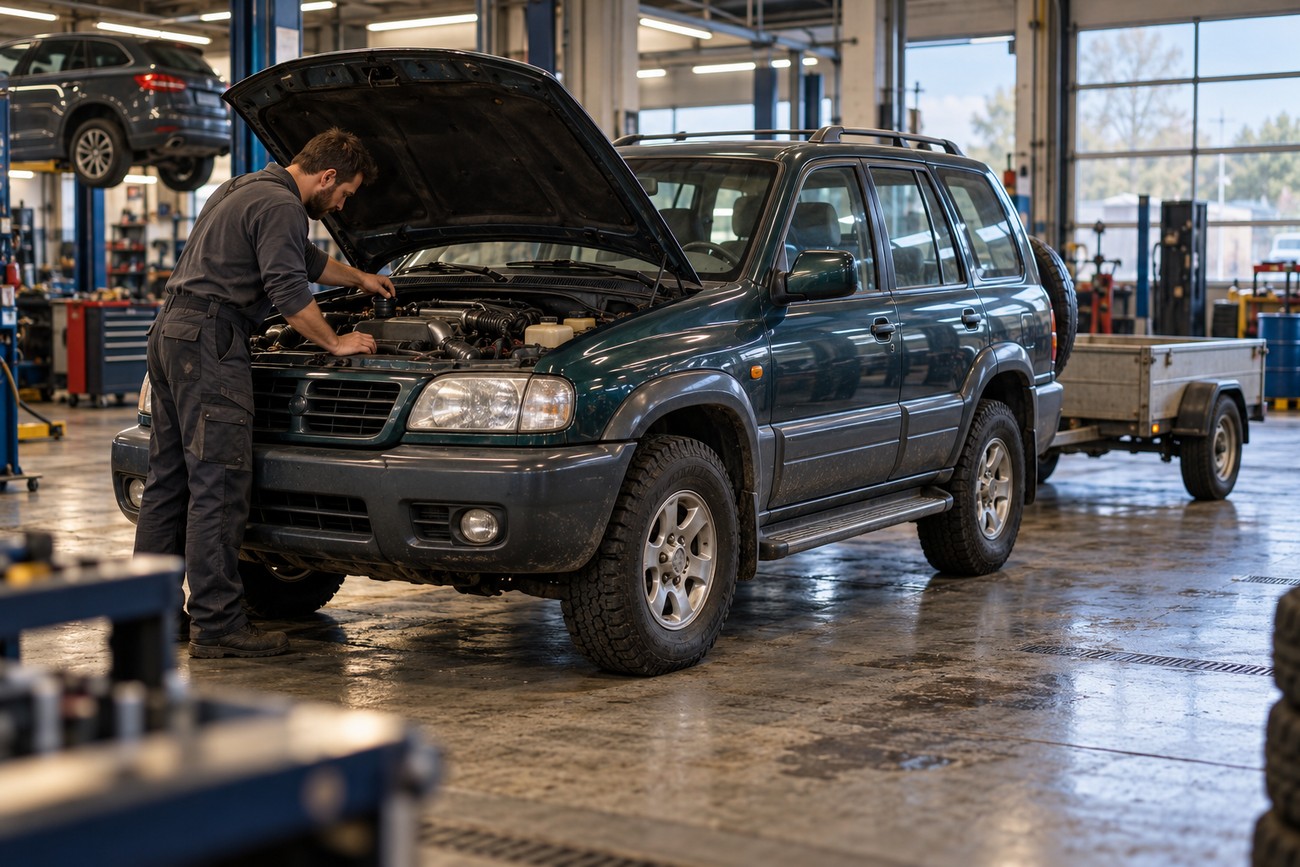
A diesel Musso can suit regular longer journeys, loads, and drivers who value a frame-based vehicle with diesel torque. Frequent short urban trips are a weaker match because they may prevent reliable DPF regeneration and increase the likelihood of DPF or EGR complaints. The key issue is the operating pattern, not the attractive fuel-economy claim in an advertisement.
Towing adds another layer of scrutiny. Cooling-fan operation, the applicable fuse, engine temperature, and automatic-transmission behavior should all be checked before the vehicle is trusted with a sustained load. Repeated hard acceleration can expose cooling or transmission weaknesses that remain invisible during a lightly loaded test drive.
Manual mode can sometimes be used temporarily to manage gears on a demanding route, but it does not remove the possibility of manual-mode faults or transmission overheating. If shifts become slow, harsh, or unavailable, continued towing can turn a drivability complaint into a larger repair issue.
The Musso makes sense for a buyer who accepts the need for careful diagnostics and has access to competent service support. Some owners have reported weak diagnosis, repair delays, and ineffective resolutions from importers or dealers, so local support deserves the same attention as the vehicle itself. The balanced verdict is simple: buy the verified generation and condition, not the Mercedes aura.
Frequently Asked Questions
How much will the price of the SsangYong Musso increase in 2026?
No single 2026 Musso price increase can be stated from the available evidence. Pricing depends on the market, importer, taxes, currency, available stock, and model updates, so a global percentage would be misleading.
Compare current official pricing, dealer charges, and equivalent local specifications in your market. For a used Musso, condition, service evidence, campaign status, and engine specification can affect value more than a general model-year prediction.
How can I check whether a used Musso has an open cooling-fan campaign?
Provide the vehicle identification number to an authorized dealer or the relevant market-specific campaign database. Request both the current status and completion records, then confirm that the invoice identifies the relevant cooling-fan fuse repair rather than a generic electrical inspection.
Check that the repair applies to the vehicle’s market and production specification. A seller’s statement that the fuse was replaced is weaker evidence than a VIN-linked record showing the correct campaign or repair procedure.
What should a healthy Musso diesel do after a cold overnight start?
A healthy diesel should start without excessive cranking, persistent smoke, or unstable running after an overnight stop. Repeated priming, visible fuel-system bubbles, or a long delay before the engine fires should prompt further diagnosis.
The assessment should distinguish glow-plug faults from possible air entering the fuel pickup system. A warm engine may hide both problems, which is why a genuinely cold inspection is more useful than a brief start after the vehicle has already been driven.







