
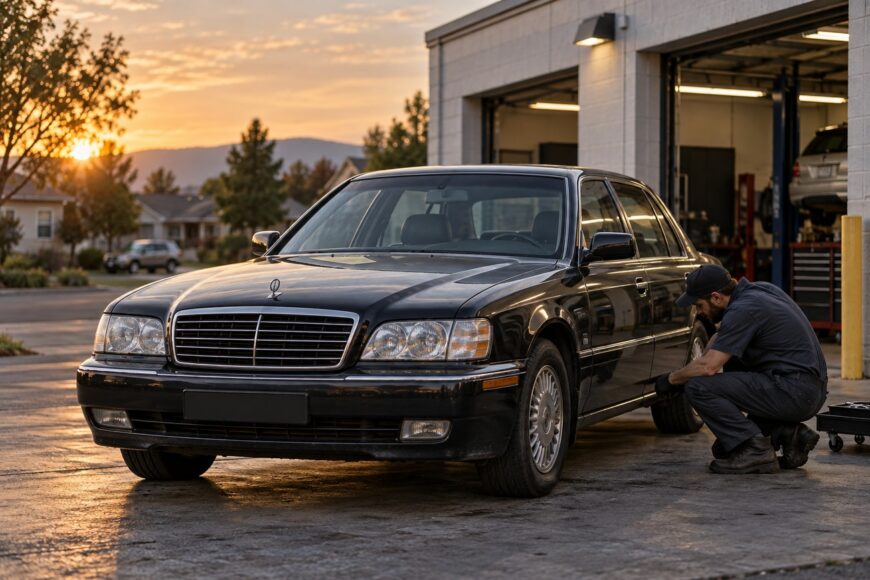
A large Korean luxury sedan with Mercedes-linked engineering has an appeal that survives its age. The SsangYong Chairman offers the proportions and equipment of an executive car, while its early mechanical roots give buyers something more specific to investigate than a vague claim of prestige.
The Chairman is not simply a Mercedes-Benz W124 with a different badge. Its first generation used licensed, deeply revised Mercedes-related engineering, but the body, electronics, and many replacement parts follow their own rules. For a used-car buyer, the useful questions are which generation, engine, and transmission the car has, which market it came from, and whether its history and local parts support make it viable to keep on the road.
- The Mercedes connection: licensed technology, not a rebadged W124
- First-generation Chairman vs. Chairman W: what actually changed
- Engines, transmissions, dimensions, and the driving experience
- The ownership trap: parts, electronics, and age-related failures
- Common buying mistakes—and a better inspection order
- Who should buy a SsangYong Chairman today?
- Frequently asked questions
- What is the price of a SsangYong Chairman?
- Which car does Kim Jong Un use?
The Mercedes connection: licensed technology, not a rebadged W124
SsangYong produced the Chairman from 1997 to 2017. The first generation is technically related to the Mercedes-Benz W124 through licensed and deeply revised engineering, which explains the persistent “Korean Mercedes” description. That ancestry is real, but it describes an engineering relationship rather than the identity of the finished car.
Early cars shared aspects of the Mercedes-derived layout and powertrain approach. Their bodywork, electronics, and some components were different, however, so a familiar-looking assembly does not establish that its Mercedes counterpart will fit. Part numbers, mounting points, and connectors matter more than resemblance in a photograph.
Nor was the Chairman an official Mercedes-Benz. Calling every Chairman a W124 is doubly misleading: it overstates the first car’s interchangeability and ignores the later Chairman W, which used a separate, more modern platform. The Mercedes comparison is strongest for the first generation and becomes a poor shortcut for identifying later cars.
First-generation Chairman vs. Chairman W: what actually changed
Specifications published under the Chairman name sometimes mix the two generations. Identify the car before using a quoted engine, gearbox, or parts listing as a buying guide.
| Feature | First-generation Chairman | Chairman W |
|---|---|---|
| Engineering origin | Licensed, deeply revised engineering related to the Mercedes-Benz W124 | Separate, more modern platform |
| Engines | Early versions included the Mercedes M104 3.2-liter inline-six petrol engine | Versions included a 3.6-liter V6 and a 5.0-liter V8 |
| Automatic transmissions | 5-speed on early versions; some variants used 4-speed automatics | Versions included a 7-speed automatic |
| Drivetrain | Rear-wheel drive | Versions included all-wheel drive |
| Dimensions | Early wheelbase approximately 2.9 meters | Generation and version affect size; Chairman models reached approximately 5.05–5.14 meters in length |
| Mercedes association and parts | Strongest engineering resemblance, without guaranteed parts interchangeability | Different platform, body components, and electronics; do not assume early-car compatibility |
The table describes ranges and examples, not a specification shared by every car. A 3.2-liter inline-six listing, for instance, should not be transferred to a Chairman W merely because both carry the Chairman name.
For parts searches, generation is only the starting point. Engine, transmission, and market specification can further narrow what fits, particularly where an apparently related mechanical part connects to Chairman-specific electronics.
Engines, transmissions, dimensions, and the driving experience
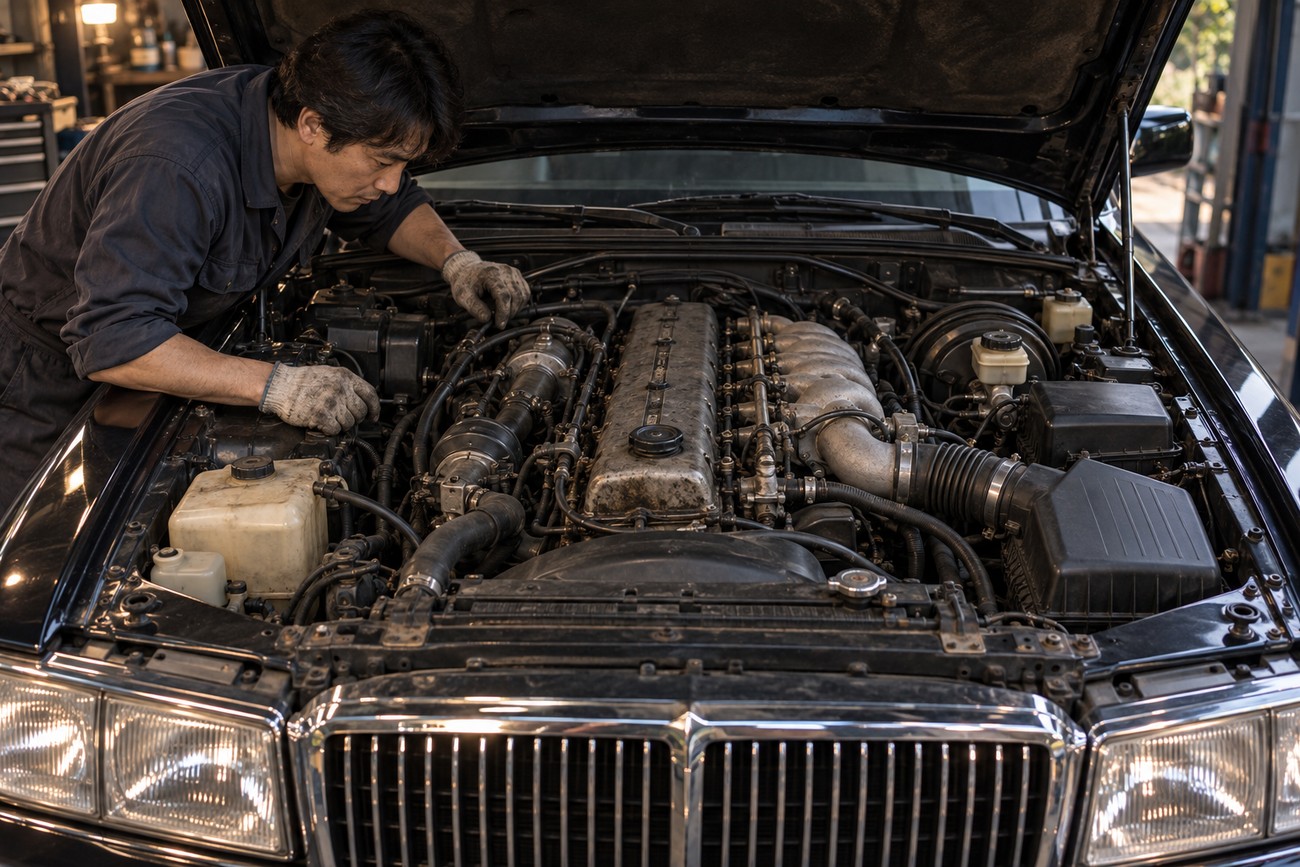
Early versions used the Mercedes M104 3.2-liter inline-six petrol engine, rated at approximately 217–220 hp depending on the cited source. Early Chairman versions used 5-speed automatic transmissions, while some variants had 4-speed automatics. Confirm the gearbox on the individual car before applying a service procedure or ordering parts.
Chairman W brought a different powertrain range, with versions including a 3.6-liter V6, a 5.0-liter V8, a 7-speed automatic, and all-wheel drive. Those features should not be read as a single standard specification. A buyer comparing two advertised Chairmans may be comparing substantially different mechanical and diagnostic demands.
Across generations and versions, overall length reached approximately 5.05–5.14 meters; the early wheelbase was approximately 2.9 meters. That scale gives the car useful long-distance space while making narrow parking spaces and tight urban routes less pleasant. Rear-wheel-drive early cars also deserve consideration in places where traction and maneuvering room are limited.
Fuel use is a practical constraint rather than a footnote to the engine figures. Owners commonly perceive it as high, especially with V8 engines and repeated short trips. A relaxed highway drive may suit the Chairman’s size better than daily stop-start errands, but running costs still depend on the exact car and its condition.
The ownership trap: parts, electronics, and age-related failures
Mercedes lineage does not turn the Chairman into a car that can be maintained entirely from a Mercedes catalog. Owners report difficulty sourcing body panels, interior trim, and original electronic components, none of which becomes interchangeable simply because an early engine has familiar origins. The problem can be the time spent finding the correct part as much as the repair itself.
Age-related electrical work may involve wiring, sensors, control modules, and connectors rather than routine servicing alone. An imported car with an incomplete history can also contain undocumented repairs or substitutions. Later Chairman versions differ substantially from early cars in body components and electronics, further limiting what can be borrowed between generations.
Check the Chairman-specific part number, connector, and pinout before ordering a Mercedes equivalent. If an automatic shifts poorly, separate mechanical and service-history checks from possible electrical or adaptation faults before condemning the gearbox.
Air-conditioning and suspension repairs deserve attention on a heavy, aging luxury sedan, even when the cabin presents well. Delayed or harsh automatic shifts are reported on cars with unknown service histories, but a symptom alone does not identify the cause. Inspect how the transmission behaves cold and warm, and establish what work has actually been documented.
A reported increase in V8 oil consumption after 100,000 km should not be treated as a universal Chairman defect; it needs confirmation for the particular engine series and car. The broader risk is easier to establish: several small, version-specific faults can keep a rare vehicle off the road while parts and knowledgeable help are located.
Common buying mistakes—and a better inspection order
Begin by identifying the generation, engine, transmission, market, and provenance. Buying on the “Korean Mercedes” label alone can leave you researching the wrong drivetrain or assuming support that does not exist locally. Check identification details against the car and its documents before using an online specification as evidence.
Inspect the body and underside next, including areas hidden by an orderly cabin. A well-kept leather interior says little about corrosion, previous body repairs, or the condition of components underneath. Those findings can determine whether the car is worth investigating further before you spend time tracing smaller faults.
Then assess cooling-system condition and seek evidence of automatic-transmission oil servicing. Observe starting, temperature behavior, and shift quality rather than accepting a brief demonstration drive. Gaps in the records do not prove a gearbox has failed, but they change how much uncertainty you are taking on.
Allow time for a thorough electrical check, including every fitted cabin function and a diagnostic assessment suited to the specific Chairman. Treating each fault as though the car were an ordinary W124 can miss Korean-market wiring or control differences. Specialists familiar with these Mercedes-derived systems are relatively uncommon, so establish who could diagnose the car before buying it.
Finally, test parts availability for anything already broken or visibly worn. Verify the exact Chairman version, part number, mounting points, and connector before trusting a Mercedes catalog match. A low purchase price can cease to look cheap when an uncommon part creates extended downtime.
Who should buy a SsangYong Chairman today?
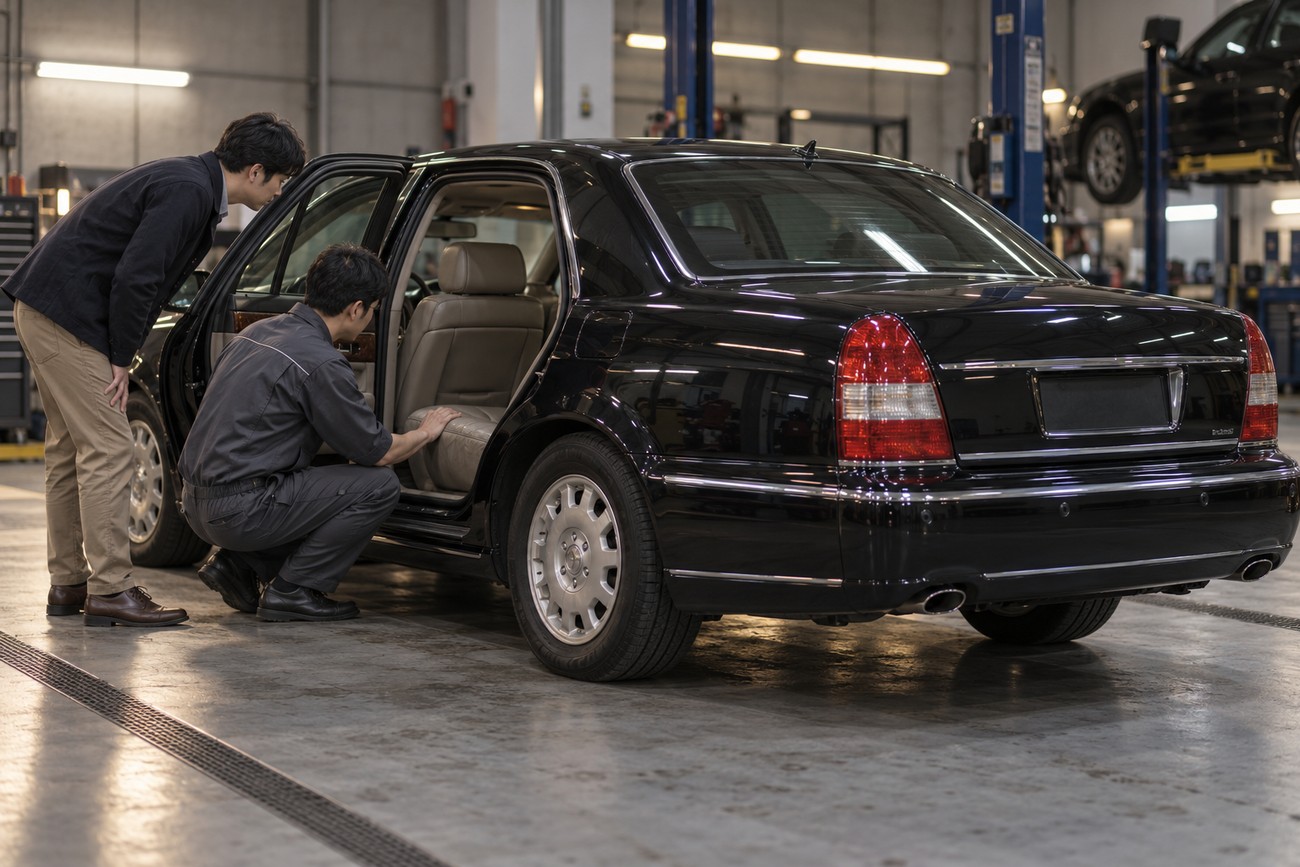
The Chairman suits an enthusiast who wants an unusual executive sedan and is willing to research its particular engineering. The early car’s Mercedes connection is historically interesting, while Chairman W offers a distinct later interpretation. In either case, the reward depends on finding an example whose condition supports regular use.
It is a harder choice for someone expecting inexpensive Mercedes parts, effortless city parking, predictable fuel costs, or straightforward diagnosis at any general workshop. The large body and rear-wheel-drive layout of early cars can complicate tight urban use. Rarity, aging electronics, and incomplete import histories add uncertainty even when the car initially drives well.
Judge the individual car ahead of its nominal power or list of licensed technologies. Documented maintenance, sound bodywork, functioning systems, and a realistic route to replacement parts carry more weight than the “Mercedes clone” nickname. That phrase is best understood as a description of early engineering ancestry, not legal status or complete identity.
Frequently asked questions
Two recurring searches need particular care: one asks for a price that varies by market and example, while the other links the Chairman to a public figure without establishing a connection to the car.
What is the price of a SsangYong Chairman?
There is no dependable universal price for a SsangYong Chairman. Generation, country, import status, condition, service history, and access to parts can matter more than the badge or engine specification. Compare a prospective car with others in its market, then account for documented repairs and any components you may have to source before it is usable.
Which car does Kim Jong Un use?
Public reporting has associated Kim Jong Un with Mercedes-Benz vehicles, but that does not establish that he uses a SsangYong Chairman or identify one confirmed model for every occasion. The Chairman’s Mercedes-linked engineering is not evidence of a personal connection; treat claims naming it as his car cautiously unless supported by specific, reliable documentation.







