
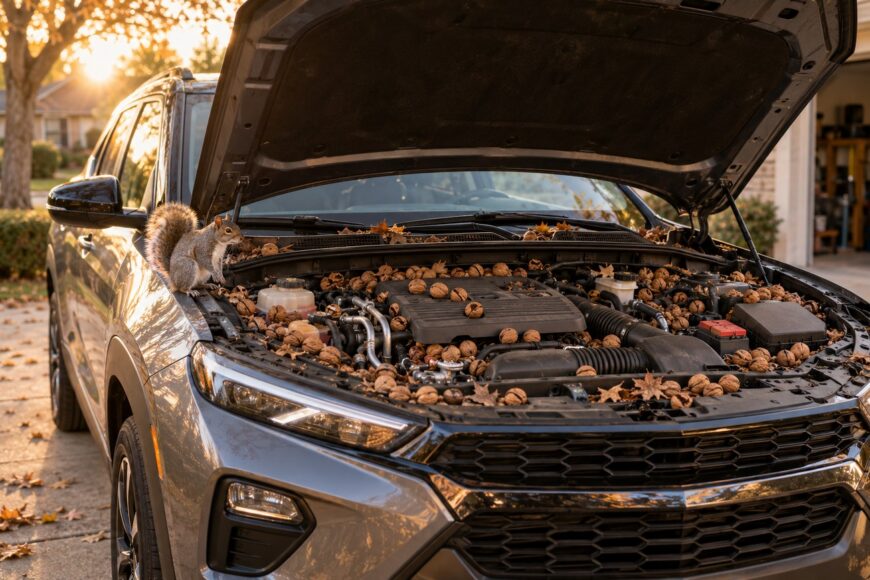
Finding roughly 200 walnuts inside a Chevrolet Trailblazer sounds like an exaggerated repair-shop story until the hood comes up and the engine bay tells the truth. Squirrels cache nuts and seeds in multiple locations as seasonal food stores, and a parked vehicle can offer warmth, cover, and protected cavities close to their feeding route.
The visible handful is rarely the whole problem. Nuts and dry grass may be lodged near the radiator fan, belts, wiring, hot surfaces, or under the battery, creating heat and mechanical concerns while also giving the squirrel a reason to return. Removing what you can see is the first step; confirming that hidden material is gone is the safety-critical part.
- Why Squirrels Fill a Trailblazer With Walnuts
- Where the Hidden Nuts Go—and What the Smell Means
- Why Dumping Out the Visible Walnuts Is Not Enough
- How to Remove a Squirrel Stash Without Creating a New Problem
- How to Stop the Same Squirrel From Returning
- The Biggest Myths About Walnuts in Car Engines
- Frequently asked questions
- How do I stop squirrels from getting walnuts into my car?
- How far away can squirrels smell walnuts?
- What should I do if a squirrel is still using my engine compartment?
- What percentage of nuts do squirrels forget they buried?
Why Squirrels Fill a Trailblazer With Walnuts
Squirrels deliberately scatter food caches so they can recover supplies later. They use many hiding places rather than one central store, which makes a vehicle attractive when its engine compartment provides sheltered pockets that are easy to reach. The behavior is ordinary squirrel food storage, even though the location is highly inconvenient for a vehicle owner.
About 200 walnuts were reportedly found in one vehicle, while another reported case involved up to 558 nuts in 7 days. These figures describe individual incidents, not a normal fixed amount that every squirrel carries into a car. The scale depends on the local food supply, access to the vehicle, and how long the animal can use the compartment undisturbed.
A parked Trailblazer may sit beneath a tree, beside a fence, or near a feeding area that forms part of the squirrel’s regular route. The motor compartment then functions like a warm, covered storage cavity with accessible gaps. Once the animal learns that the space is safe, repeated visits can turn a few dropped nuts into a distributed seasonal stash.
That pattern explains why the problem can seem to appear overnight. The squirrel is making many small trips and placing food in separate pockets, rather than carrying one large load and leaving it in a single pile. A very large reported vehicle stash has involved approximately 70 kg of nuts or 42 gallons in a Chevrolet Avalanche, showing how far systematic caching can go under favorable conditions.
Where the Hidden Nuts Go—and What the Smell Means
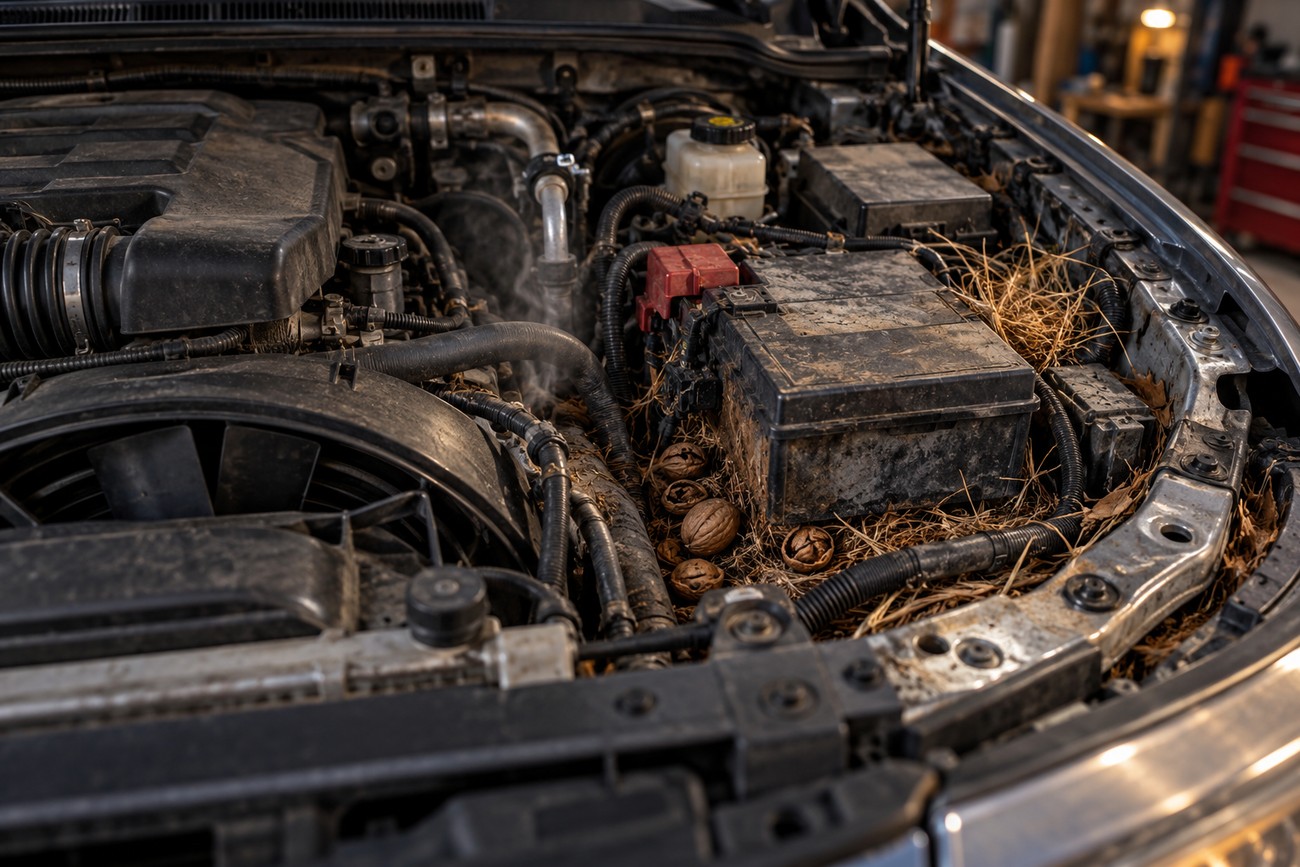
A quick look under the hood often shows only the easiest material to reach. Reported stashes have been found under the battery, near the radiator fan, in body gaps, and in other accessible engine-bay cavities. The nuts may be spread across several pockets, so an empty-looking upper surface does not confirm that the compartment is clean.
Dry grass can be stored with the walnuts and may settle around shields, brackets, and airflow paths. As the engine warms, this material can produce a roasted or burned smell. The odor is an important early warning sign, although mechanical causes such as an oil leak, wiring fault, or overheating condition still require prompt inspection.
Material near the radiator fan can obstruct airflow or be drawn toward moving parts. Nuts under the battery tray or inside body gaps may remain invisible until the battery, cover, or nearby trim is moved. These locations also explain why a stash can survive a superficial cleanup and continue producing odor after the obvious nuts have been removed.
If the smell appears after driving, stop in a safe place, switch the engine off, and allow it to cool before inspecting. Smoke, rising temperature, damaged wiring, or signs of melting call for professional assistance rather than continued driving. A wildlife explanation should never be used to dismiss a genuine mechanical fault.
Why Dumping Out the Visible Walnuts Is Not Enough
Pouring out the visible walnuts may remove the evidence that first caught your eye while leaving the most troublesome material behind. Deep engine-bay cavities can hold nuts beside the fan shroud, belts, wiring, and hot surfaces. Surface inspection is especially unreliable when the cache has been distributed across several small pockets.
Owners also commonly assume that one quick cleanup ends the issue. Residue can remain beneath the battery, behind shields, or in gaps near the radiator, and dry grass can be harder to spot than whole walnuts. If the odor returns, treat it as evidence that the inspection or cleanup is incomplete until the vehicle has been checked.
Cleaning time varies with access and the amount of hidden material. Some jobs take an hour or more; difficult cases can take several days and may require partial front-end disassembly or hood removal. Forcing parts out of the way without proper access can damage clips, wiring, seals, or cooling components.
Continuing to drive after finding debris near moving or heat-producing parts adds avoidable risk. A belt can carry loose material into another area, a fan can scatter debris, and accumulated dry grass can intensify a heat problem. The practical goal is a documented inspection of the whole affected area, followed by a mechanical check where access is limited.
How to Remove a Squirrel Stash Without Creating a New Problem
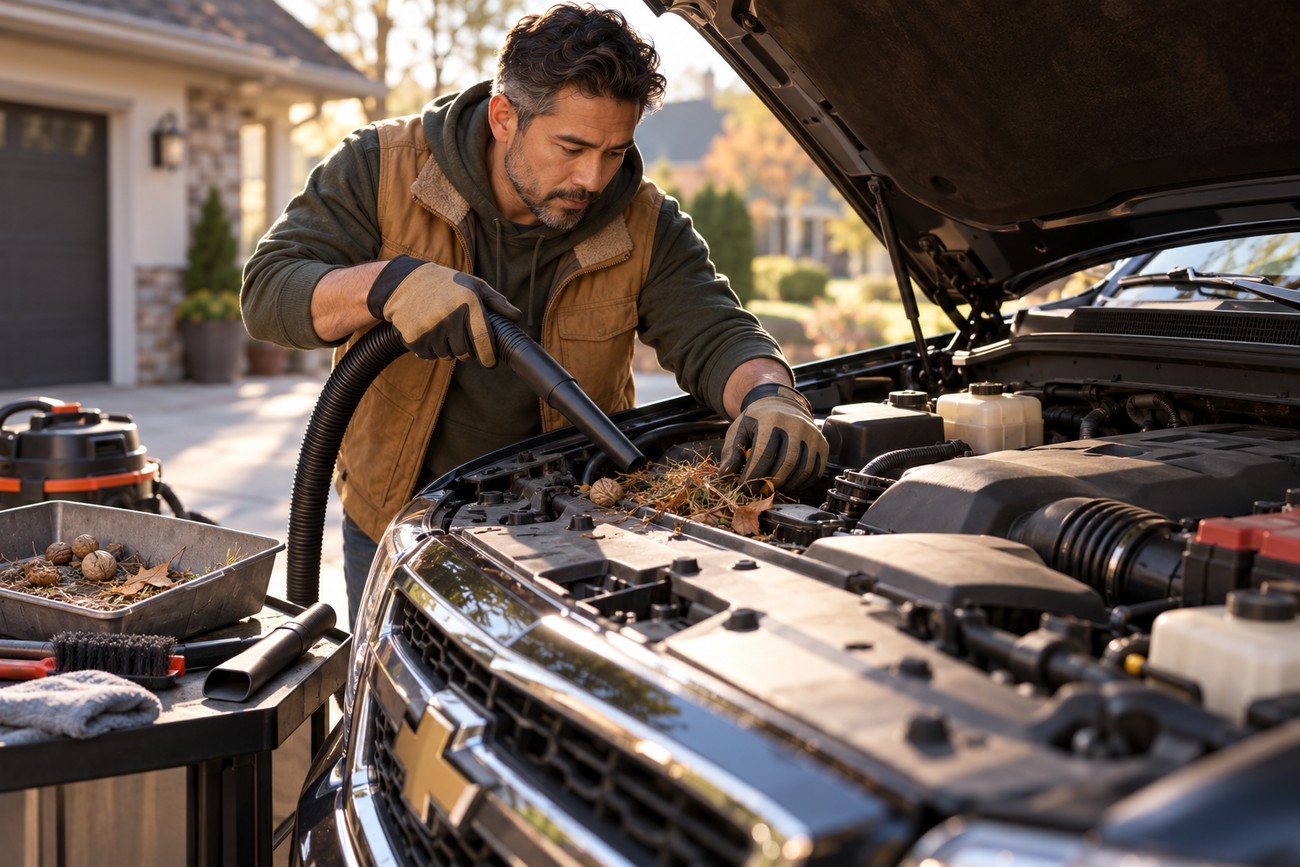
Begin with the vehicle parked securely, the ignition off, and the engine fully cold. Photograph visible nuts, grass, and their locations before removing anything; those images help show a technician where the material was concentrated. Keep hands, clothing, and tools away from the engine bay while the engine is running, since a radiator fan may start automatically and belts can cause immediate hand-injury risk.
Remove loose material by hand while wearing suitable gloves, or use tools that let you reach without leaning across moving components. A vacuum designed for the debris and space available can help with loose remnants, but avoid dragging a hose or tool across delicate wiring and connectors. Do not pull on components, disconnect wiring, or force panels apart simply to reach one nut.
After the obvious material is removed, inspect around the battery tray, fan shroud, radiator area, belts, wiring, body gaps, and heat shields. Use a flashlight and a small inspection mirror where appropriate. Look for chewed insulation, displaced connectors, nesting material, fluid contamination, and residue that could move into the fan or belt path.
Technicians trace debris around the fan shroud, battery tray, belts, and wiring before declaring an engine bay clean. A top-down glance can miss the pocket where the remaining material will later create an odor or moving-part problem.
Professional inspection is the safer choice when nuts are packed behind the radiator, under the battery, or near moving and heat-producing parts. Partial disassembly may be necessary, and some vehicles provide too little clearance for reliable owner-level cleaning. Have the affected components checked before normal driving if the stash reached wiring, belts, the fan, or hot surfaces.
Once cleaning is complete, run the vehicle only in a controlled, well-ventilated setting while watching for abnormal smell, temperature, noise, or warning lights. Stop the test if any symptom returns. A clean engine bay should be followed by confirmation that the cooling airflow, electrical connections, and moving parts remain unobstructed.
How to Stop the Same Squirrel From Returning
Recurrence usually reflects access and surroundings rather than a mysterious preference for one Trailblazer. Parking under trees or near a squirrel feeding area increases exposure, especially during the local nut season. The animal may also use a nearby fence, wall, branch, or parked object as a route into the engine compartment.
Changing the vehicle’s parking position can reduce access more effectively than repeatedly cleaning the same spot. When possible, park away from overhanging branches, woodpiles, dense vegetation, and visible feeding areas. Remove spilled birdseed, fallen walnuts, and other attractants around the parking space, while keeping any wildlife-control steps humane and lawful.
During the local nut season, inspect the engine bay regularly for fresh leaves, grass, droppings, or newly moved material. Early detection limits the time available for a large cache to develop. A single cleanup removes stored food, while changing the approach route and nearby conditions reduces the reason for the squirrel to return.
Repellents can be inconsistent because exposure, weather, and individual animal behavior vary. Do not rely on one unverified spray or scent as the entire solution. If an animal is repeatedly entering the vehicle, local wildlife guidance or a qualified humane-control service can help identify lawful exclusion methods without trapping an animal inside.
The Biggest Myths About Walnuts in Car Engines
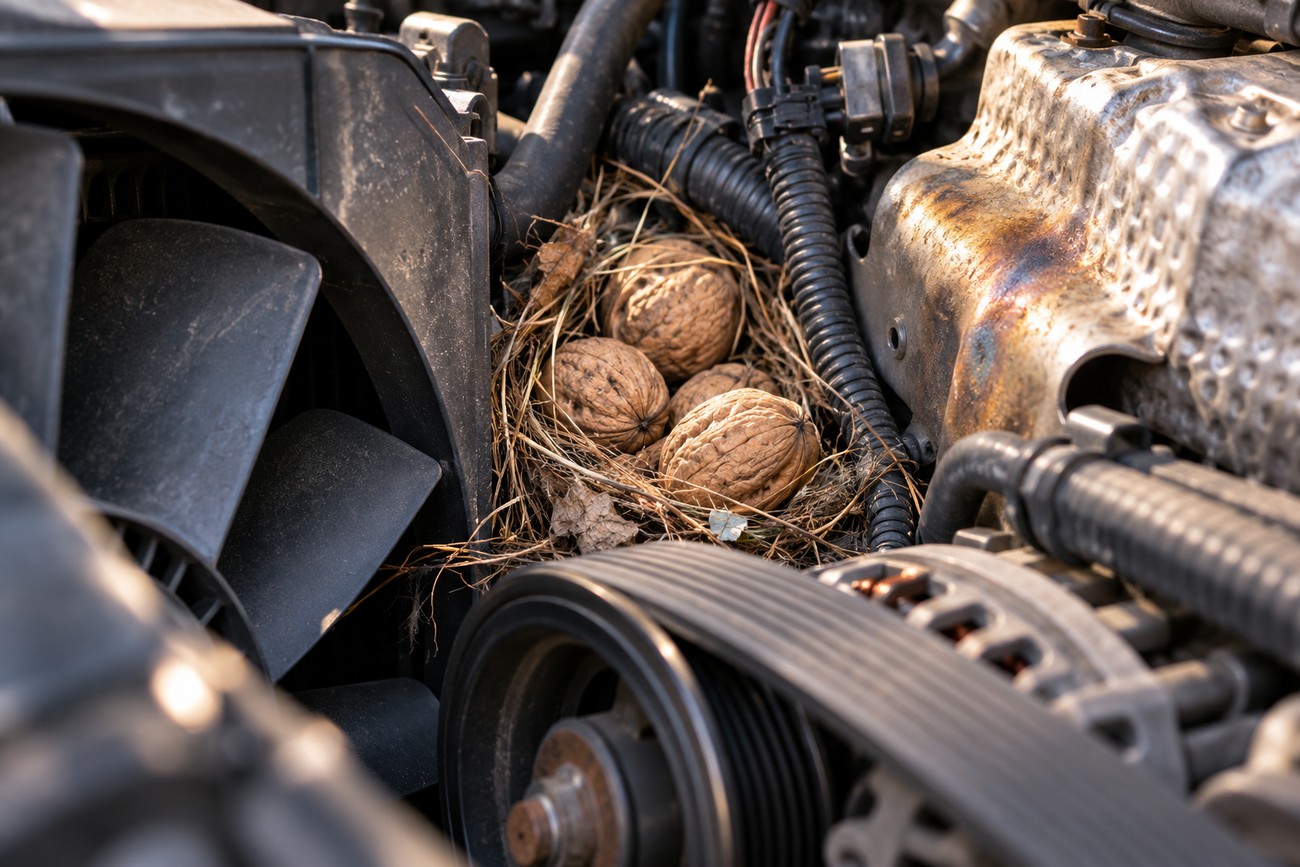
The first myth is that a squirrel carried in a few nuts by accident. Large caches represent systematic food storage, and the scattered placement shows that the vehicle is being used as a protected storage space. About 200 walnuts in one vehicle and up to 558 nuts reportedly found over 7 days in another are examples of what can happen when access remains open.
A second myth is that a small stash is harmless. Even a limited amount matters if it rests beside the radiator fan, belts, wiring, or a hot surface. The risk comes from location and material, including dry grass, rather than from the number of walnuts alone.
Another common mistake is assuming that dumping out visible nuts solves the problem. Hidden pockets under the battery, near the fan, and inside body gaps can retain enough material to create odor or interfere with components. A follow-up inspection is needed when access is poor or symptoms continue.
Finally, this is not a problem limited to unusual vehicles. Reported examples include a Chevrolet Trailblazer, a Chevrolet Avalanche, Subaru vehicles, and other common cars. Brand matters less than the parking environment, the available cavities, and whether the animal can reach and reuse the engine compartment.
Frequently asked questions
How do I stop squirrels from getting walnuts into my car?
Interrupt the animal’s approach route and remove nearby attractants. Change the parking position away from trees, branches, fences, dense cover, and feeding areas when possible, then clear fallen walnuts, spilled birdseed, and other food from around the vehicle. Inspect the engine bay during the local nut season so a new cache is found early.
A single repellent may lose effectiveness with weather or repeated exposure. Humane, lawful exclusion measures and local wildlife guidance are more reliable when the animal keeps returning, especially if the parking location cannot be changed.
How far away can squirrels smell walnuts?
There is no reliable universal distance at which squirrels can smell walnuts. Wind, enclosure, competing odors, and the freshness of the food can all change detection, so smell distance cannot determine whether a parking spot is safe.
Use access and attractants as the practical guide. A vehicle near food, cover, and a climbable route deserves more attention than one parked in a location that removes those conditions, regardless of how far away visible walnuts are.
What should I do if a squirrel is still using my engine compartment?
Do not start the engine, reach toward the animal, trap it, or seal the compartment while it may still be inside. Move away and allow the animal a safe opportunity to leave, then confirm that the compartment is empty before using exclusion measures.
Local rules may govern wildlife removal, relocation, or exclusion. Contact local wildlife authorities or a qualified humane-control service if the squirrel remains, appears injured, or repeatedly returns. Afterward, inspect for nesting material and chewed wiring before driving.
What percentage of nuts do squirrels forget they buried?
There is no single dependable percentage for all squirrels, nut types, habitats, and seasons. Recovery varies with food availability, memory, weather, disturbance, and whether another animal removes the cache.
That uncertainty makes a percentage useless for estimating how much food may remain in a vehicle. Treat every accessible cavity as potentially occupied until it has been inspected and cleaned.







