
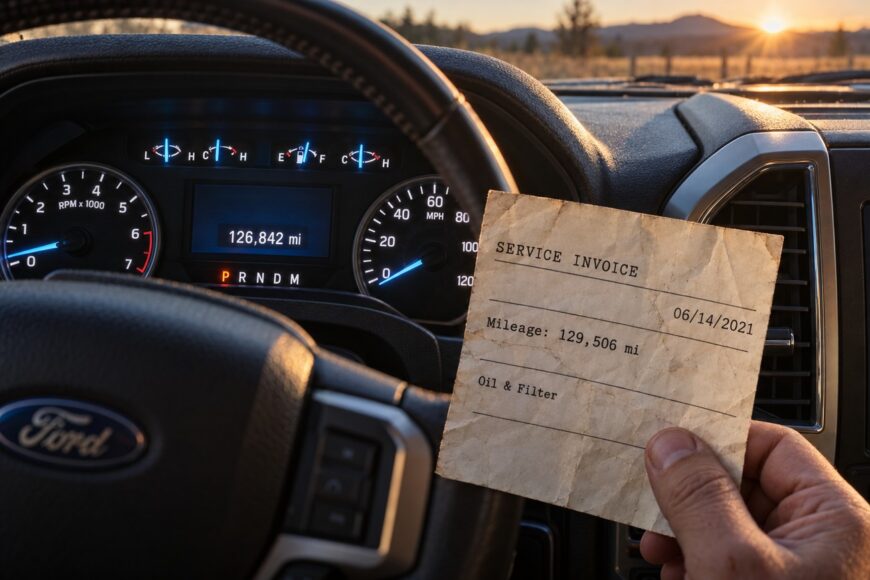
A clean, low-mileage Ford F-150 can look reassuring on a seller’s driveway, yet its digital display may not tell the whole story. A digital odometer can be reprogrammed to display a lower mileage, and a tidy instrument panel offers little assurance either way. The strongest warning comes from a contradiction across dated evidence: a later record showing lower mileage than an earlier documented reading.
Electronic checks can add another view of the truck’s history, but their results need interpretation. A replaced instrument cluster or control module may create a mismatch without establishing fraud. Before deciding what a suspicious reading means, build a timeline, preserve the original evidence, and give each clue the weight it deserves.
- What an Odometer Rollback Means on a Ford F-150
- Build a Mileage Timeline Before Trusting the Display
- Use Wear Clues as Questions, Not Proof
- Check the F-150’s Electronic Modules—Carefully
- The Evidence That Commonly Misleads Buyers
- What to Do When the Mileage Does Not Add Up
- Frequently asked questions
- What does a corrected or unclear mileage entry on an F-150 title mean?
- How can you spot a rolled-back odometer?
- What are bad years to avoid for the Ford F-150?
- How can you identify odometer tampering?
- What should you do if an odometer has been rolled back?
What an Odometer Rollback Means on a Ford F-150
The National Highway Traffic Safety Administration (NHTSA) defines odometer fraud as disconnecting, resetting, or altering an odometer with the intent to change the mileage. For a buyer, the concern is straightforward: a lower displayed reading can distort judgments about use, maintenance, and the truck’s value. Intent matters, though. An unexplained discrepancy deserves investigation; it is not automatically proof that someone altered the mileage to deceive a buyer.
A digital odometer can be reprogrammed to display a lower mileage; visual inspection alone is insufficient. A clean dashboard, intact trim, and normal-looking display cannot authenticate the number on the screen. Conversely, evidence that the instrument cluster was removed does not establish a rollback. The work may have been a legitimate repair, provided its dates, parts, and recorded mileage can be reconciled.
Cluster, PCM, and other module replacements complicate the picture because a component may carry data or settings that do not describe the truck’s entire life. Ask for the repair order, the reason for replacement, and any mileage recorded before and after the work. Those documents help separate a disclosed repair from a concealed change to the displayed reading.
No confirmed rollback frequency for the Ford F-150 is established by the available information. NHTSA’s cited analysis used a random VIN sample rather than an F-150-specific sample, so it should not be turned into a claim about this model. Evaluate the truck in front of you instead of assuming that a particular F-150 is either safe or suspect because of a general fraud estimate.
Build a Mileage Timeline Before Trusting the Display
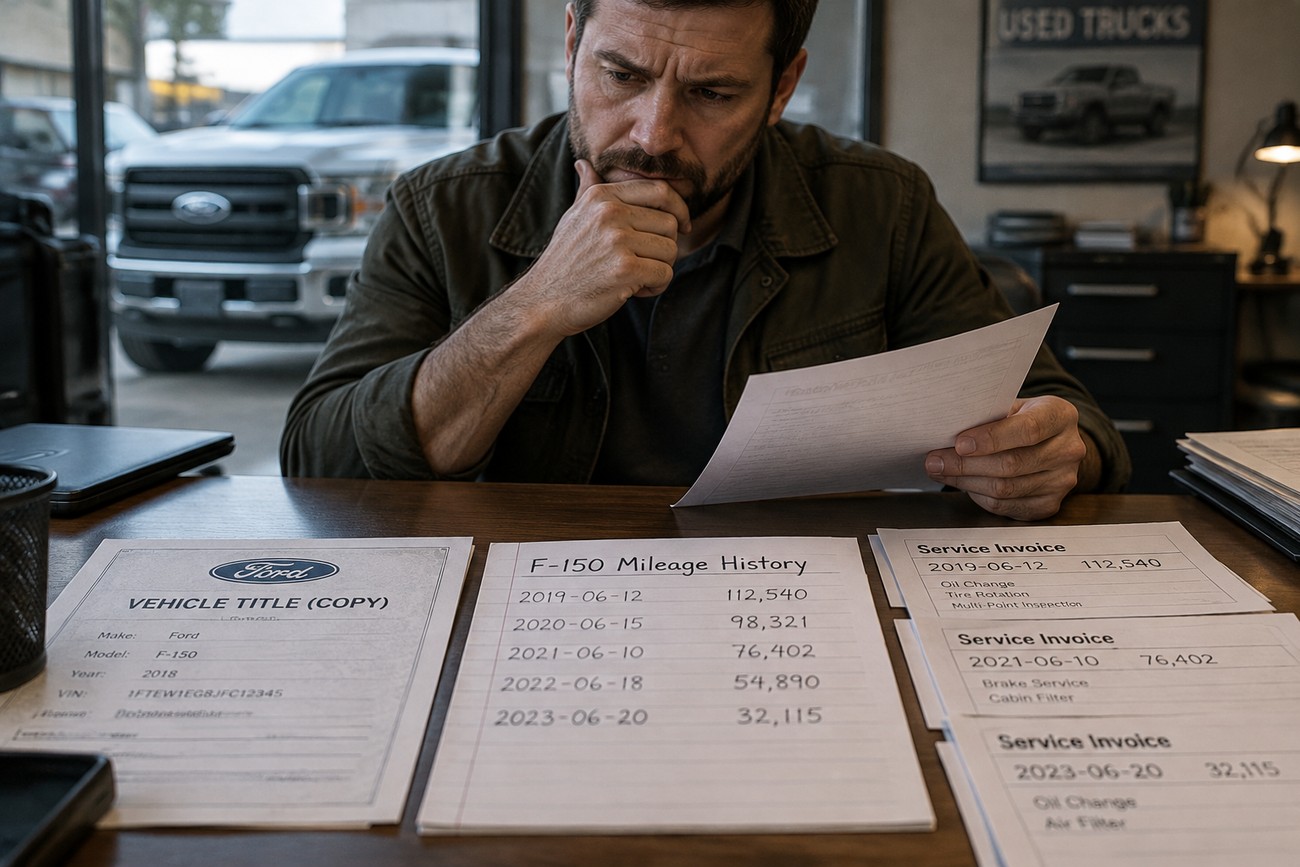
Start with records that identify both the truck and a point in time. NHTSA recommends comparing the odometer with the title, service records, inspection records, oil-change stickers, and a VIN history report. Dealer invoices and tire-service receipts may supply additional dated readings. A useful history is a sequence of observations, rather than a pile of documents whose dates have never been compared.
Record the VIN, date, source, and mileage for each entry, then put the entries in chronological order. Keep an image or copy of the original beside your notes so that you can check a surprising number against its source. Where a record uses a different unit or has an unclear handwritten digit, resolve that detail before treating it as a contradiction. Do not silently “correct” an entry to make the sequence look plausible.
- Photograph the VIN and current display, with the inspection date noted.
- Transcribe each dated reading from the title, invoices, inspections, stickers, and VIN report.
- Compare adjacent entries and mark any later reading that falls below an earlier one.
- Save the underlying documents and request clarification for entries that appear inconsistent.
A later dated record showing lower mileage than an earlier documented reading is the clearest documentary warning. Check the VIN and original document before drawing a conclusion: a data-entry error or misread digit can produce a false alarm. If the conflict remains after verification, a seller’s assurance that the mileage is “about right” does little to resolve it. Ask for records that account for the difference.
History reports only show events that were submitted to them. A gap between entries does not prove the F-150 accumulated no additional mileage, and a clean CARFAX or similar report does not guarantee original mileage. Saved listing photos and auction records can matter because they may capture a displayed reading before a sale or later correction. Preserve them while they remain available.
For an older F-150, paper traces may be particularly useful. Check for oil-change stickers under the hood, on a door jamb, or among documents in the glovebox, along with receipts for routine work. A sticker is a lead rather than a certified reading, but it can point you toward the shop that issued it. An invoice tied to the VIN may then help establish what was recorded on that date.
Use Wear Clues as Questions, Not Proof
Examine the steering wheel, pedals, driver’s seat, switches, tires, and body for wear that seems out of step with the displayed mileage. Such clues can guide the inspection: heavily worn controls might prompt you to look more closely at service history, while uneven tire wear may justify a mechanical check. Neither observation tells you how many miles the F-150 has traveled.
Parts are replaced, interiors are cleaned, and trucks see different kinds of use. Frequent entry and exit can wear a seat without adding much mileage; extended driving can add mileage while leaving an interior comparatively tidy. Tires may have been changed for age, damage, or seasonal use. These variables make a condition-based mileage estimate unreliable as a standalone test.
The reverse mistake is equally easy. A clean-looking F-150 may show no obvious physical sign of digital tampering, so an orderly cabin should not override contradictory records. Compare the strength of the evidence: a dated reading that conflicts with an earlier dated reading carries more weight than a general impression that the truck looks overused.
Keep the conversation with the seller specific. Instead of alleging a rollback because the pedals look worn, ask when the seat, tires, or cluster were replaced and request the related invoices. The answers may explain the condition, reveal a maintenance gap, or direct you to a stronger source of mileage evidence.
Check the F-150’s Electronic Modules—Carefully
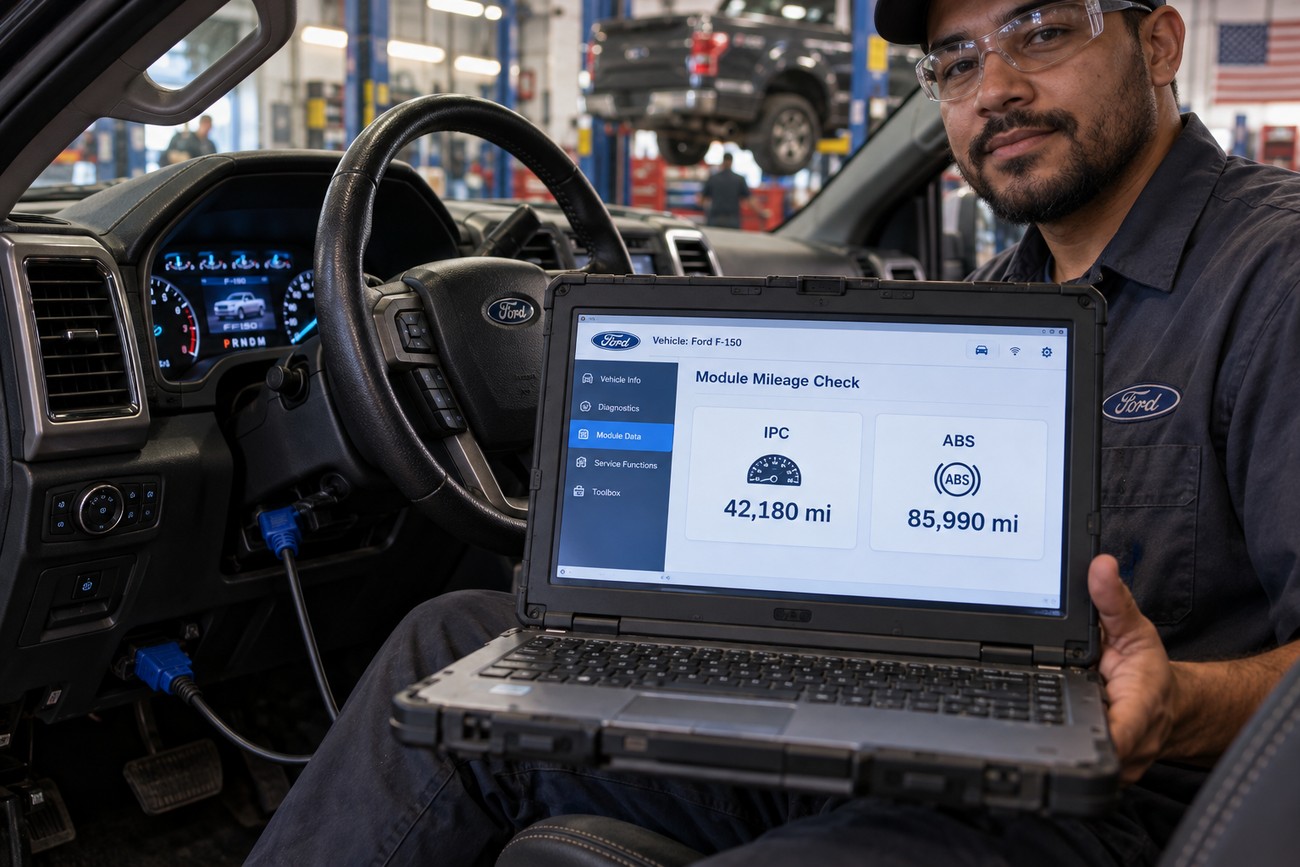
A qualified scan may give you information beyond the instrument-panel reading. Depending on year and configuration, mileage-related data may be compared in the PCM, ABS, RCM, PSCM, IPMA, and instrument panel. Availability and meaning vary by truck, so ask the person performing the scan which values were retrieved, where they came from, and whether each value represents total vehicle mileage.
Owners report using FORScan to compare values across modules. That is a practical cross-check, not a universal procedure for every F-150. A module may lack a usable reading, or its data may need interpretation in light of the vehicle’s configuration. Save the scan results with the date and VIN rather than relying on a verbal summary that the numbers “match” or “do not match.”
A mismatch may indicate tampering, but it may also result from replacement or reprogramming of the instrument cluster, PCM, or another module. A replacement part’s value cannot be assumed to represent the truck’s full history. Likewise, matching readings across accessible modules are useful corroboration, not a guarantee that every earlier mileage event has been captured.
Owner reports conflict on whether software alone can change all relevant mileage values. Some describe an earlier value remaining in other modules; others point to cluster replacement or reprogramming as an explanation for what the display shows. Treat those accounts as reasons to investigate the specific truck, rather than as a dependable rule about which module must reveal an altered reading.
Ask a Ford dealer or qualified diagnostic specialist to review relevant configuration and repair history when a scan raises a concern. Provide the dated records alongside the electronic results. The useful outcome is an explanation that fits both sets of evidence—or a clearly documented conflict that still needs resolution—not a single scan value declared to be the truck’s true lifetime mileage.
The Evidence That Commonly Misleads Buyers
A clean CARFAX can make a listing feel settled, yet CARFAX and similar reports depend on submitted events; a clean report does not guarantee original mileage. Use a report to find dates, readings, and possible conflicts. Then compare it with records held by the seller, service shops, inspection providers, and title authority where available. Missing entries are limits on what you know, not evidence that nothing happened.
Ford’s Oil-Life Monitor calculates service timing separately from total odometer mileage. Resetting it does not by itself reset or prove alteration of the odometer. An unexpectedly fresh oil-life display may prompt a question about recent service, but it cannot resolve a disputed total-mileage reading. Look for the dated invoice rather than treating the service screen as a fraud test.
Physical wear and electronic mismatches have opposite temptations. Wear can invite an accusation unsupported by records; a module value can look precise enough to end the investigation prematurely. In both cases, the next step is to identify what the clue actually measures. A scan discrepancy requires configuration, replacement, and documentation checks before it can support a conclusion about tampering.
The absence of visible interference is another weak shortcut. Digital tampering may leave no obvious trace on the instrument panel, while ordinary repair work may leave signs of disassembly. Put the greatest weight on verified, dated contradictions and on whether the seller can supply a coherent, documented explanation for them.
What to Do When the Mileage Does Not Add Up
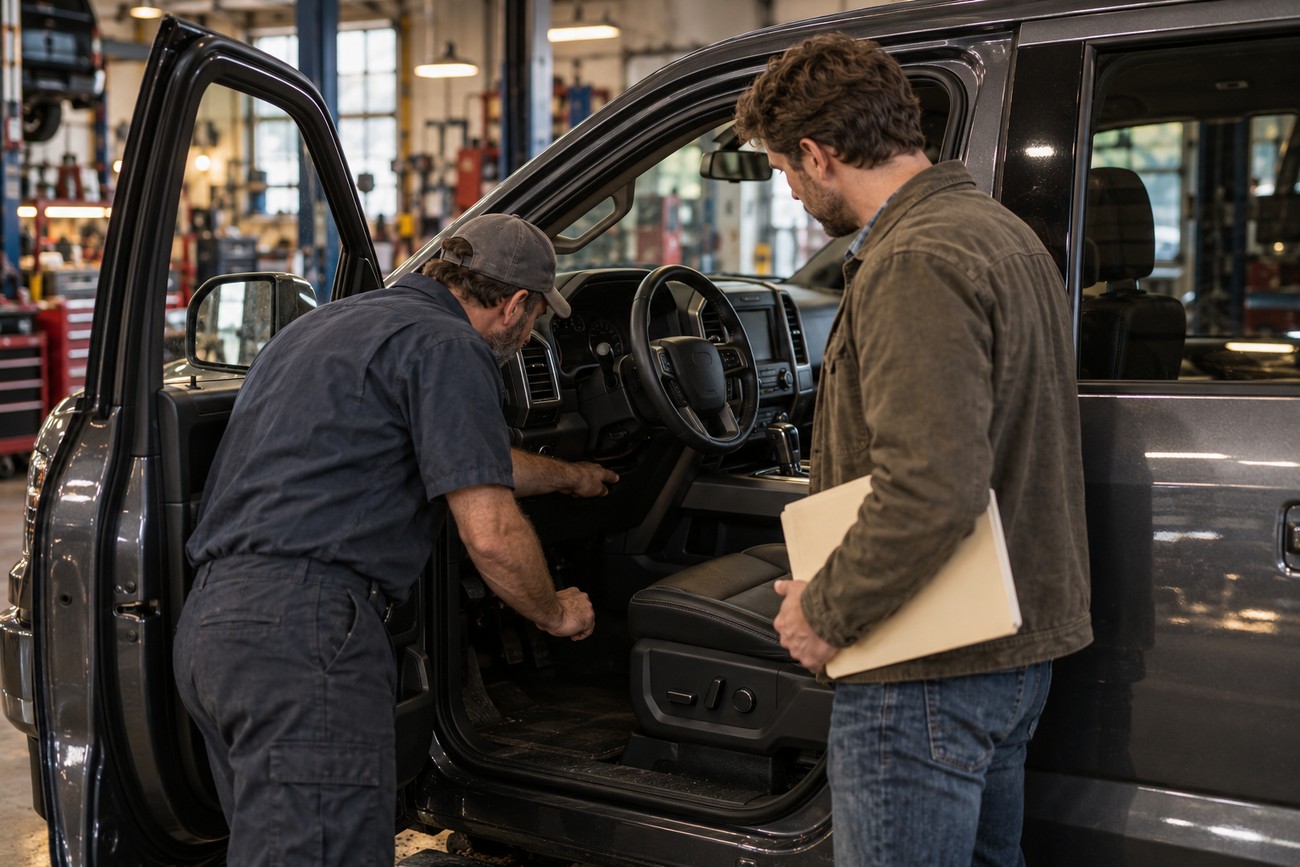
Before purchase, pause if a verified reading falls below an earlier documented one. Ask the seller for the original title, relevant service invoices, and any records of cluster or module replacement. If the explanation remains incomplete, arrange an independent inspection and allow time to check the documents. You do not need to prove fraud to decide that the mileage uncertainty is too substantial for the purchase.
Preserve the evidence before it changes. Record the VIN, displayed mileage, dates, documents, listing images, communications, and scan results before repairing, replacing, or reprogramming electronic components. Save screenshots of the advertisement and clear images of the title and odometer. Keep original files where possible, along with notes about when you received each item.
If you discover the conflict after purchase, avoid trying to “fix” the reading or swapping parts to make the numbers agree. A Ford dealer or qualified specialist can examine configuration and possible replacement history, but no single scan proves the complete mileage history. Give the specialist the earlier documents so the diagnostic findings can be considered against dated observations.
A documented cluster or PCM replacement may explain a discrepancy; it does not erase the need to reconcile prior records. Ask for a written account of what was replaced, when it was replaced, and which mileage was recorded at the time. That distinction matters to a future buyer: a repair with a traceable history is different from an unexplained lower display presented as original.
Where suspected fraud remains unresolved, keep the evidence intact and seek guidance from the appropriate consumer-protection regulator, motor-vehicle authority, or law-enforcement channel for your location. Rules and reporting routes vary. Provide the conflicting dated readings and supporting files, separating what the records show from what you suspect happened.
Frequently asked questions
These situations call for slightly different decisions. The aim in each case is to identify what can be verified before treating a displayed number—or an explanation for it—as settled.
What does a corrected or unclear mileage entry on an F-150 title mean?
It means the title entry needs clarification, not that fraud or innocence has been established. Ask the issuing motor-vehicle authority what the correction or mileage notation represents and whether an earlier title record is available. Compare the clarified entry with the truck’s dated service history, and keep copies of both the title and the authority’s response.
How can you spot a rolled-back odometer?
Look for a verified later mileage reading that is lower than an earlier one for the same VIN. Before relying on that conflict, inspect the original entries for transcription mistakes, unclear digits, or unit differences. If the readings still disagree, request the records needed to explain the change; a low current display alone cannot establish when or why it happened.
What are bad years to avoid for the Ford F-150?
There is no model year that should be labeled a rollback year on the evidence available here. For mileage verification, the better distinction is between an individual truck with a traceable history and one with unresolved gaps or contradictions. Older trucks may rely more on paper invoices and stickers because electronic history coverage varies by vehicle and record source; assess mechanical condition separately from mileage authenticity.
How can you identify odometer tampering?
Identify it through evidence that survives checks against independent sources, rather than through a dashboard appearance or one module value. A specialist can examine the F-150’s configuration and stored data, then compare those findings with dated records and documented parts replacements. Even a dealer inspection cannot guarantee exact lifetime mileage without supporting history, so ask for the findings and their limitations in writing.
What should you do if an odometer has been rolled back?
Preserve the listing, seller messages, title images, dated mileage records, and diagnostic results before authorizing repairs or programming. Contact the seller or selling business in writing with the specific conflict, and seek advice from the relevant motor-vehicle or consumer-protection authority about reporting and available remedies. Do not alter the display yourself; retaining the original evidence gives a specialist or investigator a clearer basis for reviewing the case.







