
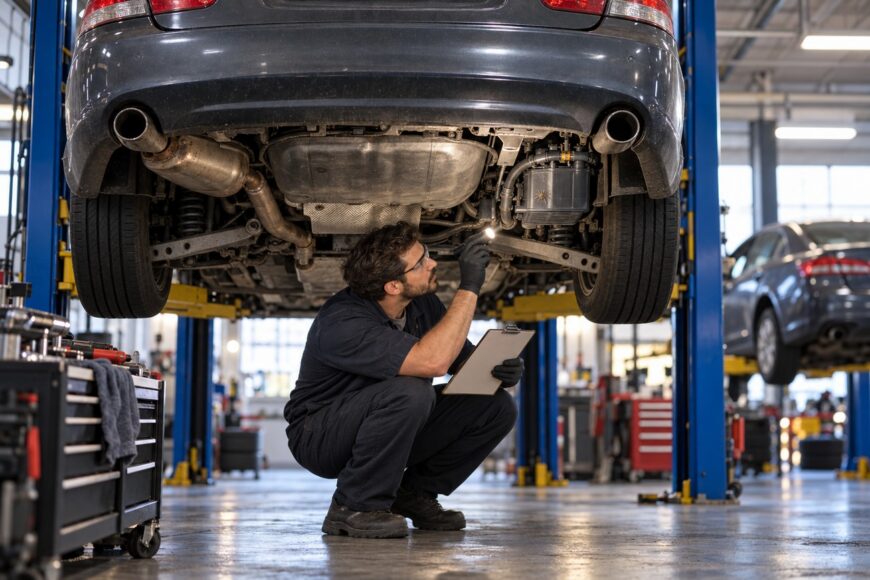
A spider small enough to hide in a protected fuel-system passage can be linked to a much larger safety concern: a cracked fuel tank. The Mazda6 recall story is often reduced to “spiders in the canister,” although the documented defect involves spider webbing in the EVAP canister ventilation line. That narrow line can lose its ability to vent the fuel tank correctly.
Many owners first see a Check Engine light, an EVAP trouble code, or a failed emissions test. The safety issue described in the recall documents is more serious: restricted ventilation can create excessive negative pressure during EVAP purge cycles, which may contribute to tank cracking, fuel leakage, and fire risk. The issue applies only to specific vehicles, and the documents do not establish that every spider, or every yellow spider, is dangerous.
- The Two Mazda6 Spider Recall Campaigns Compared
- How a Spider Can Create a Fuel-Tank Safety Risk
- Symptoms Owners Notice—and What They Do Not Prove
- What the Official Repairs Actually Change
- How to Check a Used Mazda6 Before Spending Money
- Common Myths, Mistakes, and the Safest Next Step
- Frequently Asked Questions
- What should I do if my VIN shows the recall as completed but the Check Engine light returns?
- What are the current recalls on the Mazda6?
- Which car was recalled due to spiders?
- What year to stay away from Mazda6?
The Two Mazda6 Spider Recall Campaigns Compared
Mazda6 vehicles associated with this issue fall into two campaign groups. Their production dates and repair procedures overlap in places, so a model year alone cannot identify the correct repair.
| Campaign group | Vehicles and production dates | Engine scope | Repair approach | Why VIN verification matters |
|---|---|---|---|---|
| Earlier campaign | 2009–2010 Mazda6 vehicles manufactured April 8, 2008–February 8, 2010 | As specified by the applicable VIN campaign | Clean the vent line, install a protective spring against spider intrusion, and reprogram the PCM | Production date and VIN determine whether an individual car is included |
| Later campaign | 2010–2012 Mazda6 vehicles manufactured September 14, 2009–May 2, 2011 | 2.5-liter engine | Clean the vent line and update the PCM; if webbing is found, replace the fuel tank and vent check valve | Engine, production date, VIN, and recall history must match the campaign |
The overlapping dates explain why online descriptions can be misleading. A 2010 Mazda6 may fall within one group, the other group, or neither, depending on its engine, production date, and VIN. Model year, build date, and engine scope are related identifiers, though they are not interchangeable.
The repair record also matters. A general statement that a “spider recall” was completed does not show which procedure was used, whether webbing was found, or whether a tank and vent check valve were replaced when required.
How a Spider Can Create a Fuel-Tank Safety Risk
The EVAP system controls fuel vapors rather than allowing them to escape freely into the atmosphere. Air must move through the canister ventilation path as the system stores and purges those vapors. In the documented Mazda6 mechanism, spider webbing forms inside the narrow EVAP canister vent line and restricts that airflow.
During an EVAP purge cycle, the engine draws vapors from the system. If the vent line cannot admit air properly, the fuel tank can experience excessive negative pressure. A single restricted event does not automatically mean the tank has failed, yet repeated pressure cycles may stress the tank enough to cause a crack.
A cracked tank can release fuel, creating an ignition hazard. That is why this recall involves more than an emissions fault or an inconvenient fuel-system warning. The possible consequence is a fuel leak and fire risk, even though the available recall information does not provide a simple public count of resulting fires or prove how often such damage occurred.
The location is also important. This is not a blocked engine air filter, and the documented concern is not simply a spider living inside the fuel canister. Official documents describe a particular spider-related intrusion mechanism in the EVAP ventilation line; they do not establish that all yellow spiders are dangerous.
Symptoms Owners Notice—and What They Do Not Prove
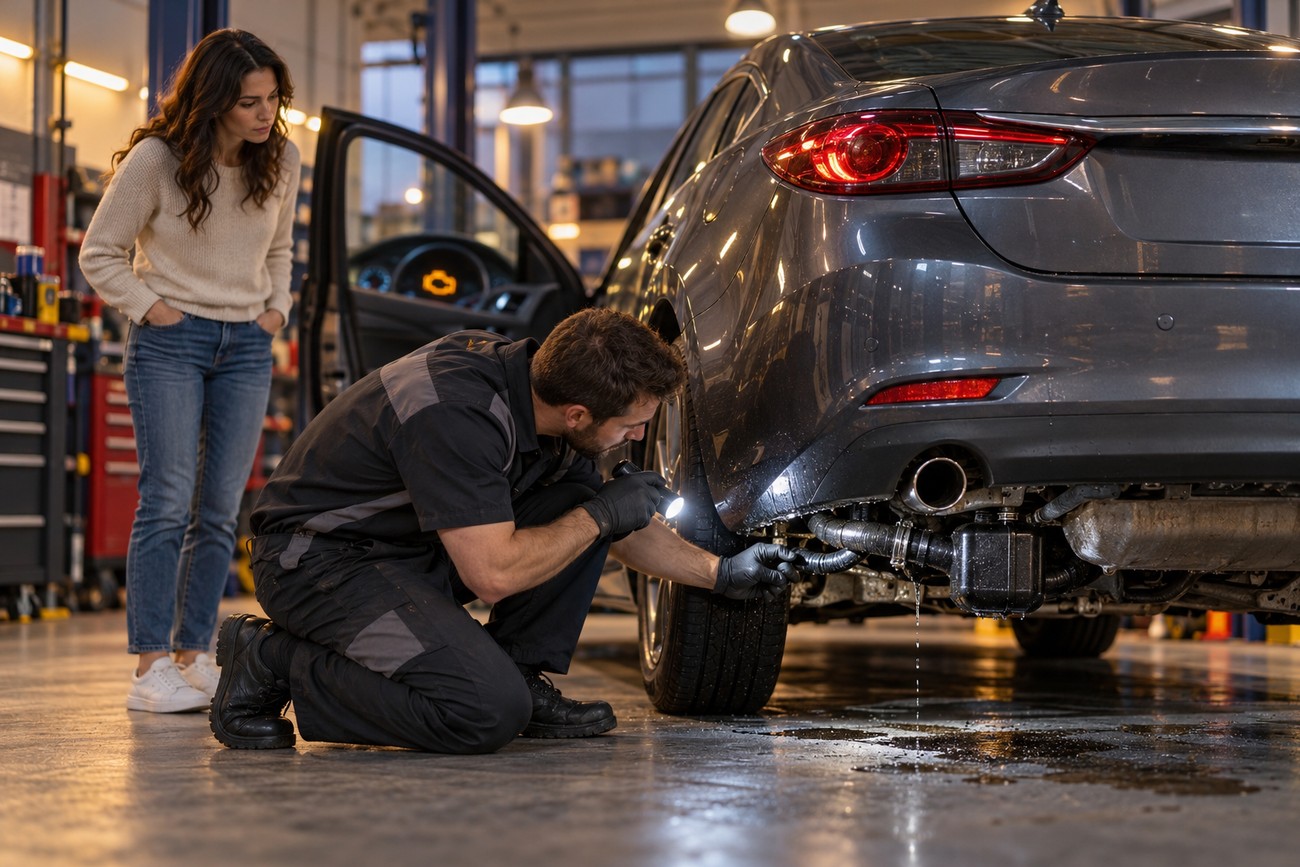
Owners may notice a Check Engine light, EVAP trouble codes, or difficulty passing an emissions test. Those signs can be consistent with restricted EVAP ventilation, although they can also result from unrelated problems such as a damaged hose, wiring fault, sensor issue, or fuel-cap problem. A symptom supports diagnosis; it does not establish recall eligibility.
A gasoline odor after parking deserves more attention than a routine emissions warning. Wet evidence near the vehicle, visible fuel, or a suspected leak should be treated as a safety issue and inspected promptly. If the odor is strong, avoid unnecessary driving and arrange professional assistance rather than testing the car through repeated trips.
A loose or faulty fuel cap can produce EVAP codes and may lead to a cheaper initial diagnosis. Correcting the cap does not prove that the recall defect is absent, especially if the ventilation line has not been checked. The two problems can also exist independently on the same vehicle.
Partial restriction creates a further trap. The car may have no visible leak while the vent line still limits airflow and allows abnormal tank pressure during purge cycles. Likewise, a Check Engine light that was recently cleared shows only that the warning is off at that moment; it does not prove that the recall repair was completed or that the underlying fault has disappeared.
What the Official Repairs Actually Change
The earlier 2011 repair procedure addressed the vent path and the control strategy together. It called for cleaning the EVAP canister vent line, installing a protective spring against spider intrusion, and reprogramming the PCM. The PCM change matters because EVAP purge control affects the pressure conditions imposed on the tank.
The 2014 campaign used a different repair path. It called for cleaning the vent line and updating the PCM. If webbing was found, the procedure required replacement of the fuel tank and the vent check valve, rather than treating cleaning alone as sufficient.
Checking the vent-line finding and the tank condition separately prevents a cleared EVAP code from being mistaken for proof that the tank survived without damage.
Parts from one campaign should not be assumed to apply to the other. A protective spring mentioned in the earlier procedure should not be presented as the complete remedy for a later campaign, and a generic replacement part should not be purchased solely because an advertisement uses the phrase “spider recall.” The applicable VIN record and repair instructions control.
Recall work addresses the documented defect. It does not automatically repair later damage to EVAP hoses, wiring, sensors, valves, or other components. A vehicle can have a completed campaign and still develop a separate EVAP fault, or it can have an incomplete record that requires the original repair to be reviewed.
How to Check a Used Mazda6 Before Spending Money
Start with the vehicle identification number, then check the recall history through the relevant authorized source. Confirm the model year, production date, engine where applicable, and the market in which the vehicle was registered. This process is more reliable than searching by “2009–2012 Mazda6” and assuming every car has the same exposure.
- Record the full VIN from the vehicle and its registration documents.
- Ask for the recall status and the detailed dealer repair order.
- Check which parts and procedures were recorded, including any tank or vent check-valve replacement.
- Arrange an EVAP inspection if the car has a warning light, gasoline odor, or a history of unexplained emissions faults.
A status marked “closed” is useful, though it is weaker evidence than a dealer work order describing the inspection, parts, and procedure. This distinction matters on a used car because the previous owner or seller may remember only that the line was cleaned. If webbing was found under the applicable 2014 procedure, tank and vent check-valve replacement was part of the required response.
Do not treat an old invoice for a fuel cap, an EVAP code, or a general fuel-system service as proof that the recall was completed. Ask the seller for documentation and let a qualified repair facility compare the vehicle’s current condition with the campaign record before you commit to repair costs.
US-market recall information, including information associated with NHTSA campaigns, does not automatically establish identical coverage in another country. A Mazda6 registered elsewhere should be checked with the manufacturer’s authorized information for that jurisdiction, using the local VIN and market records.
Common Myths, Mistakes, and the Safest Next Step
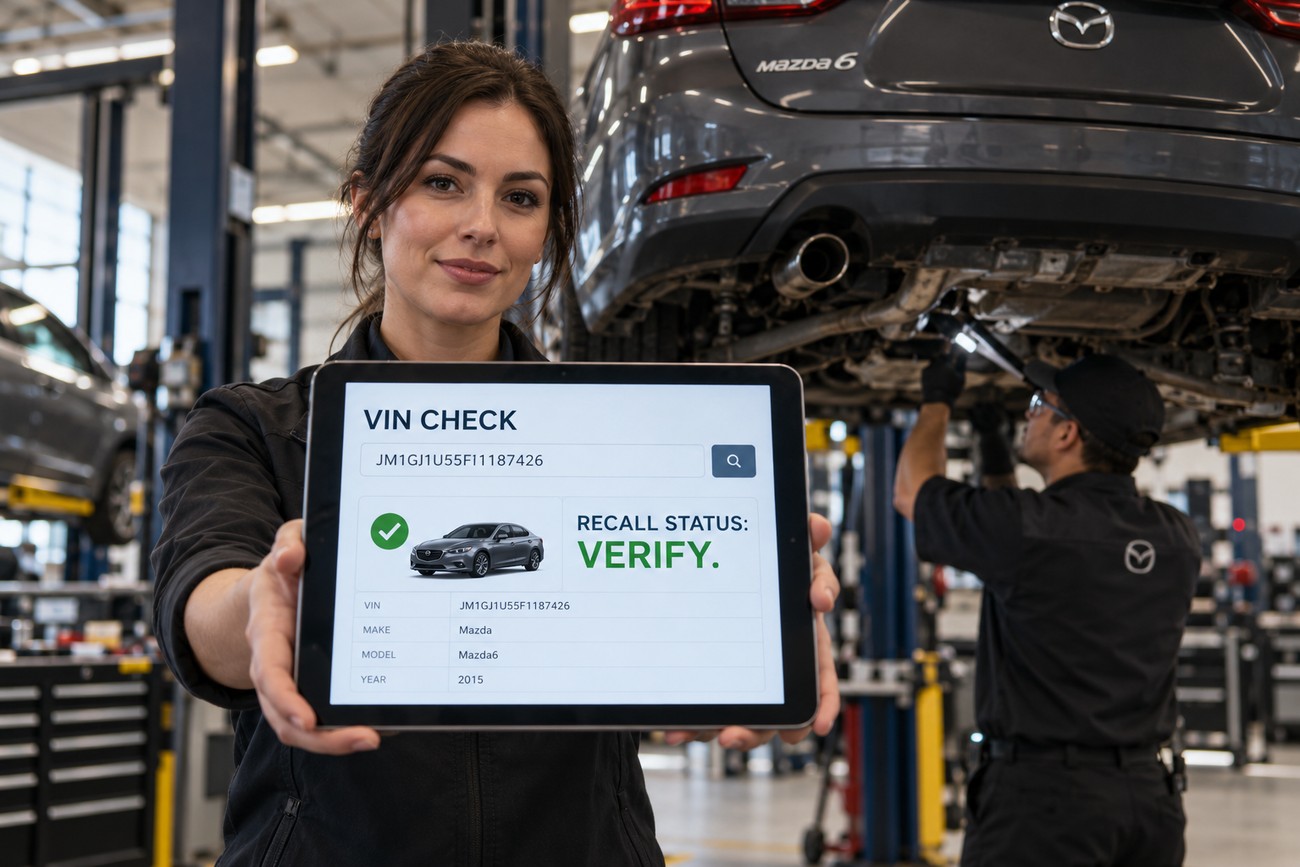
The affected population is limited by campaign, VIN, production date, and, for one group, the 2.5-liter engine. There is no sound basis for avoiding every 2009–2012 Mazda6 solely because of the model-year range. A careful buyer should verify the individual vehicle rather than rely on a blanket warning.
The defect is also not an engine air-filter problem. Spraying household insect repellent around the car, treating the engine bay, or trying to prevent spiders near the vehicle is not a documented substitute for inspecting and repairing the EVAP ventilation line. The relevant passage is protected and narrow, so surface treatment does not verify its condition.
Cleaning the line does not guarantee that the fuel tank is undamaged. If webbing was found under the applicable procedure, the repair may require tank and vent check-valve replacement. A vehicle that has only a vague note saying “cleaned” deserves a closer documentation review, particularly if it later develops fuel odor or recurring EVAP codes.
Stop using the vehicle and arrange professional inspection if you smell gasoline strongly, see wet fuel evidence, or suspect a leak. Park away from ignition sources when it is safe to do so, and avoid assuming that the problem is merely an emissions nuisance. The available information supports a safety-first inspection; it does not support claims about how often fires or repeat failures occur.
Frequently Asked Questions
What should I do if my VIN shows the recall as completed but the Check Engine light returns?
Request the original dealer work order first. It should show the campaign procedure, inspection findings, and parts used. Then have the EVAP system rescanned and inspected, rather than assuming the recall repair was incomplete or assuming the warning is unrelated.
The returning light may reflect a separate hose, wiring, sensor, valve, or leak fault. A completed recall record does not rule out a new EVAP problem, and a cleared warning does not prove that every related component is healthy.
What are the current recalls on the Mazda6?
Recall status is vehicle-specific and can change by market and VIN. For the spider-related issue, the relevant US-market groups are the specified 2009–2010 vehicles and the specified 2010–2012 2.5-liter vehicles, each limited by production date and VIN.
Use the authorized recall database for the vehicle’s registration country and obtain the VIN-specific history. A general online list cannot confirm whether an individual car has an open campaign or whether earlier work was performed correctly.
Which car was recalled due to spiders?
Specific Mazda6 vehicles were included in campaigns involving spider webbing in the EVAP canister ventilation line. The affected groups were 2009–2010 Mazda6 vehicles manufactured April 8, 2008–February 8, 2010, and 2010–2012 Mazda6 vehicles with the 2.5-liter engine manufactured September 14, 2009–May 2, 2011.
That description does not cover every Mazda6 in those model years, and it does not mean every spider is dangerous. VIN, production date, engine scope, recall history, and market must be checked together.
What year to stay away from Mazda6?
There is no single Mazda6 model year that should automatically be avoided solely because of this recall. The practical screening rule is to verify the VIN, confirm the applicable campaign, and inspect the repair documentation before purchase.
Walk away from a specific vehicle, or pause the transaction, if the seller cannot explain an open recall, refuses documentation, or the car has gasoline odor or evidence of leakage. A properly documented repair and a sound inspection provide more useful information than model year alone.







