
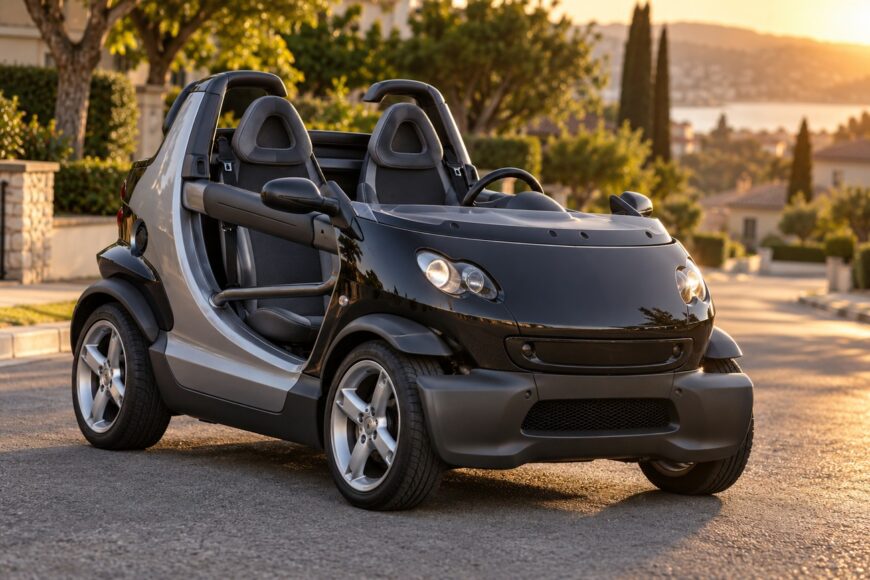
The Smart Crossblade looks less like a car with its roof removed than a car stripped down to its visual essentials. There is no windshield, side glass, roof, or conventional door, leaving the driver exposed to the air from the first turn of the wheel. Its shape stands out in traffic and makes an even stronger impression when parked.
That openness is the Crossblade’s entire point, and its greatest ownership problem. This limited Smart fortwo variant offers a beach-like summer experience with almost no weather protection. It makes more sense as an image-driven roadster, occasional toy, or collector car than as an everyday convertible.
- What the Smart Crossblade Actually Is
- Smart Crossblade Specifications: Small, Light, and Not Especially Fast
- What It Feels Like to Drive Without a Windshield
- The Ownership Reality: Weather, Noise, and a Very Short Season
- Buying a Rare Crossblade: Originality Matters More Than the Badge
- Crossblade Myths That Collapse in Real-World Use
- Frequently asked questions
- What should I inspect on an original Smart Crossblade before buying?
- How should I check Crossblade-specific parts and originality?
- What kind of trip suits the Smart Crossblade best?
What the Smart Crossblade Actually Is
The Smart Crossblade was a limited Smart fortwo variant, produced around 2002–2003. It lacks the features that normally make an open car usable: a windshield, side windows, a roof, and conventional doors. The result is closer to a stripped-down roadster than to a standard convertible.
Smart built the Crossblade around exposure rather than protection. The open sides and low body create a direct connection with the surroundings, while the seating position and restraints retain some familiar road-car elements. That combination gives the car its unusual character, but it also makes ordinary expectations about comfort unreliable.
Approximately 2,000 cars are commonly cited, although exact market and specification breakdowns vary by source. That uncertainty matters to collectors because an apparently minor difference in trim, equipment, or originality can affect how a particular car is judged. Rarity helps establish interest; it does not automatically establish value.
Smart Crossblade Specifications: Small, Light, and Not Especially Fast
The Crossblade’s mechanical specification is modest by modern standards. Figures vary slightly by source and specification, so the commonly cited ranges are more useful than false precision.
| Specification | Commonly cited figure |
|---|---|
| Engine | 0.7-liter turbocharged three-cylinder |
| Power | 50 kW, approximately 67 hp |
| Transmission | Automated manual transmission |
| Weight | Approximately 700–740 kg, depending on source and specification |
| 0–100 km/h | Approximately 17–18 seconds |
| Top speed | Approximately 135–140 km/h |
Low mass gives the Crossblade a light, immediate feel at urban speeds. The short wheelbase and open cockpit can make a modest maneuver feel more dramatic than it would in a heavier car. That is the source of its kart-like character.
Low weight does not turn the Crossblade into a genuinely fast car. The 50 kW engine and automated manual transmission deliver modest acceleration, and the transmission’s shifts are part of the experience rather than a source of sports-car urgency. It feels lively because the driver is exposed and close to the road, not because the performance figures are exceptional.
Those figures also explain why the Crossblade is more enjoyable on small roads and short outings than on long high-speed journeys. The car’s commonly cited top-speed range is approximately 135–140 km/h, but the airflow and noise arrive well before that point.
What It Feels Like to Drive Without a Windshield
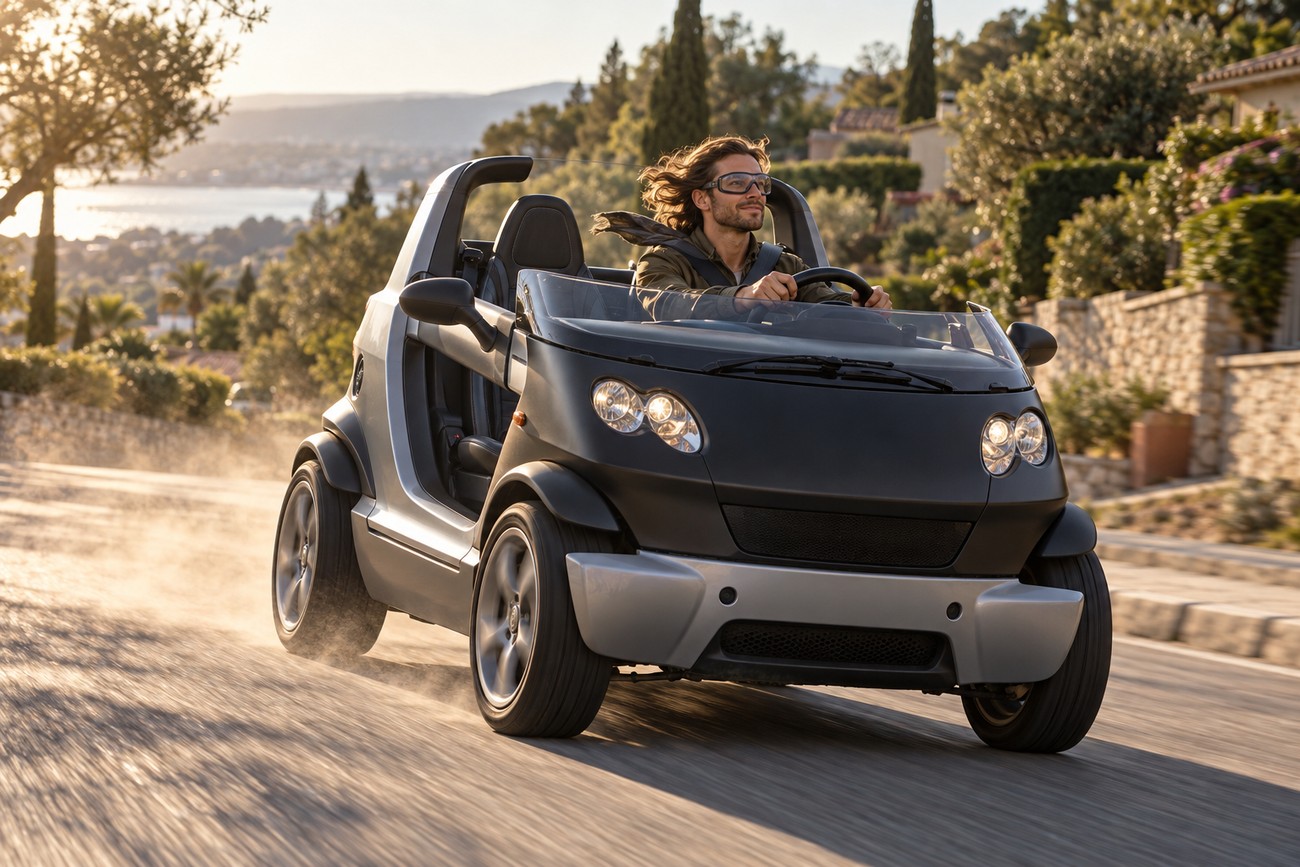
Without a windshield, airflow reaches the driver directly instead of being shaped and deflected by glass. Wind buffeting becomes increasingly uncomfortable with speed, and crosswinds can make the open cockpit feel unsettled. Even a short trip can demand more concentration than the same route in a normal convertible.
Road debris becomes part of the driving environment. Insects, dust, spray, and small stones can reach the occupants, while passing traffic on wet roads can throw water into the cabin. The Crossblade’s appeal depends on accepting that the outside world is no longer separated from the interior.
Noise is equally important. Aerodynamic turbulence, road noise, and the lack of a windshield can become tiring, especially on extended routes. Sunglasses or protective eyewear, suitable clothing, and sensible footwear are practical equipment here, not styling choices.
The Ownership Reality: Weather, Noise, and a Very Short Season
Rain changes the Crossblade from an entertaining open roadster into a wet seat with controls. Even light rain can make the cabin cold and uncomfortable, while spray from other vehicles reaches areas that a conventional convertible would shield. There is little margin between pleasant weather and an unpleasant drive.
Cold weather creates a similar problem. Warm clothing can extend the usable season, but it cannot prevent wind, moisture, dirt, and noise from reaching the occupants. Winter use is impractical for most owners, particularly where roads are wet or dirty.
The exposed interior also demands more cleaning. Dust, leaves, spray, and general road grime can settle on the seats and surrounding surfaces, so the car needs attention after conditions that would barely register in an enclosed vehicle. Proper storage becomes part of ownership rather than an optional precaution.
For those reasons, the Crossblade usually works best as a second or occasional car. A short drive on a dry, warm day can deliver the experience the design promises. A commute, a long highway trip, or an uncertain-weather journey exposes its compromises quickly.
The driver’s equipment has an outsize effect on comfort. Eyewear, wind-resistant clothing, and secure footwear can make a good day better, but they cannot provide the weather protection of a normal convertible.
Buying a Rare Crossblade: Originality Matters More Than the Badge
A Crossblade purchase needs two separate inspections: one for ordinary mechanical condition and another for model-specific body and trim. The 0.7-liter turbocharged three-cylinder and automated manual transmission still require normal checks for leaks, wear, service quality, and correct operation. Those issues may be familiar to a specialist, even when the car itself is rare.
Rare exterior elements are a different matter. Specific body components, original fittings, and unusual trim can be difficult or expensive to source. A car that looks complete at a glance may lose collector appeal if its parts have been replaced, altered, or improvised.
Resale liquidity is limited because the buyer pool is narrow. Condition and originality usually matter more than the badge or the production figure alone, and a modified car may appeal to fewer collectors even if its modifications improve day-to-day comfort. Homemade windshields or similar additions can change the appearance and reduce the model’s original character.
Registration, insurance, and operating requirements also vary by country or jurisdiction. Before buying, confirm that the particular vehicle can be registered and insured for the intended use. A rare open-bodied car can create administrative complications that have nothing to do with its mechanical condition.
Crossblade Myths That Collapse in Real-World Use
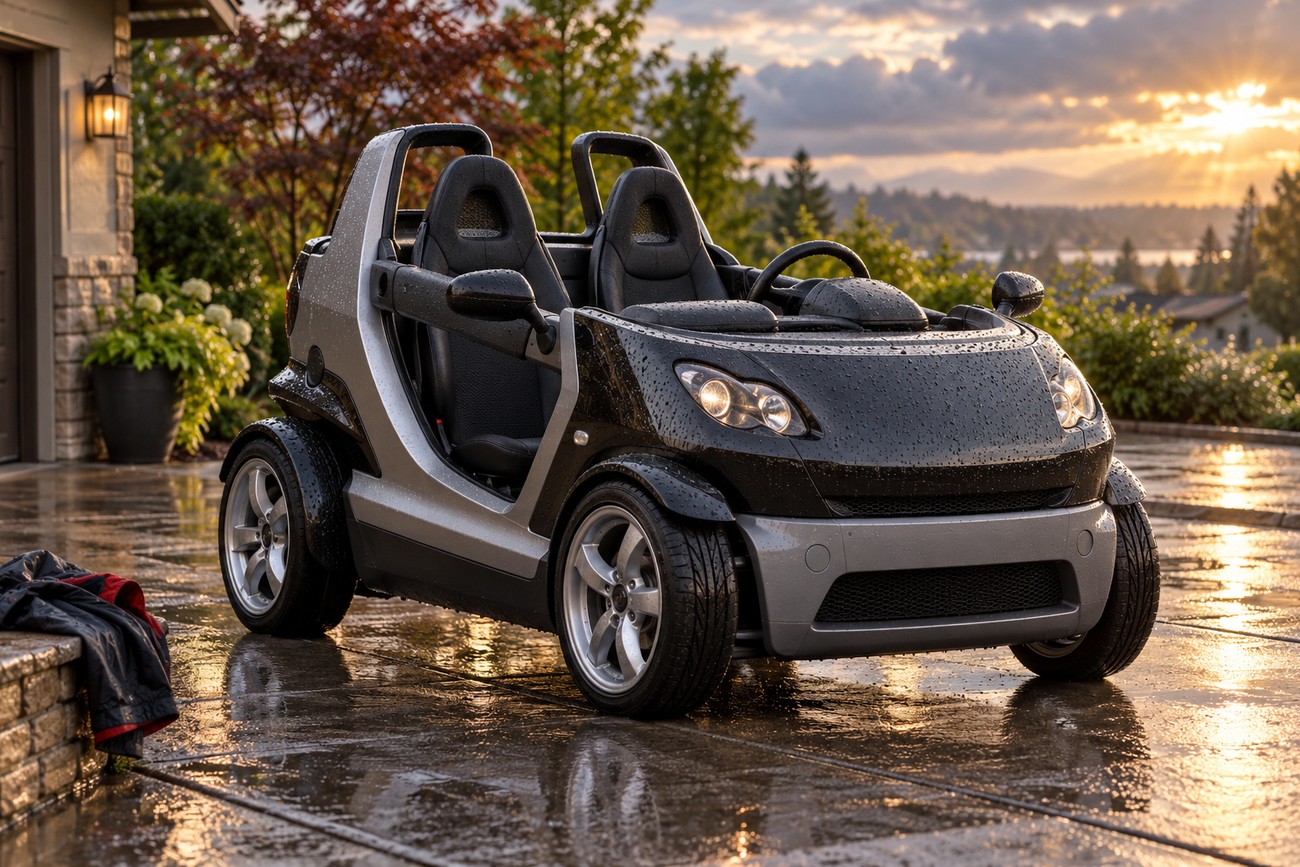
The first myth is that the Crossblade is simply a convertible without a roof. A normal convertible still offers a windshield, side glass, and some protection from wind and rain. The Crossblade is substantially more exposed, so its cabin experience belongs to a different category.
The second myth is that warm clothing makes year-round use practical. Clothing can reduce the effect of cold, but it cannot eliminate rain, spray, insects, dust, stones, or aerodynamic noise. The car remains dependent on a narrow band of suitable weather.
Low weight also creates a misleading expectation of speed. Approximately 700–740 kg helps produce a light, kart-like feel, but the 50 kW engine and automated manual transmission provide modest acceleration. The car feels immediate and dramatic without being a high-performance machine.
Finally, rarity does not guarantee investment growth. Approximately 2,000 cars are commonly cited, yet market value still depends on condition, originality, documentation, and the willingness of a small group of buyers to pay for this particular experience. A Crossblade can be collectible without being a dependable investment.
Frequently asked questions
The right Crossblade depends less on mileage than on the role you expect it to perform. These checks help separate an enjoyable collector car from an expensive surprise.
What should I inspect on an original Smart Crossblade before buying?
Start with ordinary mechanical condition: cold starting, turbocharger behavior, fluid leaks, cooling, brakes, suspension, electrical systems, and the operation of the automated manual transmission. A specialist inspection is useful because routine faults should be priced separately from the car’s rarity.
How should I check Crossblade-specific parts and originality?
Inspect the body elements, seats, restraints, trim, fasteners, and any protective or decorative pieces for damage, replacement, or non-original work. Confirm service records and compare the car with reliable reference material. A mechanically sound car with missing or altered rare parts should be valued differently from a complete, original example.
What kind of trip suits the Smart Crossblade best?
The best trip is short or moderate in length, taken in dry, warm weather on roads where the driver can enjoy the surroundings without sustained high-speed exposure. You should be comfortable wearing protective eyewear and wind-resistant clothing, and willing to clean the exposed interior afterward.
Use a simple test before buying: if rain, road spray, noise, or a dirty cabin would spoil the journey, the Crossblade is unlikely to suit you as a primary car. It is better matched to planned fair-weather outings, collecting, and image-driven driving than to commuting or year-round transport.







