
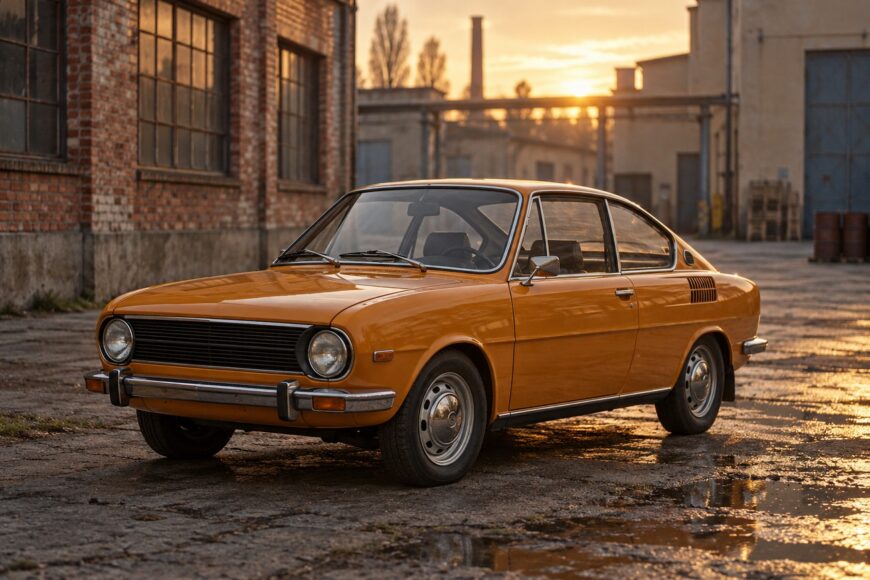
The Škoda 110 R has the appeal of a light Czechoslovak coupe with its engine at the back and a shape distinct from the family cars beneath it. Modest power is part of the story, though it does not fully explain how the car feels on a winding road.
Its link to the celebrated 130 RS gives the road car sporting credibility, but it can also distort expectations. Driving and buying a 110 R call for attention to the rear-engine layout, the condition of the body, and the accuracy of any claim that a survivor is original.
- A Czechoslovak coupe with its own identity
- What the 110 R’s specifications mean on the road
- The appeal—and demands—of the rear-engine layout
- How the 130 RS connection shaped its reputation
- The ownership compromises behind the classic looks
- How to inspect a 110 R before buying
- Frequently asked questions
- What does “Škoda” mean in Czech?
- What did AZNP stand for?
- Who owns Škoda today, and did that company build the 110 R?
- What should be checked before driving a long-stored 110 R?
A Czechoslovak coupe with its own identity
The Škoda 110 R coupe was built at AZNP’s Kvasiny plant in Czechoslovakia from 1970 to 1980. It was based on the Škoda 100/110 family, sharing the rear-engine arrangement while offering a lower, more distinctive body. That family connection matters to an owner: some mechanical knowledge and parts carry over, although coupe-specific components require more care to identify.
A two-door coupe emerging from Czechoslovakia’s state-era car industry stood apart from the everyday sedans around it. The 110 R attracted interest through its proportions and unusual layout rather than outright engine output. Its character remains easiest to appreciate at sensible road speeds, where low weight and direct driver involvement matter more than acceleration figures.
Approximately 57,000 cars were produced, although published totals vary slightly. That makes the model more than a rare experiment, yet surviving examples differ widely in condition and specification. Production numbers offer little guidance on how readily a buyer can find sound bodywork, intact trim, or a car with a well-documented past.
The coupe’s later competition association deserves its place in the story, but the production 110 R was a road car. Treating every example as a racing derivative risks overlooking what makes an ordinary one worthwhile: its compactness, recognizable design, and particular way of moving down the road.
What the 110 R’s specifications mean on the road
The standard reference specification is a 1,107 cc four-cylinder OHV engine producing about 62 hp DIN. It sits behind the rear axle and drives the rear wheels through a four-speed manual gearbox. Quoted output can differ by source, year, market, or measurement convention, so a published figure should not be taken as proof of what is fitted to a particular car.
With a kerb weight of approximately 880–900 kg, the 110 R asks comparatively little of its engine. Factory top-speed figures are around 145 km/h, but the more useful observation is how readily a light car responds to modest inputs. It rewards carrying momentum smoothly; expecting effortless passing power or relaxed high-speed cruising misses its strengths.
The gearbox and engine also set the pace of a drive. Choosing a suitable gear before a bend lets the car settle, while demanding an immediate surge from a high gear exposes the limits of its power. Mechanical condition can change that impression substantially, making a test drive more informative than the specification sheet alone.
Many survivors have been repaired or restored. Confirm the engine and gearbox actually installed, then compare their details with the car’s documents and claimed history. An enjoyable, properly maintained 110 R need not be untouched, but a buyer should know whether its specification is original, period-correct, or altered.
The appeal—and demands—of the rear-engine layout
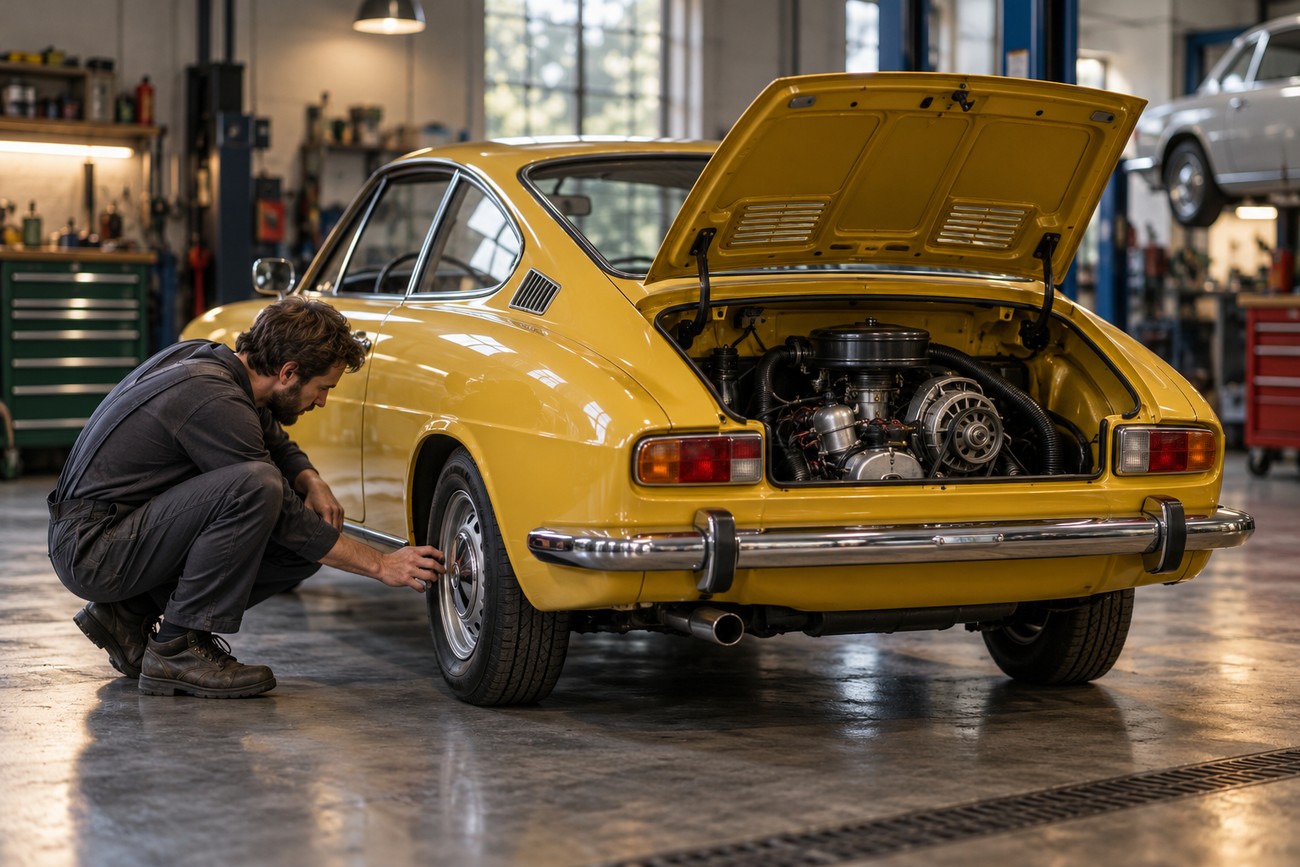
With the engine behind the rear axle and drive going to the rear wheels, the 110 R has useful traction when pulling away. The same concentration of weight at the back shapes its response in corners. Smooth steering, braking, and throttle inputs suit it better than abrupt corrections, particularly when grip is limited.
Tyres deserve attention before any judgment about handling. Old rubber, unsuitable sizes or pressures, and worn suspension can make the rear axle feel more nervous than it should. Loading can alter the balance too; a drive with luggage or a passenger may feel different from a brief solo test on an empty, dry road.
This sensitivity does not make every 110 R inherently unsafe. It does mean that a poorly prepared example can give a misleading account of the design. On a damp road, conservative speed and progressive inputs are sensible until the condition of the tyres, suspension, and brakes is known.
Owners also report heat and noise from the engine area reaching the cabin. Some mechanical presence belongs to a light car of this period, while excessive fumes, pronounced heat, or intrusive noise can point to missing seals or poor repairs. That distinction matters: charm is easier to enjoy when preventable faults have been put right.
How the 130 RS connection shaped its reputation
The 110 R provided a basis for competition developments, including the 130 RS. Motorsport gave the coupe a reputation beyond what its modest road-car figures suggest, and it remains part of the model’s appeal to enthusiasts. It also explains why period details and credible histories often receive close attention.
The 130 RS was extensively reworked for competition. A standard road-going 110 R is therefore not a production 130 RS, even if the two share a recognizable silhouette and a family connection. Racing photographs can convey the spirit of the coupe, but they cannot establish how an ordinary example was equipped or how it should perform.
That distinction becomes important around modified cars. Competition-style bodywork, wheels, or an altered engine may be attractive in their own right, yet they do not establish a documented racing history. A buyer should separate evidence of an individual car’s past from parts fitted later to evoke a more famous relative.
For a road-car buyer, the link is best treated as context rather than a promise. It helps explain the 110 R’s following, while the condition of the actual body, drivetrain, and trim determines what ownership will be like. A standard coupe can be compelling without borrowing an identity it never had.
The ownership compromises behind the classic looks
The rear-engine arrangement leaves limited luggage space and can make access to components awkward. The cabin is compact, and the driving position and small mirrors may take adjustment. A proper test drive should include ordinary maneuvers and parking, rather than only an open stretch where the car feels at its most appealing.
Brakes that feel adequate in period may require more anticipation than those of a newer car. That is separate from a fault: excessive pedal travel, pulling, or weak stopping still needs investigation. Cabin noise is another part of the ownership calculation, especially for someone hoping to use the coupe on longer journeys.
Heating and ventilation can be uneven on older examples, particularly where previous work has disturbed ducts or seals. Check demisting as well as cabin warmth; poor airflow has a more immediate effect in wet or cold weather than it does during a summer viewing. Engine-area odors inside the car also merit investigation rather than acceptance as period character.
Routine mechanical work may be more straightforward to plan than replacing a missing coupe-specific item. Body panels, chrome, and interior trim can take time to locate, and a related Škoda 100/110 part is not automatically the correct fit. Before buying a partly dismantled project, identify what is absent and whether suitable replacements are realistically available.
How to inspect a 110 R before buying
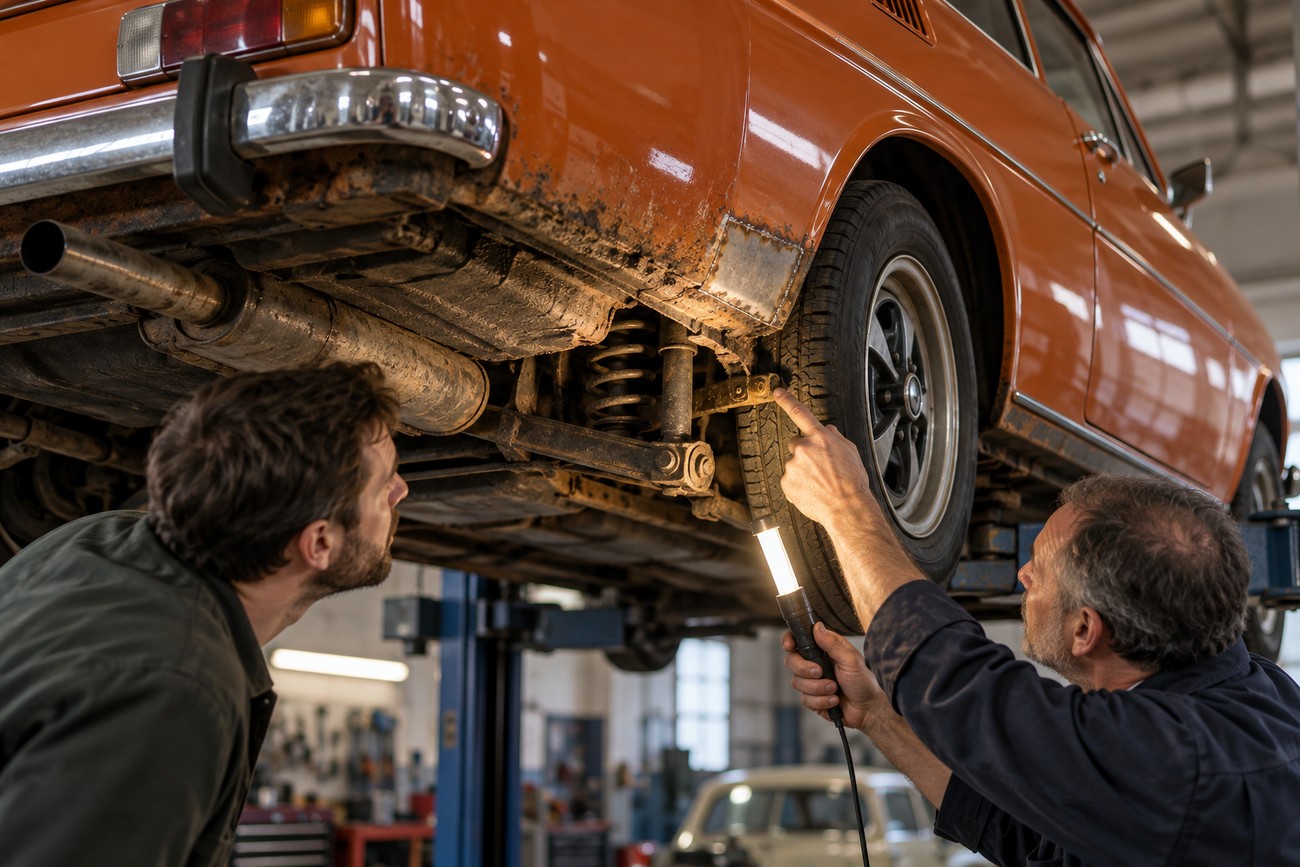
Start with the structure, even if the paint looks fresh and the engine starts promptly. Examine the wheel arches, sills, floor, and suspension mounting areas for corrosion, patch repairs, and uneven seams. A running restoration project can still need substantial metalwork, so cosmetic finish should never substitute for an underside inspection.
Look for heavy filler and signs that earlier repairs have been covered rather than resolved. If possible, inspect the car on a lift with someone familiar with older steel-bodied vehicles. Note whether the suspension mounting points and surrounding metal appear sound on both sides; their condition matters more than a polished engine bay.
Fresh cosmetic work can make a weak shell look complete. Establish the condition of the structural metal beneath it before assigning extra value to paint quality or a claim of originality.
Next, check cooling-system condition, leaks, and the sealing around the engine bay. During a drive, watch for overheating, fumes entering the cabin, poor braking, or unstable behavior that might stem from old tyres and worn suspension. Confirm tyre age and suitability rather than judging tread depth alone.
Finally, compare fitted components, trim, and documents with the seller’s account. Many surviving 110 Rs have undergone restoration, and period-correct parts are a different claim from untouched originality. Photographs of work, parts records, and consistent identification details are more useful than a broad assurance that everything is “original.”
Frequently asked questions
The coupe’s history raises a few questions beyond its driving and inspection needs. These details help place the 110 R in its original manufacturing era and clarify what to do before returning a stored car to the road.
What does “Škoda” mean in Czech?
As an everyday Czech word, “škoda” can mean “pity” or “damage,” depending on context. That meaning does not describe the 110 R’s engineering or turn the model name into a technical term; Škoda is the marque under which the coupe was sold.
What did AZNP stand for?
AZNP stood for “Automobilové závody, národní podnik,” commonly rendered in English as “Automobile Works, national enterprise.” It named the state-era carmaking enterprise responsible for the 110 R, rather than a separate modern brand.
Who owns Škoda today, and did that company build the 110 R?
Škoda Auto today is part of the Volkswagen Group. The 110 R, however, was built by AZNP in Czechoslovakia from 1970 to 1980, before that ownership era. Present-day corporate identity should not be projected onto the car’s production history.
What should be checked before driving a long-stored 110 R?
Inspect the fuel system and fluid leaks first, then verify cooling and brake operation before a road test. Check tyre age as well as appearance: sound-looking tread does not establish that old rubber is fit for use. Begin with a short, cautious drive once the car is mechanically ready.







