
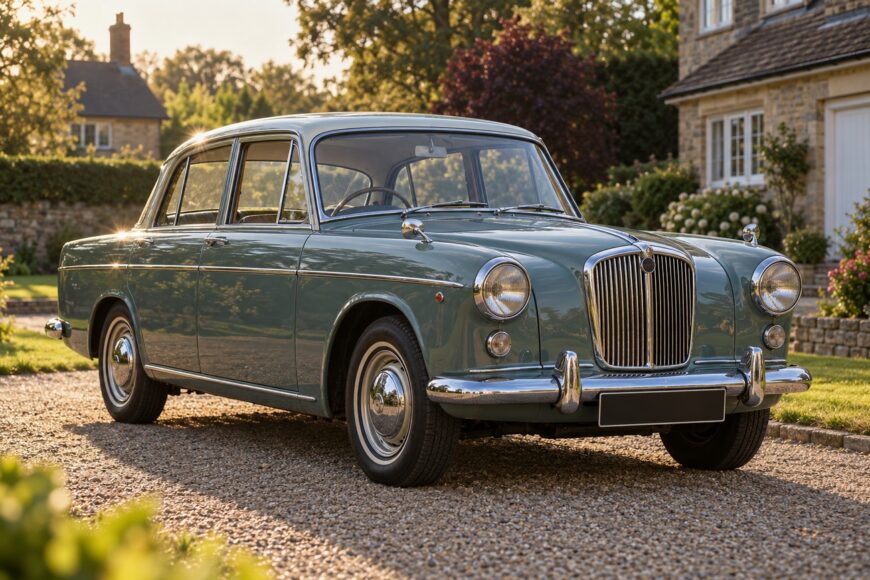
The Singer Gazelle carries its own badge, grille treatment, trim, and period identity, yet much of its engineering is shared with the Hillman Minx. That apparent contradiction defines the car. Rootes Group used common foundations across its brands, while Singer buyers received a more distinctive presentation and, depending on the period, different engines and equipment.
The sensible way to assess a Gazelle is to identify the particular car in front of you. Its year, body style, series, market specification, fitted engine, and structural condition matter more than a single catalogue figure or an attractive photograph. A late Series V and a 1950s convertible may wear the same name while requiring rather different research and mechanical expectations.
For a prospective owner, the main decision is therefore one of identity and condition. Shared Rootes engineering can make some searches easier, while Singer-specific trim and body components can make a restoration unexpectedly slow. The car rewards careful verification before purchase.
- What the Singer Gazelle was—and who built it
- More than a saloon: bodies and changing specifications
- Singer Gazelle engines by period: a specification check
- How it drives: period performance versus modern traffic
- What to inspect before buying a Gazelle
- Parts, Minx compatibility and the cost of missing trim
- Frequently asked questions
- What paperwork helps establish whether a Gazelle retains its original engine?
- What should I send a parts supplier when asking about a Gazelle component?
- How should an occasionally driven Gazelle be stored?
What the Singer Gazelle was—and who built it
Rootes Group built the Singer Gazelle from 1956 to 1970. It used a front-engine, rear-wheel-drive layout and occupied the same broad family-car territory as the Hillman Minx. The relationship was close enough to influence engines, mechanical assemblies, and servicing, although the Gazelle retained its own place within the Rootes range.
This is a classic example of badge engineering. A common platform and shared engineering reduced production costs, while Singer-specific exterior details, trim, and equipment gave the model a separate identity. Describing the Gazelle as a wholly independent design misrepresents its origins; dismissing it as an identical Minx is equally unhelpful.
Shared foundations may assist with research into running gear, fasteners, or engine components, but interchangeability must be checked component by component. Body panels, brightwork, interior fittings, and some engine details can depend on the series, year, and market. The Singer badge is useful evidence of the model’s identity, rather than a complete parts catalogue.
That distinction matters most when a car has been repaired over several decades. An engine swap, later mechanical assembly, or replacement trim may leave a Gazelle looking correct while changing the specification recorded in an old brochure. The vehicle identification, surviving paperwork, and physical inspection should be considered together.
More than a saloon: bodies and changing specifications
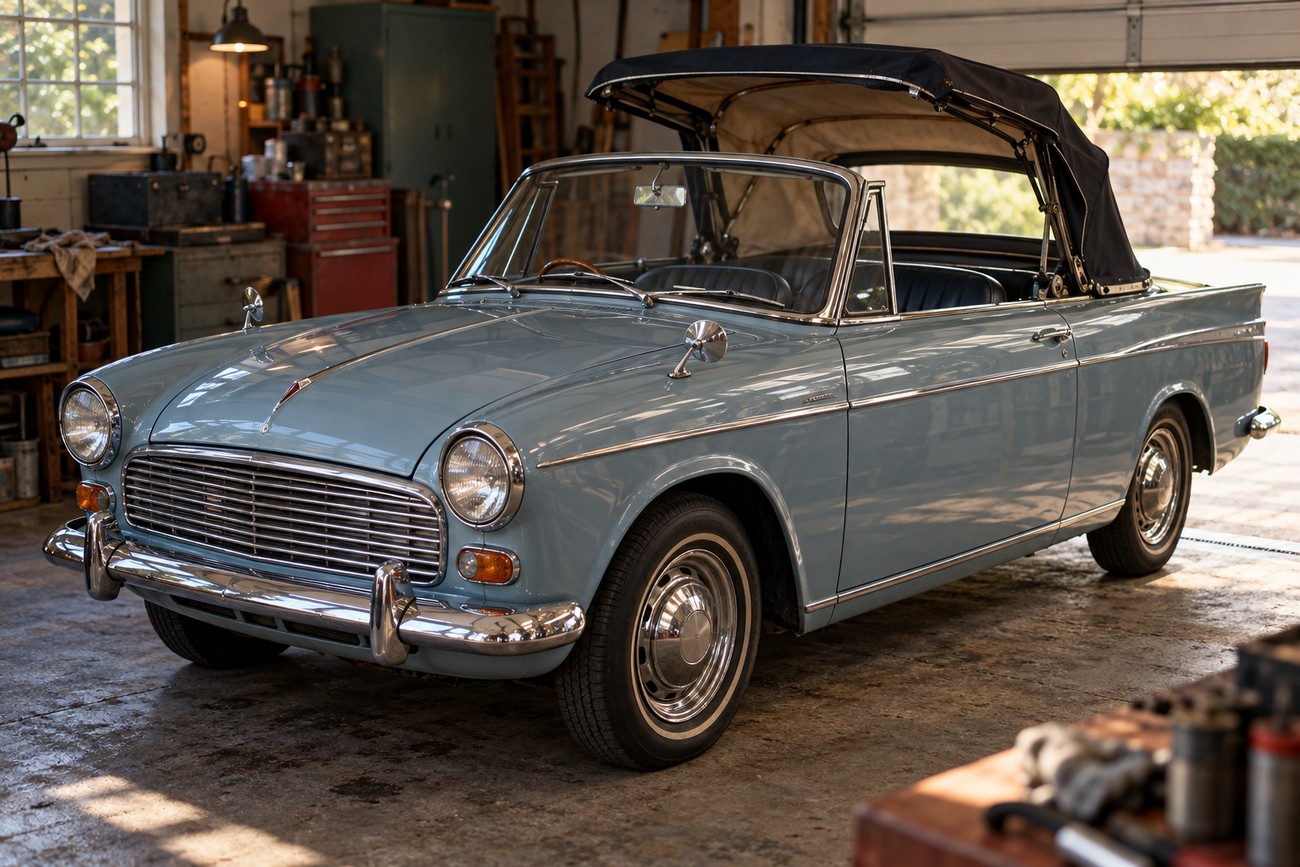
A listing that simply calls a car a Gazelle saloon describes only part of the range. The range included saloon, convertible or drophead, and estate bodies, with availability depending on the version and period. Each body style can alter the value of originality, the availability of replacement parts, and the amount of work required during restoration.
The saloon is usually the easiest body style for a buyer to understand because it follows the familiar family-car pattern of the period. A convertible or drophead brings additional structure, hood, seals, and trim to inspect. An estate adds its own rear bodywork and interior requirements, so a mechanically sound example may still need specialist attention to remain complete.
Body style also affects how published specifications should be read. Weight, performance, fuel capacity, braking equipment, and trim may differ by year, market, or construction. A figure taken from a 1959 convertible should not automatically be applied to a saloon or estate, even when the model name is unchanged.
Originality is especially valuable where a body has rare fittings. Missing badges, lamps, instruments, hood hardware, or interior pieces can take longer to replace than routine mechanical items. Before buying, record exactly which components are present and whether they appear correct for the claimed series.
Singer Gazelle engines by period: a specification check
The engine history is one of the clearest reasons to avoid treating every Gazelle as the same car. The figures below separate early cars, the Series V specification, and a cited 1967-model-year configuration. Power figures vary between sources and versions, so the engine actually fitted should be confirmed before parts are ordered or performance is assessed.
| Period or identification | Engine and transmission | Published output or related figures | Identification caution |
|---|---|---|---|
| Early Gazelle | Four-cylinder OHV petrol engine, 1496 or 1497 cc; four-speed manual gearbox | Specifications vary by source and exact version | Confirm the engine number, capacity, and equipment rather than relying on the badge or registration year |
| Series V | 1592 cc engine | Approximately 57–63 hp is reported across sources and versions | These figures are not one definitive output for every Series V car |
| Cited 1967-model-year specification | 1725 cc engine | 59 bhp and 100 Nm at 2200 rpm | This is a distinct later configuration and should be kept separate from the Series V figures |
The early 1496/1497 cc engine is a four-cylinder overhead-valve petrol unit paired with a four-speed manual gearbox. Later specifications show how easily advertisements can create confusion: a seller may quote a favorable power figure without stating the series, engine capacity, or market. A careful buyer should ask for photographs of identification marks and compare them with the car’s documentation.
The 1592 cc Series V engine is commonly associated with output in the approximate range of 57–63 hp across references and versions. A separate cited 1967-model-year specification lists 1725 cc, 59 bhp, and 100 Nm at 2200 rpm. Those figures describe different configurations and should not be blended into a single “standard Gazelle” specification.
How it drives: period performance versus modern traffic
A published reference for a 1959 Gazelle convertible gives approximately 2415 lb, or 1095 kg, an 85 mph top speed, and 0–60 mph in 21.4 seconds. It also lists a 10-gallon tank. These are useful period figures for that convertible, rather than range-wide test results or a guarantee for every surviving car.
One reference for the Series V gives 132 km/h and a weight of 1045 kg. The difference illustrates why body style, engine, equipment, and source must accompany any performance number. A Gazelle can feel willing on a quiet country road while requiring more planning in modern traffic, especially when joining faster roads or climbing with passengers.
Early cars used drum brakes, while front discs appeared later on some versions. That change can produce a meaningful difference in pedal feel and repeated stopping performance, but the condition of the individual system remains decisive. Hoses, shoes or pads, drums or discs, wheel cylinders, master-cylinder condition, and tire quality deserve attention before a road test is treated as proof of safety.
The older suspension and steering design also reward realistic expectations. Play in joints, tired dampers, incorrect alignment, or worn tires can make a car feel vague even when the basic layout is sound. Modest acceleration and a limited fuel capacity on the cited early convertible matter most on long, fast journeys; they are less troublesome during measured occasional use.
What to inspect before buying a Gazelle
Begin with the lower body rather than the paintwork. Inspect the sills, floor edges, wheel arches, door bottoms, and other low sections for corrosion, previous repairs, and moisture traps. Rust in visible panels is a cosmetic concern; corrosion affecting structural areas can change the economic logic of the entire project.
Next, establish what the brakes, steering, suspension, and tires are actually doing. Check for uneven braking, excessive pedal travel, steering play, leaking hydraulic components, worn bushes, and perished tires. A clean test drive cannot replace inspection underneath, particularly where an early drum-brake system has been left unused or maintained only intermittently.
Completeness can outweigh a more attractive engine specification: a sound-bodied car with its Singer-specific trim intact may be a safer restoration project than a shinier example missing rare fittings and interior pieces.
The engine should be judged in its present condition rather than by the capacity quoted in an advert. Carburetor adjustment, ignition timing, fuel delivery, cold starting, oil pressure, smoke, and cooling behavior all deserve checks on the actual car. Tuning complaints are useful inspection prompts, not proof that every four-cylinder Gazelle is troublesome.
Finally, make a written inventory of the car. Include instruments, badges, lamps, seats, hood parts, door furniture, bumpers, and any pieces stored separately. Condition and completeness generally matter more to a restoration decision than a headline horsepower figure, particularly when the missing item is specific to one Singer version.
Parts, Minx compatibility and the cost of missing trim
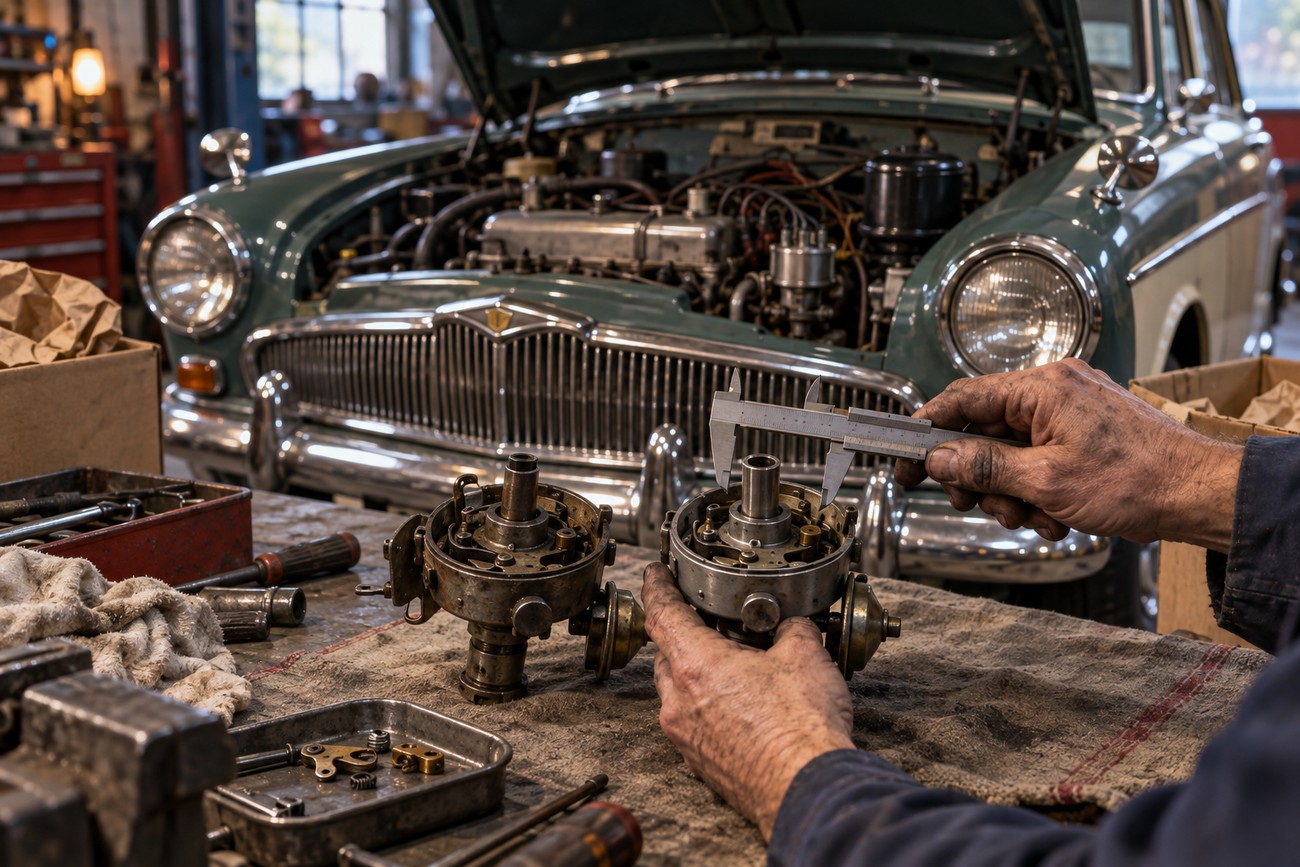
The Hillman Minx connection can improve the chances of finding information and suitable mechanical leads. It does not make every Minx component a direct fit. Dimensions, mounting points, electrical details, braking arrangements, and series changes should be checked before money is spent.
Later cars could use Hillman-derived engines, which makes ordering solely by the Singer badge risky. The engine number, capacity, casting details, carburetor arrangement, and the component being replaced provide better starting information. A gasket, piston, distributor part, or cooling component may depend on the engine actually installed rather than the model name on the bonnet.
Singer-specific body and trim parts can be slower to locate than common mechanical service items. Owners may encounter longer searches for brightwork, interior fittings, badges, lamps, or body panels, especially where a rare body style is involved. This is an ownership consideration rather than a universal shortage, since condition and local club networks vary.
Budgeting should therefore separate mechanical recommissioning from cosmetic completion. A car that runs may still need substantial expenditure to recover missing trim, and substitute parts can alter its appearance or value. Photographs, measurements, and a clear record of the series will make specialist inquiries more productive.
Frequently asked questions
A Gazelle’s identity, condition, and completeness affect both ownership and restoration decisions. The questions below focus on documentation, parts enquiries, and preparation for occasional use. In each case, details from the individual car matter more than the model name alone.
What paperwork helps establish whether a Gazelle retains its original engine?
Start with the surviving registration documents, invoices, service records, restoration notes, and any photographs showing the engine bay. Compare recorded vehicle identifiers with the chassis or body information, then compare engine numbers or markings with the physical unit. A consistent history supports an originality claim, while paperwork alone may not prove that the engine has never been changed.
Discrepancies should be recorded rather than concealed. A replacement engine does not automatically make a car undesirable, but it changes parts selection and the way its specification should be described. The most useful file combines dated documents with clear photographs of the vehicle and engine identifiers.
What should I send a parts supplier when asking about a Gazelle component?
Provide the year or claimed series, body style, engine identification, and a description of the exact component. Add any markings, measurements, thread details, mounting-hole spacing, and photographs from several angles. Include a photograph of the surrounding assembly where fitment could depend on adjacent parts.
State whether the car is a saloon, convertible or drophead, or estate, and mention known modifications. This gives the supplier a way to distinguish a Singer-specific item from a related Minx component. It also reduces the risk of ordering a part that is correct for the model family but wrong for the individual car.
How should an occasionally driven Gazelle be stored?
Keep the car in a dry, ventilated storage space and inspect it periodically for moisture, corrosion, and fluid leaks. Attend to battery care, tire condition, and the fuel system during lay-up, following suitable precautions for the equipment fitted to the car. A car that moves only occasionally still needs attention to seals, brakes, and electrical connections.
Before returning to the road, check the tires, fluid levels, brake operation, steering, lights, and fuel system at low speed in a controlled area. Do not assume that a short storage period preserves a previously sound brake system. Gentle recommissioning is preferable to treating the first outing as a normal journey.







