
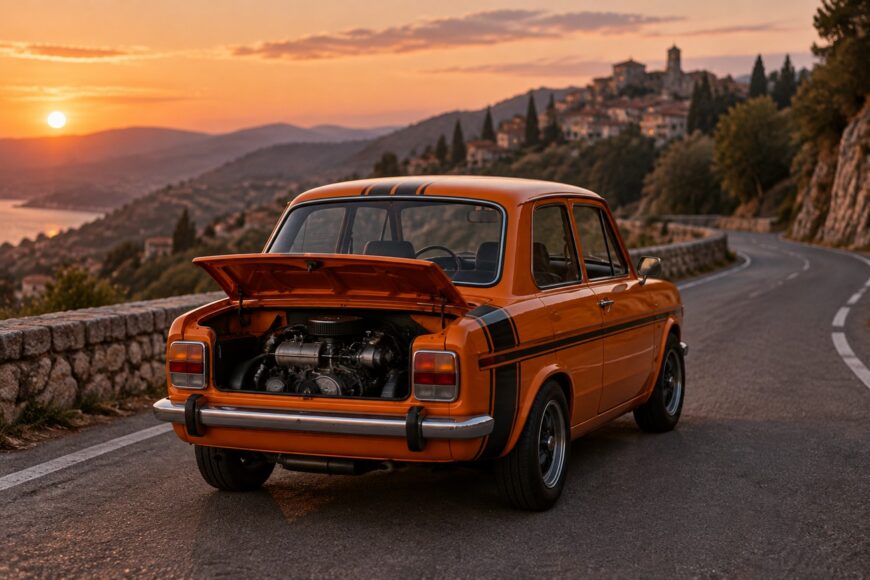
The Simca 1000 Rallye feels quicker than its figures suggest. Its small body, low weight, and engine behind the cabin give ordinary bends an immediacy that larger, more powerful cars can miss. A well-sorted example turns a modest stretch of road into an involving drive.
That appeal comes with a condition: a Rallye’s responses depend heavily on its tyres, brakes, suspension, and the person at the wheel. Decades of corrosion, repairs, and mixed parts can also separate a promising advert from a sound car. Simca built the Rallye as a sporting version of its everyday 1000, giving enthusiasts an accessible way into road driving and amateur competition.
- Why the Simca 1000 Rallye was more than a striped sedan
- Rallye, Rallye 1, Rallye 2, and Rallye 3: what changed
- How its rear-engine handling rewards—and punishes—drivers
- The less glamorous side of owning a pocket rocket
- How to inspect and set up a surviving Rallye
- Why the Rallye still matters
- Frequently asked questions
- What happened to the Simca brand?
- Who made Simca cars, and are any made today?
- When was the last Simca car made?
- What should be checked before starting a Rallye that has stood for years?
Why the Simca 1000 Rallye was more than a striped sedan
The Simca 1000 Rallye was a factory sporting version of the Simca 1000, intended for road use and accessible amateur motorsport. Its competition reputation did not arise by accident from an ordinary family sedan. Simca developed the sporting idea through successive Rallye versions, each giving buyers a more focused alternative to the standard car.
Its basic layout remained rear-engined and rear-wheel-drive, with the engine and driven wheels at the rear. That arrangement gives the driven tyres useful traction when accelerating, while the low weight helps the car respond readily to steering and throttle inputs. Its pace is as much about immediacy as outright speed.
The appeal was practical as well as sporting. An enthusiast could use a Rallye on the road and take the same compact sedan to an amateur event, without needing a large or powerful car. The link between those uses helps explain its place in European performance history: it made an involving drive available in a modest package, though competition use placed greater demands on maintenance and setup.
Rallye, Rallye 1, Rallye 2, and Rallye 3: what changed
The names mark a progression toward more aggressive performance tuning, not four interchangeable sets of specifications. Published power figures for Rallye 1, 2, and 3 span roughly 60–103 hp, but vary by year, market, and source; none is a universal figure for an individual car.
| Version | Place in the series | Buyer’s check |
|---|---|---|
| Rally | The initial sporting interpretation of the 1000. | Confirm that its trim and mechanical parts match the claimed identity. |
| Rally 1 | A step in the factory sporting progression. | Check year and market specification before accepting a quoted output. |
| Rally 2 | A more focused version often sought by enthusiasts. | Judge condition and correct components ahead of the badge alone. |
| Rally 3 | A later, more aggressively tuned development. | Verify claimed originality; published production totals differ. |
How its rear-engine handling rewards—and punishes—drivers
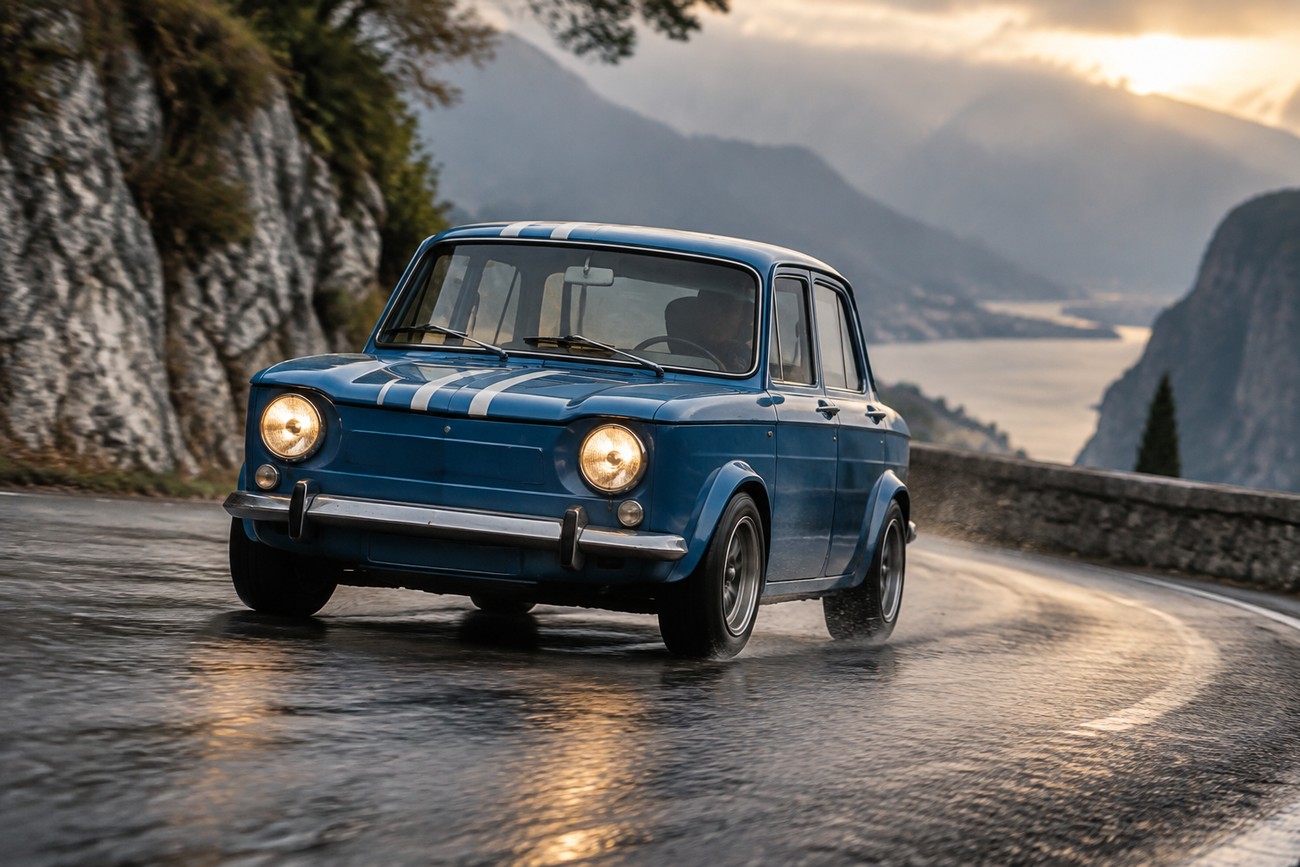
A short wheelbase and rear weight bias make the Rallye keen to change direction. Weight over the driven wheels helps it find traction, and a sound car can feel alert and readable on a winding road. Those same proportions mean it responds noticeably when weight shifts during a corner.
An abrupt throttle release in a bend can unload the rear tyres and provoke lift-off oversteer. This is a handling characteristic to respect, especially for someone accustomed to a modern front-engine car. Smooth inputs and sensible speeds matter more than treating a slide as part of the entertainment.
Condition changes the picture. Suitable tyres, correct pressures, healthy dampers, and balanced brakes all affect how progressively an individual Rallye reacts. A car on mismatched tyres or tired suspension may feel nervous long before its underlying design is the main issue.
On winding roads or in club competition, a sorted Rallye offers the vivid responses that earned it a following. It does not provide modern levels of grip, braking assistance, or forgiveness at the limit. Rear-engine layout alone does not make every example inherently unsafe, but an experienced driver will have more margin to interpret its signals than a novice will.
The less glamorous side of owning a pocket rocket
Ageing cooling components can bring overheating complaints in traffic or hot weather. That calls for a check of the system’s condition, rather than an assumption that every rear-engine Rallye must run hot. A car that repeatedly overheats needs diagnosis before regular use; accepting it as character risks more serious trouble.
Noise, vibration, and cabin heat are familiar compromises. The engine’s position and the car’s period construction make it a more direct, less insulated place to travel than a modern hatchback. Those sensations can be enjoyable on a short drive, yet tiring in slow traffic or on a long journey.
Body panels, version-specific trim, and small interior pieces can take time to find. Mechanical work may be manageable, while an apparently minor missing fitting delays a faithful restoration. This is one reason a complete, correctly detailed car can be a better purchase than a cheaper example needing hard-to-source parts.
Passive safety also reflects the standards of the car’s era. Its structure and cabin should not be expected to protect occupants like those of a current vehicle. That is a design-era limitation; worn tyres, poor brakes, and neglected repairs are additional risks a buyer can identify and address.
How to inspect and set up a surviving Rallye
Start with the shell. Examine the sills, floors, arches, front panel, and the edges of earlier repairs for concealed corrosion or signs of distortion. Fresh paint can improve presentation without resolving structural damage, so an inspection underneath matters more than a tidy first impression.
Next, check whether the claimed version agrees with the car itself. Surviving Rallyes can contain parts from different years or variants, and details may differ by market. Compare available identification records and period specifications with the fitted mechanical parts, body details, trim, and paint before paying a premium for originality.
A mixed tyre set or incorrect pressures can make a rear-engine Rallye feel erratic even when its suspension settings are unchanged. Establish matching, suitable tyres and sound pressures before trying to cure the behavior with adjustments.
Brakes, dampers, and a balanced suspension setup deserve priority over extra engine output. Inspect their condition together: fitting aggressive parts at one end of the car while leaving tired components elsewhere can make its responses harder to judge. A coherent setup gives the driver clearer feedback and a better basis for enjoying the available performance.
Finally, price the work required to reach that standard, including missing body and trim pieces. A low purchase price offers little comfort if corrosion repair and the search for correct parts consume the budget. The best candidate is the one whose identity, structure, and roadworthiness withstand close inspection, even if another car sounds more exciting on paper.
Why the Rallye still matters
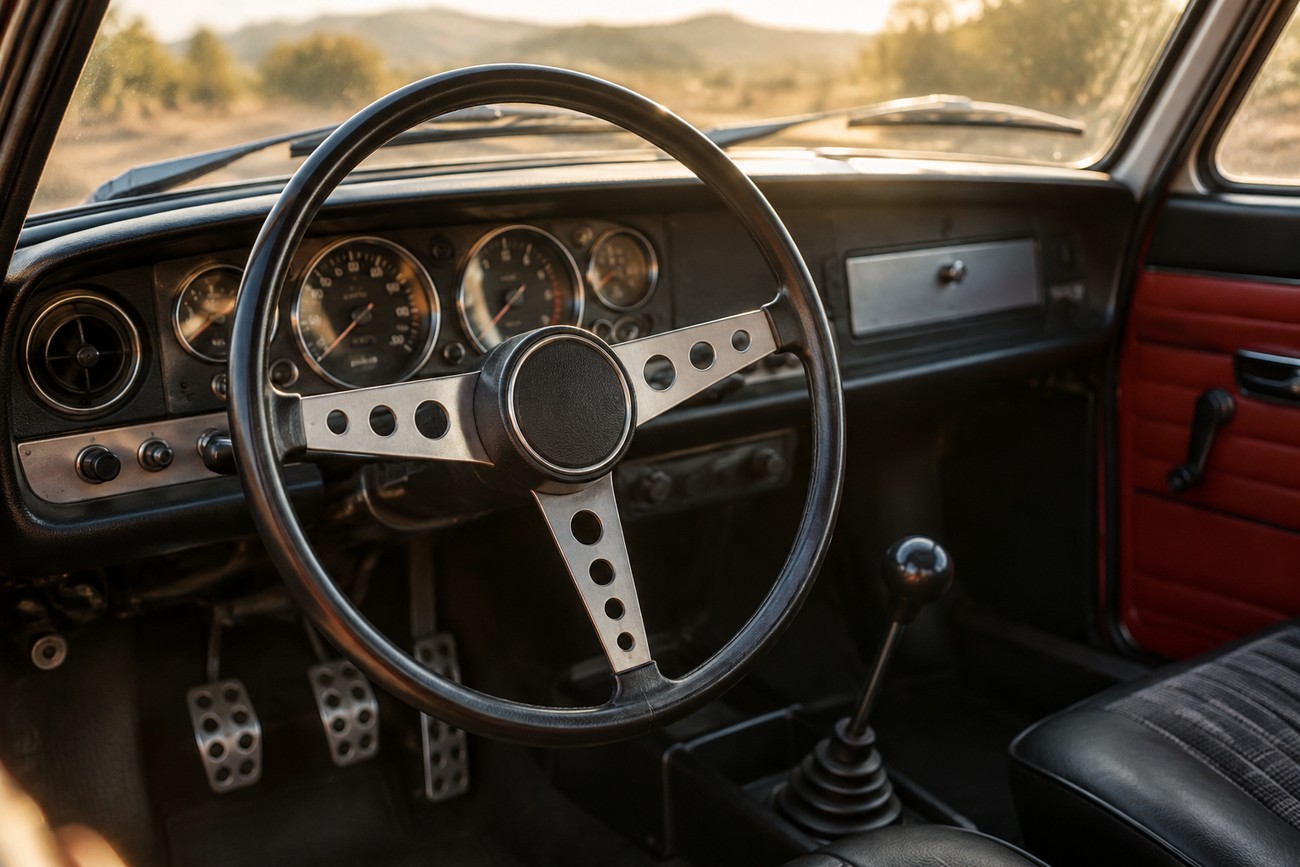
The Simca 1000 Rallye belongs to the story of accessible European performance cars of the 1970s. It showed how a light sedan with purposeful factory development could serve both everyday driving and amateur competition. Its appeal was never dependent on a large engine or an extravagant specification.
That character remains distinct from the polished speed of a modern car. Steering, weight transfer, and the rear tyres’ response are close to the driver’s attention, making a well-maintained Rallye engaging at sensible speeds. The same directness asks for care when roads, weather, or mechanical condition are less than ideal.
Rallye 2 and Rallye 3 often attract particular interest, although published production totals differ. Some owners favour the Rallye 2 as a compromise between character, rarity, and upkeep; that is a preference, not an objective ranking. A correct, sound example of any version may be more rewarding than a rarer one assembled without a coherent setup.
The distinction that matters most on the road is between a sorted Rallye and one that merely carries the right badge or claims more power. With its structure, tyres, brakes, and suspension in order, the little Simca can still explain why it earned the pocket-rocket description.
Frequently asked questions
The Rallye’s history also raises questions about the Simca name itself. The end of a badge, the end of a company’s ownership, and the end of production of a model are different events. Keeping them separate avoids giving one misleading “last Simca” date.
What happened to the Simca brand?
Simca became part of Chrysler’s European operations. Peugeot acquired Chrysler Europe in 1978 and subsequently moved its cars toward Talbot branding. The Simca name disappeared from new cars as that change took effect, although the precise timing of a badge change depends on the model and market.
Who made Simca cars, and are any made today?
Simca was a French carmaker whose vehicles later formed part of Chrysler’s European business before the Peugeot takeover. No new Simca cars are made today. Specialists may restore surviving cars or supply parts, but that does not amount to continuing production under the marque.
When was the last Simca car made?
There is no single reliable date without defining “last Simca car.” The final vehicle sold with a Simca badge and the end of production of a model that continued under another name need not coincide, and markets changed badges at different times. A precise answer requires a named model, market, and definition of the badge or production milestone.
What should be checked before starting a Rallye that has stood for years?
Begin with leaks, perished hoses and seals, and the condition of the fuel and ignition systems before attempting a start. Then verify that the cooling system is sound. Inspect the tyres and restore dependable braking before any road drive; an engine that runs does not make a long-stored car roadworthy.







