
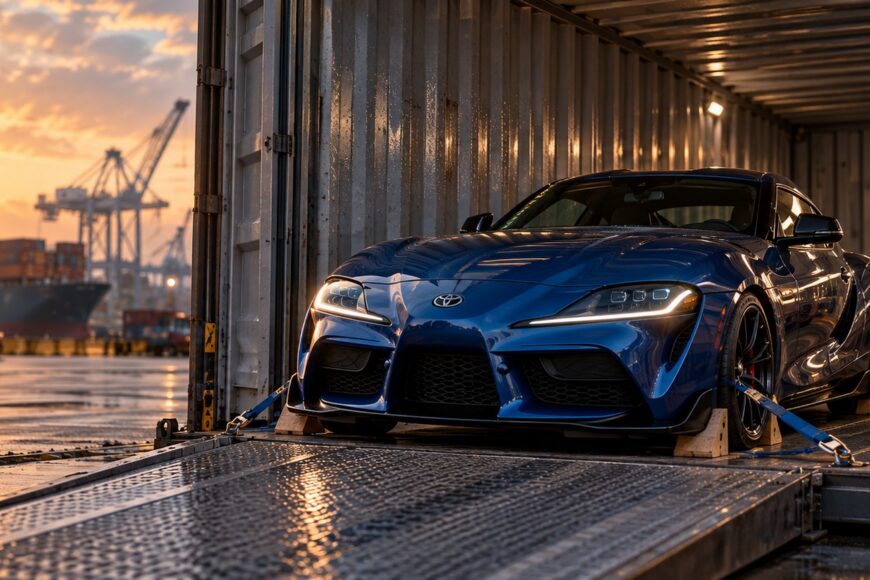
Shipping a valuable, low-clearance Toyota Supra in a container can provide controlled access, protection from direct weather, and a more private alternative to open vehicle transport. The car remains inside one sealed unit through much of the journey, which can reduce exposure to handling by unrelated cargo and make the handover trail easier to document.
Those advantages do not make container transport automatically damage-free. Condensation, salt air, temperature changes, vibration, incorrect restraints, difficult loading angles, port delays, and poor inspection controls can still affect the result. The outcome depends on the container’s condition, the fit of the Supra, the loading and securing method, the records created before closing, and preparation for the destination’s import and registration rules.
- Is a Container the Right Way to Ship a Toyota Supra?
- What to Check Before Booking the Container
- Loading and Securing a Low Toyota Supra Inside the Container
- Moisture, Battery, Fuel, and Personal Belongings: The Risks a Container Hides
- Photos, Seal Control, and Inspection at Destination
- Common Booking Mistakes and Myths That Increase the Final Risk
- Frequently asked questions
- How much does it cost to import a Toyota Supra from Japan?
- How expensive is it to ship a Toyota Supra from Japan to the USA?
- What is the three-year car rule in Japan?
Is a Container the Right Way to Ship a Toyota Supra?
A container is attractive for a Supra because it limits direct exposure to rain, road spray, and casual access during transit. It can also suit a high-value or modified vehicle whose owner wants a documented loading process and control over the space around the car. A sealed container, however, protects access more reliably than it protects against every transport hazard.
Moisture remains a concern inside a closed steel box. Temperature changes can create condensation, while marine air, vibration, and long storage can affect paint, metal, electronics, and the interior. A container also concentrates responsibility at the loading stage: a poor ramp angle, an unsuitable winch setup, or a restraint touching the wrong part of the car can cause damage before the vessel even departs.
Ro-Ro transport follows different vehicle-specific securing requirements and is not interchangeable with container loading. It may avoid the need to fit the Supra through a container door, but the vehicle is handled within a shared vehicle logistics system. Neither method is universally safer; safety depends on the condition, loading method, securing plan, route, and inspection controls.
Low ground clearance makes the booking decision more technical. The shipper should assess the entry angle, door opening, mirror position, threshold height, maneuvering radius, and room needed for restraints before accepting a container. Exterior dimensions alone do not confirm that the Supra can be loaded without scraping a bumper, splitter, side skirt, or exhaust component.
What to Check Before Booking the Container
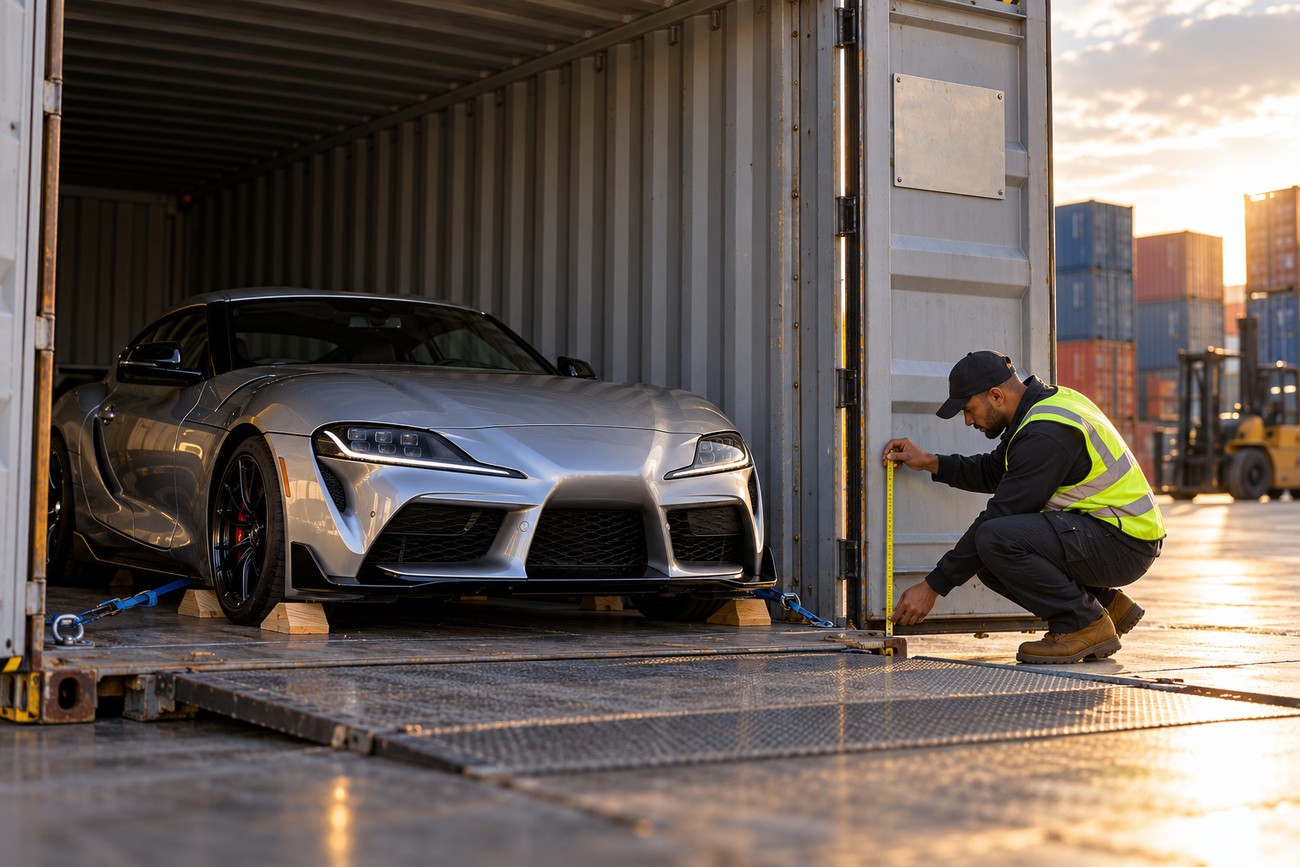
Ask for the container type and its usable dimensions, then compare them with the Supra in its actual shipping configuration. The width of the door opening can be more important than the internal width, especially with mirrors fitted. Check the approach surface, threshold, floor condition, and space around the car required for safe restraint and inspection.
An international container should have a valid CSC plate. The plate is an international control for the container’s approved use and maximum permitted gross mass, rather than a decorative label. The loaded mass includes the Supra, fuel, securing equipment, and personal belongings, and must not exceed the value shown on the CSC plate.
Inspect or request evidence about the container’s floor, walls, roof, doors, seals, and history of leaks. Damp timber, damaged locking bars, sharp metal, oil contamination, or holes can create problems that a low headline freight quote will not solve. Clarify who supplies ramps, threshold protection, a winch, wheel chocks, and any equipment needed to protect the car during loading.
Get an itemized quote before payment. Ramp work, long ramps, winch use, spoiler removal, clearance-related adjustments, terminal handling, storage, inspections, and destination charges may be separate services. At the same stage, confirm import taxes, required documents, emissions or registration rules, and any left- or right-hand-drive restrictions. Insurance wording also deserves review because cover may exclude pre-existing damage, mechanical failure, interior contents, or losses caused by improper packing or securing.
Loading and Securing a Low Toyota Supra Inside the Container
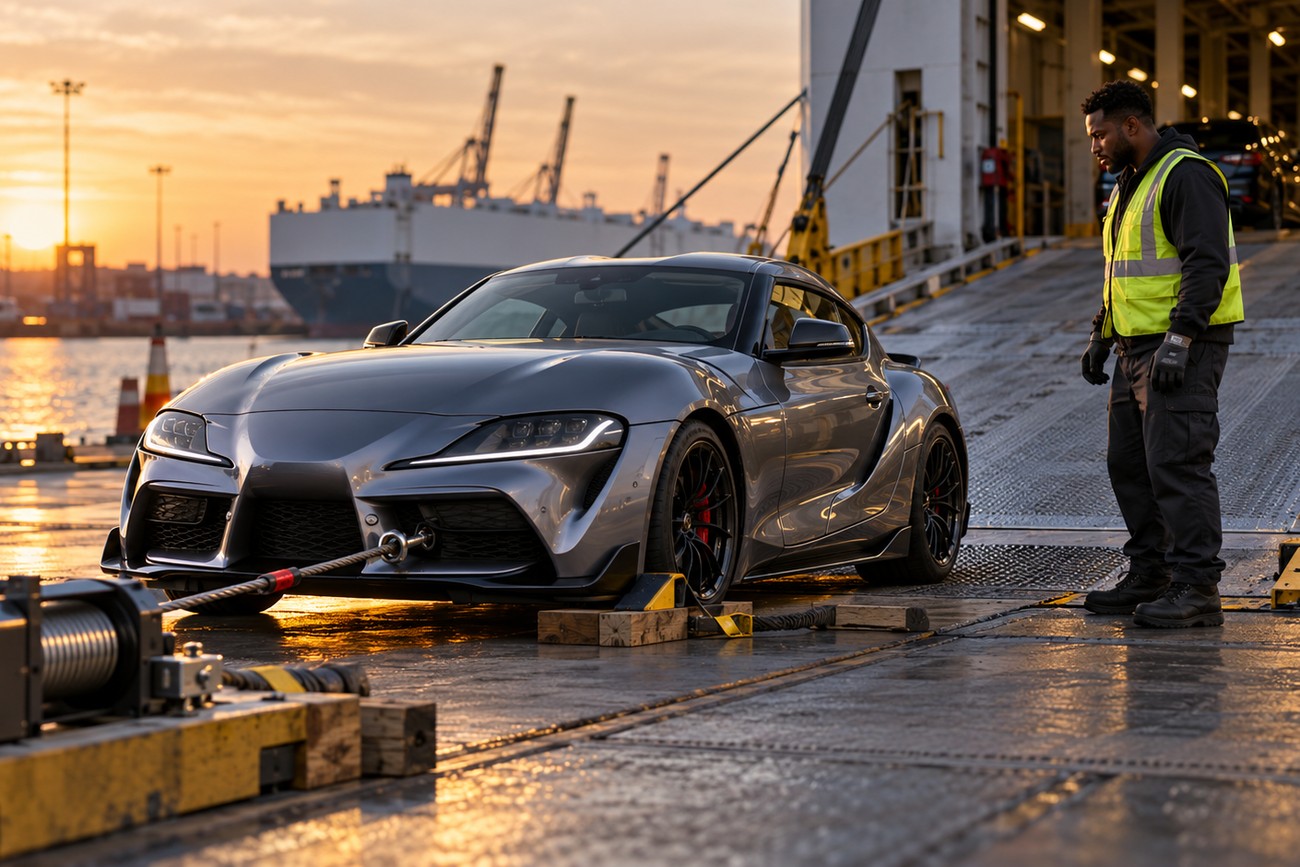
Loading should be planned around the Supra’s lowest points and the equipment available at the site. Long ramps can reduce the breakover angle, while a winch allows controlled movement when driving onto a steep or narrow ramp would risk the front lip or underbody. Threshold protection helps prevent contact with the container floor edge, and temporary clearance adjustments may be needed for a modified or lowered car.
The vehicle’s final position and its restraint points should be designed together. The operator needs enough working room to apply restraints without leaning against painted panels or forcing straps across fragile trim. Once positioned, the car must be restrained against longitudinal, transverse, and vertical movement and against tipping, using suitable blocking, lashings, wheel restraints, or a combination.
The CTU Code is the international IMO/ILO/UNECE Code of Practice for Packing of Cargo Transport Units. It applies across the intermodal journey, not only the ocean leg, so the securing plan must remain suitable for truck, terminal, and vessel movements. The plan should account for forces in all directions rather than assuming that the container’s walls or the car’s parking brake will hold the vehicle in place.
Plan the Supra’s position and restraint points before the car reaches the container threshold. A winch and long ramps allow the loading angle to be controlled, leaving less need for improvised adjustments around the bumper or suspension once the car is inside.
Do not attach restraints to suspension components, plastic trim, exhaust parts, or unverified body points. Common automotive attachment points may be around 20 kN LC/MSL, but the actual rating depends on the vehicle and the specific point and must be verified. Four straps around the wheels do not, by themselves, prove that the attachment points, blocking, tipping resistance, and overall force assessment are adequate.
Take photographs of the installed restraints before the doors close. The images should show where each restraint bears, whether the straps touch the body, how the wheels are blocked, and whether the car has clearance from the container walls. If a contractor cannot explain the securing arrangement in terms of movement control and verified attachment points, the loading plan needs further review before departure.
Moisture, Battery, Fuel, and Personal Belongings: The Risks a Container Hides
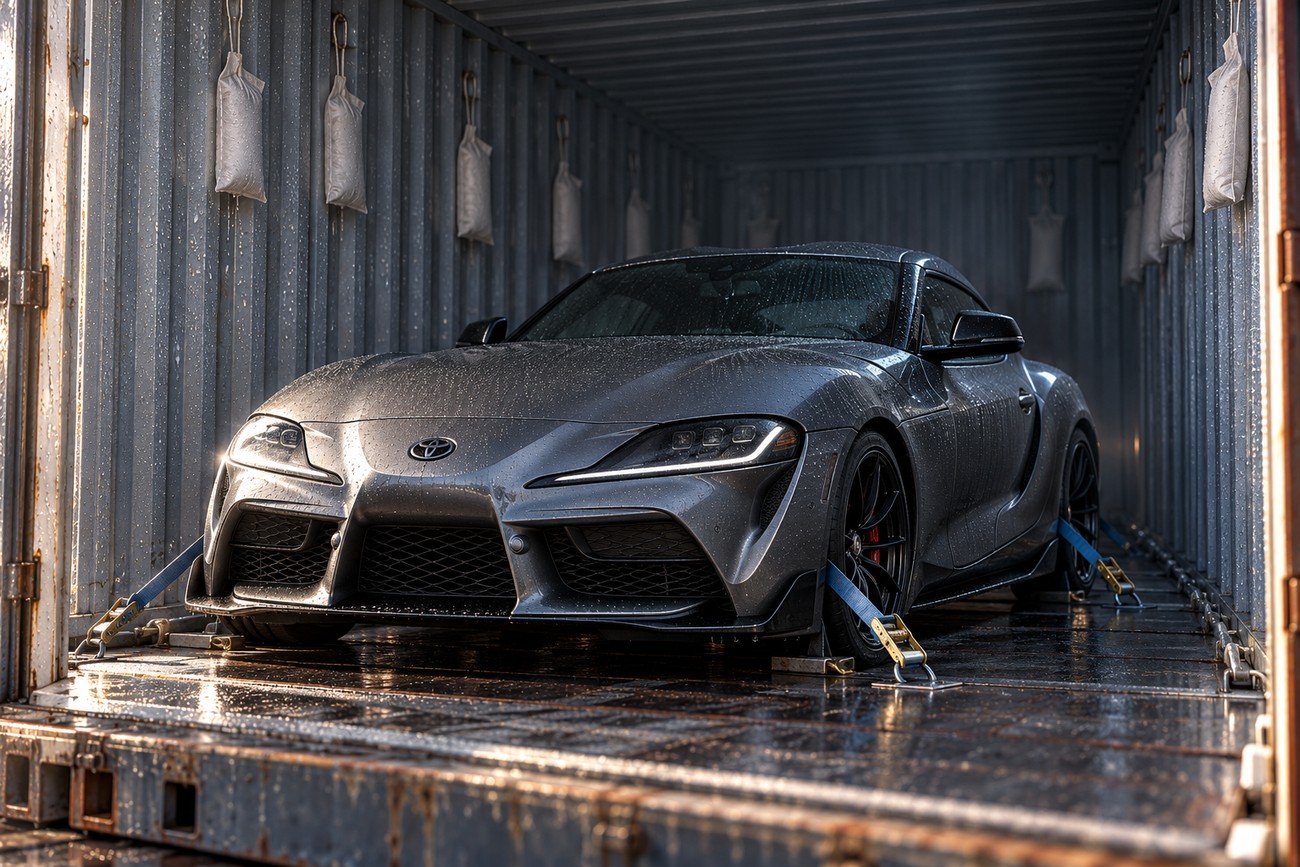
A container limits direct weather exposure, but it does not create a dry climate. Condensation can form as the steel box moves between different temperatures, and salt air can enter through ordinary ventilation paths or during handling. Dampness may lead to mold in the cabin and corrosion on exposed metal, particularly during extended storage or a delayed delivery.
Preparation should include a clean, dry vehicle and a practical plan for the battery. Long storage can discharge the battery even when the car is not being used. Disconnecting it may affect alarms, settings, and electronic systems, and it does not remove every storage risk, so the shipper should follow the vehicle and insurer’s instructions rather than applying a universal rule.
Fuel requirements are set by the shipping line, port, insurer, and applicable dangerous-goods rules. There is no universal fuel figure that applies to every route. Use only the minimum level permitted by the responsible parties, and record that level in the pre-shipment condition report so a later discrepancy can be assessed accurately.
Remove personal belongings unless they have been specifically declared and accepted. Unlisted items add to the loaded mass, can strike or stain the interior, and may complicate customs or insurance checks. Even declared contents may have limited cover, so a separate inventory and photographs are useful when the service allows belongings to remain in the vehicle.
Photos, Seal Control, and Inspection at Destination
Evidence should be created before the container is closed, not after a dispute begins. Make a continuous video and take photographs showing the VIN, odometer, exterior panels, glass, wheels, interior, trunk, engine bay, fuel level, and any existing marks. Continue the record to show the securing arrangement, container number, and seal number.
After loading, the container is closed with a unique seal. Check that seal number against the transport documents and retain copies of the documents, photographs, and video. A seal controls access to the container, but it does not prove that the car is undamaged or that condensation, vibration, and loading errors did not occur inside.
At destination, photograph the container and seal before opening. If the seal is broken or has been replaced, record the event, the old number if available, the new number, and the condition of the doors before opening. A broken seal and a newly recorded seal document an event, but they do not automatically establish carrier liability.
Inspect the Supra before signing the delivery acknowledgment. Verify the VIN, compare the odometer and exterior with the pre-shipment record, check the roof and underside where accessible, and look inside the cabin, trunk, and engine bay. Record visible and concealed damage immediately with photographs and written detail; ask the terminal or carrier to note it on the handover document before the vehicle leaves the site.
Common Booking Mistakes and Myths That Increase the Final Risk
Choosing solely by the lowest quote can transfer important work into unpriced extras. A cheap booking may assume that the car drives up a standard ramp, fits through the door with mirrors installed, and needs no winch or clearance adjustment. Confirm the complete loading method and every terminal charge before comparing offers.
A container is not automatically safer than Ro-Ro, and four wheel straps are not automatically enough. The relevant questions are whether the restraint system controls movement and tipping, whether the attachment points are suitable, whether blocking is used appropriately, and whether the system remains sound across the full intermodal route.
A CSC plate is not a paperwork formality. An international container should have a valid CSC plate, and the loaded gross mass must remain within the stated limit. The mass includes the car, fuel, securing equipment, and belongings, so optional items inside the cabin can affect compliance as well as insurance and customs treatment.
An intact seal proves controlled access, not vehicle preservation. It cannot rule out internal damage, moisture, vibration, or an error made during loading. The same principle applies to delivery paperwork: signing without inspection can make it harder to establish when a new mark, broken trim piece, or damp interior appeared.
Frequently asked questions
Import planning combines transport, customs, and registration decisions. The answers below separate general budgeting guidance from rules that depend on the destination.
How much does it cost to import a Toyota Supra from Japan?
There is no single reliable import figure without the vehicle, route, destination, and service scope. Build the budget from separate items: the vehicle price, inland transport, container loading, ocean freight, insurance, customs duties, taxes, port handling, storage, and registration.
Ask each provider to identify what is included and excluded, especially loading equipment, destination handling, customs brokerage, inspections, and storage after arrival. Import taxes and registration costs depend on the destination and vehicle details, so a low shipping quote should not be treated as the total landed cost.
How expensive is it to ship a Toyota Supra from Japan to the USA?
Japan-to-USA pricing depends on the departure and arrival ports, the Supra’s dimensions and condition, container loading requirements, inland transport, seasonal capacity, insurance, and destination services. A universal price would be misleading without those shipment details.
Request an itemized quote and confirm destination compliance before comparing offers. Check customs documents, duties and taxes, port handling, storage terms, and any requirements affecting a right-hand-drive or modified vehicle. The cheapest ocean line may not produce the lowest final cost if clearance work or storage is excluded.
What is the three-year car rule in Japan?
A three-year age rule is not a universal Japanese shipping rule. Eligibility may instead depend on the destination’s import, emissions, inspection, safety, and registration requirements, along with the vehicle’s specifications and documentation.
Confirm the applicable rule with the destination customs, transport, or registration authority before buying the car. A vehicle can be exportable from Japan yet difficult or costly to register in the receiving country, so age, steering position, modifications, and compliance should be checked as one package.







