
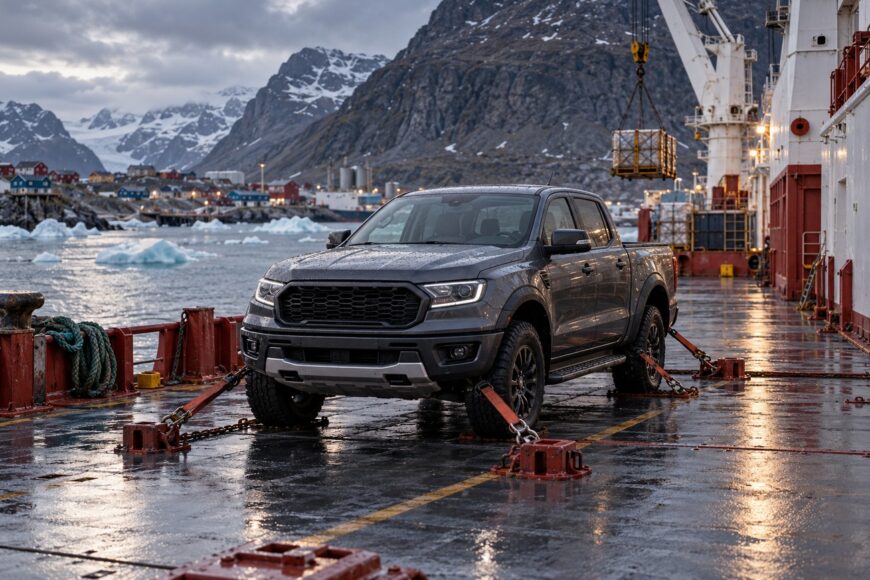
Shipping a Ford Ranger to Greenland does not work like ordinary car delivery. Greenland has no railways and a very limited road network, while sea access depends on ports, sailing schedules, and weather. Getting the pickup onto the island is one task; getting it from the arrival port to the person who will receive it may be another.
The useful starting point is a confirmed multimodal route and a named final handover point. An advertised transport price may omit customs work, port charges, insurance, or local arrangements, and a quoted delivery date may assume that every connection goes as planned. Settle those details before the Ranger leaves its origin.
- Why Shipping a Ford Ranger to Greenland Is Not a Normal Car Delivery
- The Real Route: Denmark, Iceland, or Norway as Transit Hubs
- Seasonality, Sailing Windows, and Realistic Transit Expectations
- Documents, Customs, and Vehicle Compliance
- Costing the Shipment: What the First Quote May Leave Out
- Choosing the Handover Point and Avoiding Common Booking Errors
- Frequently asked questions
- How expensive is it to ship a car from the US to Europe compared with Greenland?
- What should a carrier confirm before accepting a Greenland-bound vehicle?
- How expensive is it to ship a car from the US to Europe?
- How many cars can fit in a 20ft shipping container?
Why Shipping a Ford Ranger to Greenland Is Not a Normal Car Delivery
Shipping a Ford Ranger to Greenland is primarily a maritime and port-logistics task, usually involving multimodal transfers. A truck may carry it to a departure port, but the main planning decisions concern vessel space, transfers, and receipt at a Greenland port. There is no rail alternative for moving the vehicle across the island.
Ordinary road connections between most Greenlandic settlements are generally absent. A Ranger unloaded in one town cannot usually be driven to another as it could on a continental road network. The destination settlement therefore matters as much as the destination country when you request a quote.
A “door-to-door” offer may cover several contractors rather than one continuous delivery service. The final stage might be a port release or a handoff to a local operator, with no drive to a residential address included. Ask where the carrier’s responsibility ends and who can collect the vehicle there.
The Real Route: Denmark, Iceland, or Norway as Transit Hubs
A workable chain begins with transport from the Ranger’s origin to a port or consolidation point, followed by one or more sea legs and release in Greenland. Denmark is often a practical channel for private vehicle imports into Greenland. That makes it a useful route to investigate, though it does not establish a sailing for every origin and destination.
Denmark, Iceland, or Norway may serve as transit hubs, but the actual corridor must be confirmed for the shipment. A broker might propose a European handoff, a transfer to another vessel, and a final Greenland port call. Request the ports and operating carriers for each leg rather than relying on a list of countries on a sales page.
There is no regular direct maritime service from Russia to Greenland. A Ranger starting in Russia would therefore need a separately confirmed route through another hub, with export and transit requirements checked for that route. The same discipline applies elsewhere: a service to Europe is not, by itself, a service to Greenland.
Nuuk may be an appropriate entry point for some shipments, but it should not be assumed to serve every final destination. Give the carrier the settlement where the Ranger is needed and ask it to name the destination port, available sailing, and onward handoff. A route that ends at the wrong Greenland port can leave a substantial logistics problem unresolved.
Seasonality, Sailing Windows, and Realistic Transit Expectations
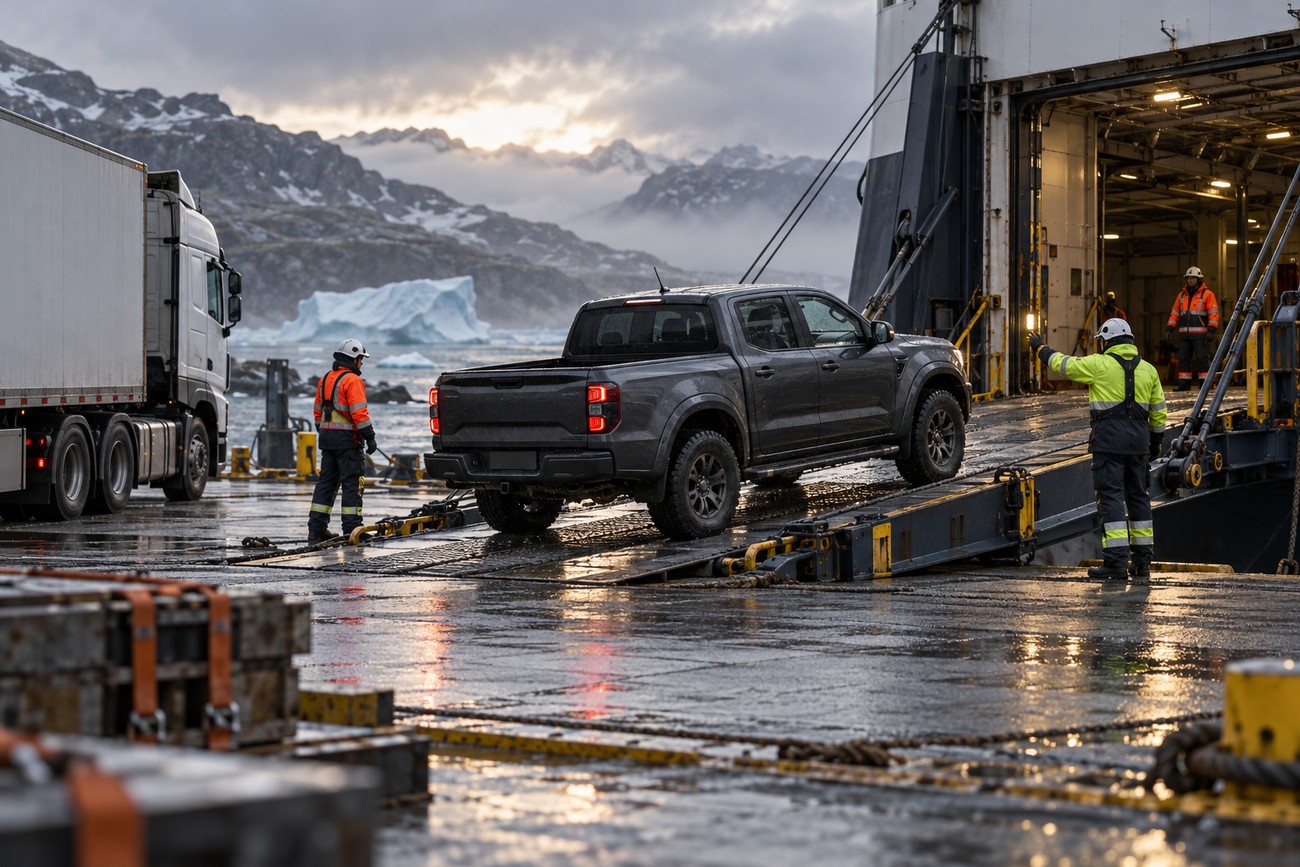
Cargo sailings are roughly concentrated from May through October, subject to sailing schedules and weather. Availability still varies by port and service, so a broad seasonal window is no substitute for a bookable departure. Ask when the Ranger must reach the first port to make its planned vessel.
Transfers create more than one deadline. The pickup may arrive at a hub safely yet miss its connection because of a late inbound vessel, loading limits, weather, or port delays. A realistic schedule should show the planned handoffs and explain what happens if the vehicle waits for a later sailing.
A 30–45-day transit estimate appears in one logistics source, but it is not independently confirmed and is not a guaranteed standard for shipping a Ranger to Greenland. Its usefulness depends on where the vehicle starts, which port will receive it, and whether the estimate includes time awaiting connections. Claims such as 24-hour delivery are promotional claims, not a normal expectation for this route.
Separate the estimated sailing time from the full period between collection and release. Customs processing, terminal appointments, and local collection can extend the latter even if the sea leg runs to plan. If you have a firm date for using the vehicle, ask for a schedule with stated assumptions rather than a fixed promise unsupported by a sailing plan.
Documents, Customs, and Vehicle Compliance
Vehicle shipments normally require proof of ownership and export and import customs paperwork. The precise set depends on the origin, ownership status, route, and importing arrangement. Before booking, match the Ranger’s identifying details across the ownership record, shipping instructions, and customs documents so discrepancies can be corrected before loading.
Establish who files each declaration and who supplies supporting records. The seller, owner, carrier, and customs broker may have different responsibilities; leaving a form “to the agent” without naming that agent can delay release. Ask for a document list tied to the actual route and the party responsible for each item.
Temporary import or export documents may apply if the Ranger is moving for a limited period rather than being permanently imported. That distinction should be settled before departure, especially if a transit country has its own handling requirements. Do not assume that passing through a European port makes the European leg a permanent import.
A certificate of conformity, or COC, confirms that a vehicle was produced to EU standards and may be relevant when the vehicle passes through the EU. Its relevance depends on the vehicle and the way the European stage is arranged. Check with the responsible broker whether a COC or other vehicle records are requested; do not treat it as a universal requirement for Greenland.
Duties, VAT, or other import charges depend on the specific importing arrangement and must be confirmed before booking. Ask who calculates and pays them, and whether any deposit or advance payment is required. A transport quote that stops at port arrival does not establish what it will cost to obtain customs release.
Costing the Shipment: What the First Quote May Leave Out
Read a quote as a description of purchased services, not as proof of the landed cost. It should identify collection, each transport leg, the destination port, and the point at which delivery responsibility ends. If it prices only the sea passage to a transit hub, it is incomplete for a Greenland-bound Ranger.
The final cost may include fuel surcharges, insurance, security, air waybill (AWB) or other handling charges where applicable, customs clearance, port fees, and broker or payment-service charges. Taxes and local collection may sit outside the carrier’s price as well. Ask which amounts are fixed, which can change, and who invoices each charge.
Figures such as 420 euros and claims of 30% savings are advertising examples, not verified market standards for this shipment. They offer little basis for comparison without the same origin, port, sailing, vehicle details, and service scope. Request itemized quotations on those common terms, including exclusions, before judging which offer costs less.
Choosing the Handover Point and Avoiding Common Booking Errors
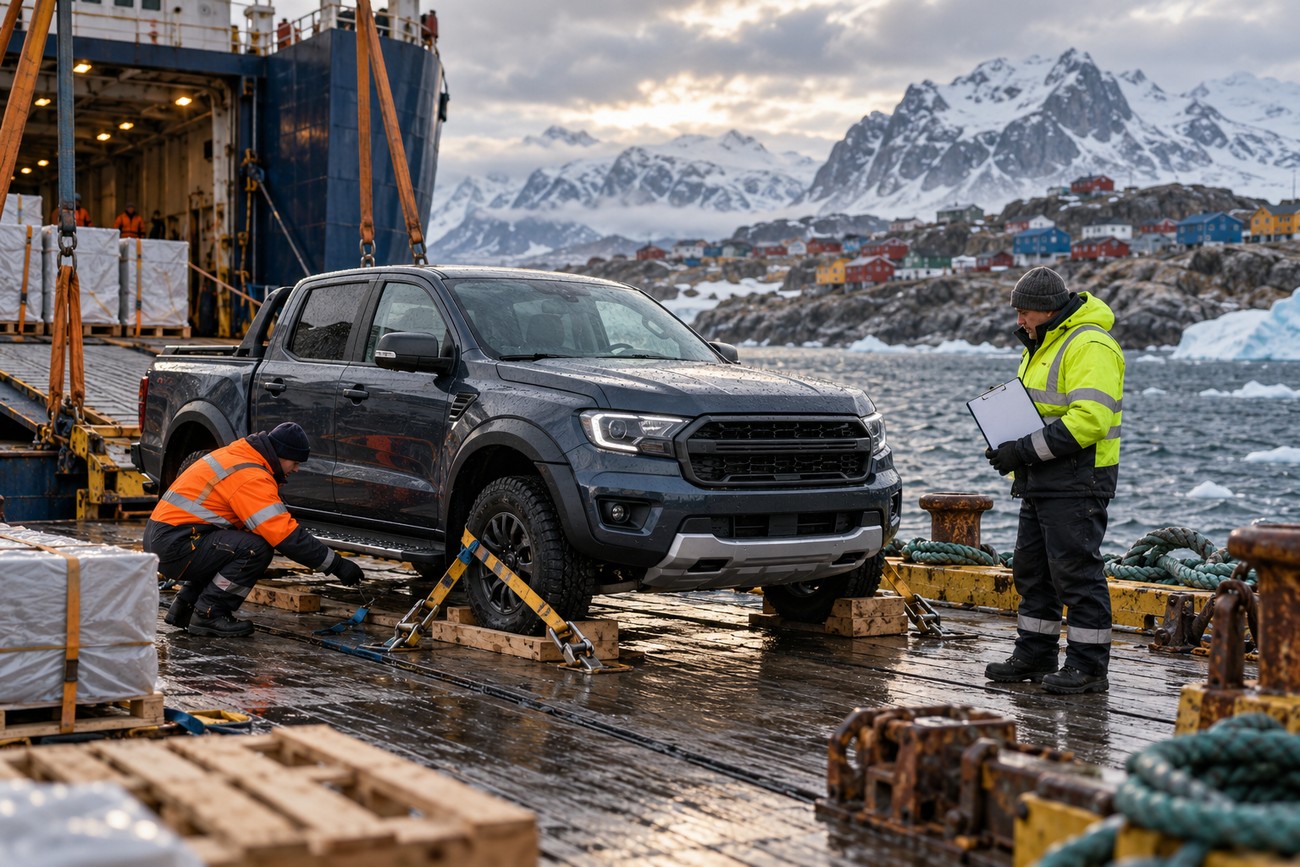
Start with the place where the Ranger will actually be used. Confirm the Greenland port that can receive it, then work backward through the available sailing and transit hubs. This avoids booking a plausible-looking route that ends in Greenland but leaves the vehicle in the wrong settlement.
For each offer, ask how many legs are subcontracted and which party controls the vehicle at each handoff. Confirm cargo insurance terms, the inspection and damage-reporting procedure, customs responsibility, and what the contract says about missed sailings. A fixed delivery date deserves scrutiny if the offer does not identify the sailing behind it.
Require the broker to name the destination port and local handoff party in writing. A “door-to-door” label can conceal a final stage that no contractor has agreed to perform.
Check whether local delivery means release at a terminal, transfer to an operator, or delivery to an address reachable by road. Ask who will receive the keys and documents, who pays storage if collection is delayed, and when risk passes to you. Those answers make the final handover operational rather than merely a line on the quote.
Be cautious with a supposed direct route, a generic multimodal page, or a price that omits fees until checkout. Denmark, Iceland, and Norway are possible hubs, not evidence of a booked connection. Before paying, obtain the route, sailing reference or current schedule, destination port, exclusions, and delay terms in one written proposal.
Frequently asked questions
These answers address comparisons and booking details that often cause confusion. The final decision should still be based on a quote for your Ranger’s origin, dimensions, destination port, and intended handover.
How expensive is it to ship a car from the US to Europe compared with Greenland?
A US-to-Europe quote is not a dependable price benchmark for shipping to Greenland. It may end at a European port, while a Greenland shipment needs a confirmed connecting route, an available seasonal sailing, and a defined port or local handoff. Compare quotations only after both specify the same included services and who pays for the onward leg and import charges.
What should a carrier confirm before accepting a Greenland-bound vehicle?
The carrier should confirm the named Greenland destination port, the planned sailing or schedule reference, and the party receiving the Ranger at the final handoff. It should also state any transfers, required vehicle and customs documents, insurance terms, and charges excluded from its price. If a connection remains unconfirmed, ask how that affects the booking and delivery estimate.
How expensive is it to ship a car from the US to Europe?
There is no reliable single price for shipping a car from the US to Europe. The departure and arrival ports, vehicle size, shipping method, sailing availability, insurance, and terminal services all affect a quote. To obtain a useful figure, provide the vehicle’s dimensions and preferred ports, then ask whether the offer includes collection, export handling, arrival charges, and customs services.
How many cars can fit in a 20ft shipping container?
A standard 20ft container is commonly planned around one passenger vehicle, provided its dimensions and loading method allow it. Do not assume that a Ford Ranger will fit: cab and bed configuration, accessories, clearance at the container doors, and space for secure lashing all matter. Send the pickup’s exact measurements to the carrier and request an approved loading and securing plan before choosing container service.







