
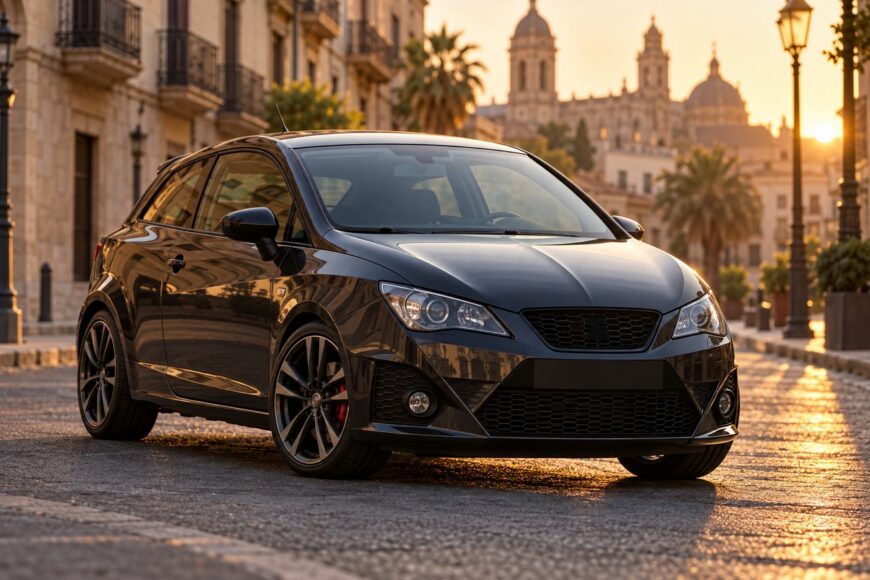
The SEAT Ibiza Bocanegra announces itself with a black front mask that makes a small three-door hatchback look like a miniature sports car. Special body treatment, distinctive wheels, and dark trim reinforce the impression, while the compact dimensions suggest an easy-to-place urban performance car.
The ownership reality is more complicated. Catalogues disagree over whether particular cars make 150 hp or 180 hp, the seven-speed DSG demands a properly documented history, and the three-door cabin offers limited practicality. A sound purchase therefore depends less on the most impressive specification sheet than on identifying the exact car and checking its condition.
- What the SEAT Ibiza Bocanegra Actually Is
- The Bocanegra Numbers Do Not All Agree
- What It Feels Like on the Road
- The Numbers That Matter for Everyday Use
- Used-Buying Risks Most Listings Hide
- Is the Bocanegra Worth the Compromises?
- Frequently asked questions
- How many SEAT Ibiza Bocanegras were made?
- Why are used SEAT Ibizas often so cheap?
- What is a used SEAT Ibiza Bocanegra worth?
- Was the Bocanegra a concept car or a production model?
What the SEAT Ibiza Bocanegra Actually Is
The Bocanegra is a special version of the SEAT Ibiza, produced approximately from 2009 to 2012, although some catalogues list the period as 2008–2012. It is a three-door hatchback rather than a separate model line with its own platform. That distinction matters because online descriptions sometimes give the name more engineering significance than it actually has.
Its defining feature is the black front mask, the visual reference behind the Bocanegra name. The treatment is supported by special bumpers, wheels, and trim details, so this is more than an ordinary Ibiza painted black. The stance and exterior package give the car a sharper identity and help explain its appeal on the used market.
Underneath, the car is technically close to Ibiza Cupra and the related TSI setup rather than being built on a unique Bocanegra platform. The production version should also be separated from the earlier concept-car narrative, which helped establish the name but can blur descriptions of the road-going car.
The Bocanegra Numbers Do Not All Agree
The core engine is a 1.4 TSI turbocharged direct-injection four-cylinder with 16 valves. Published power figures vary between 150 hp and 180 hp, depending on the version and source. Those figures should never be treated as interchangeable when comparing cars or estimating insurance, performance, or future resale value.
| Item | Commonly quoted information | What to verify |
|---|---|---|
| Power | 150 hp or 180 hp | VIN, market specification, and vehicle documentation |
| 0–100 km/h | Reported figures range from 7.2 to 7.6 seconds | Exact power version, gearbox, condition, and tires |
| Top speed | Reported figures range from 212 to 225 km/h | Factory specification for the individual car |
| Transmission | Seven-speed DSG/automated transmission is associated with the Bocanegra | Gearbox type and service history |
The performance spread is a buying issue rather than a catalog curiosity. A listing using the highest quoted figure may describe a different market specification, or it may simply be inaccurate. Before comparing prices, confirm the VIN, the original market, the engine output, and the transmission shown in the documentation.
Even two cars with the same nominal output can feel different after years of use. Turbocharger response, DSG operation, tire condition, and general engine health all influence acceleration. A claimed 7.2-second car that shifts poorly or runs on unsuitable tires may be less convincing than a correctly maintained example with a more modest published figure.
What It Feels Like on the Road
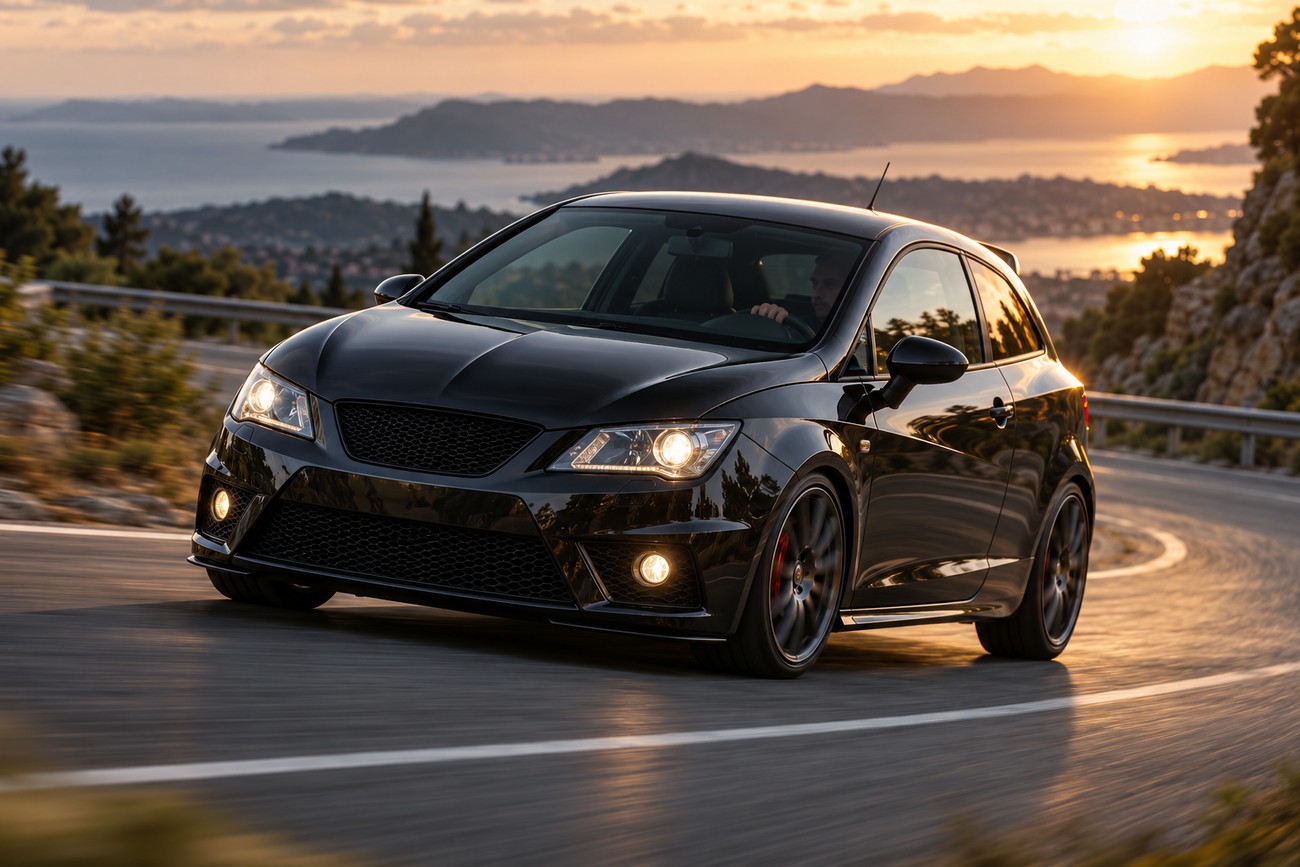
The Bocanegra’s character comes from the combination of a turbocharged 1.4 TSI, a seven-speed DSG, and a curb mass of about 1,254 kg. The compact body gives the powertrain relatively little car to move, while the gearbox is central to the sharpness of the response. Its condition therefore affects the driving experience as much as the engine specification does.
On smooth asphalt, the firm suspension and low-slung appearance suit the hot-hatch brief. The car should feel more focused than a regular small hatchback, with quick automated shifts contributing to its sense of urgency. That appeal can fade on broken urban roads, where the firm setup may feel nervous and less forgiving.
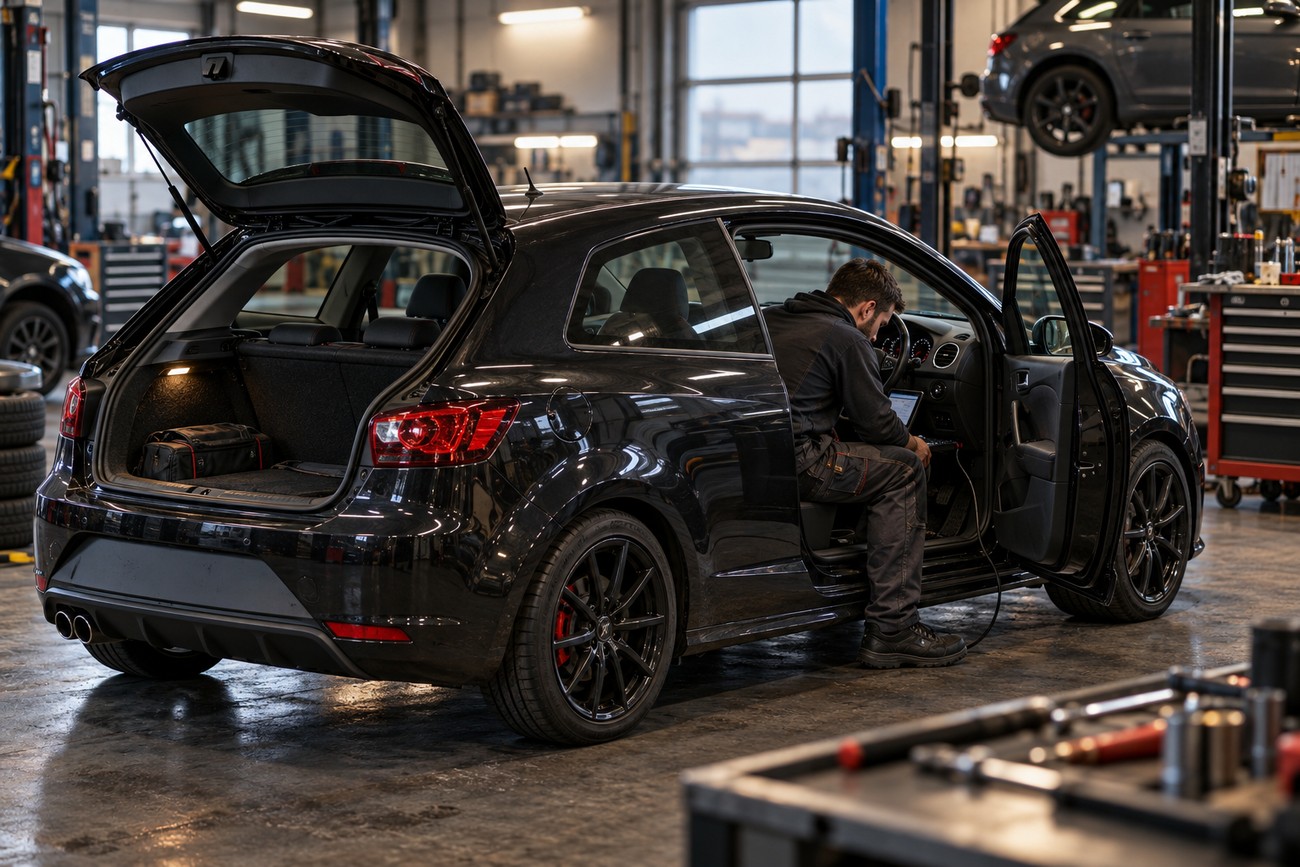
Assess a DSG through cold-start engagement, low-speed creeping, reverse selection, and service documentation together; a short road test alone can miss an expensive weakness.
Low clearance or a lowered stance is reported by one source as troublesome around speed humps and rough driveways. Treat that as a condition and usage check rather than a universal defect: the important question is whether the specific car clears the roads you use without scraping or showing damage underneath.
The Numbers That Matter for Everyday Use
The Ibiza remains physically compact, measuring about 4,072 mm long, 1,693 mm wide, and 1,424 mm high. Its wheelbase is about 2,469 mm, which helps explain why it is easy to position in town. Those dimensions are useful advantages for parking, although they do not create much space inside.
| Specification | Reported figure |
|---|---|
| Length | About 4,072 mm |
| Width | About 1,693 mm |
| Height | About 1,424 mm |
| Wheelbase | About 2,469 mm |
| Curb mass | About 1,254 kg |
| Gross vehicle weight | About 1,705 kg |
| Boot capacity | 236 liters |
| Fuel-tank capacity | 45 liters |
| Official combined fuel consumption | About 6.3 L/100 km |
| Official CO₂ | 146 g/km in one cited catalog |
The 236-liter boot is modest, and the three-door layout makes regular access to the rear seats inconvenient. Adults can use the back for occasional trips, but frequent passenger duty quickly exposes the compromises of the body style. The car works better as a driver-focused small hatch than as a flexible family vehicle.
A 45-liter fuel tank also gives the Bocanegra only a moderate reserve, particularly when the turbo engine is driven hard. The quoted combined consumption of about 6.3 L/100 km is a catalog figure, and real-world use may be higher. The gross vehicle weight of about 1,705 kg is the more useful figure when considering passengers and luggage, because loading changes both available capacity and the car’s behavior.
Used-Buying Risks Most Listings Hide
Start with the DSG history. Older DSG systems require careful servicing and documented records, yet many listings describe the gearbox only as “automatic” or “working well.” That wording says little about how the transmission engages when cold, creeps at low speed, selects reverse, or behaves after extended driving.
The engine deserves an equally careful inspection. Confirm the claimed 150 hp or 180 hp version through the VIN and paperwork, then compare the documentation with the car’s condition. A neglected engine, tired turbo system, unsuitable tires, or a poorly operating DSG can make the advertised performance irrelevant.
Inspect the black front mask, bumpers, wheels, trim, and other distinctive exterior pieces for cracks, poor repairs, and mismatched finishes. Unique Bocanegra body and trim parts may be harder or more expensive to source than ordinary Ibiza components. That is a limited-source report, not a universal defect, but it is a sensible reason to price repairs before buying.
Appearance can also conceal specification mistakes. Verify the market version, VIN, engine output, gearbox, and service records before treating the car as a genuine, correctly described Bocanegra. A pre-purchase inspection should include the underside, especially if the car has a low stance and has been used around rough driveways or speed humps.
Is the Bocanegra Worth the Compromises?
The Bocanegra makes sense for a buyer who values distinctive styling, compact dimensions, and the character of a small turbocharged hot hatch. Its black front treatment, stance, wheels, and decor give it a stronger identity than an ordinary Ibiza in black. On smooth roads, that visual drama can be matched by an engaging powertrain.
The compromises are clear. The three-door body restricts regular rear-passenger use, the 236-liter boot limits carrying capacity, and the firm suspension is better suited to smooth surfaces than poor roads. DSG risk adds a financial dimension that should be taken seriously on an older performance-oriented car.
There is no universal answer based on whether the car is listed as producing 150 hp or 180 hp. Condition, verified specification, gearbox history, originality, and the availability of special body parts matter more than choosing the highest catalog number. Buy the individual car, not the badge or the photograph.
Frequently asked questions
The questions below focus on production, pricing, value, and the relationship between the concept and production cars. The same checks remain important throughout: verify the individual car’s specification, condition, and documentation. That approach is more reliable than relying on rarity claims or appearance alone.
How many SEAT Ibiza Bocanegras were made?
The supplied research does not establish a reliable official production total. It is therefore safer to describe the Bocanegra as a distinctive Ibiza special version than to claim a specific level of rarity based on an unverified number.
Production-period descriptions also vary, with some catalogs listing 2008–2012 and others approximately 2009–2012. That variation reinforces the need to verify an individual car rather than using an assumed production count as proof of authenticity or value.
Why are used SEAT Ibizas often so cheap?
Low asking prices can reflect age, supermini market positioning, limited rear-seat practicality, and buyer concern about older DSG systems. A small performance hatch may also attract less mainstream demand than a larger, more practical car.
A low price is therefore only a starting point. It may represent a sensible market adjustment, or it may signal missing service history, an incorrect specification, or expensive future work. Condition and documentation separate a good purchase from a cheap problem.
What is a used SEAT Ibiza Bocanegra worth?
Its value depends on the country, mileage, verified power version, documented DSG servicing, originality, and bodywork condition. There is no universal price established by the available information.
Cars with complete records, correct VIN-confirmed specifications, sound special trim, and an honest history should be assessed separately from cosmetically similar examples with uncertain gearboxes or replacement body parts. Comparing like with like is more useful than relying on a single advertised figure.
Was the Bocanegra a concept car or a production model?
The Bocanegra name is associated with a concept-car story, but the road-going SEAT Ibiza Bocanegra was a production special version. Online descriptions sometimes blend the concept and production cars because the black front-mask theme links them visually.
The production car remained technically close to Ibiza Cupra and the related TSI setup, rather than becoming a separate platform. Its distinctive appearance should not be taken as evidence of an entirely independent engine or chassis.







