
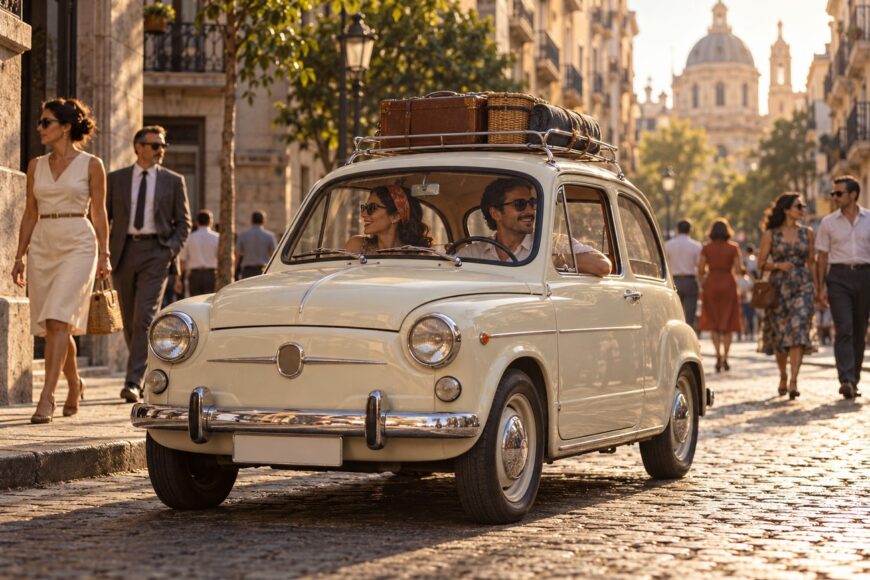
The Seat 600 is remembered as the little car that put Spain on the road. It is also a decades-old machine with modest power, limited protection, and systems that demand careful inspection. The affectionate national symbolism is real; so are the cracked sills, tired brakes, overheating radiators, and dubious repairs found beneath attractive paint.
Seat produced the car in Spain under Fiat license, so its importance was social as well as technical. Local manufacture and mass circulation made the 600 part of everyday Spanish life and a visible sign of expanding mobility. Its historical role deserves respect, though ownership today depends on mechanical condition, originality, and the roads you intend to use.
- From licensed Fiat to a national symbol
- Seat 600 versions: what changed from N to D and later cars
- Small engine, disputed figures, and real-world performance
- What restoration adverts often hide
- Living with a Seat 600 on modern roads
- Why the Seat 600 still matters—and where the myths fail
- Frequently asked questions
- How much does a Fiat 600 cost compared with a Seat 600?
- How can I tell whether a Seat 600 is a 600 N or a 600 D?
- What should I do before driving a Seat 600 after winter storage?
From licensed Fiat to a national symbol
Seat produced the 600 in Spain from 27 May 1957 to 3 August 1973. The basic design came from Fiat, yet Spanish production gave the car a distinct place in the country’s industrial and social history. It became a familiar domestic vehicle rather than a rare imported curiosity.
Production reached up to 797,319 cars, a scale that explains the model’s cultural reach. The Seat 600 carried families, luggage, and the practical hopes attached to private transport. Its small size and simple layout suited crowded streets and limited resources, while local availability helped turn the model into a shared national reference.
Seat reached the milestone of 100,000 cars produced by 23 July 1962. That figure does not by itself prove how many households owned one or how affordable every example was, and reliable evidence for such claims should be treated carefully. It does show how quickly the 600 moved from a new product to a common presence.
The phrase “motorized Spain” therefore describes more than sales volume. The car connected the licensed Fiat design with Spanish factories, mechanics, roads, and families. For historians, that local production history matters as much as the compact engineering that made the car useful.
Seat 600 versions: what changed from N to D and later cars
The name “600” does not mean every car has the same engine or equipment. Version designations, documentation, engine identity, and the quality of later repairs all matter when you assess an individual example.
| Version or designation | Supported identification | What to verify |
|---|---|---|
| 600 N | 633 cm³ water-cooled inline four-cylinder engine | Produced until July 1963; 131,985 cars were built |
| 600 D | 767 cm³ engine; about 25 CV in official Seat figures | Confirm the engine, documentation, and matching identification numbers |
| 600 E | Later 600 designation | Check the exact equipment and originality of the individual car |
| 600 L | Later 600 designation | Do not infer specifications from the badge alone |
| Comercial | 600 commercial designation | Inspect body configuration, conversions, and replacement parts |
The 600 N is the early car most clearly associated with the 633 cm³ engine. The 600 D brought the 767 cm³ engine and about 25 CV in official Seat figures, changing the way the car coped with passengers and gradients. A larger engine does not automatically make a particular survivor mechanically sound.
The later E, L, and Comercial designations are useful clues, though a badge or altered body detail cannot establish provenance by itself. A car may have received replacement panels, a different engine, a changed interior, or a rebuilt drivetrain during decades of use. Documentation and physical inspection should settle the question.
Small engine, disputed figures, and real-world performance
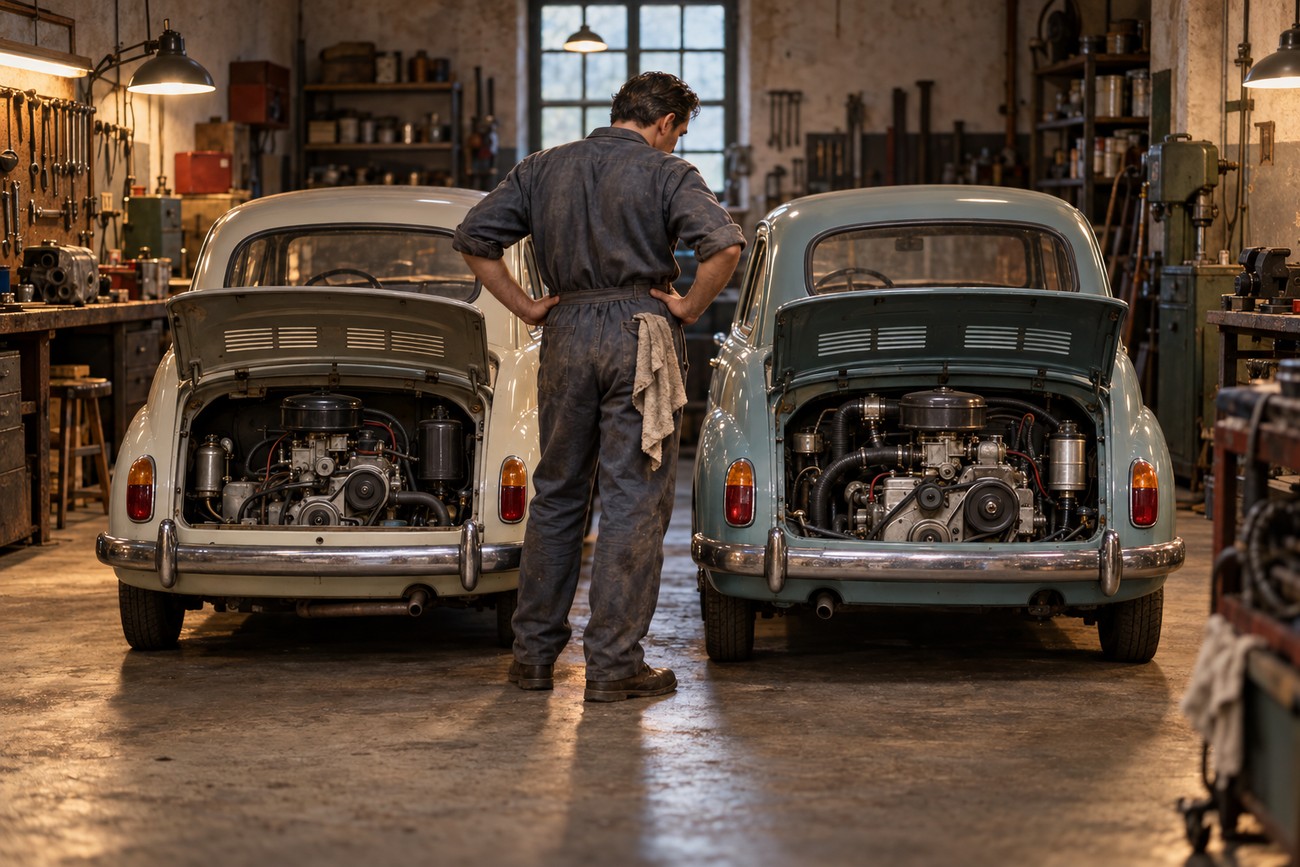
The Seat 600 used a rear-mounted engine, rear-wheel drive, and a two-door body. Early cars were approximately 3.3 meters long and weighed about 575–590 kilograms. That low mass helped a small engine move the car, while the compact dimensions made it practical in narrow urban streets.
Early 633 cm³ cars are commonly listed at about 95 km/h. Later or more powerful 767 cm³ versions are sometimes listed at about 115 km/h. Those figures describe different stages of the model’s development and should never be applied to the entire range.
Power figures require similar caution. Official Seat figures give about 18 hp for the early car and about 25 hp for the 600 D, while reference guides may quote about 21.5 hp for early cars and 32.5 hp for later or more powerful versions. Different measurement standards, terminology, and modifications can explain part of the gap, so presenting one precise number as universal is misleading.
On a modern road, acceleration matters more than the headline maximum speed. A 633 cm³ car can feel seriously limited with passengers, on an incline, or into a headwind, particularly where surrounding traffic moves quickly. The 767 cm³ versions offer more useful flexibility, though they remain old, light cars whose brakes, cooling, tires, and drivetrain condition determine whether a journey is sensible.
What restoration adverts often hide
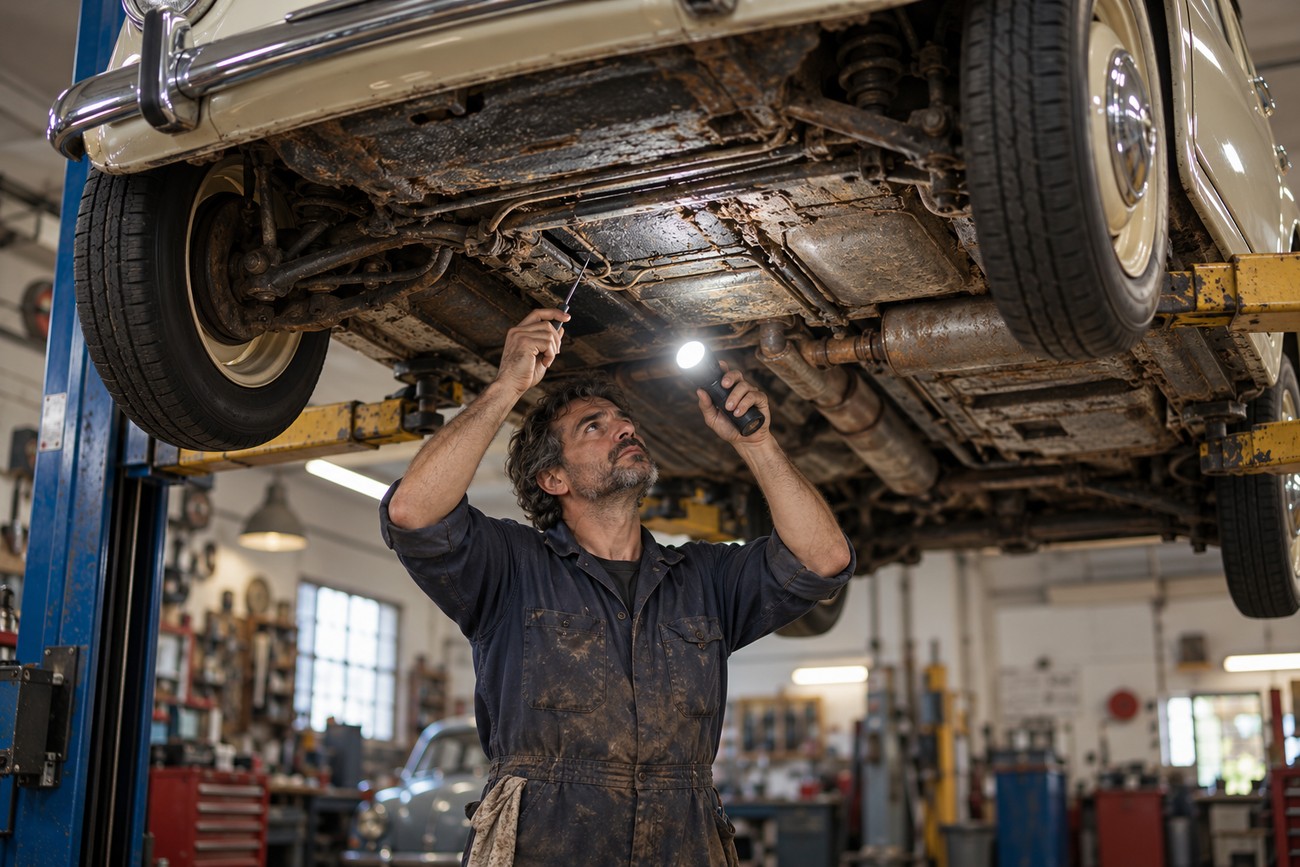
Glossy paint is weak evidence of a sound Seat 600. Corrosion commonly affects the sills, floor, wheel arches, suspension mounts, and lower door sections, all areas that can be obscured by underseal, filler, or fresh paint. A proper inspection needs access beneath the car and enough light to distinguish original metal from layered repairs.
Weld quality and body geometry deserve the same attention as visible rust. Poorly positioned repairs can leave doors misaligned, suspension mounting points distorted, or panels carrying stress they were never designed to bear. Identification numbers should match the documentation where applicable, and their surrounding metal should be checked for signs of alteration.
Overheating may involve the radiator, blocked cooling passages, the water pump, or incorrect adjustment of the cooling system. The rear-mounted layout makes the condition of the complete cooling circuit especially important; a clean engine bay does not prove that coolant moves correctly through the car.
Originality is another separate question. A restored example may contain a non-original engine, gearbox, interior, wheels, or body panels. That may be acceptable for enjoyable use, yet it changes historical value and can complicate later identification. Available material is insufficient to rank failure frequencies or state typical restoration costs reliably, so buyers should judge the individual car rather than rely on generalized price or reliability claims.
Living with a Seat 600 on modern roads
The 633 cm³ engine has limited performance on modern roads, especially with passengers, hills, or headwinds. A route that looks easy on a map may become uncomfortable when merging, climbing, or maintaining a safe position among faster vehicles. The car is better suited to considered use than to treating its quoted maximum speed as a target.
Brakes, steering, electrics, tires, cooling, and the drivetrain all require regular attention. Their age matters as much as the apparent mileage, since seals, hoses, wiring, and friction materials can deteriorate while a car is stored. Comparing the Seat 600 with a modern car by comfort or emergency stopping ability gives a false sense of security.
Its low mass reduces the load placed on the engine, yet it also means far less passive protection than a modern vehicle. The two-door body and compact dimensions are part of the car’s character, while occupants remain exposed to risks that contemporary crash structures and restraint systems are designed to reduce. Route selection and moderate speeds are practical safety measures, not signs that the car has failed its historical purpose.
After winter storage, use a deliberate sequence before any road use:
- Check the oil, coolant, fuel lines, and signs of leakage.
- Inspect the radiator, cooling passages, water pump, and system adjustment.
- Test the brakes and examine the tires for condition and pressure.
- Check steering movement, electrical connections, and drivetrain operation.
- Begin with a cautious test drive away from heavy traffic, stopping to reassess temperatures, fluid loss, and braking behavior.
Why the Seat 600 still matters—and where the myths fail
The Seat 600 remains important because it linked industrial production with ordinary mobility on a national scale. Its Spanish identity is genuine, though the car was produced under Fiat license rather than being an entirely Spanish design. That distinction adds historical accuracy without reducing the importance of what Seat achieved locally.
Several familiar claims collapse under closer inspection. The 600 N used a 633 cm³ engine, while the 600 D and later versions used a 767 cm³ engine. The approximately 115 km/h figure belongs to later or more powerful versions, whereas the early 633 cm³ car is commonly listed at about 95 km/h.
Horsepower figures also depend on version and measurement standard. Official Seat figures give about 18 hp for the early car and about 25 hp for the 600 D; higher figures in reference guides should be identified as a different source basis rather than blended into a single specification. The safest description preserves the disagreement.
For a historian, originality and documented identity may matter more than shiny paint. For a restorer, sound structure and correct cooling are more urgent than cosmetic perfection. For a prospective owner, the right Seat 600 is a carefully inspected, appropriately used old car—not a modern commuter disguised as a cultural icon.
Frequently asked questions
How much does a Fiat 600 cost compared with a Seat 600?
There is no single reliable price for either car from the available evidence. Compare the specific version, originality, corrosion, structural repairs, documentation, and mechanical condition rather than treating the Fiat or Seat name as an automatic price category.
A cosmetically restored car may command attention while hiding extensive welding or non-original components. A less polished car with sound structure, matching identification numbers, and a properly maintained drivetrain can be the more credible purchase, even if its appearance is less striking.
How can I tell whether a Seat 600 is a 600 N or a 600 D?
Start with the model designation in the documentation, then verify the engine displacement and identification numbers. The 600 N used a 633 cm³ water-cooled inline four-cylinder engine, while the 600 D adopted a 767 cm³ engine.
Appearance alone is an unreliable guide because engines, panels, interiors, and badges may have been changed. Ask whether the documented identity matches the car’s numbers and whether the engine is original, replacement, or modified.
What should I do before driving a Seat 600 after winter storage?
Begin with fluids and fuel lines, checking the oil, coolant, leaks, and signs of deteriorated hoses. Then examine cooling-system flow and the radiator before testing the brakes, tires, steering, electrical system, and drivetrain.
Only after those checks should you make a cautious test drive, preferably away from heavy traffic. Stop and reassess temperature, braking, steering, and any fluid loss before extending the journey.







