
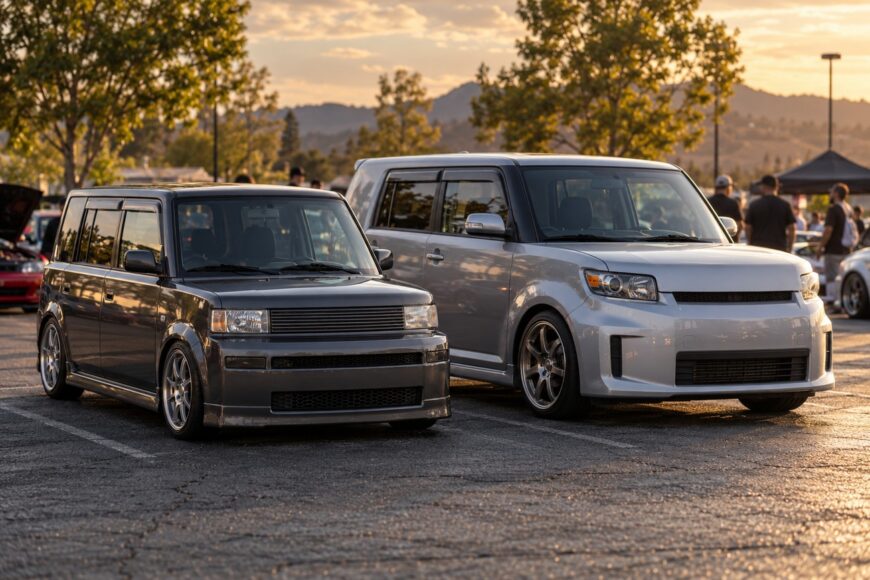
The Scion xB looked like a toaster on wheels, yet its square body built a following that outlasted the joke. Upright seating, good outward visibility, and a useful interior made it feel more spacious than its footprint suggested. The shape gave owners something distinctive without asking them to give up everyday practicality.
That appeal comes with a used-car reality check. The xB can be an economical urban runabout, but highway noise, modest performance, and a firm ride matter more on a long drive than they do in a listing photo. Now that every example is an older car, condition and history deserve at least as much attention as the badge.
- Why the Scion xB Became a Cult Car
- Two Generations, Two Very Different xBs
- Scion xB Generations: Specs That Change the Experience
- What Living With an xB Is Actually Like
- The Hidden Costs Behind the Cheap-Toyota Reputation
- Common Buying Mistakes—and the Checks That Prevent Them
- Frequently asked questions
- Which years of the Scion xB were considered the best?
- What is the 0 to 60 time of a 2005 Scion xB?
Why the Scion xB Became a Cult Car
Toyota sold the xB under its Scion sub-brand from 2003 to 2015, across two generations. Its profile was the point: a tall roof and near-vertical sides made the cabin feel open while keeping the vehicle manageable in town. Owners who value an easy view out and room for people or luggage still have good reasons to seek one out.
The first xB made an especially strong visual statement. Its upright seating and compact exterior gave it a character that ordinary small cars struggled to match. That combination helps explain the loyalty: the styling was unusual, and the space it created was useful every day.
Some listings call the xB a minivan, while others call it a wagon. A five-door hatchback or compact wagon is the more helpful description. Buyers expecting the scale and long-distance composure of a family minivan may find the xB smaller and less relaxed than the label implies.
Two Generations, Two Very Different xBs
The generation split is the first thing to establish in any xB listing. The 2003–2006 first generation used a 1.5-liter engine with 108 hp and 142 N·m, driving the front wheels. Its appeal lies in the compact footprint and easygoing urban character, rather than effortless acceleration.
The 2007–2015 second generation grew larger and gained a 2.4-liter engine with 158 hp and 220 N·m. That increase of about 50 hp changes how readily the car gathers speed, particularly with passengers aboard. It also changes the fuel-use calculation, so the later xB should not be judged by the earlier car’s reputation for thrift.
A five-speed manual or four-speed automatic was typical across the two generations. The automatic’s four ratios are worth bearing in mind if you expect quiet, low-effort highway cruising. Engine and transmission together shape the experience more than the shared xB name suggests.
Scion xB Generations: Specs That Change the Experience
These figures show why a first-generation xB and a later one serve somewhat different priorities. Fuel-economy numbers come from listings and published figures using varying methods, so treat them as comparisons rather than promises for a particular car.
| Specification | First generation | Second generation |
|---|---|---|
| Years | 2003–2006 | 2007–2015 |
| Engine | 1.5-liter | 2.4-liter |
| Output | 108 hp, 142 N·m | 158 hp, 220 N·m |
| Drivetrain and typical transmissions | Front-wheel drive; five-speed manual or four-speed automatic | Front-wheel drive; five-speed manual or four-speed automatic |
| Dimensions | 3945 mm long, 1689 mm wide, 1640 mm tall; 2500 mm wheelbase | Approximately 4250 mm long, 1760 mm wide, 1600 mm tall |
| Cargo capacity | No consistent figure available | 611–1230 L in catalogs, depending on seating configuration |
| Fuel economy | About 31 mpg city and 35 mpg highway in used listings; results vary by method and transmission | Approximately 22 mpg city and 27–28 mpg highway in published figures |
What Living With an xB Is Actually Like
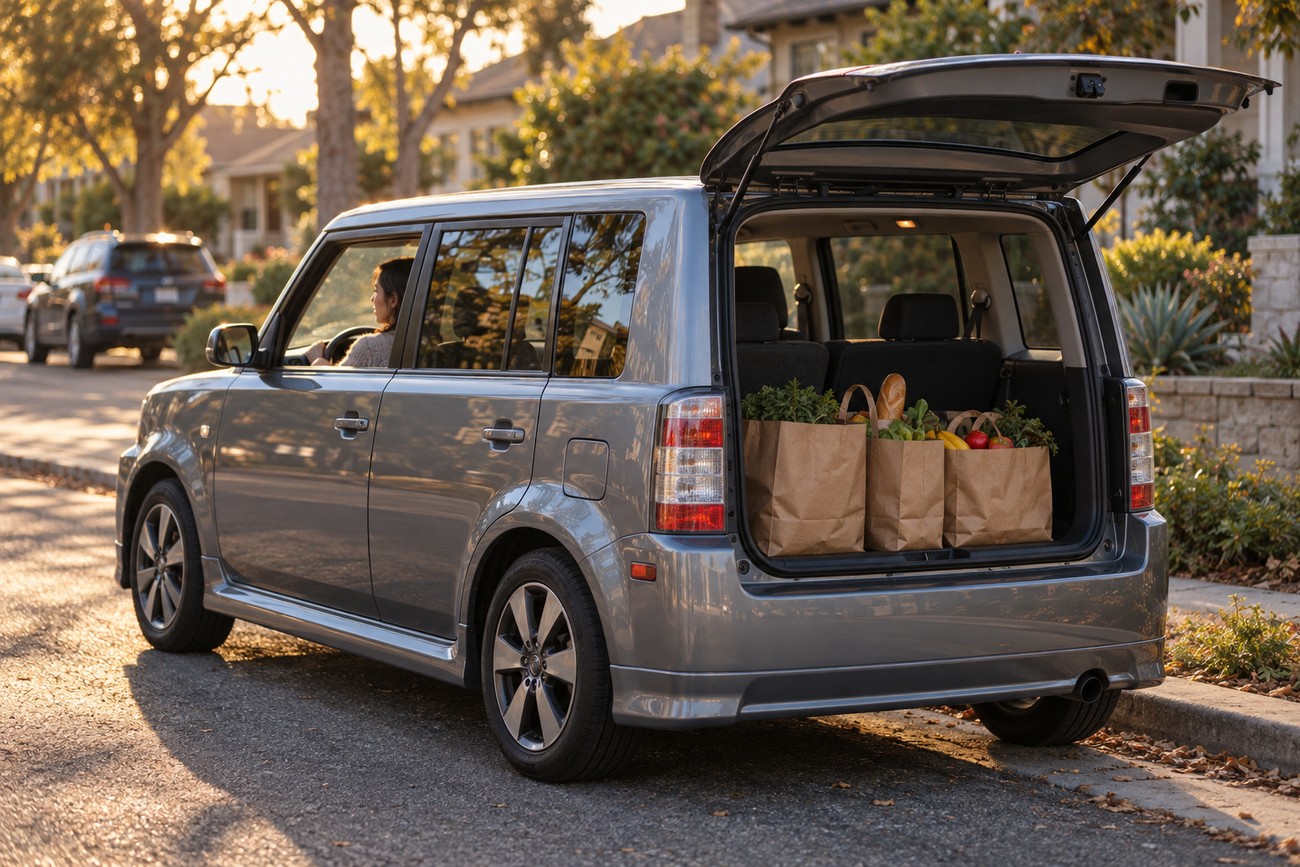
In town, the xB’s strengths are easy to appreciate. The upright driving position and outward visibility help when threading through traffic or placing the car in a tight space. Its tall cabin also makes the exterior dimensions feel less restrictive once people and bags are aboard.
Owners often describe the xB as economical and inexpensive to service. That impression fits the first generation’s modest engine particularly well, although the larger second-generation car asks for more fuel. Either way, a low running-cost reputation is a starting point for evaluation, not a guarantee attached to every used example.
Speed changes the verdict. The 1.5-liter car can feel responsive enough around town, then run short of reserve when a highway pass calls for quick acceleration. The 2.4-liter xB is noticeably stronger, but it remains a practical car rather than a fast one; transmission choice and load will also affect how eager it feels.
Ride and refinement are the other reasons to extend a test drive beyond city streets. Owners report a firm response to rough pavement, weak sound insulation at speed, and sensitivity to ruts in the road. Those complaints need to be assessed in the car you are considering, where tire condition and suspension wear may add to the discomfort.
The Hidden Costs Behind the Cheap-Toyota Reputation
The xB’s age is its principal hidden risk. Toyota origins do not protect an individual car from worn suspension parts, deferred maintenance, or a poorly documented repair. A cheap example can lose its appeal quickly if the purchase price leaves no room to put those issues right.
Repainting and modifications warrant a careful look, without automatically condemning the car. Cosmetic work may be harmless; it may also obscure earlier damage, while aftermarket changes can make future repairs less straightforward. Receipts, consistent panel finish, and a sensible inspection carry more weight than a seller’s broad assurance that it “drives fine.”
Market origin matters too. An imported xB may have equipment or parts requirements that do not line up neatly with a local catalog entry, and listings can be imprecise about trim or even body style. Confirming the vehicle’s identity and specification before ordering parts can prevent an ordinary repair from becoming a search for the correct component.
Fuel figures need the same care. One catalog gives the first-generation car 8.7 L/100 km combined, while other figures differ with method and transmission; used-listing mpg numbers are likewise guides, not measured results for the car in front of you. The square body makes space efficiently, but it also helps explain why wind noise and highway economy may disappoint someone buying solely on its small-car image.
Common Buying Mistakes—and the Checks That Prevent Them
Start by confirming the year, generation, engine, and transmission rather than trusting a listing’s description. The 1.5-liter and 2.4-liter xBs feel substantially different, and “minivan” or “wagon” labels do little to identify the vehicle’s mechanical specification. Match its identifying details to its paperwork before comparing prices or ordering an inspection.
Give the test drive two settings: rough local pavement and a suitable stretch of faster road. Listen for suspension knocks and excessive tire or road noise, then note whether the car follows ruts or needs repeated steering corrections. If safe and legal conditions allow, assess how comfortably it accelerates to traffic speed and whether it has the passing reserve you need.
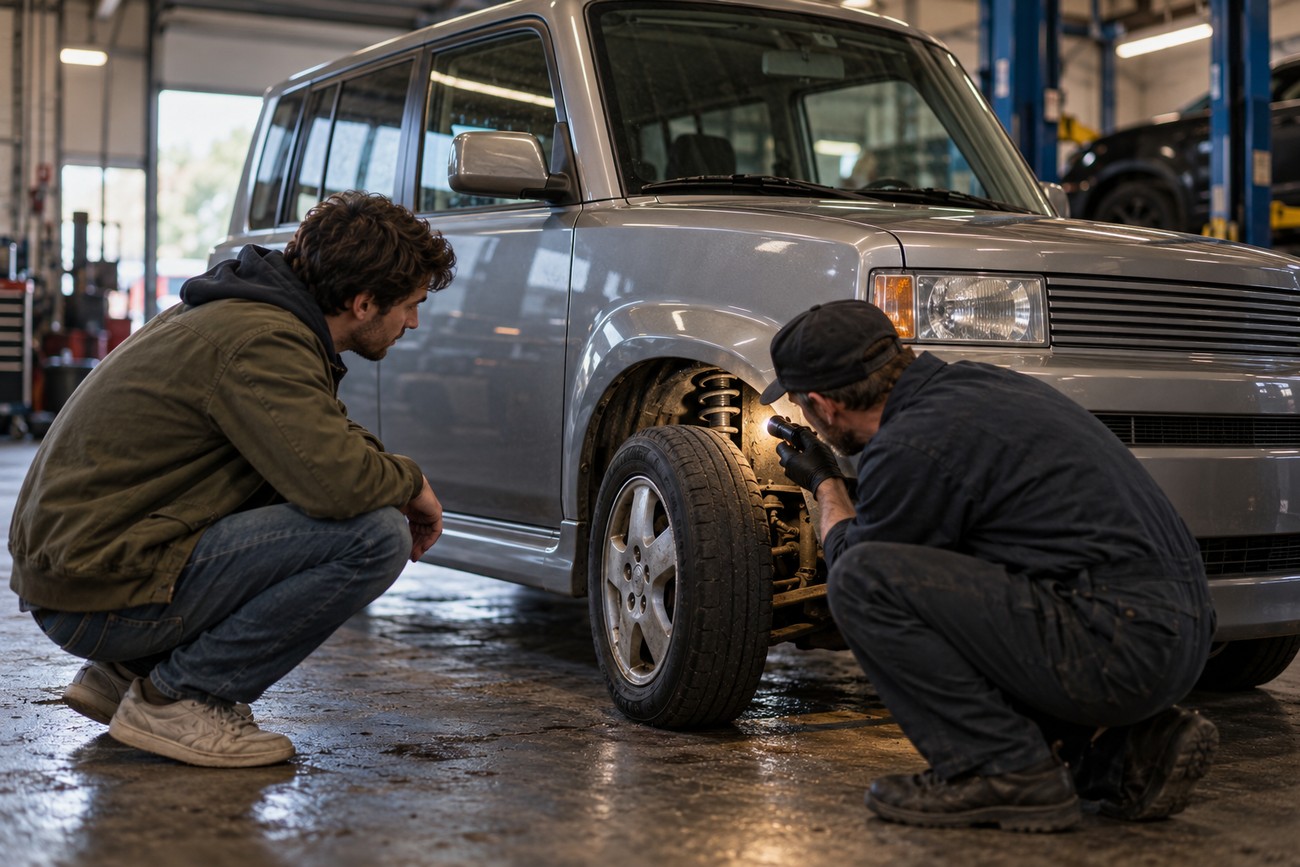
On an older xB, uneven tire wear and a steering wheel that sits off-center can be more useful inspection clues than a clean badge or tidy cabin. Check alignment, suspension condition, and any nonstandard repairs before treating rut sensitivity as simply part of the model’s character.
Inspect modifications for installation quality and ask what was changed, by whom, and why. Repainted panels merit a closer check for damage history, while service records help distinguish steady upkeep from a recent effort to make a neglected car salable. None of these signs proves a fault on its own; together, they determine whether the asking price reflects the work ahead.
Finally, establish the car’s market origin and confirm that the parts likely to need attention can be identified for that exact specification. A short city drive and a Toyota connection can make an xB seem like an uncomplicated bargain. The better buy is the example whose condition, history, and highway behavior hold up to scrutiny.
Frequently asked questions
There is no universally best xB year. Choose first by the kind of driving you do, then by the condition and documentation of the individual car; a well-kept example of the less fashionable generation may be the sounder purchase.
Which years of the Scion xB were considered the best?
The 2003–2006 xB is the choice for buyers who prize the original compact shape and its stronger fuel-economy appeal. The 2007–2015 version suits someone who values the noticeably stronger 2.4-liter engine and a larger vehicle. Within either generation, maintenance history and a convincing test drive matter more than selecting a single “best” year.
What is the 0 to 60 time of a 2005 Scion xB?
The figures here do not establish a dependable 0–60 mph time for a 2005 xB, so a precise figure would be misleading. The 2005 car belongs to the first generation and uses a 1.5-liter, 108-hp engine; its manual or automatic transmission, test method, and present condition can all affect a timed run.
For a buying decision, judge whether that car accelerates adequately in the situations you actually face. A safe test of joining faster traffic will tell you more about a particular used xB than an unsupported acceleration number.







