
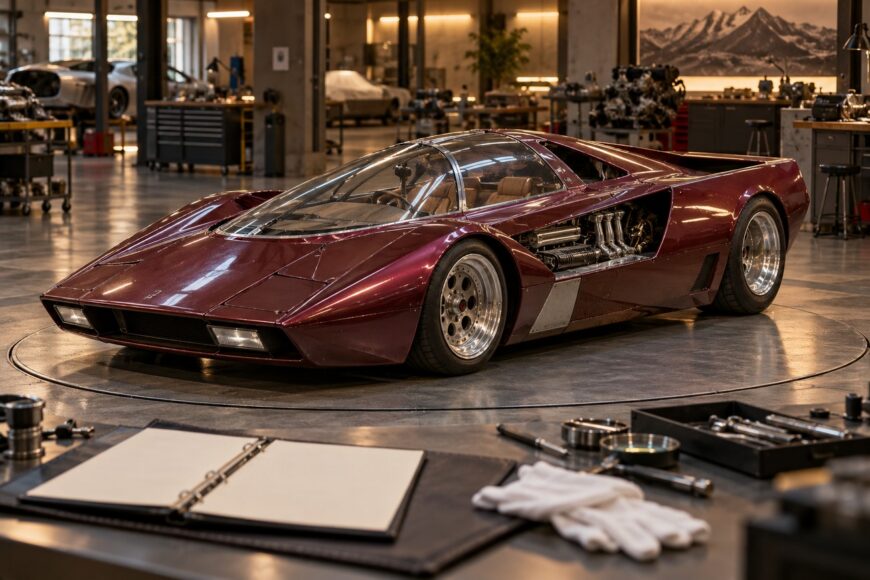
Sbarro cars can look like automotive hallucinations: two front ends joined into one machine, eight wheels arranged with theatrical intent, or a low-slung body stretched over hardware that seems borrowed from several unrelated vehicles. Their shapes are often more memorable than their badges, and that is precisely the point. These are design experiments made visible in metal, fiberglass, and composite materials.
The same spectacle creates a difficult ownership proposition. A Sbarro may be fascinating as an artifact while proving expensive, awkward, or impossible to use as an ordinary road car. Sbarro is best understood as a Swiss coachbuilder, concept house, and specialist workshop rather than a conventional mass-production automaker. Its cars reward investigation, especially because the donor vehicle tells only part of the story.
- Sbarro Was Never a Normal Car Manufacturer
- Why Sbarro Cars Look So Strange
- Sbarro Creations: The Oddities in Context
- The Donor Car Does Not Make It a Supercar
- The Real Cost of Owning a Sbarro
- Common Sbarro Buying Mistakes—and What the Market Really Values
- Frequently asked questions
- What documents help prove the provenance of an ESPERA-built Sbarro?
- Why do collectors prefer an unmodified ‘raw’ Sbarro?
- What is the goofiest car ever made?
- Who has a $100 million car collection?
- What is the poor man’s supercar?
Sbarro Was Never a Normal Car Manufacturer
Sbarro was founded by Swiss designer Franco Sbarro in 1971. The early business focused on commissioned replicas and concept cars, a very different brief from designing a model range, building a dealer network, and supporting thousands of identical vehicles. Each project could be treated as an individual answer to a client’s request or to a design challenge.
A coachbuilder adapts or constructs bodies and specialized vehicles in small numbers. A concept house develops ideas that may exist primarily to demonstrate design thinking, while a mass-production automaker must solve repeatability, crash certification, parts supply, and long-term service. Sbarro’s work sits much closer to the first two categories. Collectors and specialist communities generally classify it as a coachbuilder or concept house.
Most unusual Sbarro vehicles exist in one to three examples, and many are unique one-offs. That production scale explains why a familiar donor badge does not guarantee familiar documentation or support. A Porsche, Mercedes, Ferrari, Volkswagen, or GM component may be identifiable, yet the finished Sbarro remains a separate and highly individualized construction.
Why Sbarro Cars Look So Strange
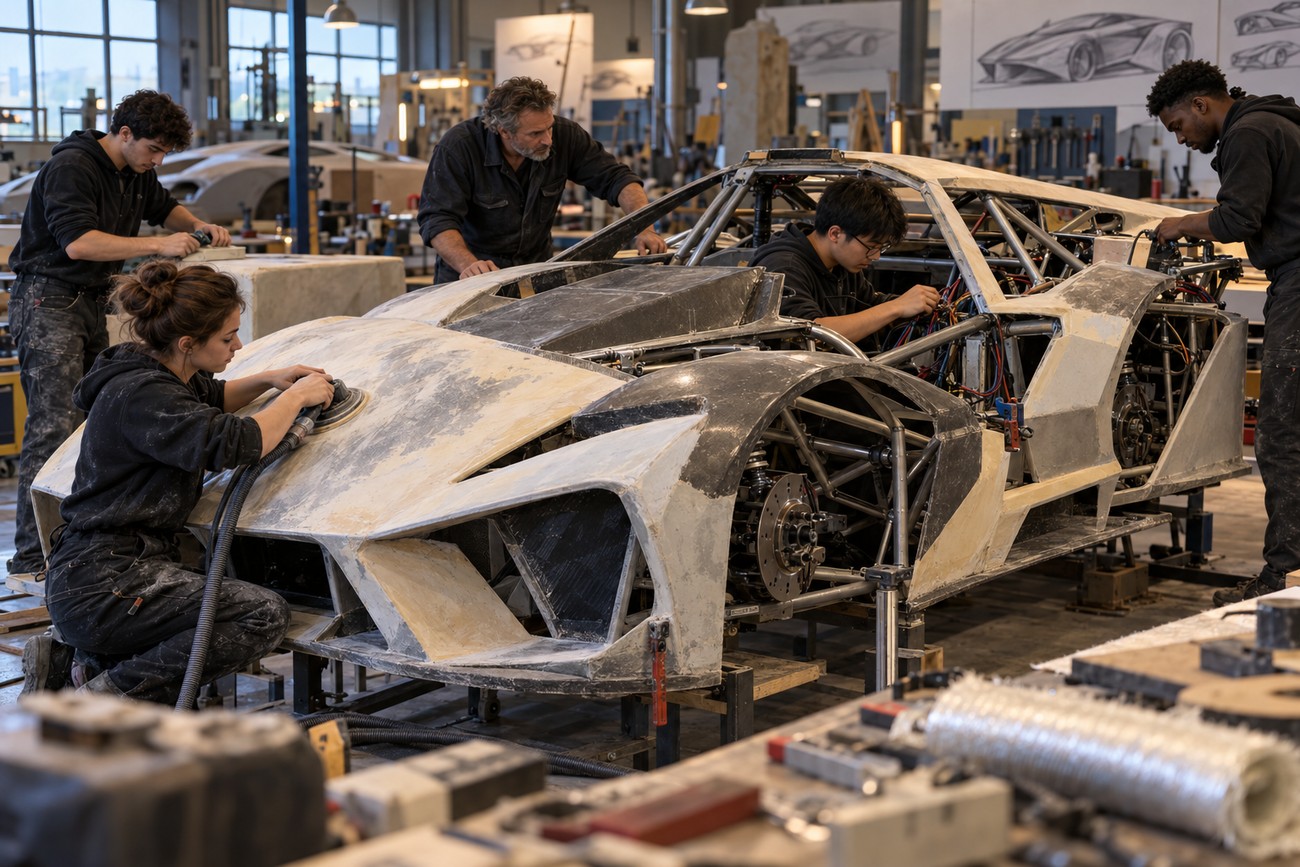
Since the 1990s, Sbarro has been closely associated with the ESPERA Sbarro design school in Montbéliard, France. The school helped turn the car into a practical design exercise: students could develop a theme, resolve packaging problems, and build a functioning object under direction. The result was often deliberately theatrical because the project had to communicate an idea quickly.
Many unusual cars are created by students under Sbarro’s direction. Franco Sbarro may function primarily as an art director, while the student team handles fabrication, assembly, and the compromises required to make the concept move. Execution quality can therefore vary by team and year, even when the visual ambition is consistently high.
That background changes how collectors judge a car. ESPERA provenance, the students involved, the exhibition where the vehicle appeared, and the degree of originality can matter as much as the donor vehicle. A visually less famous project with clear school records and an untouched build may have stronger historical interest than a more dramatic car that has been repeatedly modified.
Sbarro Creations: The Oddities in Context
These examples represent different design strategies rather than a conventional model lineup. Documentation, construction details, and legal status can vary by individual car, so the table is a guide to the ideas involved rather than a specification sheet.
| Creation or project type | Defining idea | Main documentation or usability caveat |
|---|---|---|
| Sbarro Challenge | Unusual two-axle supercar layout and extreme proportions | Individual records and road status require verification; the name alone proves neither specification nor legal approval |
| Sbarro Autobau | A prominent experimental Sbarro interpretation of a high-performance car | Its visual and historical identity should be separated from assumptions about series production or ordinary service support |
| ESPERA concepts | Student-built concepts in varied body, cabin, and chassis formats | Build quality, records, and intended use can differ substantially between projects |
| Eight-wheeled projects | Multiple axles used for visual drama and experimental packaging | Tire, steering, braking, suspension, and registration questions become highly individual |
| Asymmetric projects | Unequal body sides or deliberately unbalanced visual treatment | Visibility, ergonomics, and replacement bodywork may be difficult to resolve |
| Twin-front or two-car hybrids | Two front sections or donor-car ideas combined on one structure | Identity, wiring, structural documentation, and road approval may be especially unclear |
The Sbarro Challenge is associated with an unusual two-axle supercar layout, while Sbarro Autobau is one of the better-known experimental creations. ESPERA projects extend the idea into student-built concepts with varied proportions and levels of finish. The wider body of work includes eight-wheeled, asymmetric, and twin-front or two-car hybrid designs.
The important distinction is between a design category and a uniform technical specification. Two cars presented under a similar concept label may differ in donor hardware, construction, intended use, and paperwork. A buyer should therefore inspect the individual chassis and file rather than rely on photographs or a model name.
Some Sbarro creations were made to be displayed, studied, or demonstrated rather than used as regular transportation. That purpose can explain unusual controls and limited visibility without excusing them in a road-going car. It also makes the original exhibition context part of the vehicle’s identity.
The Donor Car Does Not Make It a Supercar
Sbarro projects commonly use fiberglass or composite bodies and tubular space frames. Donor components have included Porsche, Mercedes, Ferrari, Volkswagen, and GM hardware, while large naturally aspirated engines are often used without major modernization. This approach can provide a known mechanical starting point, but it does not turn the completed construction into an engineered production supercar.
A new body changes more than the silhouette. Weight distribution, cooling airflow, suspension geometry, braking balance, steering response, and aerodynamic behavior can all move away from the donor’s original design. An imposing body may be heavier, less stable, or less predictable than the car underneath it.
Many unusual projects did not undergo full crash testing as complete modified vehicles. Safety qualities demonstrated by a donor platform cannot automatically be applied to a finished Sbarro body, altered frame, or unusual cabin structure. This matters even more when the car is intended for public roads rather than a private collection.
Fiberglass inspection should include the structure beneath it: a flawless-looking surface can conceal old repairs, altered mounting points, or a frame that no longer matches the available paperwork.
Fit and finish can also reflect the educational nature of some builds. Owners have reported panel-fit issues, vibration, weak noise insulation, and squeaks, while student-built electrical work can create intermittent faults or compatibility problems. The dramatic appearance is therefore a poor predictor of braking performance, chassis tuning, or everyday refinement.
The Real Cost of Owning a Sbarro
Registration is the first serious filter. Road registration and legalization can require expensive individual certification in some countries, and many show cars, track cars, and special constructions do not have universally transferable road approval. A registration document from one jurisdiction may not settle the question in another.
Paperwork can be thin. Many cars lack complete service books, wiring diagrams, or parts catalogs, particularly when they began as educational or exhibition projects. The donor’s engine or suspension components may be identifiable, but the modified systems around them can remain undocumented.
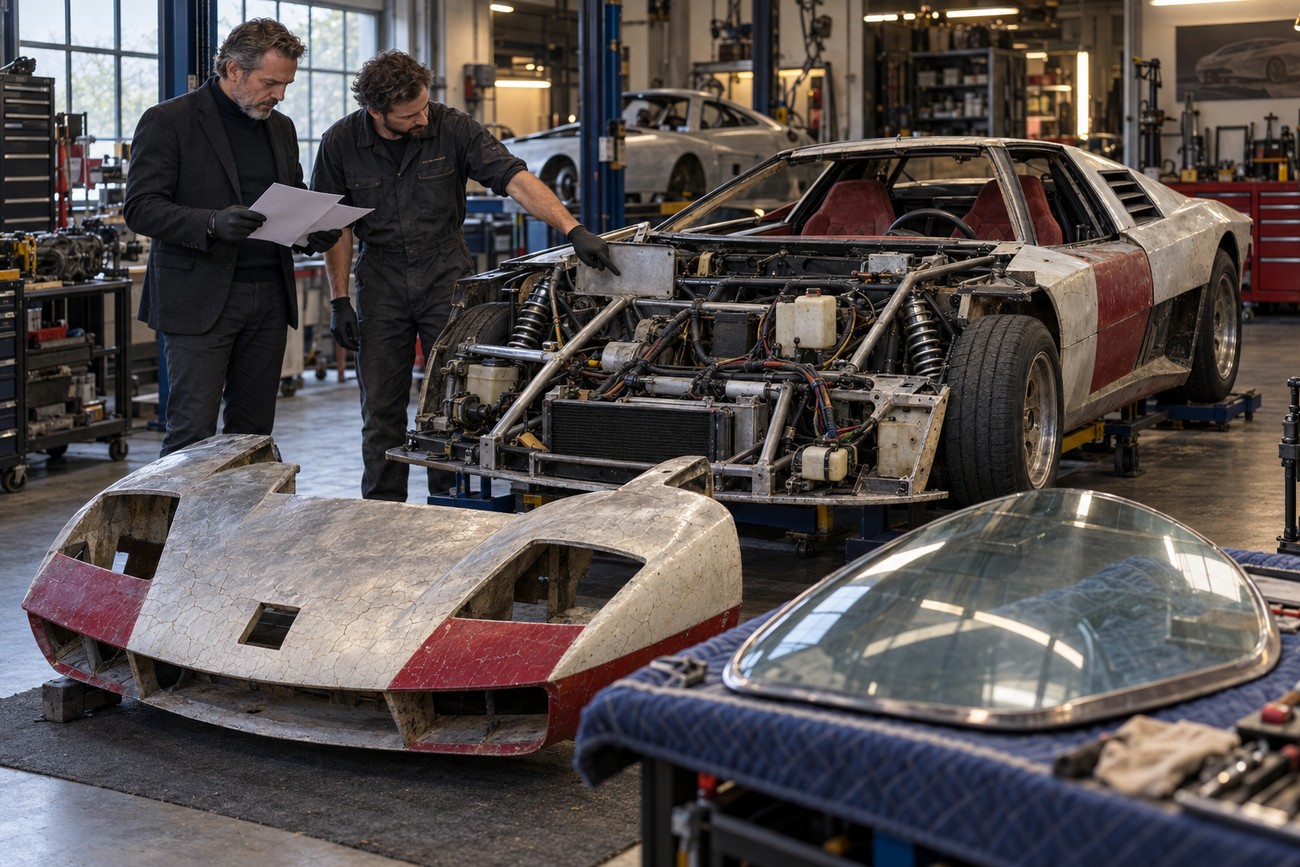
Body panels, glass, and interior components may need to be made by hand. A replacement windshield, unusual lamp surround, dashboard panel, or molded fender can require measurements, patterns, specialist fabrication, and waiting time. The donor car’s parts availability does little to solve those problems.
A repair assessment should treat the unique body, glazing, wiring, and registration file as separate risk categories from the donor car; accepting only the donor’s mechanical condition can leave the most expensive problems undiscovered.
Ergonomics can be equally unforgiving. Owners report awkward controls, strange pedal placement, limited visibility, vibration, and intrusive noise on some examples. Insurance, repair, and resale are difficult because the specialist network is extremely narrow, with no normal factory service structure to absorb mistakes or supply missing parts.
Common Sbarro Buying Mistakes—and What the Market Really Values
The most expensive mistake is buying for styling alone. A buyer can discover after purchase that a concept or show car has no ordinary road entitlement, or that importing it requires an individual approval process. Before money changes hands, confirm the vehicle identity, chassis records, intended classification, and the exact route to legal use in the target country.
Budgeting only for the donor car is another trap. A familiar engine may be affordable to service, while a cracked composite panel, missing glass, undocumented wiring loom, or one-off interior component demands custom work. Specialist fabrication can cost far more than the donor vehicle suggests and can keep the car off the road for an extended period.
Visual drama also encourages unrealistic performance assumptions. Sbarro cars can be equal to or worse than their donors because of weight, aerodynamics, chassis setup, and brake tuning. Treat a claimed performance identity as a question to verify with engineering evidence, not as a conclusion drawn from the bodywork.
Collectors often prefer authentic, unmodified examples over owner-altered cars. Original paint, trim, wiring, proportions, and documented exhibition history can preserve the connection to the project that created the vehicle. Later upgrades may improve usability, yet they can obscure the original student work and complicate attribution.
The resale market is narrow, sales may take years, and rarity does not guarantee appreciation. There is no reliable guarantee of investment growth for Sbarro cars. The strongest purchase case is usually a clear historical object that the buyer genuinely wants to preserve, with its legal and mechanical limitations understood in advance.
Frequently asked questions
What documents help prove the provenance of an ESPERA-built Sbarro?
Useful evidence includes build or project records, the school context, exhibition history, donor identification, and a record of later alterations. Photographs taken during construction can help connect the finished car to a particular student project, especially when the body changed after its first display.
Match those records to the chassis number, engine or donor identifiers, title documents, and any import paperwork. Provenance is strongest when the project history and the physical car agree; a compelling story without matching identifiers should be treated as incomplete.
Why do collectors prefer an unmodified ‘raw’ Sbarro?
An unmodified example preserves the original design decisions and makes it easier to attribute the work to its project team and period. Later owner changes can hide the student-built character, alter the intended proportions, or replace parts that carry historical evidence.
That preference does not mean every original defect should be ignored. A collector may stabilize unsafe systems while retaining reversible, well-documented repairs. The distinction is between careful preservation and changes that make the car’s authorship or original configuration difficult to establish.
What is the goofiest car ever made?
There is no objective single winner. “Goofiest” depends on whether the standard is visual absurdity, unusual engineering, or impractical packaging, and Sbarro’s eight-wheeled, asymmetric, and twin-front projects are strong candidates under different definitions.
Who has a $100 million car collection?
There is no single universally verified answer. Private collection values are often estimated, assets are bought and sold, and the contents may not be publicly documented well enough to support a definitive ranking.
What is the poor man’s supercar?
The phrase usually describes an affordable sports car that delivers some of the drama or driving appeal associated with an exotic car. It is a marketing label rather than a technical category, and the right example depends on budget, maintenance tolerance, and local availability.







