
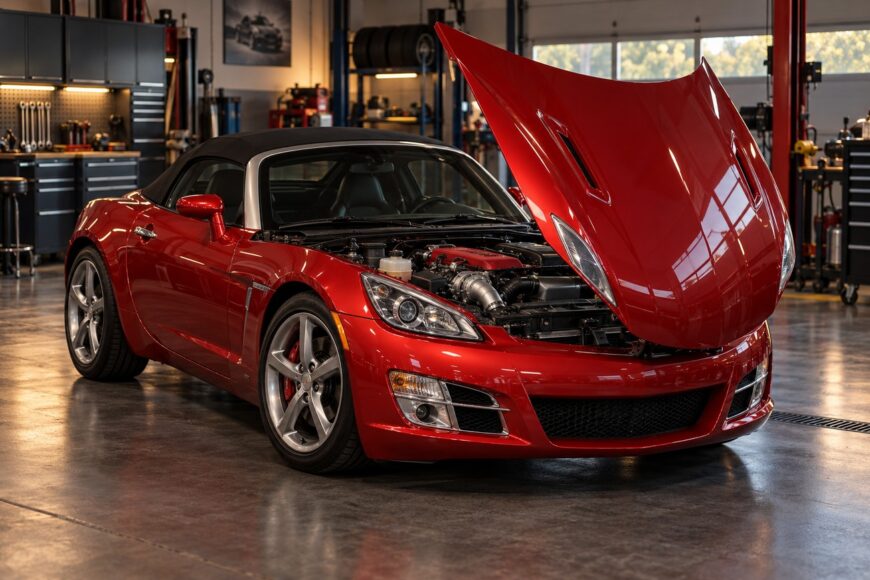
The Saturn Sky Red Line is one of those used performance cars that can look cheaper than it really is. It combines a 2.0-liter turbocharged GM Ecotec LNF, 260 hp (191 kW), rear-wheel drive, and a rear limited-slip differential in a compact two-seat roadster. That specification gives it genuine sports-car pace rather than the character of a casual open-top cruiser.
The catch is age. Every Red Line was built between 2006 and 2009, so condition, service history, and modification status now matter more than the model year or odometer reading alone. A neglected turbo system, leaking roof, or improvised tuning can turn an appealing bargain into an expensive project with limited parts support.
- What makes the Saturn Sky Red Line different
- Saturn Sky Red Line performance and specifications
- Why a cheap Red Line can become an expensive project
- The daily-use compromises are part of the design
- How to inspect a Saturn Sky Red Line before buying
- Myths that distort the Red Line buying decision
- Is the Saturn Sky Red Line still a bargain?
- Frequently asked questions
- How much is a Saturn Sky Red Line worth?
- What are the most serious common issues with the Saturn Sky Red Line?
- How fast can a Saturn Sky Red Line go?
What makes the Saturn Sky Red Line different
The Red Line is the performance version of the Saturn Sky, built around the 2.0-liter turbocharged GM Ecotec LNF. Its primary specification is 260 hp (191 kW), with 353 N·m of torque at 2,500 rpm, also listed as 260 lb-ft. That output is delivered through a rear-wheel-drive layout, giving the car a much sharper performance brief than the regular Sky.
A rear limited-slip differential is listed as standard for the Red Line. This matters on a used car because the differential supports more consistent traction when accelerating out of corners, while the rear-drive chassis preserves the balance expected from a small sports roadster. The Red Line’s mechanical specification therefore affects driving behavior, resale interest, and the cost of finding the correct replacement parts.
Exterior clues include 19-inch wheels, dark headlamp surrounds, and functional air intakes. Those details can help identify the model, although badges and cosmetic parts are easy to change. The engine code and vehicle documentation deserve more trust than a seller’s description or a visual resemblance.
That distinction matters because a regular Sky can be presented as a Red Line, especially after cosmetic upgrades. Paying Red Line money for a non-Red Line car means losing the LNF engine, performance calibration, and factory specification that justify the premium. Verify the engine and build information before evaluating condition or negotiating price.
Saturn Sky Red Line performance and specifications
The Red Line’s catalog figures place it firmly among quick performance cars of its period. Published numbers can vary slightly by source and test method, while fuel-economy data should be read separately from acceleration claims.
| Specification | Saturn Sky Red Line |
|---|---|
| Model type | Two-seat rear-wheel-drive roadster |
| Production years | 2006–2009 |
| Engine | 2.0-liter turbocharged GM Ecotec LNF |
| Power | 260 hp (191 kW) |
| Torque | 353 N·m at 2,500 rpm, also listed as 260 lb-ft |
| 0–60 mph | About 5.2 seconds |
| Quarter mile | About 14.0 seconds |
| Transmission | Five-speed manual or five-speed automatic |
| Drivetrain | Rear-wheel drive with a rear limited-slip differential listed as standard |
| Approximate length | About 4.09 m |
| Wheelbase | 2,415 mm |
| Approximate catalog weight | About 1,370 kg |
| Fuel requirement | Premium unleaded required |
| EPA fuel economy | 19/28 mpg city/highway; 22 mpg combined |
Why a cheap Red Line can become an expensive project
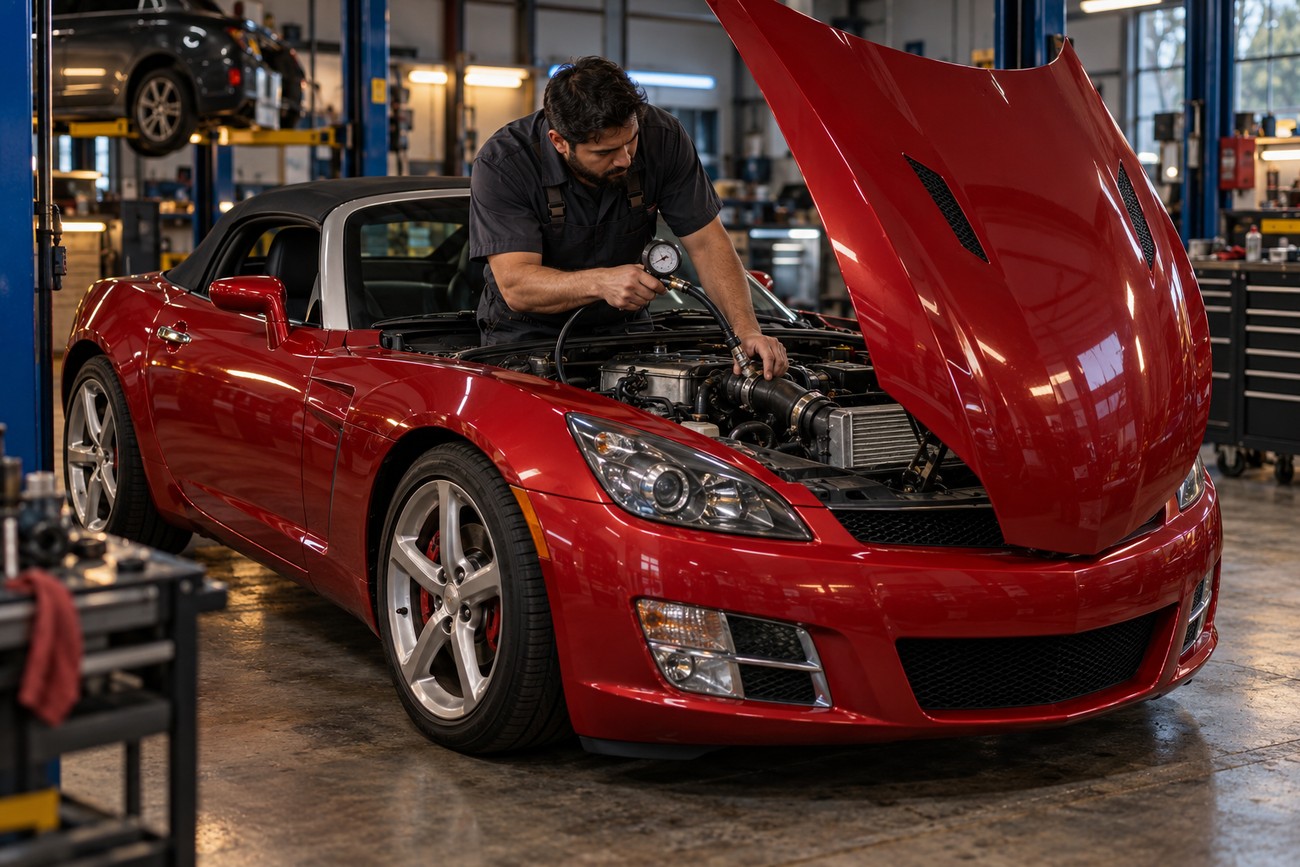
The turbocharged LNF needs more disciplined maintenance than the naturally aspirated Sky. Oil quality and replacement intervals matter because turbocharger heat and lubrication demands increase the consequences of neglect. A clean body and low odometer reading provide little protection if the car has spent years with poor servicing.
Before purchase, the mechanical inspection should include compression, oil leaks, boost leaks, turbocharger condition, and the intercooler. A road test should establish whether boost arrives smoothly and whether the engine remains stable under load. Faults in these areas can be substantially more expensive than ordinary cosmetic wear.
Cold-start behavior and a loaded boost-system inspection should come before cosmetic upgrades or mileage arguments. Leaks, delayed turbo response, intercooler damage, and oil evidence reveal more about the car’s immediate risk than polished paint.
Modified cars require extra skepticism. Chips, altered software, non-factory intake or exhaust hardware, and other changes may affect boost behavior, cooling demands, and engine safety. A tuned example can be reliable when engineered and documented properly, but an unknown calibration removes much of the confidence a used-car buyer needs.
Owner-reported complaints about uneven service histories and turbo-related repairs are anecdotal rather than proof that every Red Line has the same defect. They do reflect the central buying rule for this model: among 2006–2009 examples, actual condition matters more than year, mileage, or appearance. A documented stock car is usually the safer starting point than a visually impressive car with unclear modifications.
The daily-use compromises are part of the design
The Sky Red Line has two seats and a small trunk, so carrying capacity is limited from the outset. Luggage for two people can quickly consume the available space, and the car offers little flexibility for household errands or regular passenger use. This is a structural compromise of the roadster layout, rather than an issue an owner can correct with minor upgrades.
Its compact dimensions help with parking but make the car feel unusually tight inside. The Red Line is about 4.09 m long with a 2,415 mm wheelbase, and its low body can make entry, exit, and visibility feel specific compared with a conventional coupe or sedan. The short, compact proportions also make suspension, tire, and alignment condition more noticeable from the driver’s seat.
Age adds another layer of risk. Roof seals, folding-roof hardware, electrical functions, and interior plastics deserve careful inspection, particularly after rain or washing. Reports of cabin leaks and roof-related faults are owner-reported and not universal, yet water ingress can create secondary electrical and trim problems that are harder to diagnose than a simple worn seal.
Parts availability is another ownership consideration. The model’s niche status can make rare body panels, interior pieces, and platform-specific trim slower or more expensive to source than parts for a common convertible. A buyer should check local service knowledge and parts access before treating the car as inexpensive transportation.
How to inspect a Saturn Sky Red Line before buying
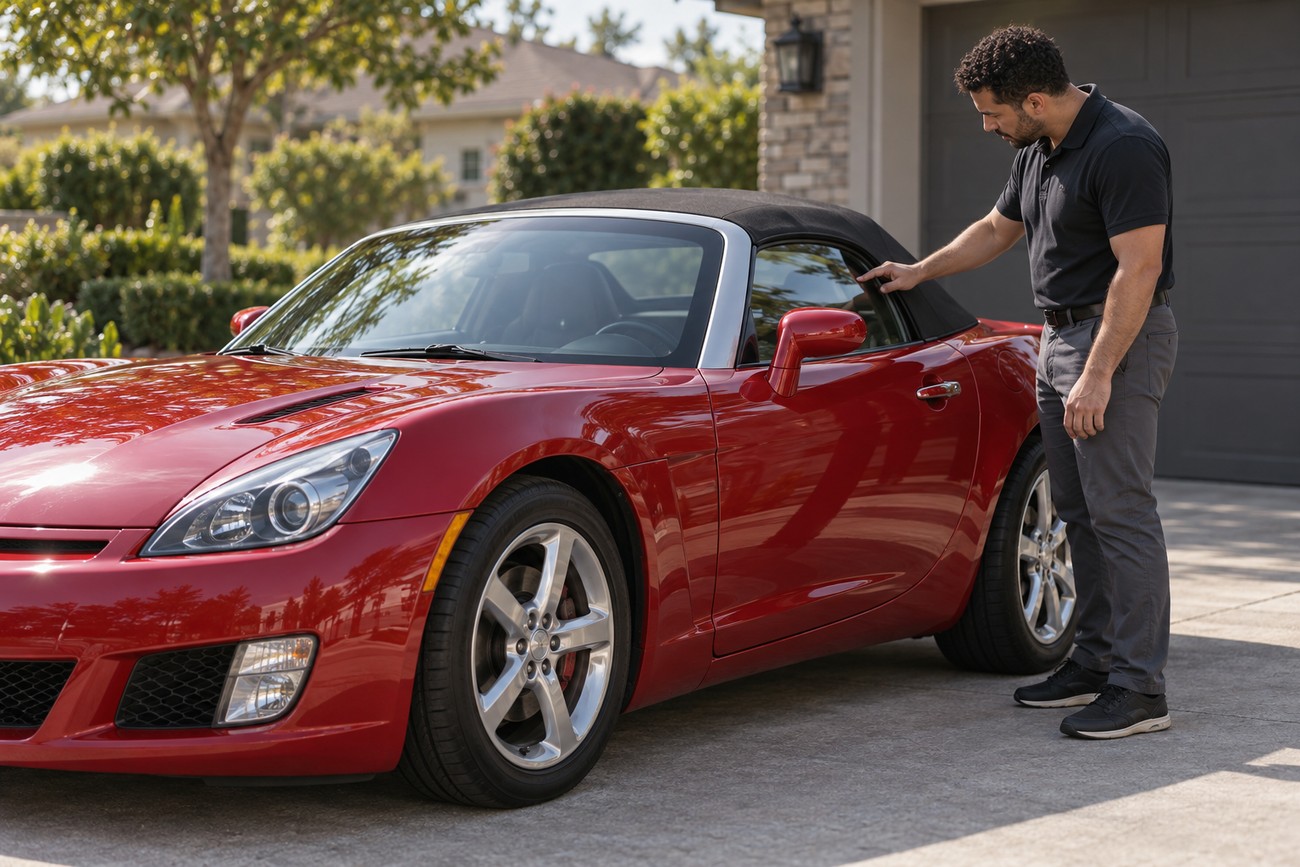
Start by confirming the identity of the car. Verify the 2.0-liter turbocharged GM Ecotec LNF rather than relying on Red Line badges, wheels, or seller claims. Review the vehicle documentation and compare the equipment with the claimed specification, including the drivetrain and transmission.
Next, inspect the body and roof in daylight. Look for inconsistent panel gaps, repaired impact damage, damaged 19-inch wheels, worn seals, and signs of water in the cabin or trunk. Operate the roof fully and check electrical functions, because an intermittent electrical fault or aging wiring can become a more complicated repair when combined with water exposure.
The engine inspection should include a cold start, compression testing, and a search for oil leaks. Check the turbocharger, intercooler, intake plumbing, and all accessible boost connections. During the road test, watch for unstable boost, hesitation, smoke, unusual noises, or behavior that suggests the engine is not producing pressure consistently.
Review the maintenance records line by line, then inspect for chips, altered software, aftermarket boost hardware, and non-factory cooling or intake components. Ask whether the calibration is known and whether the original parts are included. A stock car with clear records is generally preferable to a low-mileage tuned example whose history cannot be reconstructed.
Finish by checking support before committing to the purchase. Kappa-platform parts and rare trim may take longer to source, and specialist knowledge is not equally available in every market. A pre-purchase inspection by a shop familiar with GM turbo systems can identify risks that a general visual inspection will miss.
Myths that distort the Red Line buying decision
Myth: the Saturn Sky Red Line makes 264 hp. Reality: most authoritative specifications list 260 hp (191 kW), while 264 hp appears in some local listings. The discrepancy is less important than verifying the LNF engine and the car’s actual condition.
Myth: it is simply a cheap convertible. Reality: the Red Line is a turbocharged performance roadster with rear-wheel drive, a standard rear limited-slip differential, about 5.2 seconds to 60 mph, and a quarter mile of about 14.0 seconds. Those figures bring sports-car performance and sports-car inspection requirements.
Myth: every problem is explained by vague “old GM” reliability. Reality: the main risks are more specific: turbo-system maintenance, oil leaks, boost leaks, age-related roof and electrical faults, modifications, and limited access to niche parts. A well-maintained example may avoid many of these problems, while a neglected one can expose several at once.
Myth: the EPA figures make it an inexpensive sports car to run. The listed 19/28 mpg city/highway and 22 mpg combined figures are reasonable context, but premium unleaded is required and age-related maintenance remains part of ownership. Fuel economy does not remove the financial risk of a worn turbo system or leaking roadster roof.
Is the Saturn Sky Red Line still a bargain?
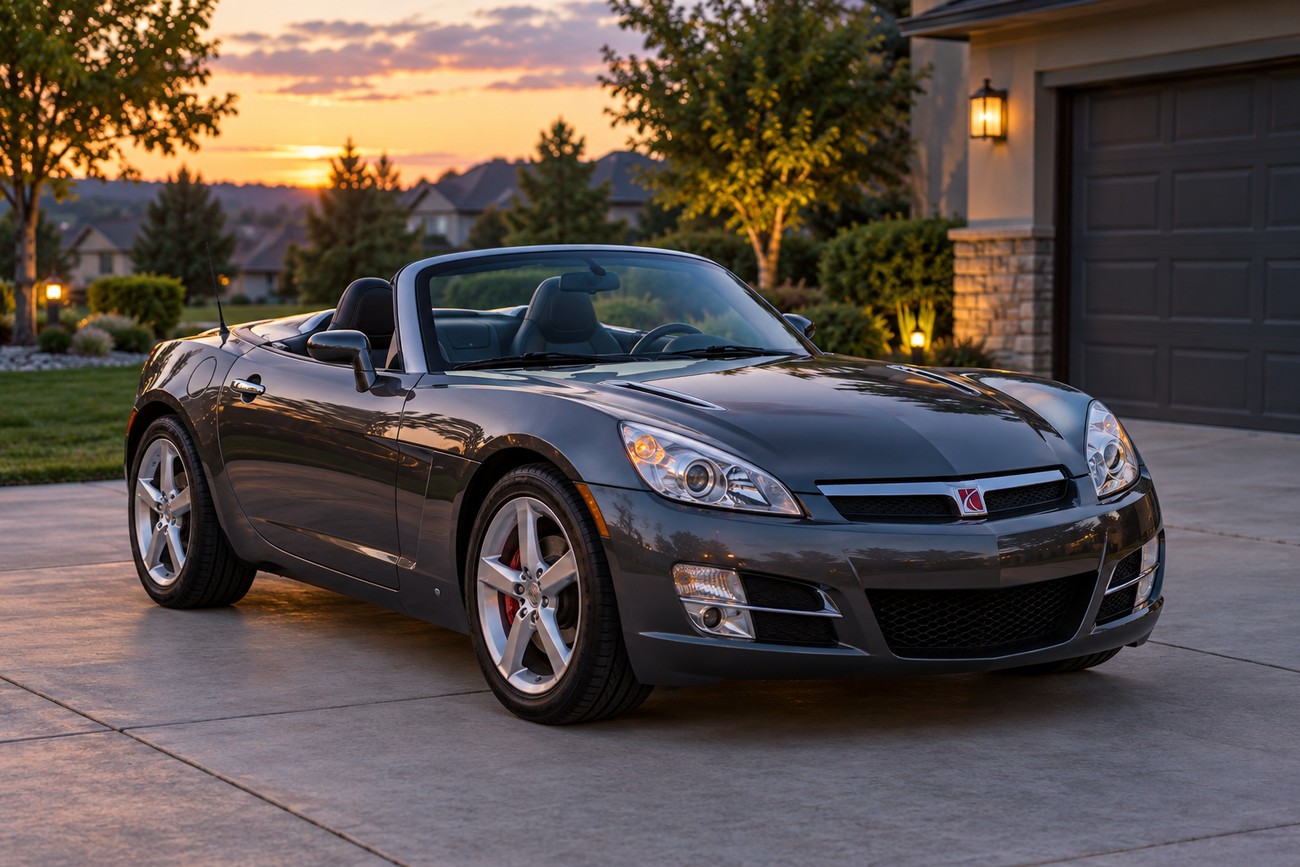
It can be a bargain when the buyer wants sharp two-seat performance and is prepared to inspect and maintain an aging niche car. About 5.2 seconds to 60 mph, a roughly 14.0-second quarter mile, rear-wheel drive, and a standard rear limited-slip differential give the Red Line a serious sports-car character for its size.
The strongest purchase candidate is a well-documented, unmodified example with healthy turbo-system readings, a dry cabin, and a roof that operates correctly. Originality reduces uncertainty, while service records show whether previous owners treated the LNF as a performance engine rather than an ordinary economy motor.
Buyers who need low-cost, practical, predictable transportation should look elsewhere. Two seats, a small trunk, premium fuel, aging seals, and niche parts support create compromises that are easy to overlook during a short test drive. The lowest advertised price can be the least useful measure of value if major mechanical or weather-tightness work is waiting.
Frequently asked questions
The Saturn Sky Red Line’s value depends heavily on condition, originality, documentation, and the health of its turbo system and roof. Its performance figures describe acceleration rather than top speed, and the most serious buying risks involve mechanical wear, water ingress, and undocumented modifications.
The following questions address the main points to check before buying one of these aging performance roadsters.
How much is a Saturn Sky Red Line worth?
No single figure describes a Red Line’s value reliably because originality, documentation, turbo health, roof condition, and parts risk can outweigh mileage. A stock, well-documented car with a healthy LNF and a dry, properly operating roof deserves more confidence than a lower-mileage example with tuning and missing records.
Value should therefore be assessed in layers: confirm that it is a genuine as emphasized by field specialists systems, check the roof and cabin for water, then price the remaining cosmetic and trim work. Rare parts or uncertain modifications should be treated as financial risk, not as minor deductions.
What are the most serious common issues with the Saturn Sky Red Line?
The highest-risk findings are compression problems, significant oil leaks, boost leaks, turbocharger wear, intercooler damage, and unsafe or undocumented tuning. These issues can justify walking away because they affect the engine’s basic health or require specialist diagnosis.
Roof leaks, failed roof hardware, aging electrical components, and scarce trim are also important, although their effect depends on severity and parts access. A worn seal may support negotiation; persistent water ingress combined with electrical damage is a much stronger reason to reject the car.
How fast can a Saturn Sky Red Line go?
The supported performance benchmarks are about 5.2 seconds from 0–60 mph and about 14.0 seconds for the quarter mile. Those figures describe acceleration, not top speed, and they can vary with test conditions, transmission, tires, temperature, and vehicle condition.
A reliable top-speed figure is not established by the supplied specifications, so it should not be presented as a buying fact. For a used example, consistent boost delivery, engine health, and traction matter more than an unsupported maximum-speed claim.







