
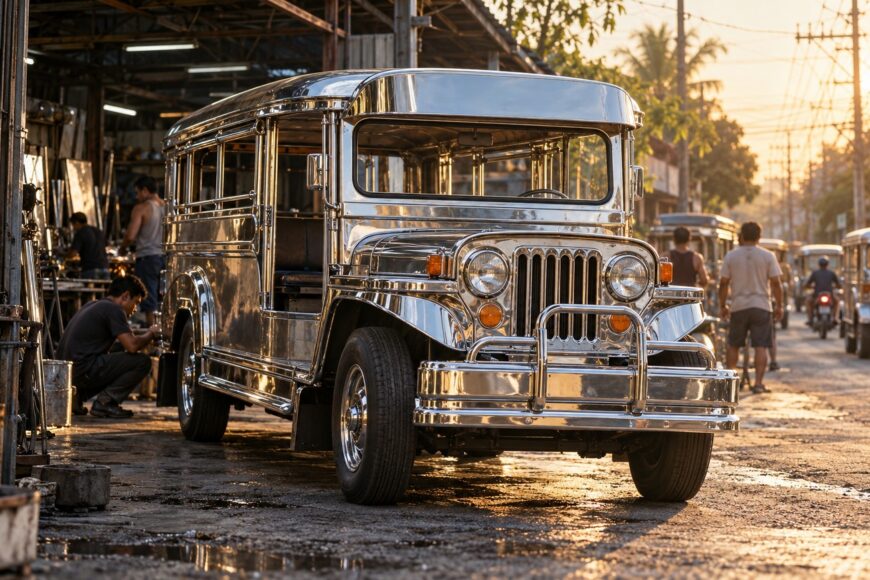
A Sarao-style jeepney announces itself before it arrives. Chrome catches the light, painted panels carry names and symbols, and the long, open-sided body gives an ordinary street a moving focal point. Its appearance is deliberate: color, lettering, ornaments, and polished metal turn a work vehicle into a public statement.
That image carries several meanings at once. The jeepney is a cultural icon, a low-cost public-transport vehicle, and, increasingly, a tourist or heritage object. The central question is whether “rolling art” describes the complete vehicle or mainly its decorated exterior. The answer depends on what lies beneath the finish: the chassis, engine, brakes, electrical work, repair history, and legal status can differ sharply from one jeepney to another.
- How the Sarao Jeepney Became a Philippine Icon
- Why Jeepney Design Is Called Rolling Art
- The Working Jeepney Behind the Beautiful Exterior
- What Matters More Than the Sarao Name
- Modernization, Safety, and the Cost of Keeping Tradition Moving
- The Myths That Make Sarao Jeepneys Hard to Judge
- Frequently Asked Questions
- What is the symbolism of the jeepney in the Philippines?
- How much does a Sarao jeepney cost?
- What is jeepney art in the Philippines?
How the Sarao Jeepney Became a Philippine Icon
Sarao Motors holds a historic place in Philippine jeepney culture. Associated with body-building and assembly in Las Piñas, the company helped establish a recognizable visual and commercial tradition. Its role is better understood through local fabrication and vehicle assembly than through the image of a Western-style automaker producing identical cars on a single mass-production line.
Jeepneys grew from postwar adaptation and rebuilding. Vehicle technology was reshaped for local roads, passenger needs, available materials, and the economics of small-scale public transport. A jeepney generally takes form around a chassis, with its body and mechanical specification influenced by the builder, donor vehicle, later repairs, and the intended route.
That history explains why the word “jeepney” covers such a wide range of machines. Two vehicles may share a familiar silhouette while differing in engine, frame, suspension, seating, electrical system, and build quality. Even a vehicle presented as Sarao-style does not automatically prove that Sarao Motors built it.
The Las Piñas association matters because it connects a manufacturer’s name with a broader national tradition. Sarao became part of the public image of the jeepney, while local workshops and individual operators continued to shape the vehicles in practical ways. The result is a living construction culture rather than a single universal platform with one fixed specification.
Why Jeepney Design Is Called Rolling Art
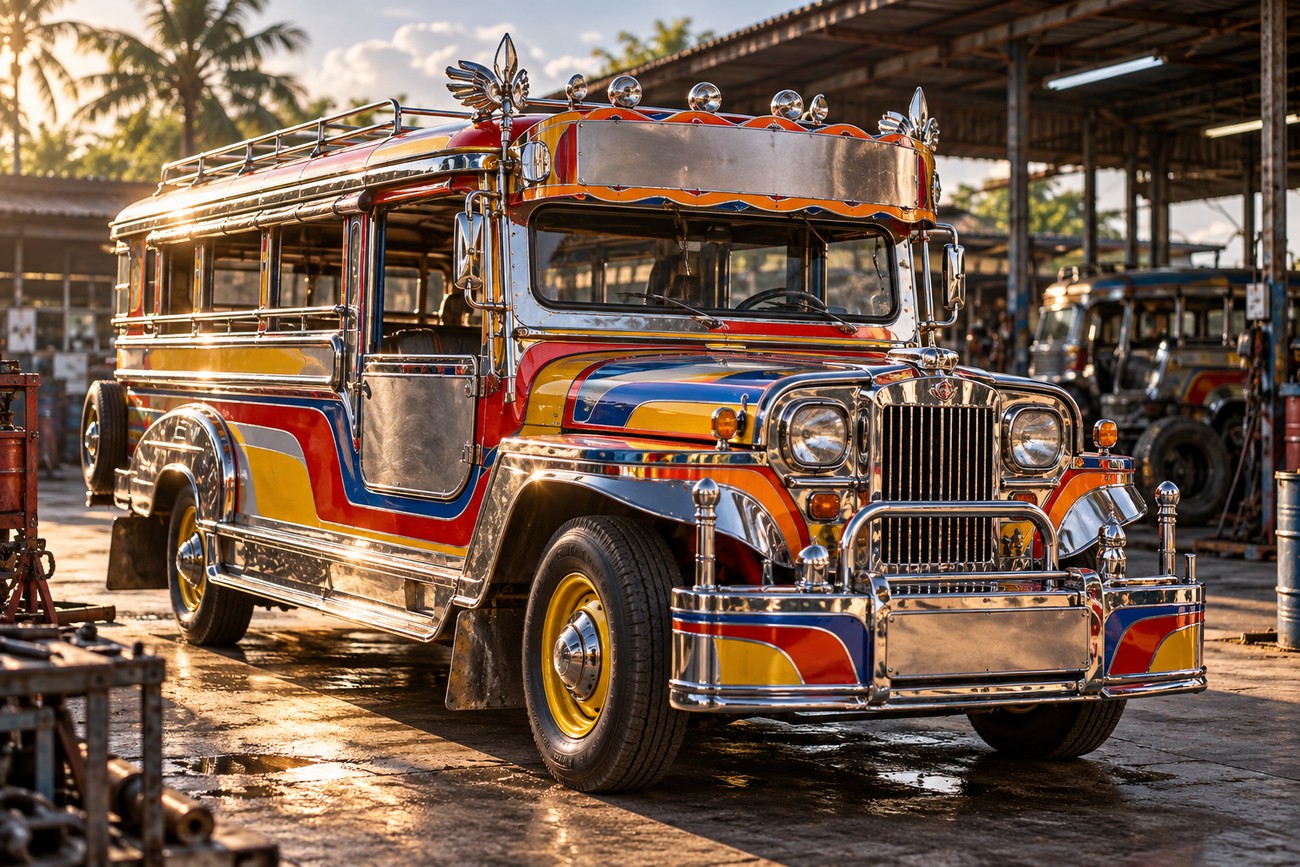
Jeepney decoration is easy to recognize, though its meaning extends beyond surface beauty. Chrome trim, bright paint, hand lettering, emblems, roof ornaments, polished rails, and route markings can identify a vehicle within a crowded transport network. The design may express an owner’s taste, a builder’s skill, a route’s identity, or a desire to give a hard-working machine a visible sense of pride.
Appearance also works as a social code. Passengers, owners, drivers, and builders can read clues in a jeepney’s finish and presentation. A carefully maintained body may signal investment and status, while names, religious imagery, regional references, or route lettering connect the vehicle to a particular community.
The popular phrase “rolling art” can obscure the construction reality. Many jeepneys use repeated or standardized body forms, with paint and ornament providing the most visible layer of customization. That does not make the art meaningless; it shows how creativity operates within a practical vehicle category whose bodies may be repeated or adapted by local workshops.
For the same reason, a bright Sarao-style appearance should be treated as a cultural and visual description rather than proof of identical manufacture. The body-builder, later modifications, and maintenance history tell a more precise story. A vehicle can carry the Sarao image while having been assembled elsewhere or rebuilt around a different chassis.
The Working Jeepney Behind the Beautiful Exterior
A daily public-transport jeepney lives a harder life than a preserved display vehicle. It carries repeated passenger loads, works in traffic, stops frequently, and absorbs heat, vibration, dust, rain, and road shock. Those conditions make the mechanical condition more important than the shine of the body.
Older jeepneys are often criticized for fuel consumption compared with modern light buses or minivans. Their operating cost also includes frequent repair work and the lost income associated with downtime. A vehicle that appears inexpensive to acquire can become costly when fuel, worn components, electrical faults, and repeated body repairs are considered together.
Passenger complaints are practical rather than abstract. Engine and transmission noise can make a trip tiring, while heat and limited ventilation become especially uncomfortable in slow traffic. Narrow seating, crowded interiors, leaks, and vibration reduce everyday usability even when the vehicle remains culturally distinctive.
Corrosion deserves particular attention because it can develop behind trim, under paint, around roof joints, and along repaired body sections. Water ingress may follow earlier modifications or imperfect sealing. Decorative work can conceal these problems until a panel is removed or the frame begins to show fatigue.
A tourist or show jeepney follows a different brief. Heritage appearance, photography, and atmosphere may matter more than fuel economy, passenger flow, ventilation, or long daily service. Such a vehicle can be valuable as a cultural object while proving poorly suited to ordinary urban work.
What Matters More Than the Sarao Name
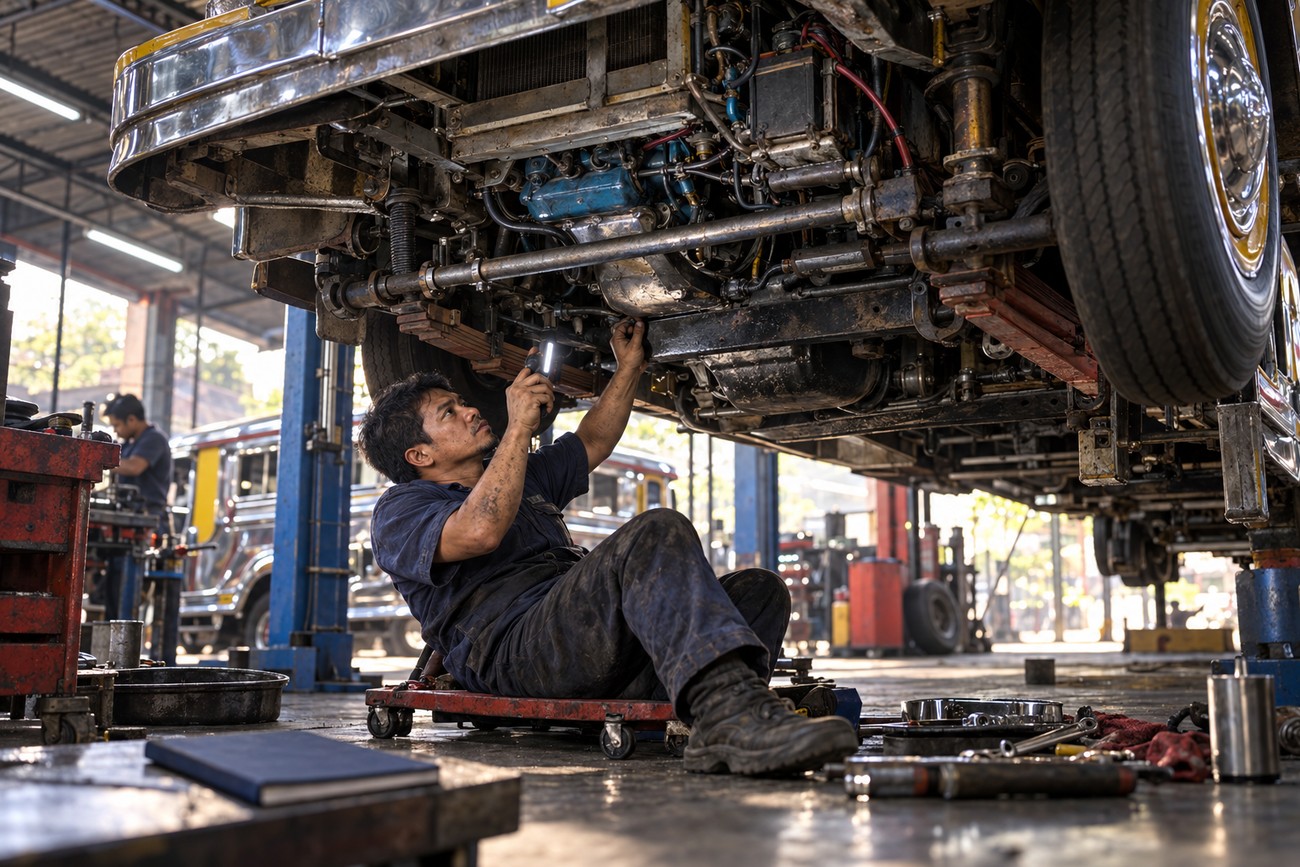
Evaluating a Sarao jeepney starts with the chassis or frame, then moves through the systems that keep the vehicle controllable and serviceable. The engine, brakes, steering, suspension, electrical installation, and body attachments all deserve separate attention. A famous name or attractive finish cannot substitute for a documented service history.
Parts access is a major ownership issue. Jeepneys may combine components from different vehicles or years, especially after repeated rebuilding. That mixture can make diagnosis slower and replacement parts harder to match, even when each individual component seems familiar.
Loading needs should also guide the assessment. A vehicle intended for a busy route faces different demands from one used for events, private hire, or display. Seating layout, axle and suspension condition, access for passengers, and the effect of a full load all matter in the intended use.
The actual body-builder may be more informative than the badge associated with the style. Workshop quality influences panel fit, corrosion protection, wiring, fastening, and the way later repairs were integrated. A careful inspection should connect those details with PUV compliance, because a mechanically sound heritage vehicle may still face restrictions on registration or public-route operation.
Modernization, Safety, and the Cost of Keeping Tradition Moving
PUV modernization changes the benchmark for an older jeepney. Government policy directions require stricter attention to emissions, safety, and regular inspection than many older vehicles were designed to meet. The requirements affect the vehicle as a public utility unit rather than simply as a piece of visual heritage.
Emissions are only one part of the issue. Braking performance, lighting, structural condition, passenger access, electrical safety, and inspection records can all influence whether a vehicle remains usable in a regulated transport role. Exact requirements depend on the applicable Philippine rules and the vehicle’s registration and route circumstances.
Older designs may provide limited protection through restraints, crash structure, and deformation management compared with modern vehicle standards. Open or exposed passenger arrangements can also create safety concerns that a decorative upgrade cannot resolve. A replacement seat cover or fresh paint changes appearance; it does not create modern crash protection.
Registration and route eligibility must be checked separately from cultural value. A jeepney may be suitable for a private heritage event while facing restrictions as a public utility vehicle. Buyers and operators who postpone this check can discover that a visually convincing vehicle cannot legally perform the work they intended.
Modernization therefore creates a genuine preservation dilemma. Keeping the traditional shape and visual language supports cultural continuity, while meeting current emissions, inspection, and safety expectations may require substantial changes. The practical choice depends on whether the vehicle is being preserved, displayed, privately operated, or placed into daily public service.
The Myths That Make Sarao Jeepneys Hard to Judge
The first myth is that every Sarao jeepney is the same. In reality, quality and specification vary by year, chassis, workshop, later modifications, and service history. “Sarao-style” describes an association with a visual and cultural tradition; it does not establish identical manufacture or condition.
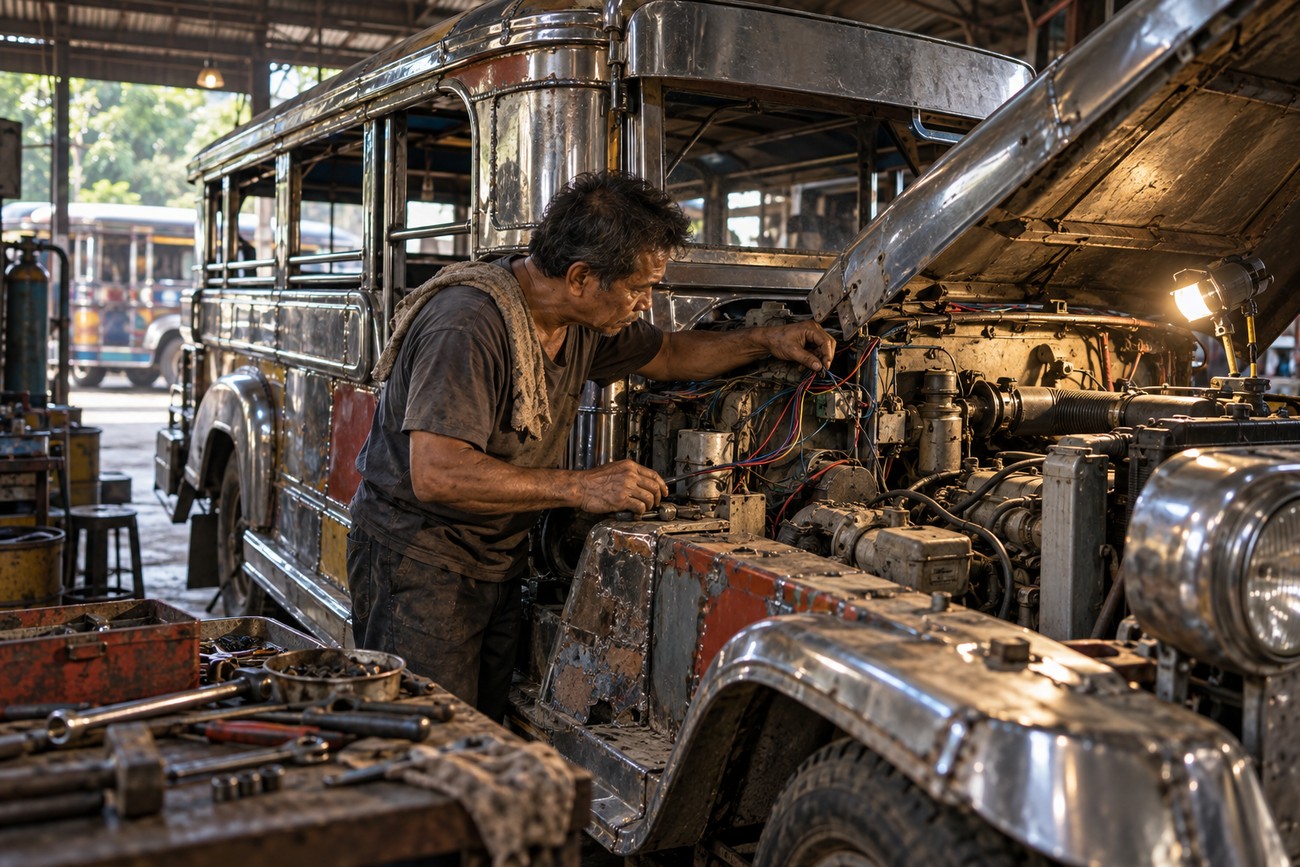
The second myth is that old means simple. A jeepney may have a straightforward basic concept while containing mixed parts, improvised wiring, several generations of repairs, and a body rebuilt around a different chassis. That combination can challenge even a mechanic familiar with the general vehicle type.
The third myth is that jeepneys are always cheap to operate. Traditional construction may support repair through local skills, yet fuel use, recurring maintenance, corrosion, and downtime can offset the apparent economy. The right comparison is the total cost of keeping a specific vehicle in its intended service.
Decoration creates a fourth trap. Bright paint and extensive chrome can indicate care, but they can also cover frame fatigue, rust, leaks, or worn mechanical systems. A sober inspection should begin where passengers and cameras look least often.
The tradition remains valuable because its worth is larger than transport efficiency. Jeepneys record postwar ingenuity, local enterprise, route communities, and a distinctive approach to public vehicle design. For some owners and visitors, the heritage and tourist value exceeds the vehicle’s practical value, provided that the difference is understood before purchase or use.
Frequently Asked Questions
What is the symbolism of the jeepney in the Philippines?
The jeepney symbolizes postwar ingenuity, shared mobility, local pride, and owner status. It shows how vehicle technology was adapted to Philippine conditions and how small operators turned transport into a visible part of community life. Route markings, names, ornaments, and paint can connect a vehicle with a neighborhood, a livelihood, or a particular public identity.
Its symbolism also includes economic reality. The jeepney is a working asset whose appearance may communicate care, ambition, and belonging. That combination explains why it can function as both public transport and a national cultural emblem.
How much does a Sarao jeepney cost?
There is no single dependable Sarao jeepney price. Value varies with the chassis, engine, condition, customization, service history, parts access, body-builder quality, and intended use. A preserved or tourist vehicle may be assessed for heritage appearance and presentation, while a working public-transport unit must also be judged by load capacity, operating condition, compliance, and likely downtime.
The purchase figure is only part of the calculation. Fuel, repairs, corrosion treatment, electrical work, inspections, registration requirements, and unavailable or mismatched parts can substantially affect ownership cost. A Sarao-style label alone cannot establish either mechanical condition or fair value.
What is jeepney art in the Philippines?
Jeepney art combines body shape, chrome, paint, lettering, ornaments, and route identity. It is not limited to freehand painting: the whole presentation of the vehicle can carry social meaning, including the way an owner or builder signals pride, affiliation, and status.
Many vehicles use repeated or standardized body forms, so decoration often provides the most visible customization. The art remains culturally significant because it transforms a practical transport unit into a recognizable public object without making every jeepney mechanically or historically identical.







