
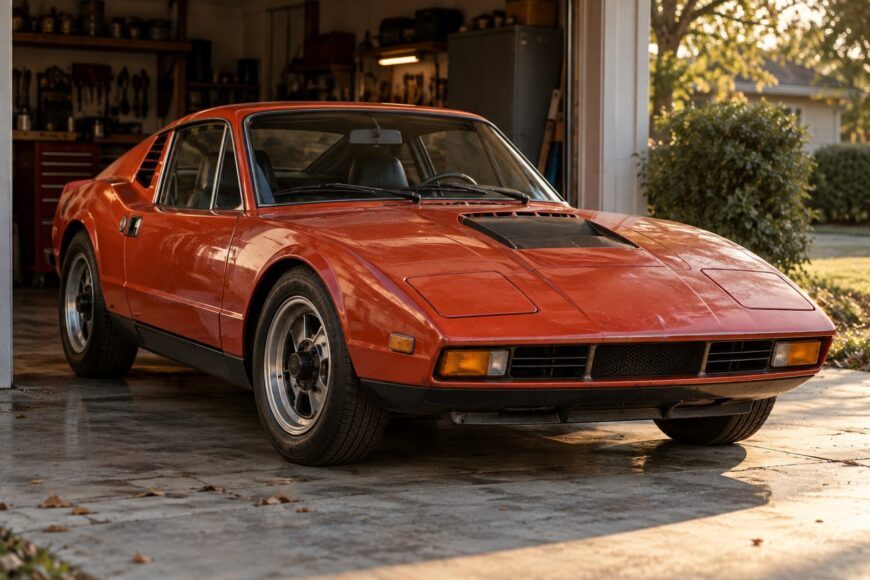
The Saab Sonett III is a striking fiberglass sports car that is neither truly lightweight nor effortless to own. Its two-seat shape, front-wheel drive, Swedish engineering, and unusual styling give it genuine character, yet the body panels can distract buyers from the steel structure beneath them. The car looks like a clever shortcut to classic sports-car ownership. An inspection often reveals a much more involved proposition.
That creates the central buyer’s problem: is a Sonett III an honest, usable classic, or an expensive-looking project concealing rust, unavailable trim, and improvised repairs? The answer depends less on the shine of its fiberglass than on the condition of its underside, the quality of past work, and the completeness of its model-specific parts.
- What the Saab Sonett III Was—and Wasn’t
- Ford V4 Performance: More Character Than Speed
- Fiberglass Styling, Steel Rust: How the Structure Really Works
- On the Road: What Ownership Feels Like
- The Hidden Cost of Keeping a Sonett III Alive
- Buying One: A Better Inspection Order
- Myths, Rarity, and the Case for Buying One
- Frequently asked questions
- How much is a Saab Sonett III worth?
- How many Saab Sonett III cars were made?
- What is the rarest Saab model?
- Why can a cheap Sonett III become an expensive restoration?
What the Saab Sonett III Was—and Wasn’t
The Sonett III was Saab’s small sports coupe for the early 1970s, produced from late 1970 through 1974. Approximately 8,368 cars were built, making it a limited-production model rather than a mainstream Saab. Sales were concentrated in the United States, where the car’s styling and equipment were shaped partly by local regulations and customer expectations.
Its basic formula was unusual for a sports car of the period. The Sonett III used front-wheel drive and a two-seat coupe body, with a load-bearing steel structure carrying bolt-on fiberglass panels. That arrangement allowed Saab to create a distinctive shape without making every exterior panel a structural component, while retaining a mechanical layout related to the company’s front-wheel-drive family cars.
Fiberglass creates the wrong first impression about weight. The Sonett III weighs approximately 810 kg, compared with roughly 760 kg for the earlier Sonett II. Steel reinforcement, safety equipment, glass, trim, and the structural base consume much of the advantage suggested by the composite body.
It is therefore better understood as a compact, technically individual grand tourer than as an ultralight racer. The front-wheel-drive layout gives it a clear Saab identity, while the limited production run as reported by field specialists
Ford V4 Performance: More Character Than Speed
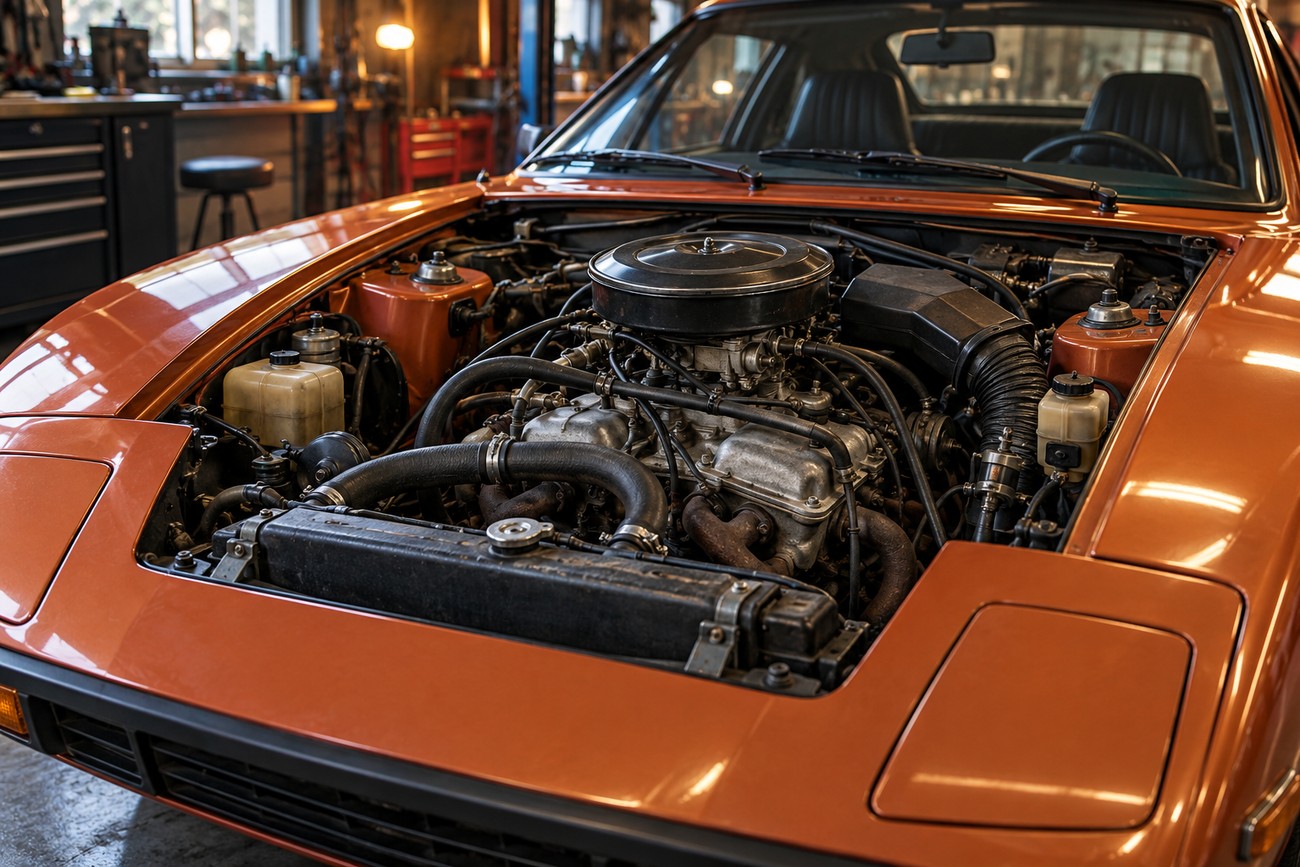
The commonly documented Sonett III specification is a 1.7-liter carbureted Ford V4 producing 65 hp. It drives the front wheels through the car’s manual transmission, with front disc brakes and rear drum brakes. Period performance figures vary, but top speed is reported at approximately 165–171 km/h, and acceleration to 100 km/h takes approximately 13 seconds.
Those figures make the Sonett usable on modern roads, provided the car is correctly maintained, yet they do not match its low, exotic appearance. The V4 delivers a functional, slightly agricultural soundtrack rather than the smooth urgency associated with a purpose-built sports-car engine. The car’s modest mass helps, but the performance remains more brisk than fast.
Some references cite 55–65 hp and a 1.5-liter V4. Those claims should be treated as disputed rather than as settled Sonett III specifications. The consistently documented production description is the 1.7-liter, 65-hp Ford V4, so a seller’s claim about a different engine or output deserves supporting paperwork.
A reported 2.6-liter V6 prototype producing about 150 hp belongs to experimental development, not to the series-production Sonett III specification. Stories about powerful factory engines can therefore mislead buyers. A modified car may be entertaining, but it requires separate scrutiny of cooling, engine mounts, transmission condition, weight balance, and braking.
Fiberglass Styling, Steel Rust: How the Structure Really Works
The Sonett III’s revised nose, pop-up headlights, and bumper treatment gave it a cleaner early-1970s appearance than the previous model. The front end and bumpers were adapted for United States safety requirements, which also contributed to the car’s visual bulk and less delicate proportions. The result is distinctive, though the long nose demands care around ramps and curbs.
Fiberglass panels do not rust, but that does not make the body virtually permanent. They can crack, delaminate, deform, develop waves, or show poor repairs made with incompatible materials. Impact damage is especially significant because a damaged panel may need replacement or careful composite reconstruction rather than conventional dent repair.
The steel structure remains the decisive inspection area. Floors, underside sections, frame-related areas, suspension mounting points, and hidden edges can corrode while the visible exterior still looks presentable. Salted climates are particularly unforgiving, and a clean fiberglass finish can conceal expensive structural work.
The weight penalty matters on the road as well as on a lift. At approximately 810 kg, the Sonett III is light by modern standards, but it is not exceptionally light for a small fiberglass coupe. That extra mass helps explain why the car feels more substantial and less sharply responsive than its compact silhouette suggests.
On the Road: What Ownership Feels Like

The Sonett III uses coil-spring suspension front and rear, broadly related to the earlier Sonett V4 layout. A sound car can feel stable and coherent, with the front-wheel-drive system giving it predictable traction. Its limits arrive gradually, although neglected suspension parts, altered ride height, or mismatched tires can change that behavior considerably.
The Ford V4 is usually the dominant sensory feature. It can feel coarse and noisy compared with expectations for a sports car, and engine-bay heat and sound can reach the cabin. Extra insulation may improve long-distance use, but it cannot turn the drivetrain into a quiet, high-revving performance engine.
Ground clearance is a daily concern. The low nose and long front overhang increase the risk of scraping ramps, curbs, and uneven driveways, while wind noise and sensitivity to crosswinds can make highway travel less relaxed than the styling implies. Excessively low suspension makes both problems worse.
Cabin space is another practical limitation. Drivers taller than approximately 180 cm may find the seat travel and legroom restrictive, with the driving position requiring compromise. Ventilation and heating are often weak, and poor sealing can worsen window fogging in damp weather or heat retention in summer.
The Hidden Cost of Keeping a Sonett III Alive
Routine mechanical work can take longer than the Ford badge suggests. Access to components is restricted by the compact nose, surrounding panels, and the Sonett’s specialized packaging. A mechanic familiar with the V4 still needs model-specific knowledge to avoid damaging adjacent structure, wiring, or fiberglass during ordinary service.
Specific fiberglass panels, original trim, and small interior parts can be difficult to source. Early and late Sonett III cars may differ in interior details, bumpers, and other small components, so apparently interchangeable parts may require modification. American-market lighting and bumper changes can further complicate matching a replacement to the car’s original specification.
Many surviving examples have custom interiors, altered wiring, or modified electrical systems. Such changes may have solved an owner’s immediate problem, yet they can make factory wiring diagrams less useful and future troubleshooting slower. A car with a tidy, documented electrical system is worth more in practical terms than one with attractive but unexplained upgrades.
The familiar Ford V4 makes engine parts more approachable, but it does not make the entire car easy to maintain. Fiberglass work, structural corrosion, trim shortages, and restricted access remain Sonett-specific problems. Resale liquidity is also limited because the next buyer is likely to be a specialist who will inspect the same details carefully.
Buying One: A Better Inspection Order
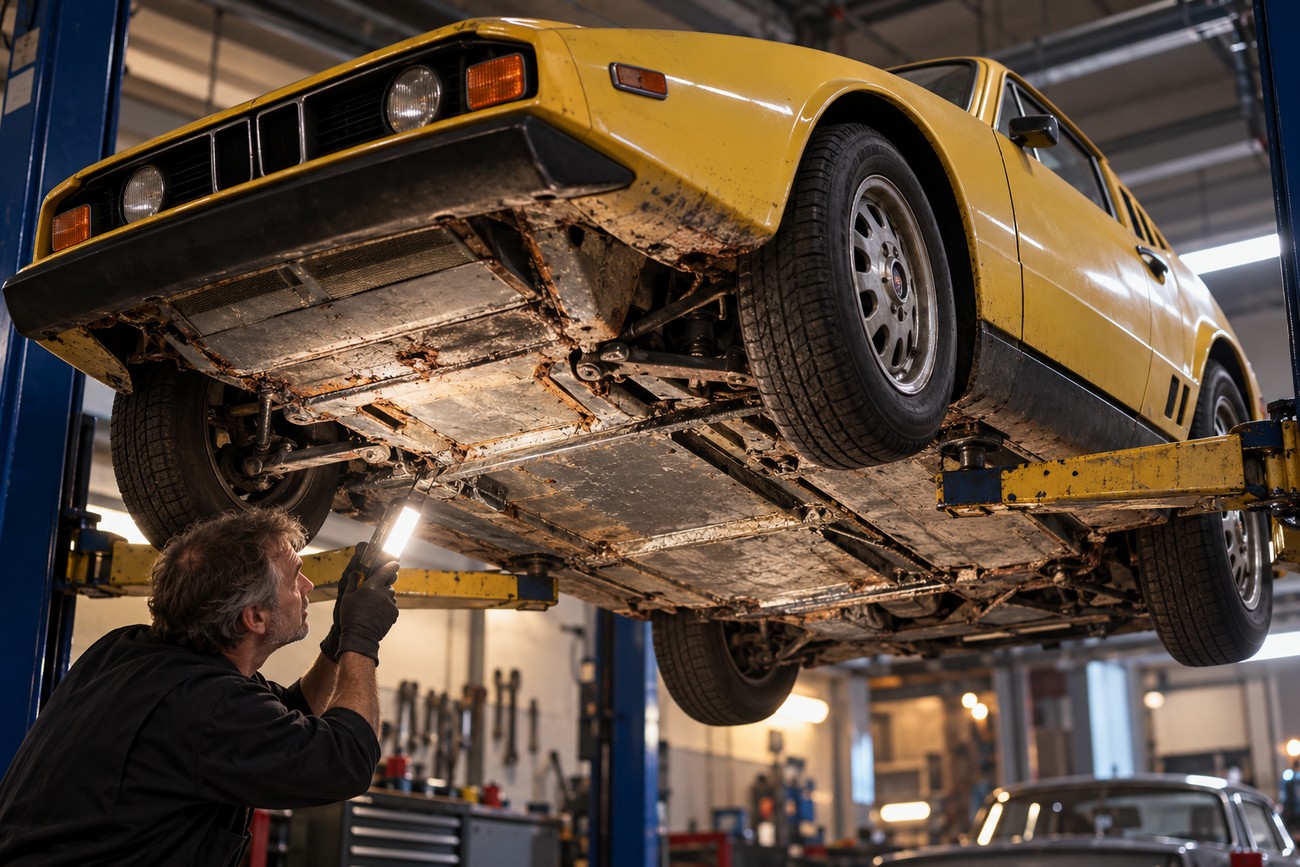
Start underneath, before judging the paint or panel gaps. Inspect the steel structure, floors, frame-related areas, suspension mounting points, and underside for corrosion, repairs, distortion, and water traps. A lift is strongly preferable because a visual inspection from ground level can miss the most consequential damage.
Then examine every fiberglass panel for cracks, waves, delamination, impact marks, and uneven alignment. Check the engine-bay area for heat damage and inspect whether panel gaps agree with the chassis and suspension geometry. A straight-looking nose can sit over a corroded or misaligned structure, making cosmetic repair a poor first investment.
On the road, assess drivetrain noise, clutch operation, gearbox behavior, cooling, braking, steering, and suspension response. Confirm that the engine reaches and holds normal operating temperature. Check the electrics, lights, heater, ventilation, windshield sealing, and signs of water entry, because these systems often reveal the quality of previous ownership.
Be cautious with cheap power modifications. Extra output can raise thermal loads and stress the transmission, while incorrect engine mounts or altered engine position can affect weight balance. Wide, low-profile tires and lowered suspension may look purposeful, but they can worsen steering behavior, ground-clearance problems, and contact with the body.
Ask for documentation covering repairs, parts sources, wiring changes, and any American-market lighting or bumper alterations. Fiberglass repairs require compatible resin and mat, correct layering, and controlled working conditions; a quick patch may return as cracks or waves. A usable, structurally sound car with ordinary cosmetics is usually a safer purchase than a glossy project with incomplete parts and no repair history.
Myths, Rarity, and the Case for Buying One
The first myth is that fiberglass automatically means an ultralight sports car. The Sonett III’s approximately 810 kg mass is respectable, yet the steel structure and safety adaptations make it heavier than the image suggests. Its appeal lies in its unusual engineering and shape rather than in an exceptional power-to-weight ratio.
The second myth concerns engines. Series production is associated with the modest Ford V4, while the reported V6 belongs to an experimental prototype and not to a normal factory version. A modified Sonett can be faster, but that is a separate ownership proposition with additional mechanical and documentation risks.
Fiberglass also does not eliminate restoration costs. It resists rust while the steel structure can corrode, and the panels themselves can crack, delaminate, or require specialist repair. Scarce trim and limited parts supply can make ownership more expensive than the purchase price initially suggests.
The Sonett III suits someone who values rare design, front-wheel-drive character, and hands-on specialist ownership. It is a poor choice for someone seeking abundant parts, effortless performance, or easy resale. Approximately 8,368 examples were built, enough to give the model a defined identity, but too few to make every repair or replacement straightforward.
Frequently asked questions
The Sonett III’s value and rarity are easy to misread from photographs. These answers focus on the details that affect an actual purchase rather than on appearance alone.
How much is a Saab Sonett III worth?
There is no reliable value judgment from appearance alone. The condition of the steel structure, quality of fiberglass repairs, originality, documentation, and completeness of model-specific parts matter more than fresh paint or a clean interior.
A structurally sound, documented car with correct trim may justify a stronger valuation than a cheaper example requiring hidden corrosion repair. Conversely, a modified car can be usable while remaining difficult to value because its parts, wiring, and future buyer appeal are less predictable.
How many Saab Sonett III cars were made?
Approximately 8,368 Saab Sonett III cars were built from late 1970 through 1974. Production was limited, and sales were concentrated predominantly in the United States.
That figure explains the model’s specialist status without making every surviving car equally desirable. Condition, originality, and parts completeness still determine whether an individual example is a usable classic or a restoration project.
What is the rarest Saab model?
There is no single definitive answer without defining the comparison. Production cars, prototypes, special builds, and one-off experimental vehicles belong to different categories, so a claim about the “rarest Saab” needs a stated scope.
The Sonett III is certainly a limited-production Saab, with approximately 8,368 built, but its rarity should be considered alongside its surviving condition and parts support. A scarce model with extensive undocumented modifications may be less practical than a slightly more common car with complete records.
Why can a cheap Sonett III become an expensive restoration?
A low purchase price can conceal corrosion in the steel structure, scarce fiberglass and trim parts, and specialist composite repairs. Altered wiring, incomplete interiors, and missing American-market components can add further costs before the car is mechanically dependable.
Limited resale demand also reduces the chance of recovering those expenses later. The purchase decision should therefore be based on structural condition, repair quality, documentation, and parts availability rather than on the car’s exterior price or the familiarity of its Ford V4.







