
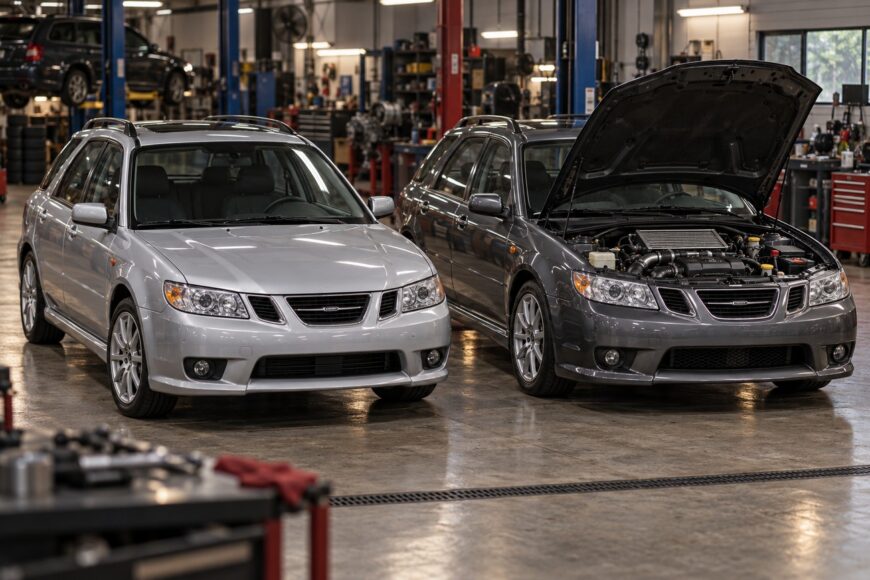
The Saab 9-2X wears Saab styling and branding, yet its mechanical identity is firmly tied to Subaru. Built as a five-door wagon from 2004 to 2006, it combines permanent all-wheel drive with a platform closely related to the Subaru Impreza/WRX. That unusual mix explains both its appeal and its complications.
The Linear offers practical, relatively calm transportation, while the Aero brings a turbocharged WRX engine and sharper responses. Age, rarity, confusing parts catalogues, and neglected maintenance matter more today than the badge on the hood. A cheap example can require expensive recommissioning, especially when its AWD system, suspension, automatic transmission, or turbo engine has been ignored.
- What the Saab 9-2X Really Is
- Linear vs. Aero: The Two 9-2X Personalities
- Linear and Aero Specifications at a Glance
- How the Saabaru Drives in the Real World
- Maintenance, Parts and the Saab–Subaru Trap
- How to Buy a Good Saab 9-2X Today
- Is the Saabaru Worth the Compromise?
- Frequently asked questions
- What is the Saabaru?
- What is the rarest Saab model?
- What is the value of a 2005 Saab 9-2X?
What the Saab 9-2X Really Is
The Saab 9-2X was produced from 2004 to 2006 as a five-door wagon with permanent all-wheel drive. It was developed from the Subaru Impreza platform, with Saab-specific styling and interior changes intended to make the car fit the Swedish brand’s range. Enthusiasts soon gave it the nickname “Saabaru,” a direct reference to that shared identity.
Calling it a fully original Saab is inaccurate. Its engines, drivetrain, and much of its underlying engineering are closer to Subaru than to a typical Saab model. That distinction affects service procedures, parts searches, driving expectations, and the kind of specialist who can diagnose it efficiently.
The badge engineering does not make the 9-2X worthless. Its appeal lies in the unusual combination: a compact wagon body, permanent AWD, Saab design cues, and, in Aero form, Subaru WRX-related performance. It has a clear place in automotive history because the crossover of brands is central to the car, rather than an incidental detail.
For owners, the Subaru connection is also practical. Mechanical parts may be easier to locate through Subaru applications, while body panels, lighting, and decorative trim can be difficult because the Saab-branded car is rare. Treating it as an ordinary Saab can lead to wrong parts, wrong expectations, and unnecessary repair delays.
Linear vs. Aero: The Two 9-2X Personalities
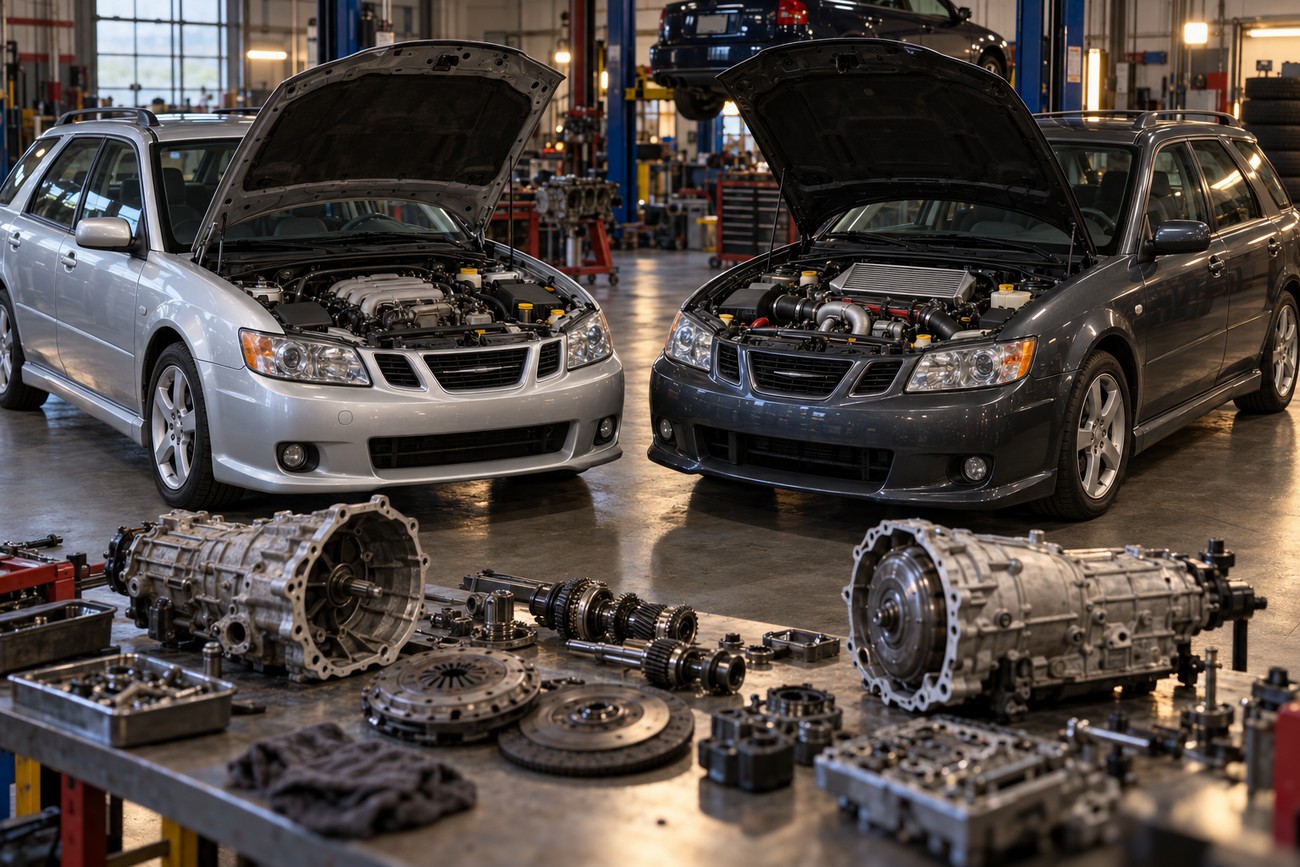
The Linear and Aero represent different ownership propositions. The Linear uses a 2.5-liter naturally aspirated Subaru EJ253 producing 165 hp and 225 Nm. The Aero uses a 2.0-liter turbocharged Subaru WRX engine rated at 227 hp and 294 Nm.
Both versions were available with a five-speed manual or a four-speed automatic. That common transmission choice can hide a major difference in character: the Linear is generally easier to drive gently, while the Aero delivers stronger acceleration and invites more demanding use. The manual suits the Aero’s engine better, although condition remains more important than transmission type alone.
Catalogue figures occasionally create confusion. Some sources list approximately 230–233 hp, while others show the more familiar 227 hp figure for the Aero. These differences can reflect market, version, or rounding variations; they do not turn the 165-hp Linear into a high-output model.
Shopping by horsepower alone is a poor strategy. A sound Linear with documented servicing can be a better purchase than a neglected Aero, and a healthy AWD system or suspension is worth more than an attractive specification sheet. Aero buyers also need evidence that the turbocharged engine was maintained carefully rather than driven hard and serviced late.
Linear and Aero Specifications at a Glance
The essential figures show why the two trims appeal to different buyers, while their shared chassis and drivetrain create several common inspection priorities.
| Item | Linear | Aero |
|---|---|---|
| Engine | 2.5-liter naturally aspirated Subaru EJ253 | 2.0-liter turbocharged Subaru WRX engine |
| Power | 165 hp | 227 hp |
| Torque | 225 Nm | 294 Nm |
| Transmissions | Five-speed manual or four-speed automatic | Five-speed manual or four-speed automatic |
| Drivetrain | Permanent all-wheel drive | Permanent all-wheel drive |
| Body style | Five-door wagon | Five-door wagon |
| Practical character | Calmer and less demanding | Sharper, quicker, and more performance-focused |
Both cars share approximately the same compact footprint: 4,460 mm long, 1,694–1,695 mm wide, and 1,465–1,466 mm high, with a 2,525 mm wheelbase. Those dimensions give the 9-2X useful wagon practicality without making it a large family vehicle.
The Aero’s extra output changes more than acceleration. Its sharper responses and firmer setup can make it more engaging on a good road, while owners often describe it as noisier and less comfortable on broken pavement. The Linear is calmer, though it should not be mistaken for a soft luxury wagon.
Both versions can carry the ownership burden of permanent AWD, aging suspension, and an outdated four-speed automatic. Specification differences help identify a car, yet they do not replace an inspection of the actual vehicle.
How the Saabaru Drives in the Real World
The 9-2X feels more like a Subaru-based performance wagon than a traditional Saab cruiser. Permanent AWD gives the car a planted feel, and the wagon body adds everyday usefulness. Steering, road noise, and suspension response depend heavily on trim and condition.
The Aero is generally perceived as sharper and livelier than the Linear. The turbocharged engine supplies stronger mid-range response, and the WRX relationship explains much of the model’s enthusiast appeal. The trade-off is a firmer ride and more mechanical noise, especially on poor roads, where the car can feel busy rather than refined.
The Linear provides a more restrained experience. One review lists the 2.5-liter version at a 190 km/h top speed and 0–100 km/h in 9.8 seconds; those are source-specific figures, not universal factory data for every market or car. In daily driving, the naturally aspirated engine’s simpler response may matter more than the headline performance.
The four-speed automatic can feel dated by current standards in either trim. It limits flexibility on the highway and makes the Aero’s engine feel less fully exploited. A manual car may be more satisfying, but clutch condition, drivetrain wear, and previous use still determine whether it is a good purchase.
Maintenance, Parts and the Saab–Subaru Trap
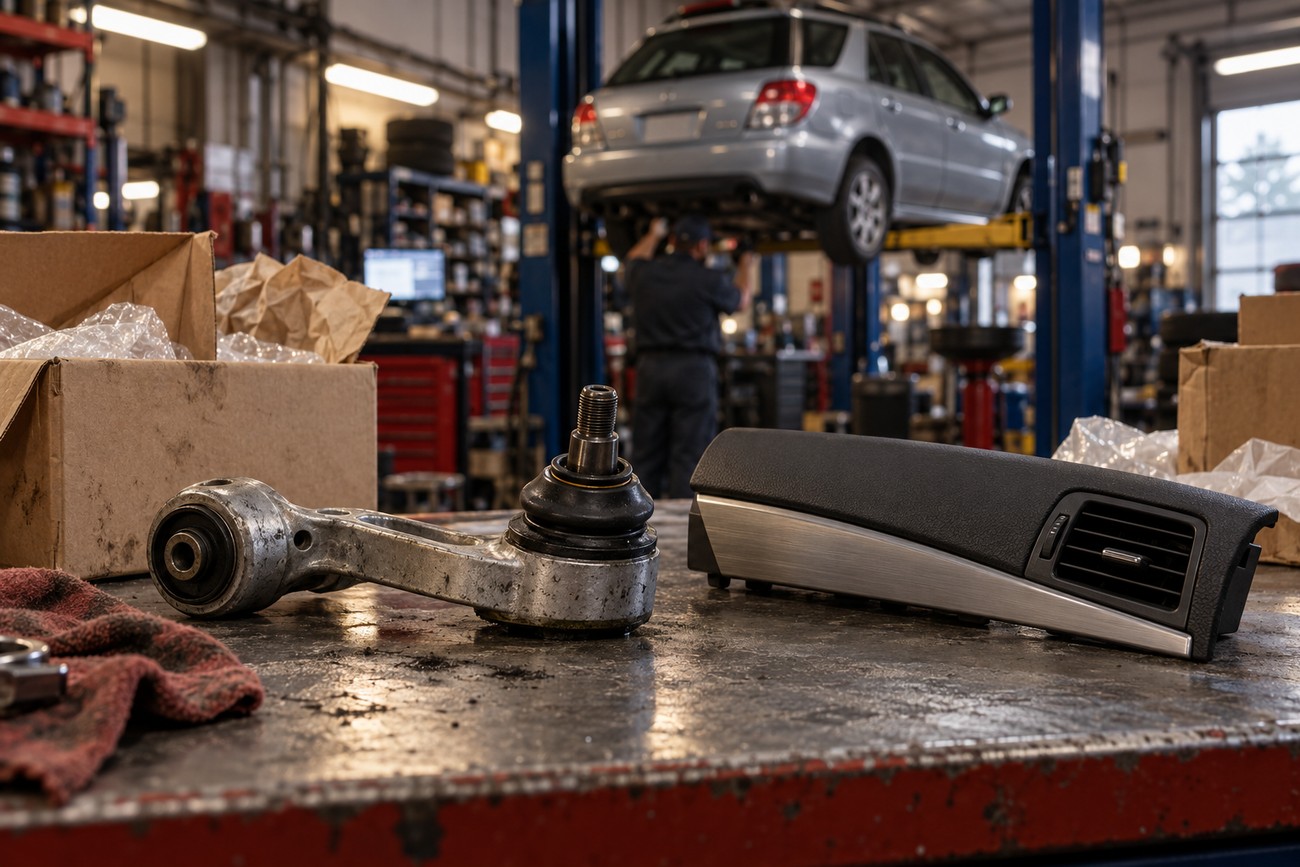
The main service problem is the split between Saab branding and Subaru engineering. Many mechanical and drivetrain considerations are closer to Subaru than to a typical Saab, while trim-specific and cosmetic items may follow Saab catalogues or be unique to the 9-2X. A parts counter that searches only by badge can return the wrong component.
Verify mechanical parts through the Subaru application or part number, then confirm the VIN and trim. This matters for brakes, suspension components, drivetrain parts, and interior pieces, because Linear and Aero equipment can differ. Body panels, lighting, and decorative elements are slower and often more expensive to source simply because the model is rare.
Before ordering, cross-check the Saab part reference against Subaru catalogues, VIN data, and the exact trim application. A familiar-looking brake or suspension component can still be wrong for the car.
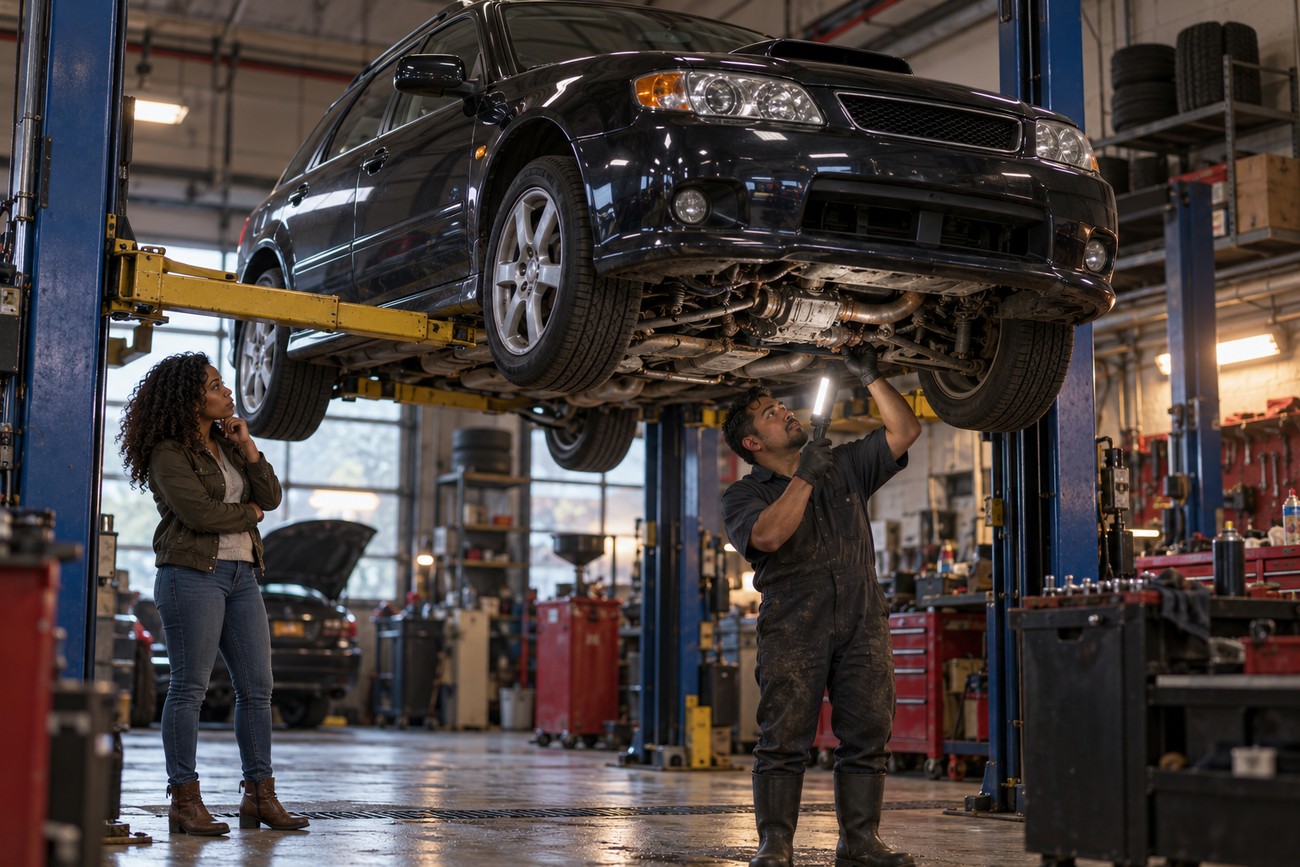
The AWD system deserves a proper inspection rather than a casual road test. Binding, abnormal noise, leaks, or uneven behavior under load can turn a promising purchase into a major repair project. The four-speed automatic also needs evidence of sensible servicing and smooth operation; its age and design already make it a weak point for buyers expecting modern shift quality.
Suspension wear is another budget risk. Bushings, dampers, springs, and related hardware can affect alignment, tire wear, ride quality, and handling. A neglected turbocharged Aero is especially sensitive to missed maintenance, since the engine’s performance encourages harder use and leaves less room for careless servicing.
How to Buy a Good Saab 9-2X Today
Start by confirming the car’s identity. Check whether it is a Linear or Aero, verify the transmission, and compare the equipment with the VIN and service records. This prevents the common mistake of ordering the wrong brakes, suspension components, interior trim, or badges after purchase.
Engine behavior should be assessed from a cold start and during a fully warmed drive. Look for smoke, unstable running, unusual noises, warning lights, and evidence of poor turbo maintenance on Aero cars. Service documentation is more useful than a low odometer reading, particularly when the vehicle has changed hands several times.
Test the AWD system, transmission, and suspension deliberately. Listen for drivetrain noises, feel for hesitation or harsh automatic shifts, and check whether the car tracks properly over uneven pavement. Inspect corrosion, accident repairs, and water entry, then examine the availability and condition of missing trim before negotiating.
A documented, mechanically sound example may cost more than a cheaper car that needs age-related recommissioning. That difference is justified only when the inspection supports it. Rarity creates interest, yet it does not repair a worn AWD system or make unavailable bodywork easier to find.
Good candidates can be difficult to locate because the market contains many tired cars alongside a small number of carefully maintained ones. Allow time to compare several examples, and budget for specialist diagnosis before committing. A seller who cannot identify the trim or explain the Subaru-related service history is offering a reason for caution.
Is the Saabaru Worth the Compromise?
The Saab 9-2X makes sense for buyers who value an unusual story, wagon practicality, permanent AWD, and Subaru/WRX lineage. The Aero adds a sharper, more energetic character that is difficult to confuse with a conventional family wagon. Its enthusiast value comes from that combination and its rarity, rather than from wholly original Saab engineering.
The Linear is the more rational choice for relaxed use, provided its condition is strong. The Aero is the more exciting choice, with greater performance and greater exposure to expensive neglect. Neither version offers effortless ownership, especially where specialist knowledge and cosmetic parts are limited.
The car is a compelling enthusiast purchase when bought on condition, with a clear maintenance history and a realistic parts strategy. It is a poor fit for anyone expecting easy parts supply, modern automatic-transmission behavior, or a soft Saab ride. Rarity brings collector interest and parts-supply compromises at the same time.
Frequently asked questions
The Saab 9-2X combines Saab branding with Subaru engineering. Its Linear and Aero trims offer different performance and ownership profiles. The questions below address its nickname, rarity, and value.
What is the Saabaru?
“Saabaru” is an enthusiast nickname for the Saab 9-2X, reflecting its Saab branding and Subaru engineering. It refers to a Saab-branded vehicle closely related to the Subaru Impreza/WRX platform, rather than to a separate Saab model or an official factory name.
The nickname has practical meaning as well as historical appeal. Owners should approach mechanical parts, drivetrain servicing, and many diagnostic questions with Subaru applications in mind, while checking Saab-specific trim and body components separately.
What is the rarest Saab model?
There is no single universally accepted official ranking that identifies the rarest Saab model. Production records, market-specific sales, surviving examples, special editions, and the definition of “model” can produce different conclusions.
The Saab 9-2X is certainly rare in many markets, but rarity claims should be separated from verified production data. A scarce car can also have more surviving examples than a limited special edition, so “rare” does not automatically mean historically unique or highly valuable.
What is the value of a 2005 Saab 9-2X?
A 2005 Saab 9-2X has no single fixed market value. Start with the trim, because Linear and Aero attract different buyers, then account for manual or automatic transmission, originality, service documentation, rust, accident history, and the condition of the AWD system.
Missing trim, lighting, or body parts can reduce practical value even when the engine runs well, because replacement items may take time to locate. A well-documented, original, mechanically sound car should be judged separately from a cheaper example that needs turbo, suspension, automatic-transmission, or cosmetic recommissioning.







