
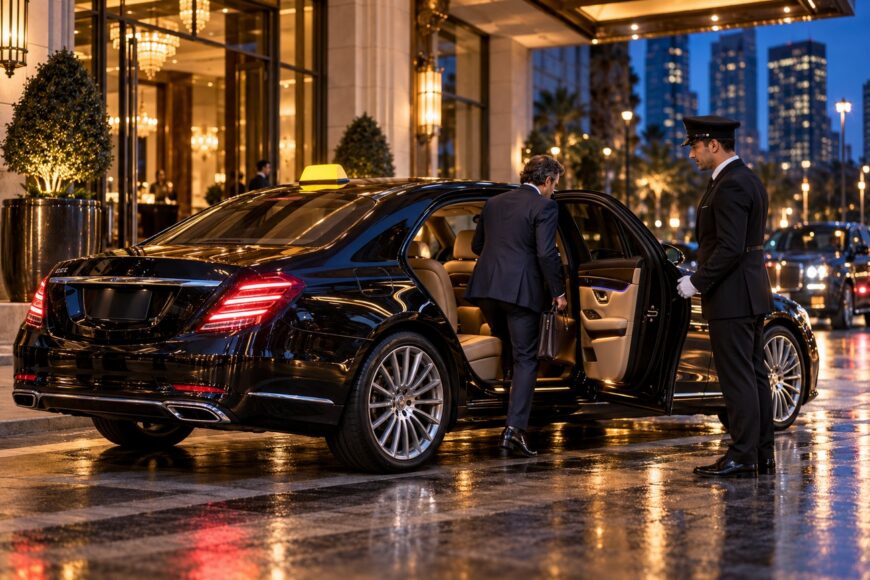
Running a taxi business with a Mercedes S-Class can work when the vehicle is sold as part of a premium service. Its quiet cabin, rear-seat comfort, and prestige can support executive, hotel, airport, and chauffeur bookings. Those advantages disappear quickly if the car is assigned to low-fare street work with long unpaid gaps between passengers.
The financial risk begins before the first trip. A current S-Class in the United States starts at about $112,550, while fuel, commercial insurance, premium parts, cleaning, depreciation, and downtime continue regardless of demand. Commercial-use restrictions may also affect warranty protection, so a purchase decision requires written checks rather than assumptions based on a showroom specification.
- Is the Mercedes S-Class a Viable Taxi Car?
- Build the Business Case Before You Buy
- Licensing, Insurance, and Warranty Checks
- Choose the Right S-Class Specification for Passengers
- Maintenance, Reliability, and Downtime Risk
- Operate It as a Premium Chauffeur Service
- Common Mistakes and a Practical Go/No-Go Test
- Frequently asked questions
- Which car is best for a taxi business?
- Which Mercedes is good for a taxi?
Is the Mercedes S-Class a Viable Taxi Car?
The S-Class is viable when passengers pay for the experience and the operator can keep the car working on suitable assignments. A silent ride, refined rear compartment, and strong brand recognition help justify a chauffeur or business fare. They do little to improve the economics of a standard street-taxi meter, where customers mainly compare price and arrival time.
Size creates a practical trade-off. The large sedan is less comfortable on narrow streets, crowded central routes, and tight parking spaces, while repeated curbside stops add stress to doors, tires, brakes, and the cabin. The 12.5 ft³ trunk rating also deserves attention: several large airport suitcases can use the available space faster than the advertised seating capacity suggests.
Fuel economy is another constraint. The stated figure is approximately 23 mpg, and real commercial use can vary with traffic, idling, climate control, passenger loads, and route conditions. A well-maintained Mercedes may exceed 200,000 miles, yet that possible service life does not mean each mile will be inexpensive or free from interruptions.
The sensible verdict is conditional. An S-Class can be a productive asset for pre-booked executive travel, private airport transfers, hotel clients, and events. It is a weak match for low-margin work unless the operator has unusually strong utilization, a fare structure that reflects the vehicle, and a repair plan that protects booked service.
Build the Business Case Before You Buy
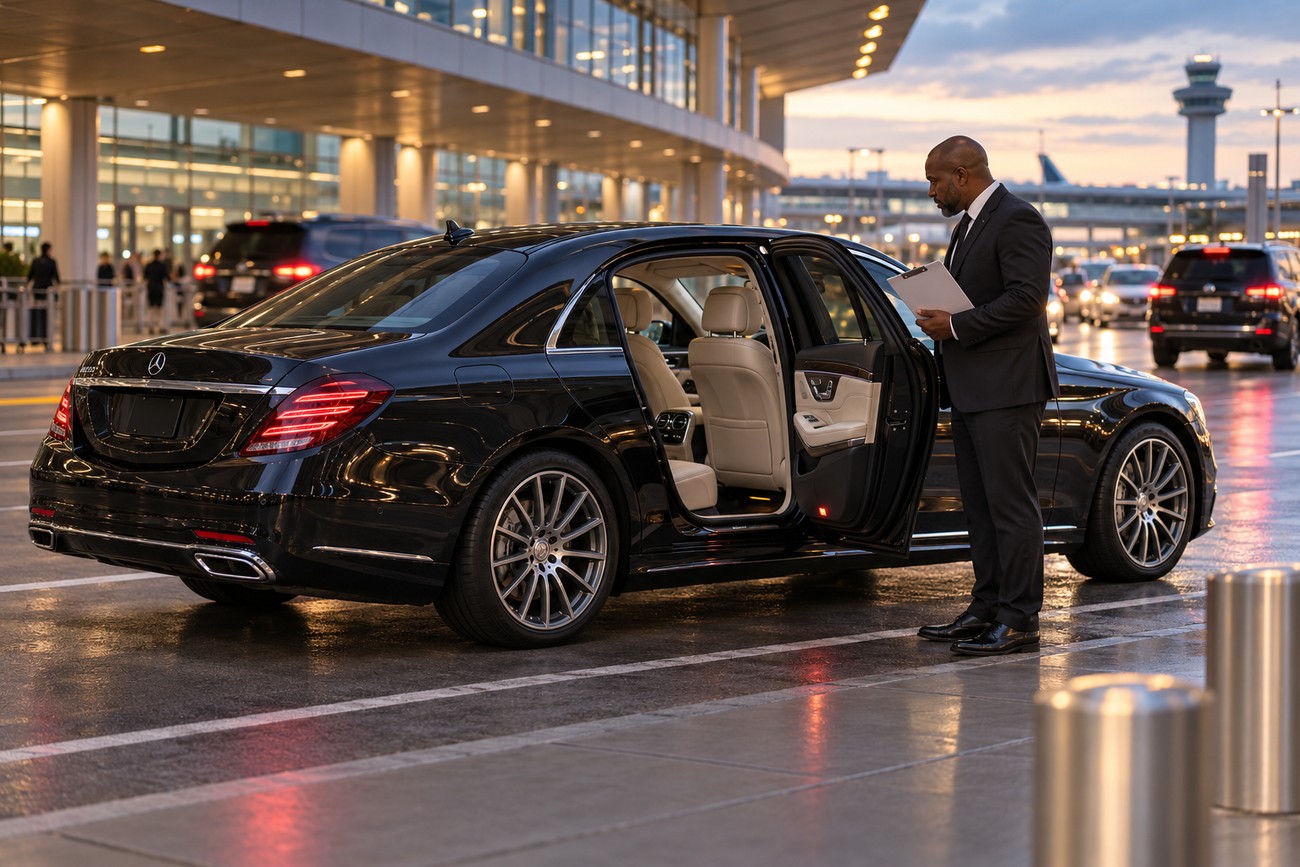
Start with the share of each shift spent carrying a paying passenger. A costly sedan that waits at an airport, travels empty to a pickup, or sits outside a hotel between bookings continues to consume insurance, depreciation, and maintenance capacity. Profit depends on utilization, fare level, commercial insurance, depreciation, maintenance, and downtime rather than the badge alone.
Build a monthly model that includes fuel, commercial insurance, scheduled servicing, tires, brakes, cleaning materials, interior repairs, financing or capital cost, and expected depreciation. Free scheduled maintenance is not included with the stated U. S. factory warranty information. Commercial work also adds wear to air conditioning, door mechanisms, leather surfaces, and electronic equipment.
Insurance deserves its own line rather than a rough allowance. Commercial insurance can materially reduce margins, and the premium varies by city, coverage limits, licensing status, driver record, and the type of passenger service. A personal policy usually does not replace the commercial passenger-transport policy required by the jurisdiction.
Pricing should reflect the asset and the service promise. A fare designed for a standard sedan may cover fuel while leaving insufficient room for premium parts, professional cleaning, downtime, and capital recovery. If the market will not support a premium rate or advance-booking model, a less expensive vehicle may produce a healthier margin even with a lower headline fare.
Licensing, Insurance, and Warranty Checks
Taxi licensing, vehicle approval, inspections, and compulsory insurance are set by local authorities. Requirements can differ between ordinary taxi work, private hire, airport transfers, and chauffeur services. Confirm the rules before paying a deposit, particularly if the vehicle is imported or carries a specification intended for another market.
Ask the regulator to confirm that the exact body style, trim, imported specification, and equipment are eligible. A general statement that “the S-Class is allowed” may not cover a particular model year, seating layout, window treatment, registration category, or safety equipment. Keep the confirmation in writing and match it against the vehicle identification details.
Warranty wording needs the same care. In the United States, Mercedes-Benz basic and powertrain coverage is 4 years or 50,000 miles, while free scheduled maintenance is not included under the stated U. S. factory warranty information. Commercial taxi use may also be treated differently from private ownership.
Some market-specific Mercedes-Benz battery warranty certificates exclude taxi use. That document should be checked for the exact market and vehicle rather than treated as a universal Mercedes rule. The same principle applies to roadside assistance, battery components, and any extended coverage: obtain the relevant certificate before assuming a commercial fault will be covered.
Choose the Right S-Class Specification for Passengers
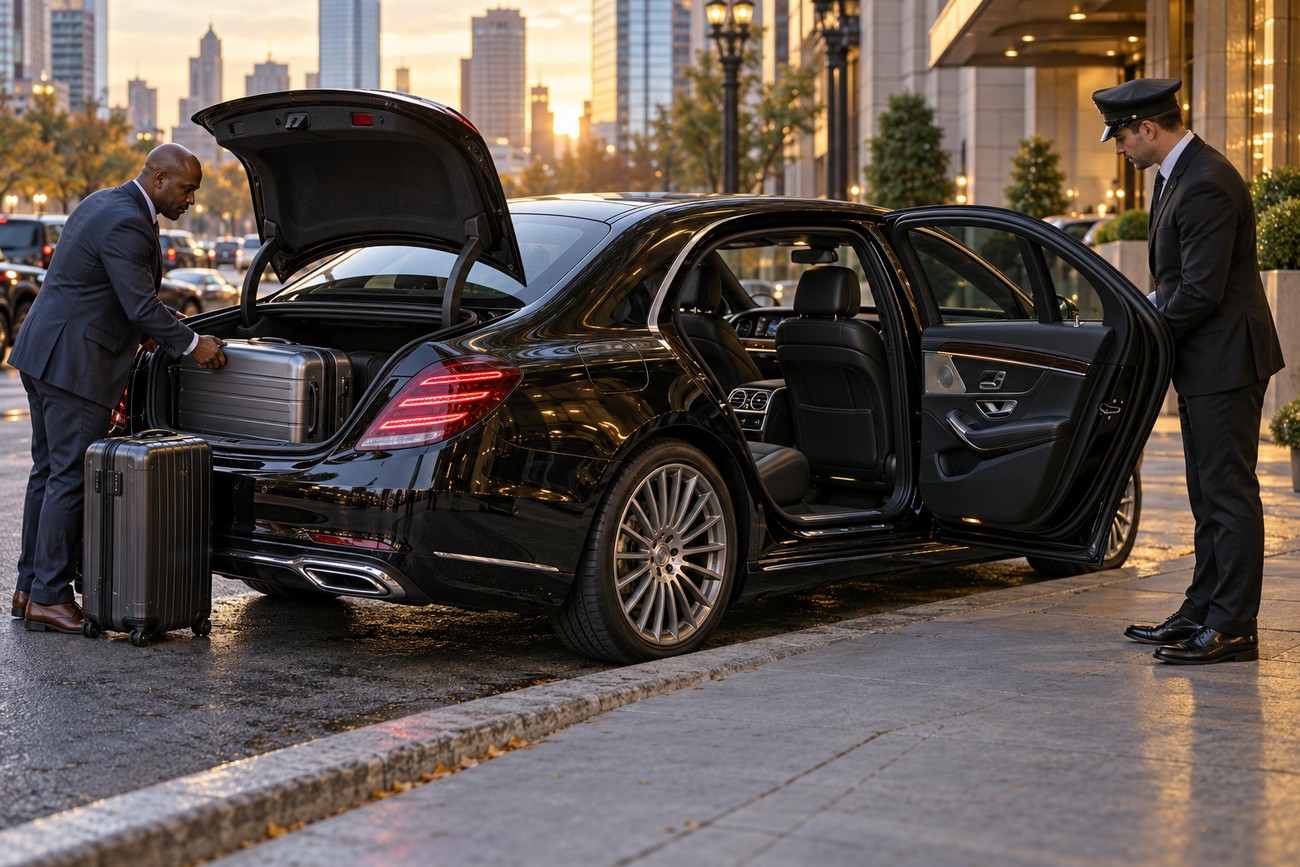
Passenger value comes mainly from the rear compartment, climate control, luggage access, and a consistently quiet ride. Check rear-seat entry with the vehicle parked close to a curb, the ease of loading suitcases, and whether the interior can be cleaned without excessive labor. A specification that looks impressive at delivery can become difficult to maintain under daily passenger use.
Typical versions use either a 3.0-liter inline-six or a 4.0-liter V8 with a 48-volt mild-hybrid system. A 9-speed automatic transmission and all-wheel drive are typical configuration features. Maximum power is rarely the deciding factor for a business taxi; recovery time after a fault, parts supply, air conditioning, and rear-seat usability have greater commercial importance.
Extra executive rear seats, massage functions, cameras, and complex climate equipment can improve the product for high-value bookings. They also add components that may require specialized diagnosis and costly replacement. Choose options that customers will pay for repeatedly, rather than adding every available feature without a clear revenue purpose.
Use the stated 12.5 ft³ trunk rating as a starting point, then test the actual suitcase mix expected on your routes. Airport work may involve large hard cases, garment bags, and smaller carry-ons at the same time. A practical loading trial can reveal a revenue problem before the first airport contract exposes it to customers.
Maintenance, Reliability, and Downtime Risk
An S-Class taxi should be inspected as a network of expensive systems, not judged by engine noise and a clean service book. Review service history for the Airmatic suspension, 48-volt system, transmission, air conditioning, electronics, sensors, and driver-assistance systems. A low odometer reading cannot compensate for missing records or deferred repairs.
Owners commonly report that electronics, sensors, multimedia, and driver-assistance systems create major costs. Airmatic repairs can become expensive at higher mileage; around 150,000 km is a reported discussion point, not a fixed failure interval. The inspection should include fault-code history, ride height, compressor operation, suspension leaks, calibration status, and evidence of previous parts replacement.
Parts delays and electronic faults can cost more in lost bookings than in the repair invoice itself, which is why operators budget for an independent Mercedes diagnostic specialist and a replacement-vehicle plan.
A well-serviced Mercedes is sometimes reported above 200,000 miles, but expensive suspension and electronic failures become more likely with age and mileage. Some operators report roughly 600,000 km from diesel Mercedes taxis; that is individual operating experience, not a normative S-Class service-life guarantee. Engine durability should therefore be treated as one input in the business model.
Use an independent Mercedes specialist who can explain the fault, estimate parts availability, and state a realistic repair time. Set aside a diagnostic budget and identify a replacement vehicle before accepting contracts that carry penalties or reputational risk. A repair assumption should include the possibility of waiting for a component, because one immobilized car can remove several paid shifts and damage future bookings.
Operate It as a Premium Chauffeur Service
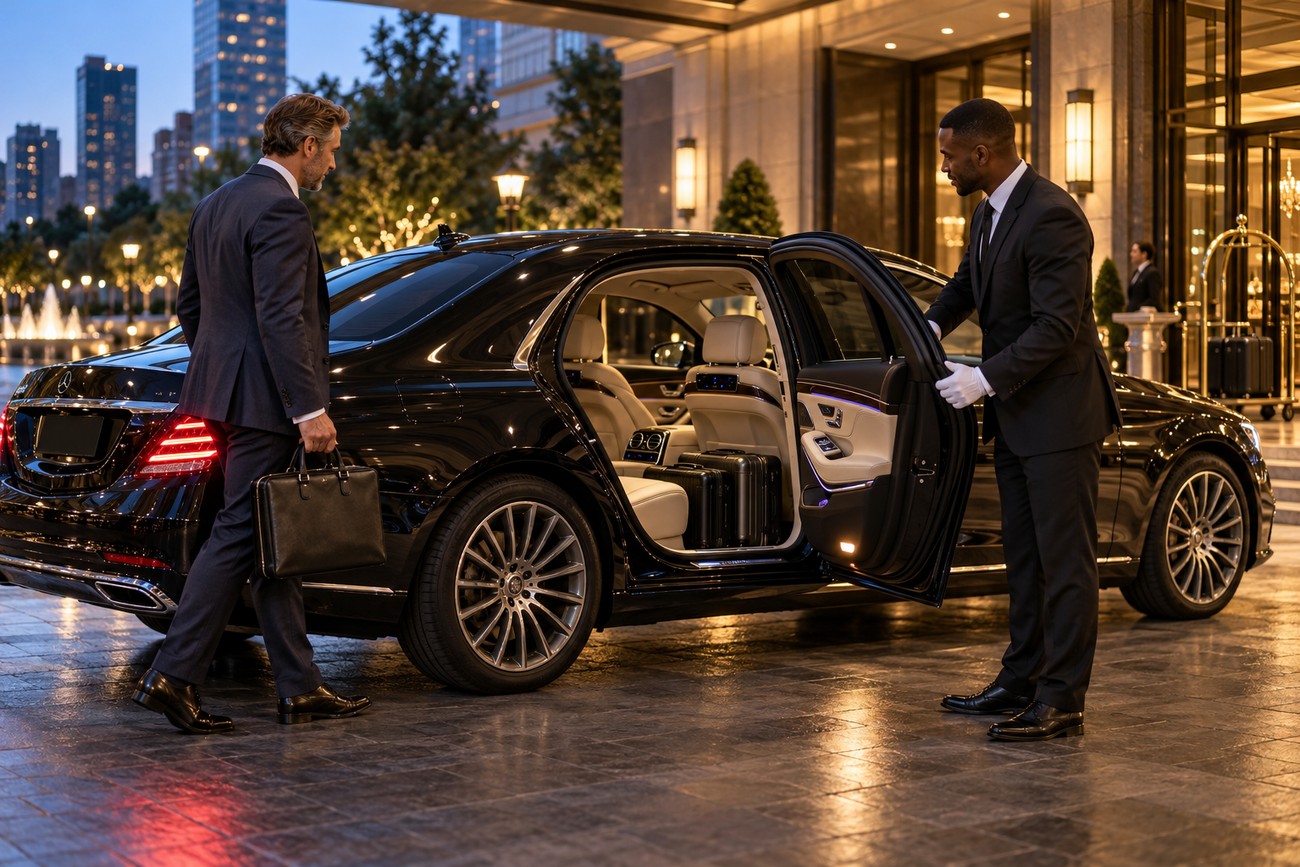
The S-Class is generally better positioned as a pre-booked chauffeur or business service than as a low-fare street taxi. Target work where the customer values punctuality, privacy, presentation, and a predictable cabin: airport transfers, corporate travel, hotels, events, and executive meetings. Advance bookings also make route planning and vehicle preparation easier.
Presentation standards must be operational, not occasional. Keep the cabin free from odors, stains, scratches, loose items, and visible leather wear. Build cleaning time into the schedule, and inspect high-contact areas such as door handles, rear controls, seat belts, mats, and charging points after each substantial booking.
Passenger communication supports the premium price. Confirm pickup instructions, luggage expectations, terminal details, waiting terms, and the vehicle’s access limitations before the journey. A large sedan can be difficult around narrow streets, crowded downtown areas, and tight parking spaces, so route planning should include a safe stopping point rather than relying on a last-minute curbside maneuver.
Airport work deserves a loading policy. Ask about suitcase quantity when the booking is made, and state what happens if the group brings more luggage than the trunk can carry. Customers remember an avoidable luggage problem more readily than a powerful engine, while a clear policy protects both the service schedule and the vehicle interior.
Common Mistakes and a Practical Go/No-Go Test
The first mistake is buying on purchase price alone. The ownership case must include commercial insurance, cleaning, premium parts, downtime, depreciation, and the amount of the shift that will be paid. A newer, warrantied car is not automatically inexpensive to operate because free scheduled maintenance is not included with the stated U. S. factory warranty information.
The second mistake is choosing by mileage without examining condition and records. Verify Airmatic history, 48-volt system behavior, transmission servicing, air conditioning performance, electronic faults, and driver-assistance calibration. Commercial use accelerates wear in brakes, tires, the cabin, door mechanisms, and air-conditioning systems.
Compliance errors can be more serious than a poor maintenance estimate. Do not rely on a personal policy, verbal approval, or a general belief that warranty coverage follows the car into taxi work. Confirm commercial insurance, local vehicle eligibility, inspection requirements, and market-specific warranty exclusions in writing.
Proceed when the local regulator approves the exact vehicle, the insurer confirms the intended passenger service, the fare structure covers the full cost model, and a specialist plus replacement-vehicle plan are available. Choose a different vehicle when bookings are mostly low-fare, luggage demand exceeds the trunk, parking conditions are hostile, or the business cannot absorb a long repair delay. A premium badge supports profit only when the operating model supports the badge.
Frequently asked questions
The right taxi is selected by duty cycle, passenger volume, luggage needs, local approval, service access, and paid utilization. Prestige matters only when customers recognize it in the fare and booking channel.
Which car is best for a taxi business?
The best car is the one that fits the dominant work pattern with the lowest interruption risk. Compare the number of passengers, typical luggage, road and parking conditions, expected annual use, commercial insurance, local licensing rules, parts access, and the share of miles carrying a paying customer.
A large premium sedan can be sensible for pre-booked executive trips and wasteful for short, low-fare urban rides. A practical vehicle with easier servicing may produce more dependable profit if it spends more of the shift carrying passengers and less time waiting for repairs or cleaning.
Which Mercedes is good for a taxi?
An S-Class is justified when the business can sell rear-seat comfort, quietness, privacy, and presentation at a premium fare. A less expensive Mercedes format may protect margins better for mixed urban work, higher passenger volume, frequent curb stops, or routes where luggage and easy maintenance matter more than executive features.
The model badge should follow the service plan. Check approval, insurance, parts supply, and actual customer demand first; then select the Mercedes specification that delivers the promised experience without adding options or repair exposure that customers will not pay for.







