
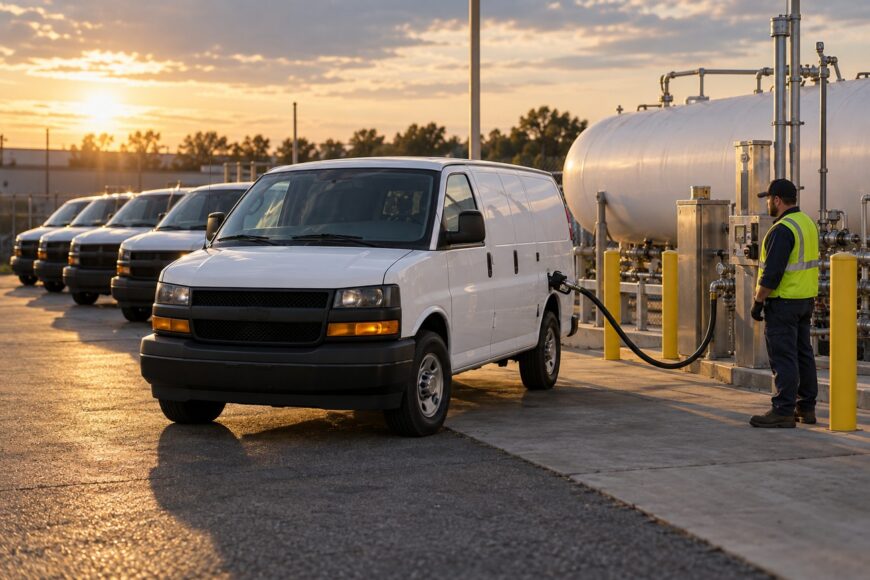
Running a Chevrolet Express on propane can reduce fuel costs, but the conversion adds equipment, infrastructure, planning, and maintenance work. The fuel may be cheaper at the pump, yet propane contains less energy per gallon, and the van may need a larger or more carefully managed fuel supply to cover the same routes.
The answer depends mainly on annual mileage, local propane pricing, access to reliable fueling, and whether the van belongs to a private owner or a depot-based fleet. A high-mileage Express that returns to a company tank every night is a different financial proposition from a lightly used personal van that depends on retail stations.
There is also a technical distinction that sales material sometimes blurs. An OEM-optimized propane engine can use the fuel’s high octane more effectively, while an aftermarket conversion of a gasoline Express depends on the kit, calibration, PCM compatibility, installation quality, and service support. Those differences determine whether the project delivers predictable savings or becomes an expensive drivability experiment.
- The Short Answer: When Propane Makes Sense for a Chevy Express
- Fuel Economy and Performance: What Changes on Propane
- Conversion Cost, Fuel Savings, and Payback
- Why Fleet Depot Fueling Changes the Math
- Choosing and Installing a Chevy Express Propane System
- The Hidden Costs: Range, Safety, Maintenance, and Service
- Chevy Express Propane vs. Gasoline: Which Ownership Scenario Wins?
- Frequently asked questions
- Which Chevy Express model years should you avoid?
- How long will a 500-gallon propane tank last?
- Which is better for a van: a propane heater or a diesel heater?
The Short Answer: When Propane Makes Sense for a Chevy Express
Propane makes the strongest case for Chevrolet Express 2500 and 3500 vans that accumulate steady mileage on predictable routes and refuel at an owned or corporate depot. Conversion companies list these platforms as propane or autogas candidates, and some suppliers also list the Express Cutaway 3500 and 4500. The platform may be suitable, but suitability alone does not make the economics work.
A fleet can spread infrastructure, training, and service costs across several vehicles. Drivers return to the same fueling point, dispatchers can plan around a known fuel supply, and maintenance staff can monitor one system across multiple vans. That operating pattern removes much of the inconvenience that private owners experience when they must search for stations or arrange cylinder swaps.
The case is weaker for a low-mileage private van. A conversion can cost thousands of dollars before the first gallon of propane is used, and retail fueling may erase part of the price advantage. If the Express covers short trips, sits for long periods, or changes routes frequently, the owner may never buy enough fuel to recover the installation cost.
Engine design matters as much as fuel price. AFDC describes potential efficiency or performance benefits for engines optimized around propane’s properties. That evidence should not be converted into a promise that every aftermarket Express conversion will retain identical power, improve acceleration, or deliver the same range as gasoline.
Fuel Economy and Performance: What Changes on Propane

Propane contains 27% less energy per gallon than gasoline, according to AFDC. That difference means a propane-powered van generally consumes more fuel by volume for comparable work. A lower pump price can still produce a saving, but the calculation must use energy-adjusted consumption rather than simply comparing the displayed price for one gallon of each fuel.
Propane’s advantage is its high octane rating. AFDC lists propane at 104–112 octane, compared with 87–92 for gasoline. An engine designed to exploit that resistance to knock can use ignition timing or compression strategies that improve efficiency or performance. A gasoline engine converted with a general-purpose system may capture only part of that potential.
Real-world results depend on the vaporizer or regulator, injectors, controls, fuel mapping, and the original powertrain electronics. PCM compatibility is particularly important on an Express because poor communication between the conversion controls and the factory system can produce unstable idle, warning lights, weak drivability, or difficult troubleshooting. A claim of “no loss in horsepower” is therefore a system-specific claim, not a universal property of propane.
Propane can avoid many cold-start problems associated with diesel, which may help vehicles operating in cold conditions. That advantage does not eliminate all winter considerations: fuel-system condition, battery health, calibration, vaporization, and the quality of the installation still affect starting and operation. Range may also decline if the tank and system design do not provide enough usable fuel to offset propane’s lower energy per gallon.
Conversion Cost, Fuel Savings, and Payback
Professional fleet materials commonly place a light-vehicle propane conversion at $3,000–$10,000. That range is a planning reference, not a quote for every Chevrolet Express. A cheap kit advertised for an older GM V8 is not equivalent to a complete, documented installation on a specific Express with emissions and electronic-control requirements.
The complete project may include the conversion kit, tank, fuel lines, injectors, controls, installation, calibration, certification, and documentation. Depending on the operating model, it may also require a storage tank, site preparation, safety controls, training, and changes to the fueling procedure. Leaving these items out creates an artificially short payback period.
A useful calculation starts with actual annual miles and the van’s measured gasoline consumption. Estimate propane consumption using the energy difference, then apply local propane pricing and include any loss of range or additional fueling time. Subtract the expected propane operating cost from the gasoline baseline, and compare the result with the full installed project cost rather than the kit price.
Fuel-price stability can matter alongside the nominal per-gallon saving. A fleet that buys propane under a predictable supply arrangement may budget more accurately and reduce exposure to retail station availability. For a private owner, that benefit may disappear if the nearest suitable station is inconvenient, closes unexpectedly, or charges a premium.
Payback must be calculated from the vehicle’s actual use. A lightly used van may need too many years to recover the conversion, while a heavily utilized van can justify the project even if propane consumption is higher by volume. The right comparison includes fuel, financing, maintenance, infrastructure, downtime, and the residual value of a specialized conversion.
Why Fleet Depot Fueling Changes the Math
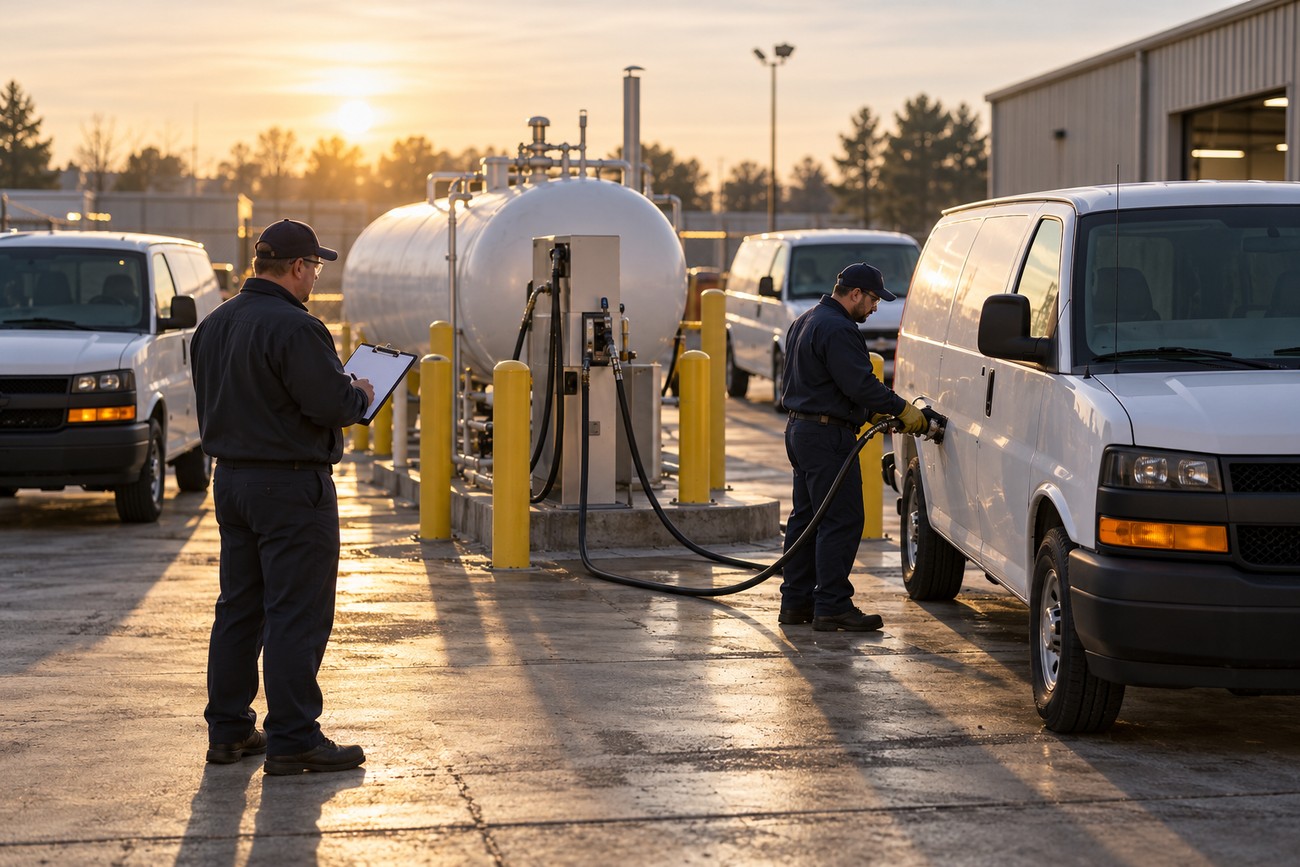
Depot fueling changes the project from an individual vehicle modification into an operating system. Routes can be assigned around a known fuel point, drivers do not need to search for public propane, and a company can standardize inspections and refueling procedures. Those benefits are especially relevant to Express vans that return to base after each shift.
A cited fleet case involving 10 Chevrolet Express 2500 and 3500 vans reported about $10,000 in savings in less than one year. The vehicles traveled approximately 12,000–15,000 miles per year each, and the case reported payback in less than three years. This is useful evidence of what a suitable fleet arrangement can achieve, not a guaranteed result for every Express owner.
The result includes assumptions that may be invisible in a simple fuel-price comparison. The fleet had enough utilization to consume substantial fuel, a centralized operating pattern, and the ability to manage fueling and training across multiple vehicles. An individual owner with one van may face the same tank and installation costs without the same fuel volume to spread them across.
A dedicated or corporate propane tank also reduces station-searching and makes fuel planning more predictable. It introduces capital spending and compliance responsibilities, however. The business case is strongest when the depot already has suitable infrastructure or when several vehicles can use the investment over time.
Choosing and Installing a Chevy Express Propane System
Start with the exact van, not the model name alone. Express 2500 and 3500 applications are commonly identified by conversion companies, while some providers also list Express Cutaway 3500 and 4500. The engine, model year, emissions configuration, transmission controls, and intended vehicle use still need to match the proposed system.
Ask for written compatibility information covering the engine, PCM, injectors, fuel system, and emissions requirements. Confirm what the installer supplies and what remains the owner’s responsibility. The documentation should identify the tank, lines, controls, calibration procedure, inspection requirements, and any limitations on towing, payload, or service.
Installation quality is more important than a low advertised kit price. A complete installation may require a tank, fuel lines, injectors, controls, calibration, certification, and documentation. The installer should also be able to diagnose the system after delivery, because a van that runs acceptably on the first day may develop fuel-trim, idle, or warning-light problems if the calibration is marginal.
Forum and operator experience commonly favors factory systems because the engine, controls, emissions equipment, and service documentation were developed as one package. Aftermarket systems can work well with the right application and installer, but they can be harder to tune and less reliable when the provider lacks model-specific experience. Ask who will support the van after installation, not only who can mount the tank.
The Hidden Costs: Range, Safety, Maintenance, and Service
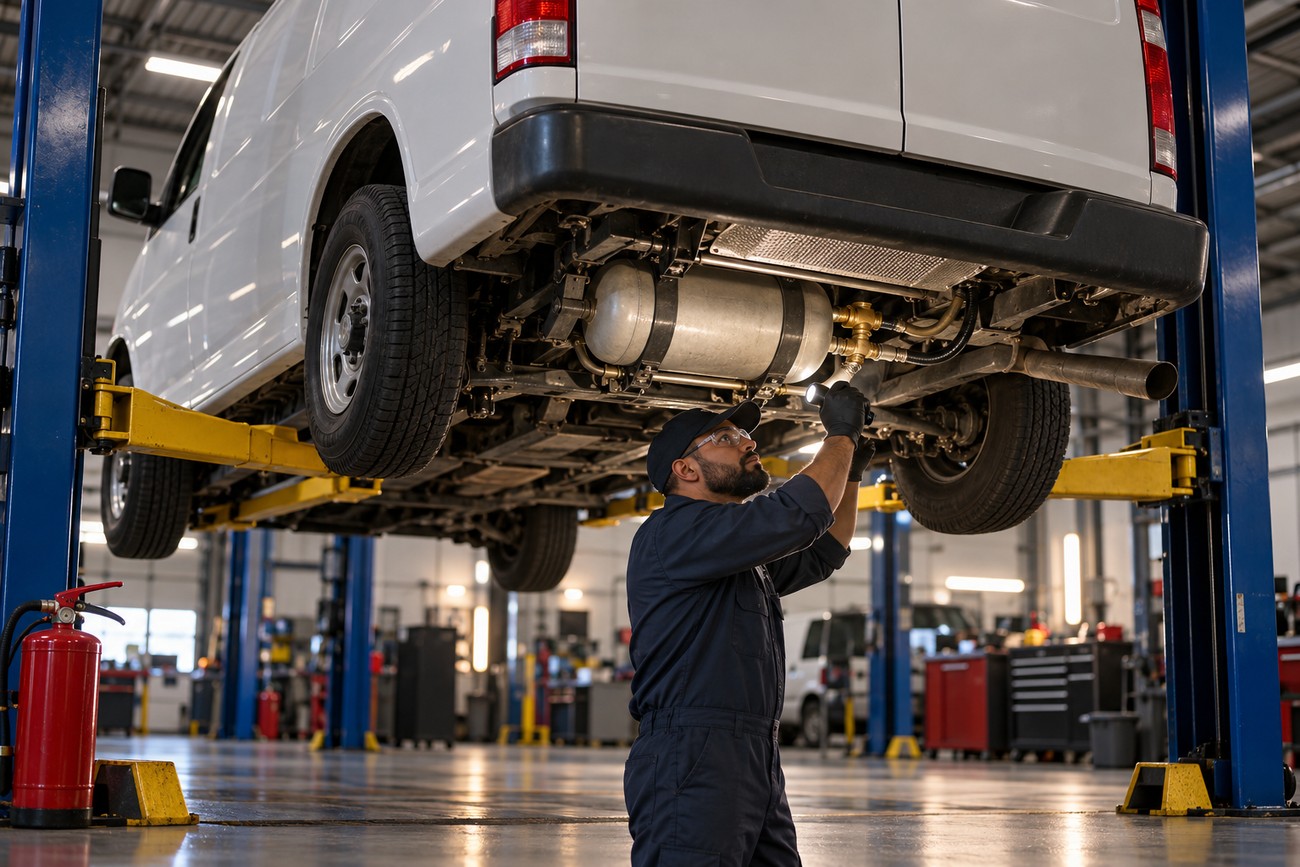
Range is the first operational cost that fuel-price comparisons tend to omit. Since propane has 27% less energy per gallon than gasoline, fuel economy and usable range can be worse by volume, depending on tank capacity and system design. A route that is easy on gasoline may require more frequent refueling on propane, particularly under heavy payload, towing, or stop-and-go conditions.
Public station access is another constraint. Propane availability varies by location, operating hours, dispenser type, and whether the site serves vehicles rather than portable cylinders. A company tank solves much of that problem, but the tank and site can require capital spending, safety controls, inspections, and staff training.
Propane adds a separate layer of leak prevention and fuel-system management. Valves, connections, lines, tank condition, and refueling procedures require appropriate inspection. Drivers and maintenance personnel need clear instructions for safe refueling, recognizing abnormal odors or system behavior, reporting damage, and keeping unqualified people away from service work.
Service access can decide whether a conversion remains economical. Not every repair facility is equipped or willing to troubleshoot LPG calibration, PCM interaction, or propane-specific components. Before converting, identify a shop that can perform diagnosis and calibration locally; otherwise, a minor drivability problem may become a long-distance recovery or an extended period of downtime.
Some users perceive heat from LP systems as warmer or more humid and less comfortable during long winter trips. That is an operating complaint rather than a universal engineering result, and the effect depends on the heater and installation. Winter planning should still consider ventilation, moisture control, defrost performance, fuel availability, and the time the van spends occupied while stationary.
Chevy Express Propane vs. Gasoline: Which Ownership Scenario Wins?
The operating pattern usually matters more than the fuel label. The following comparison separates the main ownership cases without assuming a universal fuel price, mileage threshold, or payback period.
| Ownership scenario | Economics | Infrastructure and fueling | Range and service | Overall operating risk |
|---|---|---|---|---|
| Low-mileage private owner | Weak payback case because annual fuel use may be too low to recover the full conversion cost. | Usually dependent on retail stations; no dedicated tank means more planning and less control over availability. | Potentially lower range by volume, with specialized service harder to justify for one vehicle. | High financial risk if the van is sold early or develops calibration problems. |
| High-mileage private owner with convenient fueling | Can be viable if local propane pricing and annual use produce meaningful operating savings after energy-adjusted consumption. | Convenient access improves the case, but the owner still carries the full conversion and maintenance burden. | Route planning must account for range and station reliability; local LPG-capable service is important. | Moderate risk, depending heavily on installer quality and fuel access. |
| Commercial fleet with depot fueling | Generally the strongest case because high utilization spreads conversion and infrastructure costs across predictable operations. | Corporate tank, standardized procedures, driver training, and scheduled refueling reduce daily disruption. | Routes can be planned around the depot, while fleet maintenance can standardize LPG inspection and diagnosis. | Lower operational uncertainty when the system is properly documented and supported, though safety and infrastructure duties remain. |
The private owner with convenient fueling still needs to compare the conversion with simply continuing on gasoline. Fuel savings must cover the installed system, any service premium, and the value of time spent managing a less common fuel. A van that travels widely may lose the convenience advantage even if its home station is close.
The fleet case benefits from consistency. A depot can track consumption, keep trained personnel, schedule inspections, and identify a failing component across several vans before it causes repeated roadside problems. The same controls are possible for one vehicle, but their cost is harder to distribute.
OEM-optimized propane systems should also be evaluated separately from aftermarket conversions. The decision must include conversion cost, infrastructure, service access, range, safety procedures, and fuel-price stability. A favorable spreadsheet result is incomplete if the van cannot be repaired locally or cannot complete its normal route without extra fueling.
Frequently asked questions
These questions address purchase and operating decisions that cannot be answered by a single fuel-saving figure. The exact engine, system documentation, fuel demand, and local support remain decisive.
Which Chevy Express model years should you avoid?
There is no universal Chevy Express model year that should be avoided solely because it is being considered for propane. Judge a used van by its exact engine, model year, conversion documentation, emissions compliance, maintenance history, and access to a qualified local service provider.
Inspect the tank, valves, lines, injectors, controls, and mounting hardware, and request records showing calibration and certification work. A newer van with an undocumented or poorly supported conversion can be a worse purchase than an older van with a properly installed, well-maintained system. If the seller cannot identify the installer or provide system documentation, price the vehicle as a specialized risk rather than assuming the conversion adds value.
How long will a 500-gallon propane tank last?
A 500-gallon tank does not establish a reliable number of days by itself. Duration depends on the vehicle’s propane consumption, annual and daily mileage, payload, route conditions, refueling reserve, and any other equipment connected to the tank, such as building or heating loads.
Estimate duration from measured fuel use: determine how much propane the van consumes over a representative route, establish the usable amount available under the site’s operating rules, and divide the usable amount by the van’s consumption. A fleet with several Express vans will consume the supply far faster than a single lightly used van, while winter driving, towing, and idling can materially change the result.
Which is better for a van: a propane heater or a diesel heater?
The better heater depends on fuel access, installation constraints, ventilation, winter use, and comfort priorities. A propane heater may fit a van already equipped with a well-managed propane supply, while a diesel heater can be attractive when the vehicle has dependable diesel access and the installation can safely use the vehicle’s fuel system.
Compare tank placement, exhaust routing, combustion-air requirements, service access, and protection from leaks or fuel contamination. Some users perceive LP heat as warmer or more humid during long winter trips, so moisture and ventilation deserve practical testing rather than assumptions. The heater should be selected as part of the complete fuel and living-space design, not only by the price of the fuel.







