
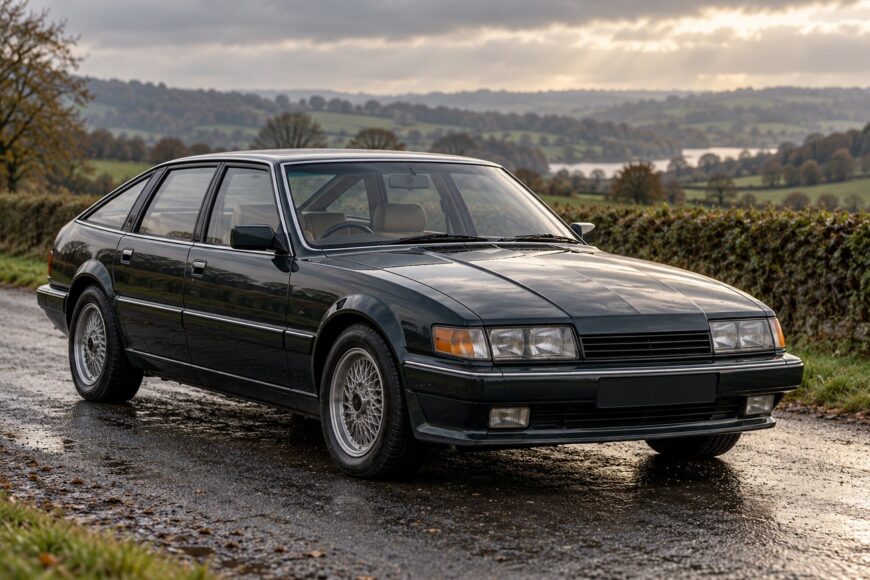
The Rover SD1 Vitesse can produce a double take from across a parking lot: a large British hatchback with the low, wedge-shaped face and long shoulder line associated with the Ferrari Daytona. That visual resemblance is real enough to explain the nickname, yet the car underneath is a very different proposition. It is a front-engine, rear-wheel-drive five-door hatchback, built for broad usefulness rather than exotic theater.
The Vitesse has genuine performance credibility, supported by a stronger V8, sportier suspension, and a successful touring-car record. It is also an aging British classic with corrosion risks, fragile trim, complicated recommissioning work, and inconsistent specifications. Condition, market, and exact version matter more than the badge or a headline horsepower figure.
- Why the Rover SD1 Looked Like a Ferrari
- SD1 and Vitesse: The Numbers That Vary
- What Made the Vitesse More Than a Badge
- The Police-Car Reputation Needs a Market and Year Attached
- The Ownership Reality Behind the Ferrari Looks
- The Buying Mistakes That Turn a Vitesse Into a Project
- Rover SD1 Vitesse Myths, Tested Against Reality
- Frequently asked questions
- What was the top speed of a Rover SD1 Vitesse?
- Why is the Rover SD1 called a poor man’s Ferrari?
- How many Rover SD1 Vitesse cars were made?
Why the Rover SD1 Looked Like a Ferrari
The SD1’s shape was unusually dramatic for a mass-market Rover. Its low wedge-shaped nose, lack of a conventional grille, and long beltline gave the car a clean, forward-moving profile. The five-door hatchback body added practical volume behind that sleek front section, creating a combination that looked more exotic than its engineering brief suggested.
That profile invited comparisons with the Ferrari Daytona, especially from the front three-quarter angle. The comparison concerned visual language rather than construction or intent. The SD1 was larger and more practical, with a front-engine, rear-wheel-drive layout and a rear hatch, while the Ferrari was an entirely different class of performance car.
Design references associated with the SD1 include the Ferrari Daytona and the Pininfarina/BMC 1800 influence. Those references help explain the car’s proportions without turning it into a direct Ferrari copy. The resemblance came from shared themes—wedge geometry, a low nose, and a strong horizontal shoulder line—rather than copied mechanical or body engineering.
This distinction matters when buying one today. The SD1’s shape creates expectations of lightness and delicacy, but the car is a substantial family and executive machine. Its visual drama belongs to the design; its size, weight, and practical hatchback architecture belong to a very different brief.
SD1 and Vitesse: The Numbers That Vary
Published specifications vary by market, year, and source, so the figures below should be treated as a careful comparison rather than a single universal specification.
| Specification | Regular V8 SD1 | Rover SD1 Vitesse |
|---|---|---|
| Engine | 3,528 cm³ V8 | 3,528 cm³ V8, with output reported as 190, 192, or 193 hp |
| Power and torque | One cited specification: 157 hp and 274 Nm | Power reported in the 190–193 hp range; torque figures vary by source |
| Performance claim | One cited specification: 203 km/h and 8.6 seconds to 100 km/h | 0–100 km/h claims vary from 7.1 to 8.6 seconds, depending on version and condition |
| Transmission | Five-speed manual and three-speed automatic were available within the SD1 range | Market and year specification must be confirmed on the individual car |
| Suspension | Standard SD1 setup | Sports suspension |
| Aerodynamics | Standard body treatment | Aerodynamic package |
| Dimensions | Approximately 4.69–4.73 m long, with a 2.815–2.820 m wheelbase and approximately 1.77 m width | |
| Reported weight | Approximately 1,372–1,500 kg, depending on specification and source | |
The figures show why simple brochure comparisons can mislead. A regular V8 specification is cited at 157 hp, 274 Nm, 203 km/h, and 8.6 seconds to 100 km/h, while Vitesse power is reported as 190, 192, or 193 hp. Acceleration claims for the broader range run from 7.1 to 8.6 seconds, a spread large enough to reflect specification, test method, and mechanical condition.
The dimensions also explain the car’s road manners. At approximately 4.69–4.73 m long and around 1.77 m wide, the SD1 is not a compact sports hatchback. The reported weight range of approximately 1,372–1,500 kg reinforces the point: the Vitesse gains urgency from its engine and chassis work, but it does not shed the mass of the underlying car.
What Made the Vitesse More Than a Badge
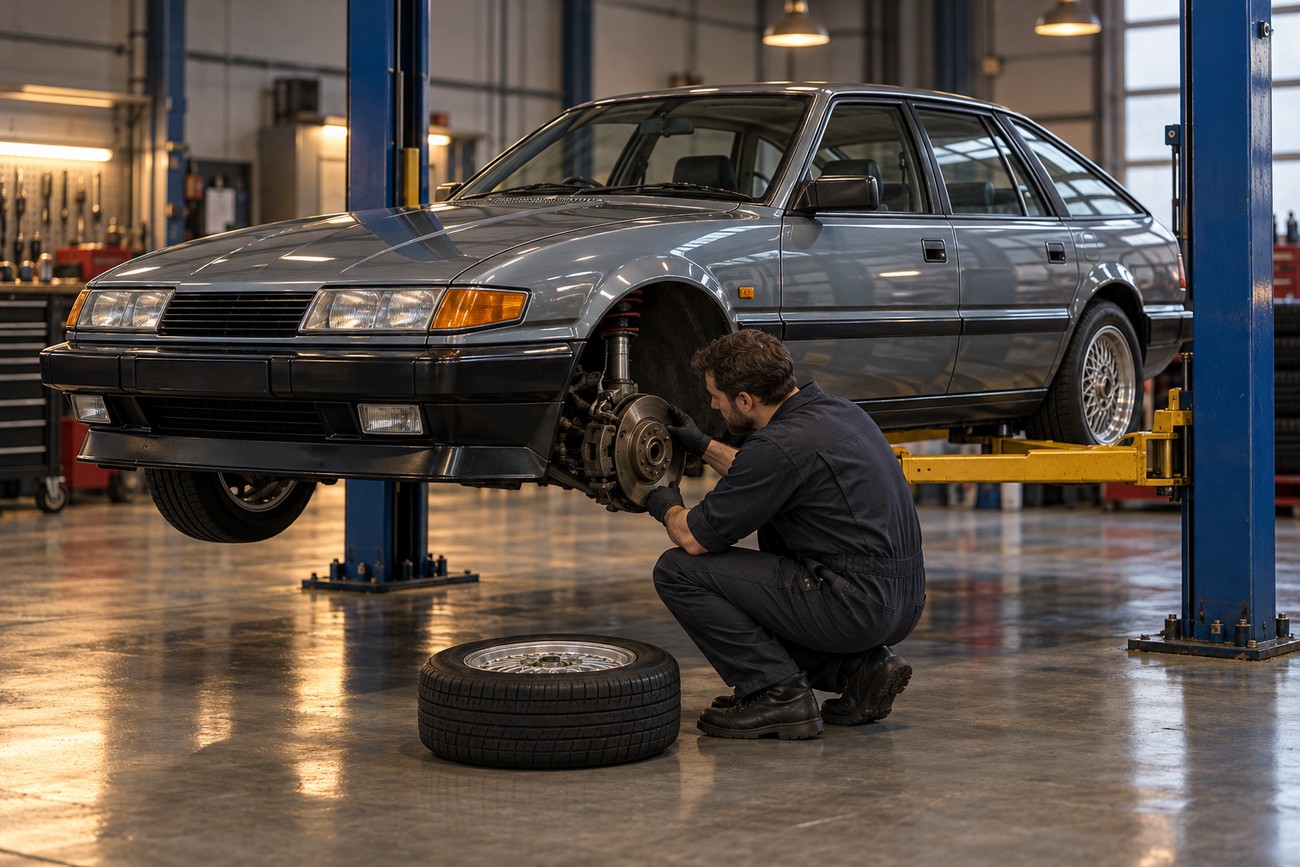
The Vitesse formula involved more than fitting a larger-output V8 badge to an ordinary SD1. Its reported 190–193 hp output was part of a wider package that included sports suspension and an aerodynamic treatment. Those changes were intended to make the car more controlled and purposeful when driven hard.
Tyres and brakes matter just as much as the engine figures. They influence how confidently the car can use its power, how it settles after a direction change, and how much effort the driver needs when the pace rises. A Vitesse with tired dampers, unsuitable tyres, or neglected brakes can feel closer to an old standard SD1 than to the sharper version described in period material.
The competition record strengthened the Vitesse’s reputation. Rover Vitesse cars recorded a RAC Tourist Trophy victory in 1983, a BTCC victory in 1984, and wins in European touring-car series. Those achievements do not mean a road Vitesse had racing specifications, but they gave the model a credible sporting identity beyond its styling.
For a buyer, the useful lesson is restraint. Motorsport success confirms that the platform could be developed into a competitive touring car; it does not guarantee that a surviving road car retains the same discipline. The condition of its suspension, brakes, tyres, and engine management determines what you actually experience.
The Police-Car Reputation Needs a Market and Year Attached
The SD1’s police-car image is powerful, particularly in markets where the model was used for patrol, traffic, or highway work. That association helped establish the car as a fast, capable British machine, but the SD1 was designed as a universal mass-market model rather than exclusively as a police special.
Police use and Vitesse status are separate facts. A car may have a police connection without being a Vitesse, while a Vitesse’s sporting specification should be verified through its equipment and documentation rather than inferred from a story about previous service.
The reputation also changes with market and year. UK-spec and EU-spec cars could differ in details, and equipment that appears familiar in one country may not identify the same version elsewhere. A seller’s description using “police,” “V8,” or “Vitesse” is a starting point for research, not proof of identity.
Check the market specification, engine configuration, transmission, suspension, aerodynamic parts, and available history together. That approach is slower than accepting the legend, but it prevents you from paying a Vitesse premium for an ordinary SD1 carrying a dramatic backstory.
The Ownership Reality Behind the Ferrari Looks
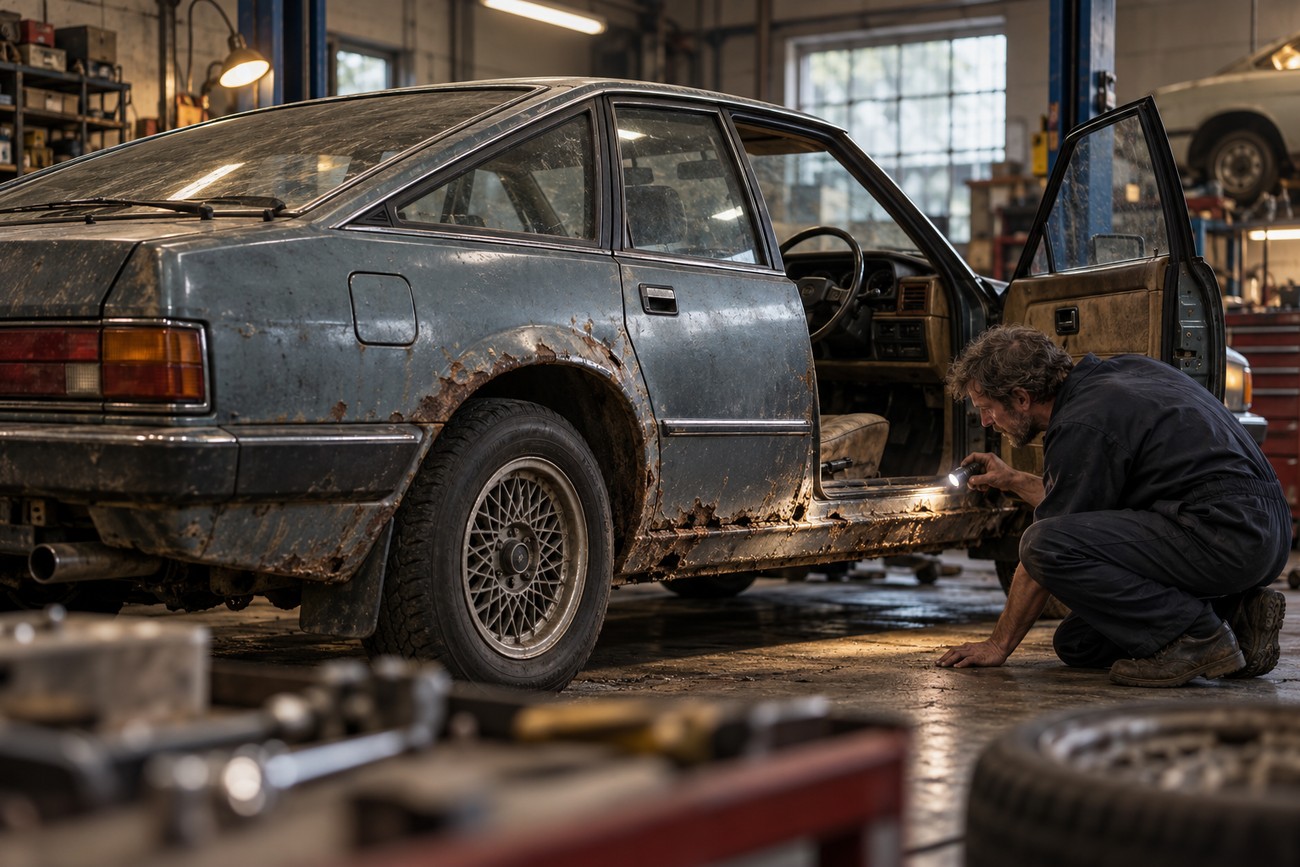
Photographs flatter the SD1. The wedge profile and large glass area can make a tired car appear purposeful, while corrosion, poor repairs, and aging panels remain hidden at the edges of the image. Interior plastics and trim can look especially disappointing in person, because brittle surfaces and worn finishes undermine the impression created by the exterior.
Corrosion is the financial problem to establish first. Long-term neglect can affect the body, floor, and structural areas, turning what appears to be a running classic into a lengthy restoration. Good, mechanically sound examples are difficult to find, so an attractive purchase price may simply transfer the cost of bodywork to the new owner.
The SD1’s most expensive faults are often visible only after the car is raised and the trim is inspected. Establishing the condition of the shell and floor before proving the V8’s advertised output usually gives the clearest picture of the real project.
The 3,528 cm³ V8 also needs disciplined maintenance. Its fuel or injection system, tuning, and ignition components are sensitive to age and neglect, particularly when a car has been stored or repeatedly recommissioned without a systematic approach. An injected V8 may look preferable on paper while demanding more careful diagnosis when its old fuel and ignition systems are no longer operating as intended.
Driving expectations need similar adjustment. The SD1 is a large, comparatively heavy 1980s car that can feel cumbersome in town, especially beside modern hot sedans. The Vitesse has period sporting character and stronger performance, but it does not provide the compact responses, refinement, or electronic assistance of a current performance car.
Originality adds another hidden cost. Returning a modified or incomplete car to the correct market specification can require scarce trim, correct aerodynamic parts, appropriate wheels, and period-correct mechanical details. Making the car run is one budget; restoring what the car is supposed to be is another.
The Buying Mistakes That Turn a Vitesse Into a Project
Start with the shell, not the engine note. Inspect the body, floor, jacking points, and structural areas carefully, preferably with the car raised and with enough access to distinguish surface corrosion from deeper damage. A polished exterior and freshly cleaned engine bay do not establish the condition of the car underneath.
Next, verify the version. A standard SD1 and a Vitesse should not be treated as mechanically or dynamically identical, even when both carry a V8. Check the suspension, brakes, tyres, aerodynamic equipment, interior details, engine specification, and market documentation rather than relying on a badge or a seller’s memory.
Identify the exact V8 and its fuel system. Carbureted and injected versions differ in throttle response, torque delivery, and maintenance demands, while an old injection system can require careful fault-finding before the engine delivers its intended performance. Confirm cold starting, hot restarting, idle quality, charging, ignition behavior, and evidence of regular servicing.
Published performance figures should remain background information. Claims of 0–100 km/h in 7.1 to 8.6 seconds vary with version and condition, so they tell you little about a particular car unless the engine, transmission, tyres, brakes, and suspension are all healthy. A slower but solid car can be a better purchase than a supposedly rapid example with structural corrosion.
Finally, price the help available in your area. The SD1 is an age-sensitive British project, and scarce good parts, incomplete history, and limited specialist knowledge can extend a repair far beyond the initial estimate. Include originality in the inspection: a car that runs may still need substantial work before it becomes a correct Vitesse.
Rover SD1 Vitesse Myths, Tested Against Reality
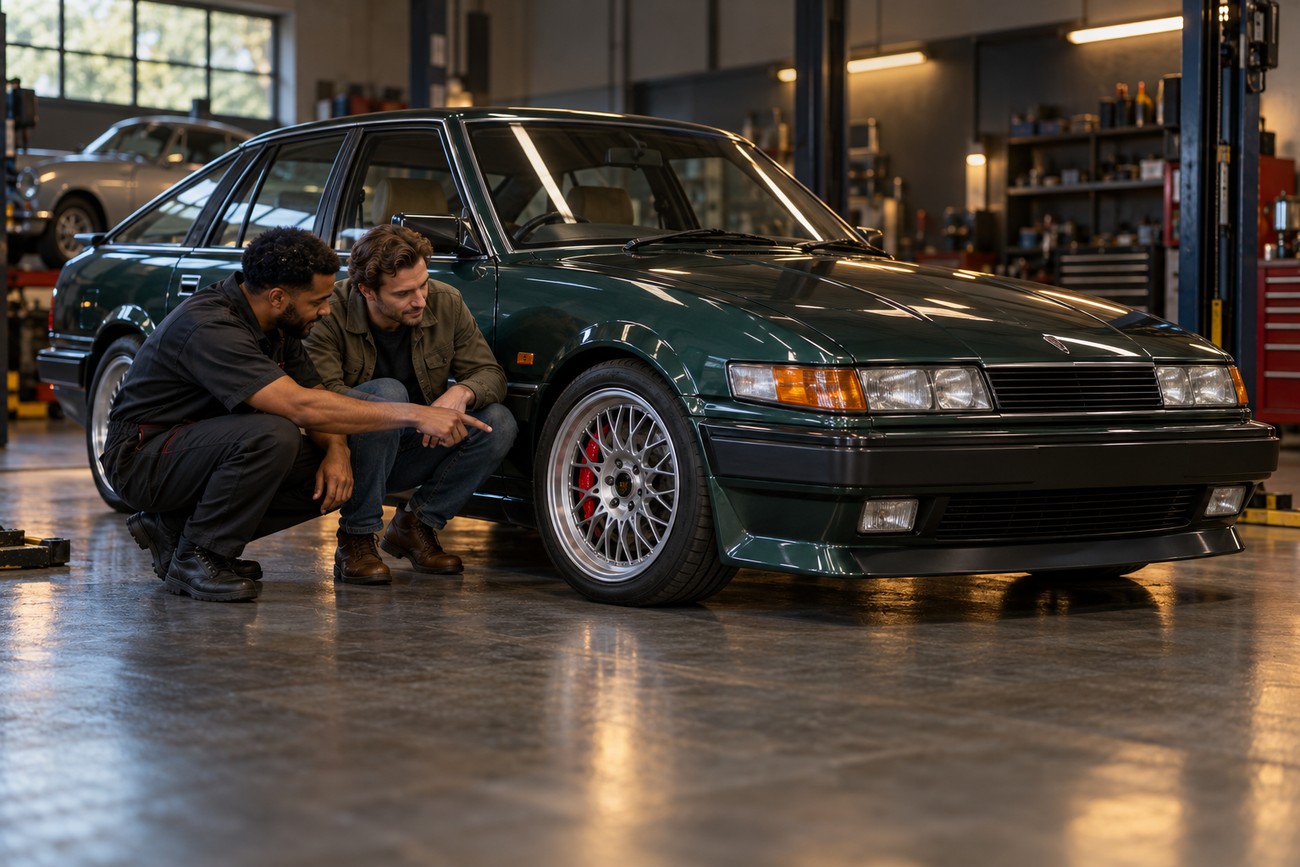
The “poor man’s Ferrari” label is useful only as a styling shortcut. The SD1 shares visual cues with the based on observations from specialists with hands-on experience, greater mass, and practical purpose place it in a different category. It offers an affordable way to enjoy dramatic 1970s design language, not Ferrari engineering or an exotic ownership experience.
The idea that every Vitesse has exactly 193 hp is also too precise. Sources report 190, 192, or 193 hp, and performance claims vary from 7.1 to 8.6 seconds to 100 km/h. Those differences reflect market specification, test conditions, and the state of individual surviving cars.
Calling the SD1 a rare sports sedan misses its basic identity. It was primarily a series-production Rover, built as a versatile five-door hatchback, with the Vitesse representing the sportier version. Its competition record gave the Vitesse genuine credibility, but it did not turn every SD1 into a racing-derived special.
The shape can also encourage a false impression of compactness. With a reported length of approximately 4.69–4.73 m, a wheelbase of approximately 2.815–2.820 m, and a reported weight range of approximately 1,372–1,500 kg, the SD1 is a substantial car. Its dramatic nose may look light, but its town manners and parking requirements reveal the scale quickly.
Frequently asked questions
What was the top speed of a Rover SD1 Vitesse?
The supplied evidence does not establish one dependable top-speed figure for every Rover SD1 Vitesse. The 203 km/h figure belongs to one cited regular V8 specification, so it should not automatically be presented as the universal Vitesse rating.
Market specification, transmission, testing method, and mechanical condition all affect published results. For a surviving car, the health of the V8, fuel or injection system, ignition, gearing, tyres, and aerodynamics matters more than selecting one disputed catalogue number.
Why is the Rover SD1 called a poor man’s Ferrari?
The nickname comes mainly from the SD1’s visual resemblance to the Ferrari Daytona: its wedge-shaped nose, grille-less front treatment, and long shoulder line create a similar impression from certain angles. It is an informal styling comparison rather than a claim about Ferrari engineering or construction.
The SD1 remained a practical, front-engine, rear-wheel-drive five-door hatchback with a different purpose, scale, and mass. Its appeal lies in delivering dramatic design and V8 character through a mainstream British car, not in recreating the Ferrari driving experience.
How many Rover SD1 Vitesse cars were made?
A reliable total number of Vitesse cars is not established in the supplied evidence. It would be unsafe to invent one because production totals can depend on the market, model year, and the way different specifications were counted.
Use a market- and year-specific production source if an exact figure is essential. For buying purposes, documented identity, structural condition, originality, and mechanical health are more useful than an unsupported production total.







