
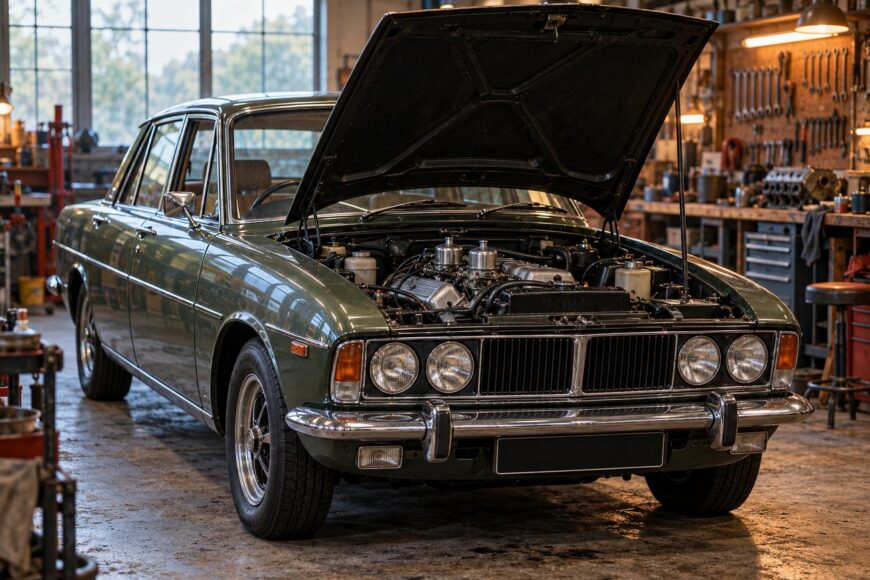
The Rover P6 3500 presents a compelling contradiction: it is an advanced, relatively light V8 sedan whose hidden structural and mechanical faults can outweigh a polished exterior. In period form, its 3528 cc aluminum OHV V8, De Dion rear suspension, and carefully packaged saloon body gave it an unusual mixture of refinement, pace, and technical ambition. The car weighed approximately 1300–1304 kg, a useful figure for a large executive sedan of the 1960s.
Its unusual body construction adds another layer to the buying decision. The steel central structure carries the load, while the outer panels bolt on and can be replaced comparatively easily. That arrangement can make cosmetic restoration more manageable, although it does nothing to protect the frame, sills, floor, or suspension mounts from corrosion. Early cars also relied on a three-speed automatic, while the later 3500S brought a four-speed manual and sharper driver control.
The engineering still has value today, provided you judge the car as a complete system rather than as a handsome classic with a V8 badge. The central structure, cooling system, engine history, and transmission deserve more attention than rare trim or fresh paint. A sound P6 3500 remains distinctive; a neglected one can turn sophisticated engineering into an expensive ownership problem.
- Why the Rover P6 3500 Still Feels Ahead of Its Time
- The Engineering: A Clever Chassis with Real Compromises
- V8 Performance: Automatic Ease vs 3500S Control
- The Faults Owners Discover After the Shine Wears Off
- How to Inspect and Buy a P6 3500
- Myths, Value, and the Verdict
- Frequently asked questions
- What does the S in Rover 3500S mean?
- What is the top speed of a Rover P6 3500 V8?
- How much is a Rover P6 3500 worth today?
Why the Rover P6 3500 Still Feels Ahead of Its Time
The P6 3500 was significant because it treated a family-sized executive sedan as an engineering project rather than simply a larger version of an ordinary car. Its 3528 cc aluminum OHV V8 with twin SU carburetors supplied strong torque without imposing the mass associated with many contemporary iron V8s. That helped the Rover feel responsive while retaining the quiet, composed character expected of a long-distance saloon.
The approximately 1300–1304 kg curb weight also explains much of its period performance. The automatic version could reach 60 mph in approximately 9.5–10.5 seconds, a serious result for a four-door car of its era. The figures matter less than the way the engine delivered them: the V8’s torque allowed relaxed progress, with little need for constant high-revving or frantic gear changes.
Packaging was equally deliberate. The P6 used a steel central structural frame with bolted outer body panels, leaving the cabin and exterior styling clean and restrained while allowing damaged panels to be removed independently. That concept was ambitious for a 1960s sedan, although its benefits are often misunderstood today. A replaceable fender can simplify bodywork; it cannot make a corroded load-bearing frame safe.
The Engineering: A Clever Chassis with Real Compromises
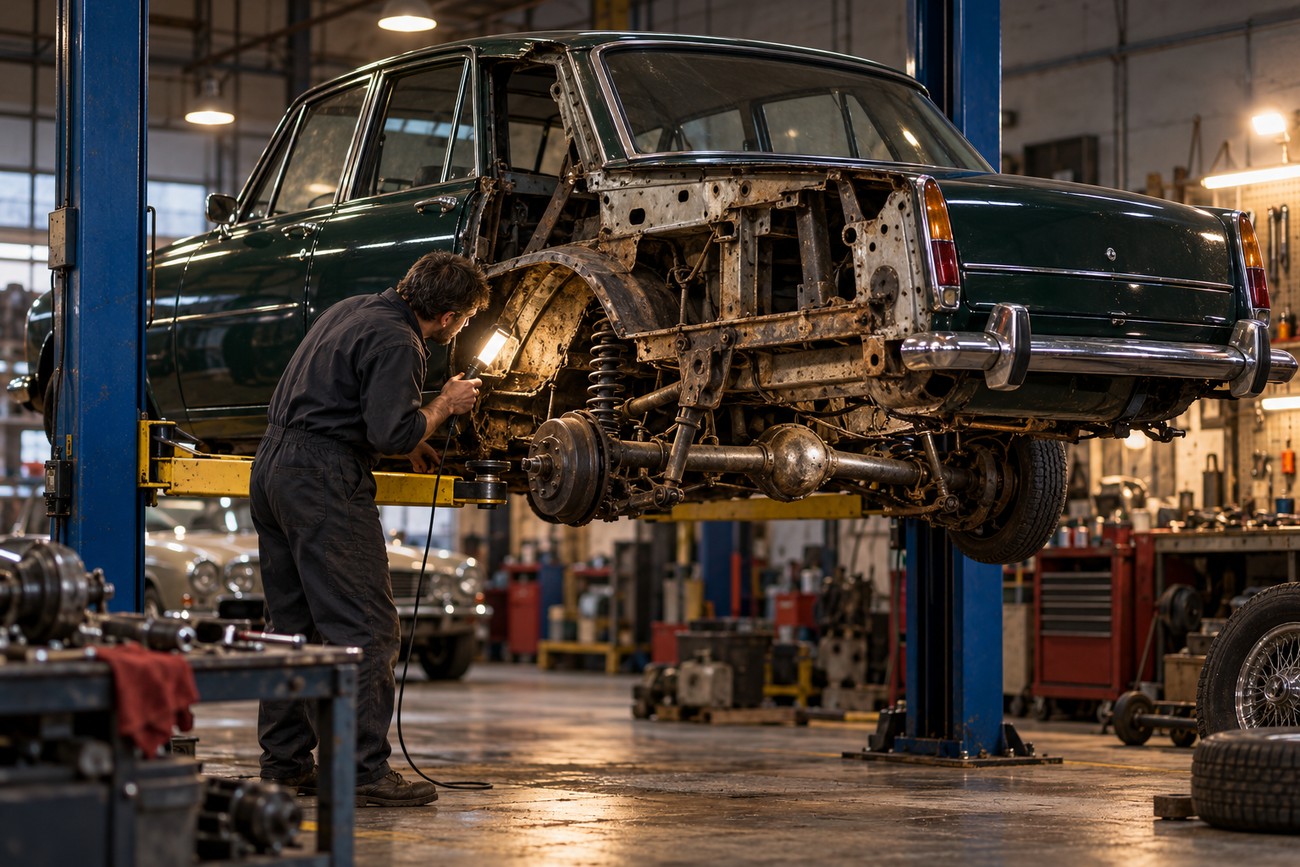
The P6’s central structure carries the important loads, while the outer panels provide the visible shell. This separates cosmetic work from some structural repairs and gives the car its distinctive engineering identity. It also creates a trap for buyers: a straight, shiny body can conceal corrosion in the steel framework underneath.
Independent front suspension and a De Dion rear layout gave the Rover a sophisticated road manner. The rear arrangement controls wheel geometry while keeping much of the final-drive mass away from the wheels, reducing unstrung weight and helping the car remain composed over uneven surfaces. The result is a sedan that can feel more deliberate and balanced than its upright shape suggests.
The rear disc brakes are mounted inboard at the differential rather than at the wheels. This reduces unstrung mass, yet it makes inspection, pad replacement, and general servicing less convenient than with conventional wheel-mounted rear brakes. Access matters on an older car because a theoretically excellent design can become costly when routine work has been postponed for years.
Corrosion in the hidden structure is therefore more serious than a poor door skin or tired fender. Previous repairs also deserve close attention: thick filler, poorly aligned replacement panels, and fresh underseal can hide damage around load-bearing areas. The P6 rewards careful engineering inspection, while cosmetic enthusiasm alone can lead you toward the wrong car.
V8 Performance: Automatic Ease vs 3500S Control
The Rover V8 produced approximately 202 lb-ft of torque, giving the car its effortless character. Published power figures commonly range from approximately 144 to 150 bhp, while some advertising and sources quote around 160 bhp. These numbers reflect differences in year, market, and measurement method, so they should only be compared when the test basis is the same.
Early Rover 3500s used the three-speed Borg-Warner 35 automatic. It suited smooth urban driving and allowed the V8 to do the work without frequent driver input, yet its limited ratios are evident on modern highways. At higher speeds or on climbs, the engine can feel busy, and the transmission may make the car less relaxed and less economical than its torque suggests.
The 3500S appeared in 1971 with a four-speed manual transmission. The S means Synchromesh, not Sports, although the manual gearbox made the car quicker and more controllable in period use. Published acceleration figures place the automatic at approximately 9.5–10.5 seconds from 0–60 mph and the manual at approximately 9.0–9.1 seconds.
Period fuel figures also need context. An old-cycle test commonly gave approximately 22 mpg for the automatic and 19 mpg for the 3500S. The manual version can feel more engaging, but its lower quoted economy figure reflects the test and specification rather than a universal rule for every surviving car. Gearbox identity, final-drive condition, carburetor tuning, and driving style all affect actual use.
The Faults Owners Discover After the Shine Wears Off
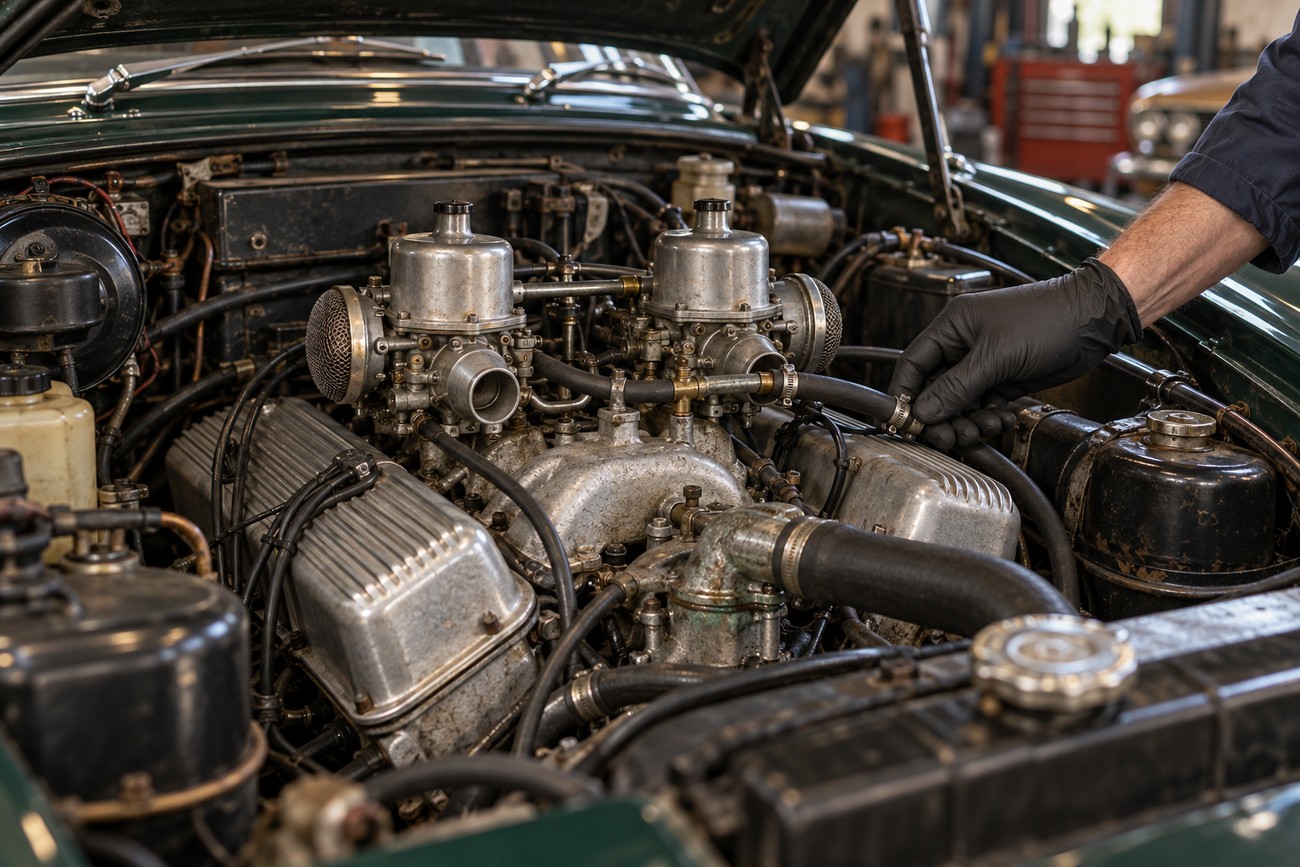
Slow starting after a long period of storage often begins in the fuel system. The mechanical fuel pump may lose valve sealing, allowing fuel to drain back to the tank. Before replacing SU carburetors or changing the ignition system, inspect the fuel line, pump behavior, possible air leaks, and the basic carburetor settings. A simple loss of prime can imitate a much larger tuning problem.
Cooling faults deserve faster attention because a small leak can become an overheated engine. Leaking side core plugs in the block may allow coolant loss, especially after the car has sat unused. Check the cooling system thoroughly before a long trip, including evidence of dried coolant, unstable temperature, and pressure loss. The V8’s reputation for smoothness does not make it tolerant of neglected cooling.
Oil leaks require interpretation rather than automatic dismissal. Early V8s can develop front-main or rear-main sealing problems, and repair may require substantial engine disassembly. A light mist around an old engine may remain manageable for some owners, while an active leak, falling oil level, or contaminated clutch area on a manual car changes the financial calculation significantly.
Oil-change history is equally important even when the engine sounds quiet. Dirty oil can contaminate the hydraulic lifters and accelerate wear in the camshaft, tappets, and rocker gear. The three-speed automatic adds a separate ownership compromise: it can still operate smoothly, yet its dated ratios are noticeable during modern highway driving, particularly on long climbs. These are conditions to assess, not reasons to reject every car.
How to Inspect and Buy a P6 3500
Begin underneath the car, before spending time on paint, chrome, upholstery, or an attractive color. Inspect the steel central structure, sills, floor, and suspension mounting points for corrosion, distortion, crude welding, and concealed repairs. Pay particular attention to areas hidden by underseal or recently applied coatings. The outer panels can be replaced more readily than a damaged load-bearing structure.
Next, assess the engine when fully warm. A quiet V8 is not proof of good health, so measure hot oil pressure and examine the documented oil-change history. Check for coolant loss and inspect the engine’s side core plugs before planning long-distance use. Also look for evidence of persistent main-seal leakage rather than treating every oil mark as a harmless characteristic.
For a delayed start, observe how the fuel system behaves after the car has been parked. Confirm whether the mechanical pump retains fuel, then check for air leaks and basic SU settings before fitting replacement carburetors or ignition components. This sequence avoids turning a drain-back problem into an unnecessary collection of modifications.
Finally, verify the transmission rather than trusting a badge. A genuine 3500S should have the four-speed manual introduced in 1971, and its engine identity and conversion quality should be documented where the car has been altered. Inboard rear brakes also need a realistic service assessment because their position at the differential makes access more difficult. Structural condition and repair quality outweigh rare trim, unusual paint, or abundant brightwork.
Myths, Value, and the Verdict
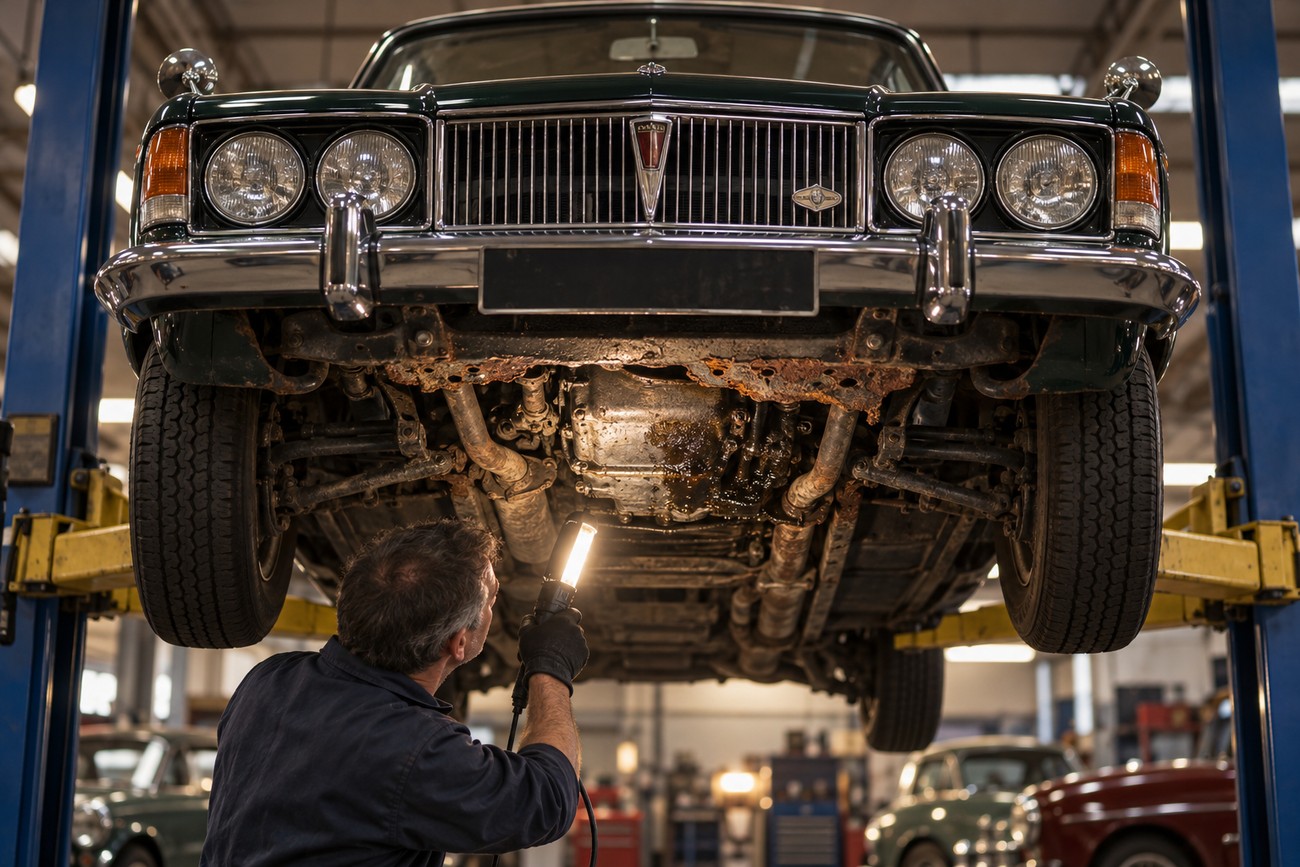
The removable-panel design does not make a P6 immune to rust. It can make some visible body repairs simpler, while corrosion in the central steel structure remains the decisive concern. A buyer who judges the car by straight panels and clean chrome may miss damage that affects safety, alignment, and restoration cost.
A small oil leak also deserves measured diagnosis. It may be minor, although on an early V8 it can involve a front-main or rear-main seal and require major dismantling rather than a simple external gasket replacement. Likewise, the 3500S is faster and more controllable through its manual gearbox, yet the name describes Synchromesh rather than a factory Sports trim.
The P6 3500 was a good car because its engineering ambition produced real benefits in weight, ride, handling, and V8 performance. It remains compelling when the structure, cooling system, engine history, and transmission are verified. Sophistication does not remove age-related ownership costs, so the best example is the structurally honest, properly repaired car rather than the rarest-looking one.
Frequently asked questions
What does the S in Rover 3500S mean?
The S means Synchromesh. It identifies the four-speed manual-transmission version introduced in 1971, rather than a separate factory Sports trim.
The manual gearbox made the 3500S feel quicker and gave the driver more control than the earlier automatic. Its identity should still be confirmed from the transmission and documentation, since badges alone cannot prove that a car is an original 3500S.
What is the top speed of a Rover P6 3500 V8?
Period figures commonly place the Rover P6 3500’s top speed at approximately 115–122 mph. Results vary with gearbox, engine specification, test conditions, market, and the source’s measurement method.
The three-speed automatic and four-speed manual can produce different high-speed impressions even when their quoted maximum speeds are close. A surviving car’s cooling condition, carburetor tune, ignition settings, and drivetrain health also determine whether it can reproduce its original performance.
How much is a Rover P6 3500 worth today?
There is no single defensible value for every P6 3500. Structural integrity, repair quality, drivetrain originality, and documentation should carry more weight than color, interior trim, or the amount of brightwork.
A cosmetically impressive car with corrosion in the central frame can be a poor purchase, while a less glamorous example with sound structure and a documented engine may offer stronger value. Inspection costs are justified because hidden repairs can exceed the difference between apparently similar cars.







