
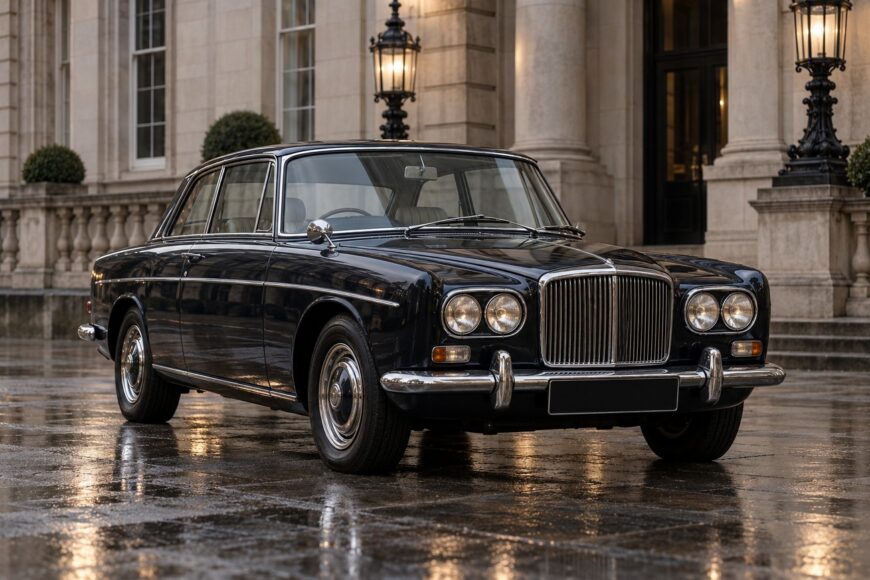
The Rover P5B Coupe carries the image of a British prime minister’s car: restrained, formal, and instantly recognizable. Its reputation becomes less glamorous once ownership begins. Rust hides beneath fresh paint, the V8 can consume fuel at a modern SUV’s rate, braking requires planning, and the electrical system may contain decades of improvised repairs.
That tension defines the P5B today. It has genuine government associations, including use by Harold Wilson, Edward Heath, and Margaret Thatcher in her early years, yet popular retellings often turn a government-fleet car into an exclusive personal limousine. The useful question is whether a particular car remains usable, structurally sound, and properly documented, rather than whether it carries a prestigious story.
- Why the P5B Became a Prime Ministerial Car
- P5B Coupe: What Changed from the Saloon?
- The Engineering Beneath the Executive Image
- The Faults Buyers Miss on a Shiny Example
- Running One Today: Fuel, Comfort, and Sensible Upgrades
- Should You Buy a Rover P5B Coupe?
- Frequently asked questions
- Why is the Rover P5B sometimes called the “poor man’s Rolls-Royce”?
- What matters most when preserving a P5B Coupe?
- What was Queen Elizabeth’s favorite car?
Why the P5B Became a Prime Ministerial Car
Rover produced the P5B Coupe from 1967 to 1973, during a period when formal executive cars were expected to project authority without theatrical display. The P5’s upright proportions, broad glass area, substantial chrome, and quiet road manners suited official work. It looked important outside a government building while remaining more restrained than an overtly chauffeur-focused limousine.
British prime ministers and cabinet members used P5s through government garages, with Harold Wilson, Edward Heath, and Margaret Thatcher in her early years associated with Rover service cars. The model’s appeal came from its presence and familiarity as much as from its engineering. It communicated seniority without requiring the owner to adopt the conspicuous image associated with a Rolls-Royce.
The Coupe has become the best-known version in photographs, which encouraged the belief that every prime ministerial Rover had this body style. Government use included both Coupes and Saloons, and the P5 was part of a wider official fleet. A claimed ministerial connection therefore requires paperwork, registration history, or credible archival evidence; the shape of the roof is not proof.
P5B Coupe: What Changed from the Saloon?
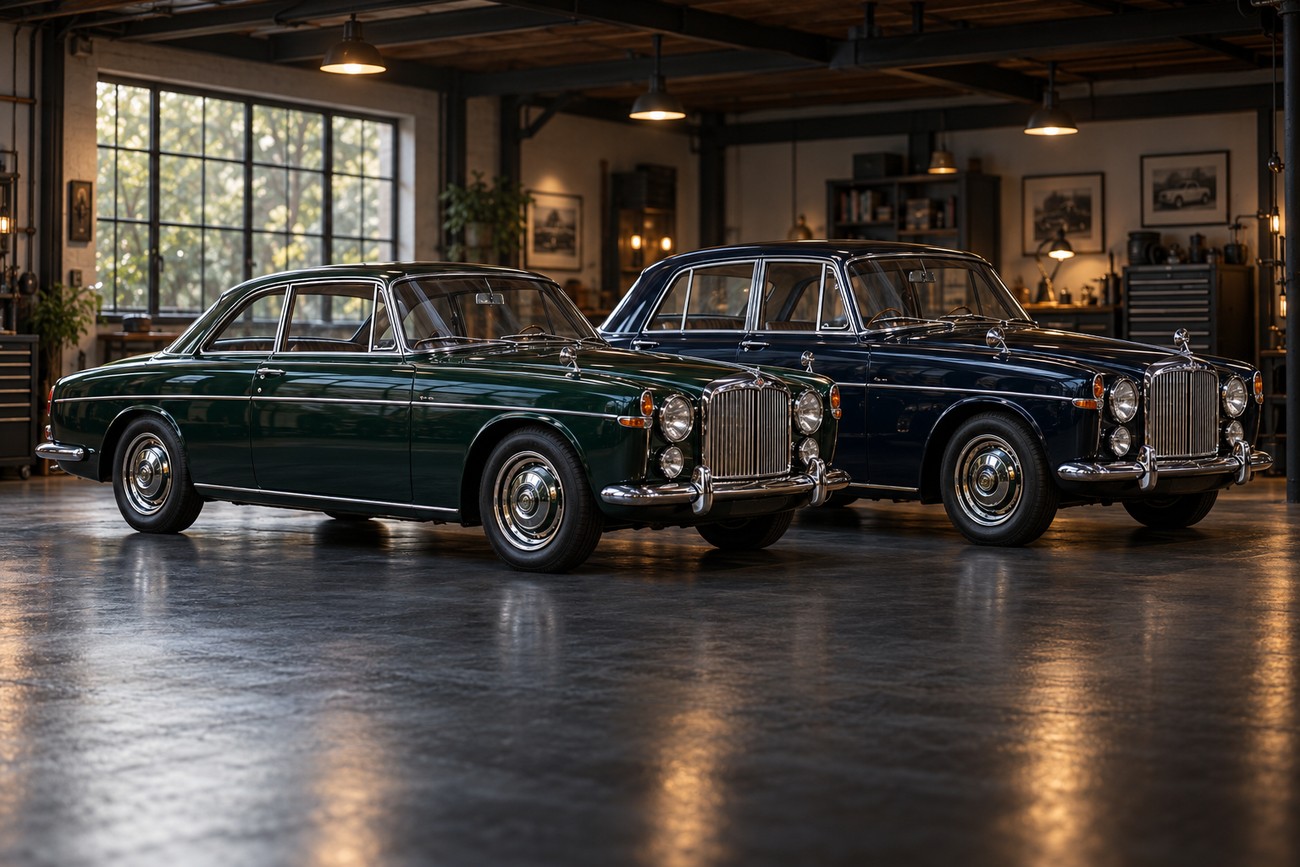
The Coupe’s defining changes are visual. It has a lower roofline and narrower door frames than the Saloon, giving the body a lighter, more deliberate profile. The treatment made the car appear more personal and stylish while preserving the formal proportions that made the P5 suitable for official transport.
Mechanically, the Coupe is close to the Saloon. It does not transform the P5 into a sports car, and its lower silhouette brings no major performance advantage. The familiar V8, automatic transmission, suspension, and braking layout remain central to the driving experience, so buyers should select the body style for its appearance and character rather than promised speed.
Practical compromises are easy to overlook in photographs. The Coupe’s body shape restricts rearward visibility, and the large steering wheel sits relatively far from some drivers. Tall owners may find the driving position awkward, while the rear compartment loses some of the easy access associated with the Saloon. These are manageable traits for occasional use, but they matter during regular city driving.
The Engineering Beneath the Executive Image
The P5B uses a 3.5-litre Buick-derived V8, chosen to give the heavy Rover relaxed performance and smooth low-speed progress. The usual transmission is a Borg-Warner automatic, which matches the car’s official-car character. A four-speed manual gearbox exists, though it is extremely rare and should be treated as a specialist configuration rather than a realistic default for most buyers.
With an approximate mass of 1.6–1.7 tonnes, the P5B depends on torque and momentum more than sharp acceleration. It settles into a steady cruise well, yet its weight remains apparent when changing direction or stopping. The driving experience is composed and dignified when the suspension is healthy, with little connection to the lightness expected from a modern performance coupe.
Braking hardware consists of front disc brakes and rear drum brakes, with no ABS. That arrangement can work adequately when the hydraulics, friction materials, wheel cylinders, and adjustment are correct. Its reserve is modest by modern standards, however, so a driver must leave more distance and anticipate traffic earlier than in a contemporary car.
The Faults Buyers Miss on a Shiny Example
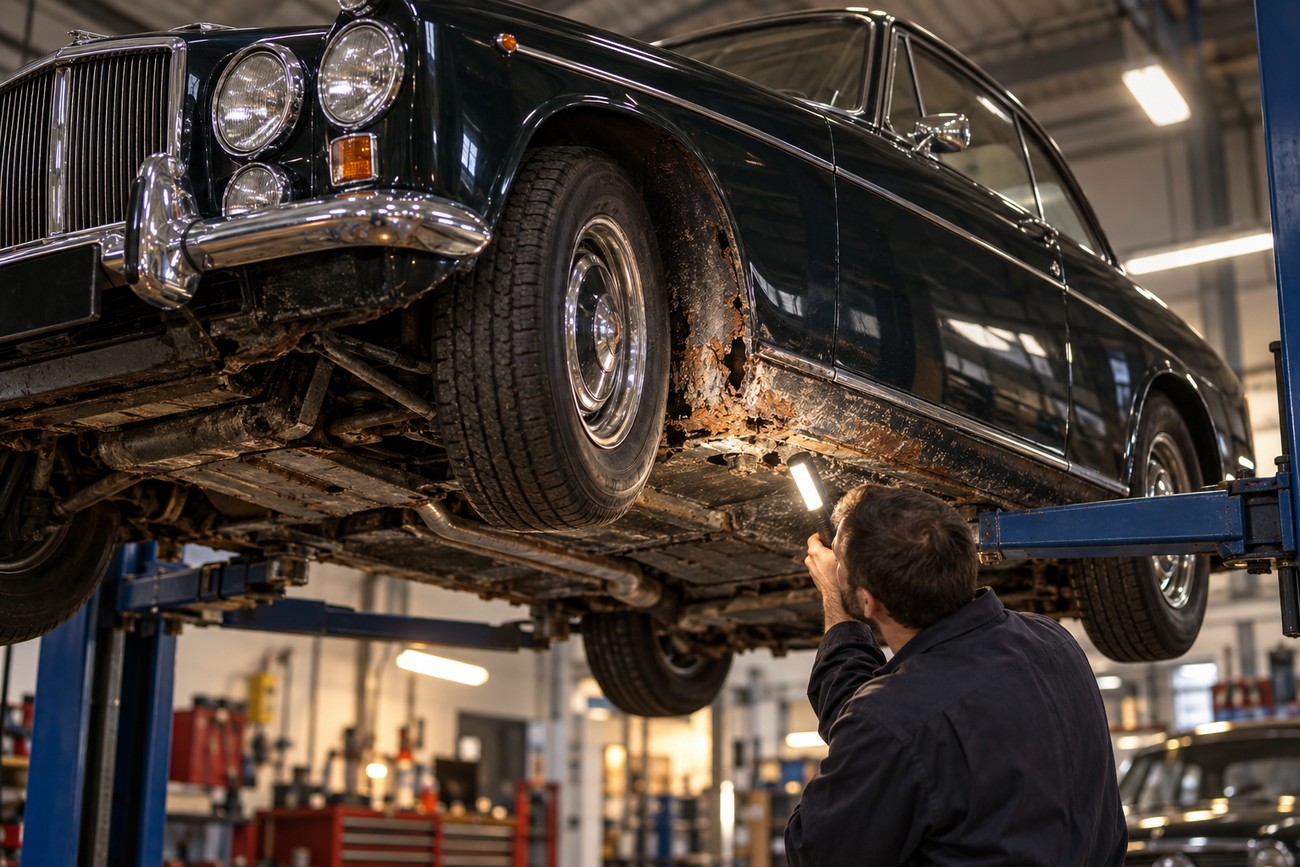
A lift inspection should come before close examination of the paint, trim, or a quiet cold start. The critical corrosion zones include the sills, floors, lower door sections, and front inner wings. These areas can be repaired cosmetically while retaining weakened metal, and structural work on a P5B can quickly exceed the apparent value of an attractive car.
Replacement body panels may be expensive, rusty, or poorly fitting. A fresh restoration is therefore not evidence of sound construction. Inspect door gaps, mounting points, floor seams, jacking areas, and the transition between repaired metal and original structure. Good original chrome is often more reassuring than a recent repaint because it suggests that the car has not been cosmetically reset to conceal unfinished work.
The engine can sound healthy while the brakes and suspension remain tired. Check for a long or uneven pedal, seized components, worn bushes, leaking dampers, and steering play. On a road test, transmission and rear-axle noise or vibration may become noticeable above 100 km/h, even when the car feels acceptable around town.
Electrical faults commonly involve corroded connections, poor grounds, and undocumented modifications. Government cars may also have had unusual wiring for radio equipment or other official requirements. Trace every added cable rather than assuming that an old accessory is harmless; a weak charging system combined with poor connections can create failures that appear random.
Running One Today: Fuel, Comfort, and Sensible Upgrades
Reported fuel consumption is approximately 15–20 L/100 km in urban use and approximately 12–15 L/100 km on the open road. SU carburetor settings make a material difference, and a small error in mixture, balance, or choke operation can turn an acceptable touring car into an expensive commuter. Carburetor condition and ignition setup deserve attention before blaming the V8’s basic design.
The electrical system is 12 volts, and the original charging capacity is weak by modern standards. Corroded connections and poor grounds make that limitation worse, especially after owners add modern audio equipment, extra lighting, or cooling fans. A carefully designed charging-system improvement is sensible, provided the wiring is documented and protected rather than patched into the original loom.
Comfort also has limits. The large windscreen and extensive chrome can create glare and heat, while the factory ventilation system is complicated and often works poorly after incorrect reassembly. Original seat padding feels soft but may fatigue the back on a long journey, and vague power steering can require constant correction on a fast road.
Cooling capacity, carburetor balance, and oil pressure should be checked before approving any V8 power increase. Tuning is an engine-system decision: extra output without matching cooling and lubrication capacity can produce overheating and expensive damage.
Seat belts, brakes, cooling, and electrical reliability are the sensible priorities for regular use. Heavy modern wheels can add unwanted load to the hubs and steering while harming the car’s response. Aggressive V8 tuning without cooling-system improvements carries a real overheating risk, so originality in the engine bay is often preferable to poorly integrated performance parts.
Should You Buy a Rover P5B Coupe?
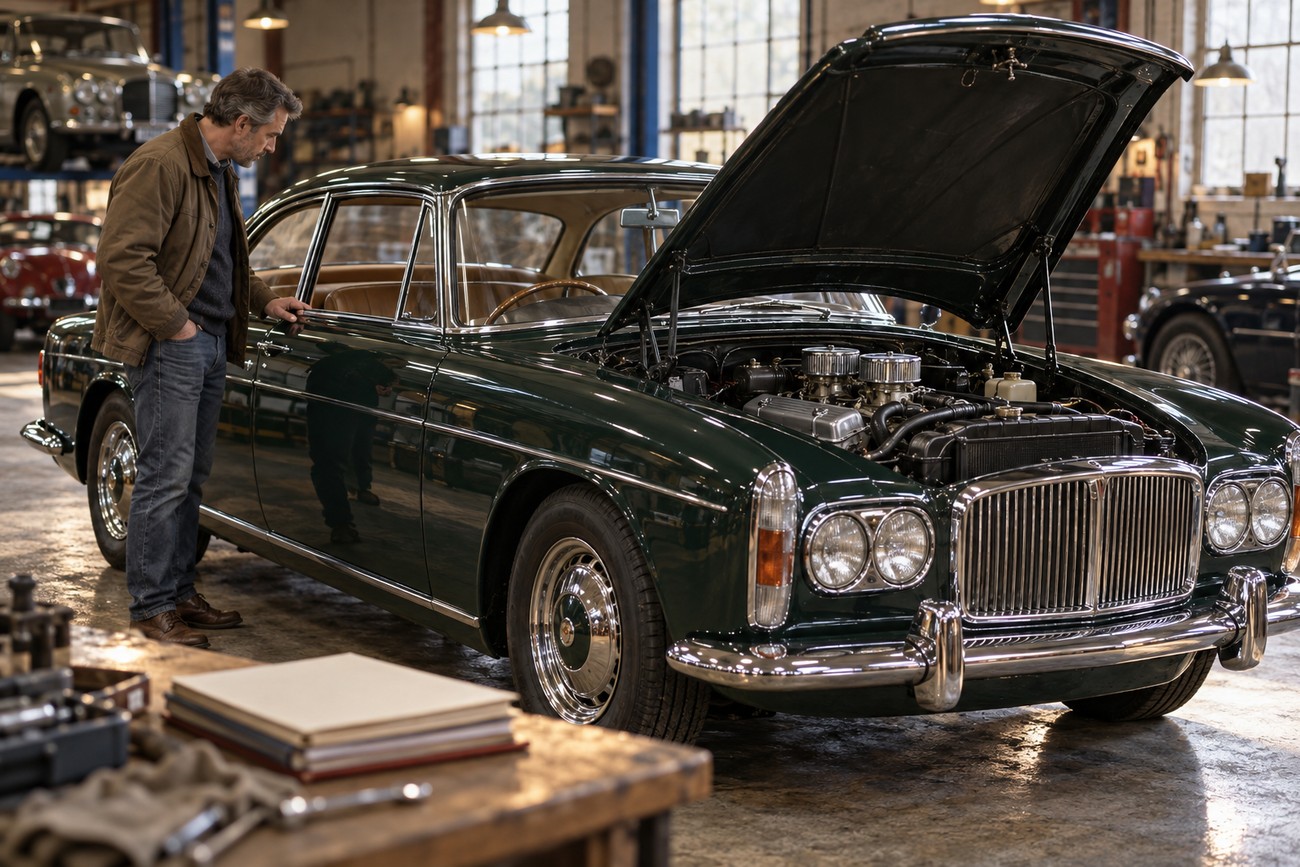
The P5B Coupe offers unusual political symbolism, a strong road presence, and a V8 that can be durable with correct cooling, oiling, and carburetor maintenance. Rover positioned it as an executive saloon, and its period price, finish, and specifications placed it below Rolls-Royce and Bentley. That distinction matters when estimating both comfort and restoration cost.
A buyer should value sound structure, original or well-preserved chrome, and clear mechanical records above a glossy repaint. A poor-quality re-chrome may look bright at first while losing the crisp fit and detail that make a good P5B special. Likewise, a government connection adds interest only when supported by documentation; it does not repair rust or improve worn brakes.
This is a rewarding car for an owner who enjoys careful maintenance, has access to a specialist club or knowledgeable mechanic, and accepts substantial fuel use. It is a difficult choice for someone seeking an effortless daily classic. Buy the condition, inspection evidence, and service history first, then assess the ministerial story as an added feature rather than the foundation of the decision.
Frequently asked questions
The questions below cover the P5B’s reputation, preservation priorities, and reported official connections. They also separate documented history from folklore, which is essential when assessing an individual car. Condition and records remain more important than symbolism.
Why is the Rover P5B sometimes called the “poor man’s Rolls-Royce”?
The nickname refers to the P5B’s formal presence, quiet executive character, and association with senior public life. It is a shorthand comparison rather than an official market position. The P5B was an executive saloon, with period price, specification, and finish below Rolls-Royce and Bentley. Its appeal lies in restrained authority and usable mechanical simplicity, not equivalence with a luxury limousine.
What matters most when preserving a P5B Coupe?
Preservation should begin with structural metal, especially the sills, floors, lower doors, and front inner wings. Original chrome and correct period details come next, followed by mechanical systems that allow the car to be used safely. A repaint can improve appearance, yet it cannot compensate for hidden corrosion or poorly executed repairs. Documented originality is also more valuable than a speculative claim about government service.
What was Queen Elizabeth’s favorite car?
Royal motoring folklore is strongly associated with Land Rover vehicles, while the P5B’s documented role was as a government executive car used by ministers, cabinet members, and official garages. A royal association should therefore be treated separately from evidence of prime ministerial or government use. Neither royal preference nor political symbolism proves the history of an individual P5B without supporting records.







