

A Toyota Corolla is usually associated with dependable, uneventful ownership, so a sudden rotten-egg, sulfur, or sewage-like smell can be especially unsettling. The description alone does not identify the fault. The smell may come from the exhaust, battery, transmission fluid, climate system, or damp insulation, and the location and timing provide the first useful clues.
Pay attention to whether the odor is strongest inside the cabin, under the hood, beneath the car, from the vents, or in the trunk. Record whether it appears during acceleration, braking, a cold start, refueling, air-conditioning use, or wet weather before anyone replaces parts. Battery fumes and exhaust entering the cabin are safety concerns, so a recurring or strong odor deserves diagnosis rather than air freshener or a new cabin filter.
- What a Rotten Egg Smell Usually Means in a Toyota Corolla
- Trace the Smell by Timing and Location
- Exhaust, Fuel, and Catalytic-Converter Causes
- Battery Smell Under the Hood: A Charging-System Warning
- Transmission Fluid, HVAC, and Hidden Moisture: The Lookalikes
- A Sensible Diagnostic Order Before Buying Parts
- Common Mistakes That Let the Problem Get Worse
- When Is It Safe to Keep Driving?
- Frequently asked questions
- Why did the rotten egg smell start right after I filled up with gas?
- What does it mean if my Corolla smells but the check-engine light is off?
- What is the most common problem with Toyota Corolla?
- Why is my car smelling like a rotten egg?
- Why does my car smell like rotten egg gas?
What a Rotten Egg Smell Usually Means in a Toyota Corolla
A rotten-egg odor in a Corolla is usually associated with hydrogen sulfide (H₂S), along with other sulfur compounds. It is a symptom rather than a diagnosis. The same smell can be produced by different systems, so identifying where and when it occurs matters more than relying on the description alone.
The most common classic automotive source is a catalytic converter that is not properly oxidizing sulfur compounds in the exhaust. Fuel quality and engine operation affect the converter’s workload. High-sulfur or poor-quality fuel can intensify sulfur odor even with a functioning catalytic converter, while a rich air-fuel mixture can overload and overheat the converter.
Several credible alternatives can imitate the smell. Battery overcharging or battery damage can release sulfur-like gas near the engine bay, and old or overheated transmission fluid leaking onto hot exhaust parts can smell sulfurous. Bacteria or mold on the evaporator, a blocked condensate drain, and hidden damp insulation in the cabin or trunk can create damp, sewer-like, or rotten odors.
A mild sulfur note may occur with some fuel conditions, so every faint exhaust odor does not prove a failed catalytic converter. A strong, recurring, or cabin-entering odor should still be diagnosed. It should not be dismissed as a normal Toyota or Japanese-car characteristic, because the underlying cause may be a mixture fault, charging problem, leak, or moisture issue.
Trace the Smell by Timing and Location

Begin by comparing the odor inside and outside the Corolla. With the vehicle parked safely outdoors, notice whether the smell is strongest near the tailpipe, under the hood, around the transmission area, at the vents, or in the trunk. Do not crawl under a hot or running vehicle, and do not place your face near the exhaust or battery.
Odor during acceleration, heavy load, or braking from high engine speed points toward exhaust, fuel quality, a rich mixture, or catalytic-converter overload. A smell that appears during a cold start may be exhaust-related, while a smell that begins after refueling makes the fuel source relevant. Write down the fuel station, the timing of the first odor, and whether it changes as the tank is used.
An odor from the engine bay makes the battery and charging system important suspects, especially when the exhaust outside the car seems ordinary. If the smell starts after the air conditioner runs, inspect the evaporator, condensate drain, and microbial buildup. HVAC odors often become more noticeable in wet weather because moisture remains on contaminated surfaces.
A smell isolated to the trunk or rear cabin can come from hidden water intrusion, a body leak, or damp insulation even when the carpet looks dry. Lift the trunk floor and check spare-wheel and side compartments when safe to do so. Moisture can remain underneath trim or padding long enough to produce a persistent rot-like smell without an obvious wet patch.
Exhaust, Fuel, and Catalytic-Converter Causes
Gasoline contains sulfur compounds that the emissions system is designed to process. High-sulfur or poor-quality fuel can intensify sulfur odor even when the catalytic converter is still functioning. If the odor began immediately after refueling and gradually fades after using fuel from another source, fuel quality becomes a reasonable lead, although that pattern does not rule out an engine or converter problem.
A rich air-fuel mixture sends more unburned fuel into the exhaust and can overload and overheat the catalytic converter. Fuel injectors, fuel-pressure regulation, and lambda or oxygen-sensor faults can contribute to a rich mixture. Other engine-control faults can have the same effect, so replacing the converter before checking mixture control may leave the original problem in place.
Odor during hard acceleration, sustained load, or braking from high engine speed is especially useful evidence. The converter may be working under excessive thermal and chemical load at those moments. A catalytic converter can begin producing a noticeable sulfur odor before a check-engine light appears, so a clean dashboard does not clear the exhaust or fuel system.
A proper inspection should include stored and pending faults, fuel-trim and oxygen-sensor information, injector and fuel-pressure checks where indicated, and an assessment of exhaust behavior under the conditions that reproduce the smell. A basic code read alone may miss a developing mixture problem. Removing the catalytic converter as a shortcut can increase exhaust odor, create emissions and fault-code problems, and fail to correct the cause.
Battery Smell Under the Hood: A Charging-System Warning
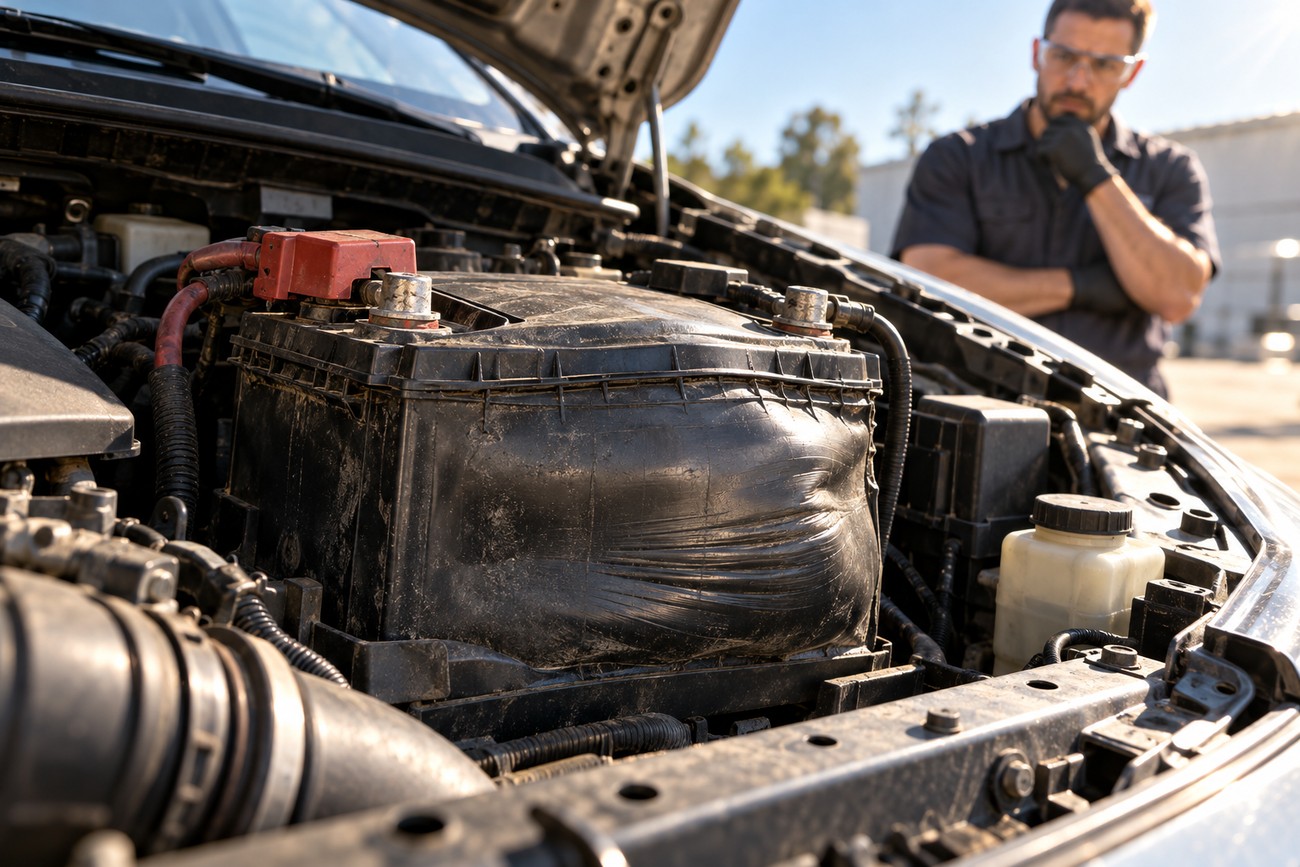
A sulfur smell concentrated near the hood or battery points toward a different diagnostic path than an odor at the tailpipe. Battery overcharging or battery damage can release sulfur-like gas. The smell may be local to the engine bay, with no obvious change in the exhaust odor.
Charging-system faults can damage the battery and vehicle electronics if the vehicle continues to be driven. A swollen, hot, cracked, leaking, or actively venting battery requires caution. Avoid touching it, disconnecting cables casually, or creating sparks nearby.
Park the Corolla in a safe, well-ventilated place and arrange testing of charging behavior and battery condition. Do not rely on odor alone to decide whether the alternator, battery, wiring, or regulator is responsible. Charging-system testing should be part of the diagnosis whenever the smell is strongest under the hood.
Transmission Fluid, HVAC, and Hidden Moisture: The Lookalikes
Old or overheated transmission fluid can create a sulfur-like smell if it leaks onto hot exhaust components. This source is easier to confuse with an exhaust fault when the odor appears after driving and seems strongest underneath the car. Look for fluid residue, wet areas, or signs of heat damage during a proper inspection, while keeping clear of hot components.
The climate system creates a different pattern. An evaporator that remains damp and contaminated with bacteria or mold can produce musty, sewer-like, or rotten odors from the vents. A blocked condensate drain can retain moisture and make the smell worse after air-conditioning use or during wet weather.
Replacing the cabin filter alone does not clean a contaminated evaporator or clear a blocked condensate drain. A new filter may briefly improve airflow or reduce some airborne particles, while the underlying odor returns because the source remains inside the HVAC housing. Cleaning and drain inspection need to match the evidence from the vents.
Hidden water intrusion is another overlooked cause. Leaks around the trunk, body seals, or cabin can keep insulation damp beneath trim, even when the visible carpet appears dry. A persistent smell in the rear cabin or trunk should prompt inspection below the floor covering and around side compartments rather than repeated use of ventilation aerosols.
A Sensible Diagnostic Order Before Buying Parts
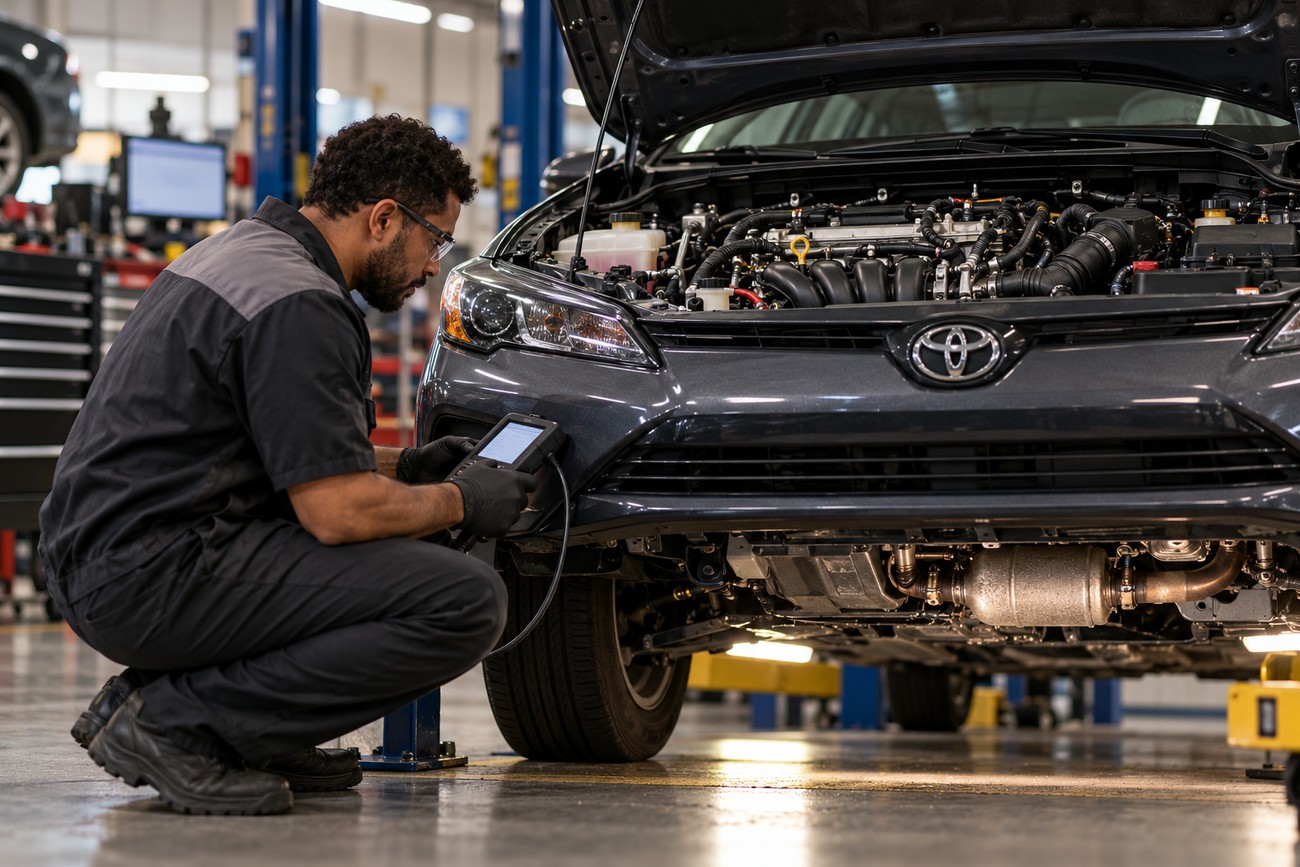
Start with safety and source location. Establish whether the odor is outside, under the hood, from the vents, beneath the car, or in the trunk, then reproduce it only under safe conditions. Note recent refueling, engine temperature, load, braking, air-conditioning use, rain, and the duration of the smell.
For an exhaust-related complaint, scan for stored and pending faults, then examine mixture-related data rather than stopping at the scan result. The inspection should consider fuel quality, injectors, fuel-pressure components, oxygen or lambda sensors, and catalytic-converter behavior. For an odor near the battery, test charging behavior and battery condition. For a cabin odor, inspect the evaporator and condensate drain, especially when a new cabin filter has not helped.
Fluid leaks and heat-damaged exhaust parts should be checked separately from electrical and HVAC concerns. Inspection identifies the source; repair follows only after the source is confirmed. Home observations are useful for describing the symptom, while exhaust-composition, charging, and electrical testing should be handled with suitable equipment and precautions.
Common Mistakes That Let the Problem Get Worse
Fresheners and vent aerosols can mask an HVAC source without cleaning the evaporator or drain. The smell often returns when moisture and microbial buildup remain inside the housing. Replacing only the cabin filter produces little or temporary improvement in that situation.
Another costly mistake is assuming that a reliable Corolla cannot develop a catalyst, mixture, or charging fault. Ignoring a rich mixture can accelerate catalytic-converter degradation, while continued driving with an overcharging fault can damage the battery and vehicle electronics. Reliability reduces the likelihood of some failures over the ownership period; it does not make the vehicle immune to them.
A basic error-code scan or visual inspection may not test charging behavior, exhaust composition, fuel control, or hidden moisture. A converter can produce sulfur odor before a warning light appears, and HVAC, battery, fluid, and moisture sources may never trigger the engine-control warning light. The diagnostic method must therefore follow the odor’s location and operating pattern.
Removing the catalytic converter before checking the fuel and engine-control system is another poor shortcut. It can leave a rich mixture untouched, increase exhaust odor, and create emissions or fault-code problems. Parts replacement should follow evidence from testing rather than the smell alone.
When Is It Safe to Keep Driving?

Strong exhaust or sulfur fumes entering the cabin should not be treated as a cosmetic issue. Stop using the vehicle and arrange inspection if the odor is intense, rapidly worsening, or accompanied by smoke, overheating, severe misfire, or major loss of engine performance. Move occupants into fresh air if fumes are present inside the cabin.
A hot, swollen, damaged, leaking, or actively venting battery is an urgent charging-system concern. Avoid touching it and keep away from sparks while arranging assistance. Continued driving with an overcharging fault can damage the battery and vehicle electronics.
A brief odor after questionable fuel may fade after changing the fuel source, but recurrence still warrants diagnosis. With a mild intermittent odor and no safety signs, limit unnecessary driving and schedule a structured inspection. Do not declare the vehicle safe solely because the check-engine light is off.
Frequently asked questions
The odor can come from several systems, so the most useful answer depends on where it occurs and what the Corolla is doing at the time. These points help separate a temporary fuel-related symptom from a developing mechanical or electrical fault.
Why did the rotten egg smell start right after I filled up with gas?
Fuel quality is a plausible reason because high-sulfur or poor-quality fuel can intensify sulfur odor, even with a functioning catalytic converter. Record the station, fuel grade, date, mileage, and how long the smell lasts. If the odor fades as that fuel is used and does not return with fuel from another source, the fuel may have contributed.
Changing fuel does not repair an underlying rich-mixture fault or damaged catalytic converter. If the smell returns, appears under load, or continues after the tank is diluted with different fuel, have the fuel system, mixture control, and exhaust system checked.
What does it mean if my Corolla smells but the check-engine light is off?
An absent check-engine light does not identify the source or prove that the vehicle is free of a fault. A catalytic-converter or mixture problem can produce odor before a stored fault appears, while HVAC, battery, transmission-fluid, and moisture sources may never trigger the engine-control warning light.
Diagnosis should therefore include more than a code scan. The inspection should follow the odor’s location and include mixture-related data, charging-system testing, fluid and exhaust checks, or evaporator and condensate-drain inspection as appropriate.
What is the most common problem with Toyota Corolla?
There is no single universal most-common problem for every Corolla generation, engine, market, and service history. For a rotten-egg odor specifically, the most common classic automotive source is a catalytic converter that is not properly oxidizing sulfur compounds, often affected by fuel quality or a rich mixture.
That statement does not make the converter the automatic repair. Battery charging faults, HVAC contamination, transmission-fluid leaks, and hidden moisture can produce similar smells and require different tests.
Why is my car smelling like a rotten egg?
The usual chemical clue is hydrogen sulfide (H₂S), along with other sulfur compounds. In a car, the likely sources include the catalytic converter and exhaust, high-sulfur fuel, a rich air-fuel mixture, an overcharging or damaged battery, overheated transmission fluid, contaminated HVAC components, and damp insulation.
Use location and timing to narrow it down. Acceleration or heavy load suggests exhaust or mixture control, the engine bay suggests the battery and charging system, the vents suggest the evaporator or drain, and the trunk suggests hidden moisture.
Why does my car smell like rotten egg gas?
A rotten-egg gas smell usually indicates sulfur compounds, often hydrogen sulfide, but the odor alone cannot identify one failed part. A faint sulfur note may occur with some fuel conditions; a strong, recurring, or cabin-entering odor needs inspection.
Stop driving and seek prompt assistance if the smell is accompanied by battery heat or swelling, smoke, overheating, severe engine-running problems, or fumes entering the cabin. Otherwise, document the conditions and arrange diagnosis before buying a catalytic converter or cabin filter.







