
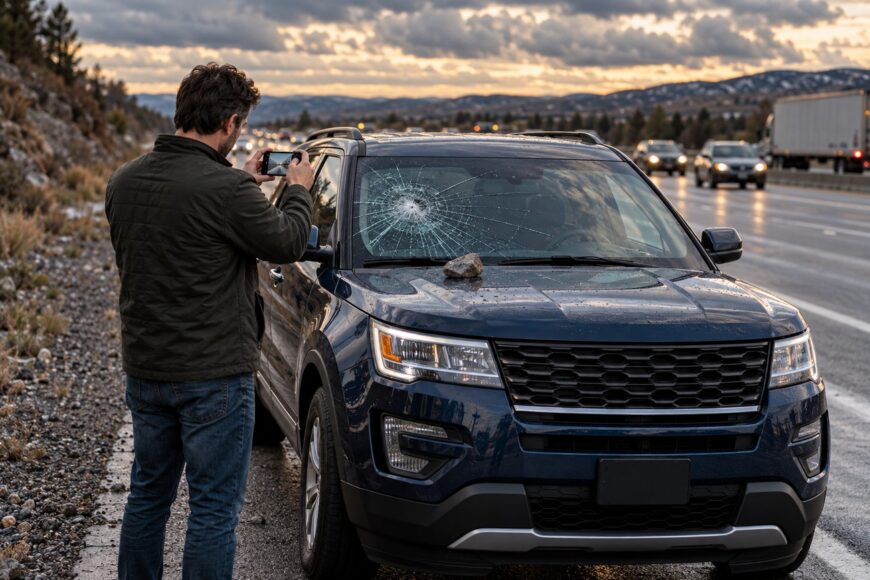
The impact is sudden: a stone strikes the Ford Explorer windshield, and at I-80 speeds, a small mark can become a spreading crack before you reach a safe exit. Many sections allow passenger vehicles to travel at 65–80 mph, increasing the energy carried by road debris.
The truck may already be gone, leaving you with a damaged windshield and little obvious proof. Protect the glass, record the event, and make a careful repair-or-replacement decision. The quality of the glass, installation, and any required ADAS calibration can affect safety long after the original impact.
- What to Do Immediately After the Impact
- Repair or Replace the Ford Explorer Windshield?
- Insurance, Liability, and the Real Cost
- Choosing the Installer and Checking the Work
- Frequently asked questions
- How much is it to fix a rock that hit a windshield?
- Who is responsible if a rock hits my windshield?
- What should I do if a rock chipped my windshield?
What to Do Immediately After the Impact
Reduce speed smoothly and stop where you can do so safely. Check whether the damage is a small chip, a spreading crack, or damage that affects visibility or structural integrity. A crack across the driver’s viewing area can create inspection or enforcement problems in most states, so avoid treating it as a cosmetic issue.
Photograph the glass from inside and outside the Explorer. Record the time, direction of travel, nearest exit or mile marker, lane, weather, and roadway condition. If you saw the vehicle that shed the stone, record its plate, company markings, trailer, and any witnesses without following or confronting the driver.
Heat, cold, vibration, and continued driving can make fresh damage spread quickly. Keep the damaged area dry and avoid pressing on it, applying household adhesive, or placing tape where it could complicate inspection. A small chip or limited crack may remain repairable, but its location and movement matter.
Repair or Replace the Ford Explorer Windshield?
The Explorer uses laminated glass designed under FMVSS 205 and ANSI Z26.1. Some small chips or cracks away from the driver’s viewing zone and edges may be repairable. Damage near an edge, in a critical viewing area, or around a camera mounting area often leads to replacement because repair may leave safety or optical concerns.
Match the glass to the Explorer’s generation and equipment. Features can include a heated wiper area, rain or light sensors, and camera brackets. A wrong part can require rework, leave sensors unusable, or create poor camera alignment even when the windshield appears to fit.
Price alone is a weak selection test. OEM and aftermarket-equivalent glass can differ in optical distortion, fit, acoustic isolation, thickness, sensor compatibility, and ADAS performance. Poor optical quality may increase eye strain, while an inaccurate camera view can affect driver-assistance functions.
Insurance, Liability, and the Real Cost
Rock and glass damage is usually handled under comprehensive coverage. Some policies offer zero-deductible glass coverage, but that depends on the policy and is not automatic under state law. Check the deductible, approved repair network, glass-part terms, and whether calibration is included before authorizing work.
Ford Explorer windshield replacement commonly ranges from $400 to $1,200 or more, depending on the year, glass features, sensors, and ADAS equipment. Calibration can add approximately $150–$400. The final cost also depends on whether the damage qualifies for repair and whether your deductible makes a claim worthwhile.
The vehicle that shed the rock is usually not liable merely because the stone came from its tires. A claim against that driver generally needs evidence of negligent cargo handling, such as unsecured material or missing load covering. A plate alone identifies a vehicle; it does not usually prove that violation.
Your photographs and exact location can still help an insurer assess the loss. They may also support a complaint to the relevant roadway-maintenance agency when loose gravel, construction debris, or winter treatment is clearly documented. Keep the original images and claim notes.
Choosing the Installer and Checking the Work
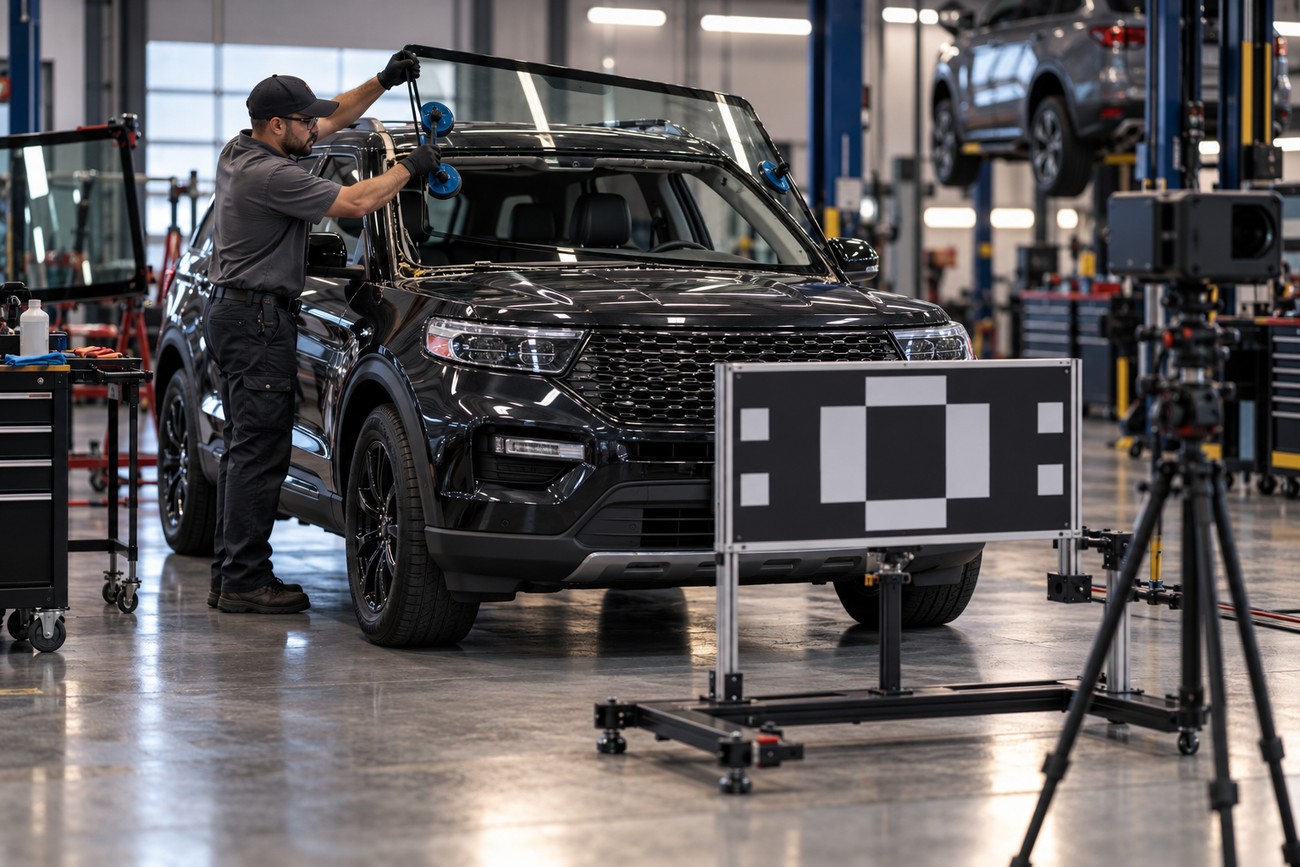
Ask whether the Explorer requires camera and driver-assistance calibration after replacement. The process should follow Ford procedures and relevant SAE/ISO specifications. A proper shop should explain whether calibration is static, dynamic, or both, and identify the equipment and verification used.
Require a calibration record showing the targets or calibration stand and the verification result. A statement that the camera was “reset” does not establish that the system was calibrated correctly.
Adhesive cure time depends on temperature and conditions and may range from several hours to about 24 hours. Follow the shop’s written safe-drive-away instruction, including limits on washing, door slamming, and vehicle movement. A one-hour marketing promise is not universal.
Before accepting the Explorer, inspect the glass for distortion, leaks, wind noise, vibration, damaged trim, and warning messages. Ask the installer to check the frame, surrounding trim, and mounting area for hidden damage. Test wipers, rain and light sensors, camera functions, and driver-assistance warnings before returning to normal driving.
Frequently asked questions
These answers summarize the immediate steps, liability considerations, and typical repair or replacement costs described above. The correct choice depends on the damage, policy terms, and Explorer equipment.
How much is it to fix a rock that hit a windshield?
A small repair may cost less than full replacement, while an Explorer replacement commonly ranges from $400 to $1,200 or more. Add possible ADAS calibration of approximately $150–$400, then apply your comprehensive deductible and any glass-specific policy terms.
Who is responsible if a rock hits my windshield?
Usually, the other driver is not liable simply because the rock came from that vehicle. Pursuing the truck requires evidence of negligent cargo handling or another clear violation; a visible plate alone may identify the vehicle without proving fault. Photos of the roadway can also support a possible maintenance complaint.
What should I do if a rock chipped my windshield?
Stop safely, check your view, and limit further driving if the damage is spreading or lies in the driver’s viewing area. Photograph the glass, roadway, location, time, witnesses, and any truck plate, then arrange a prompt professional assessment before temperature changes and vibration enlarge the damage.







