
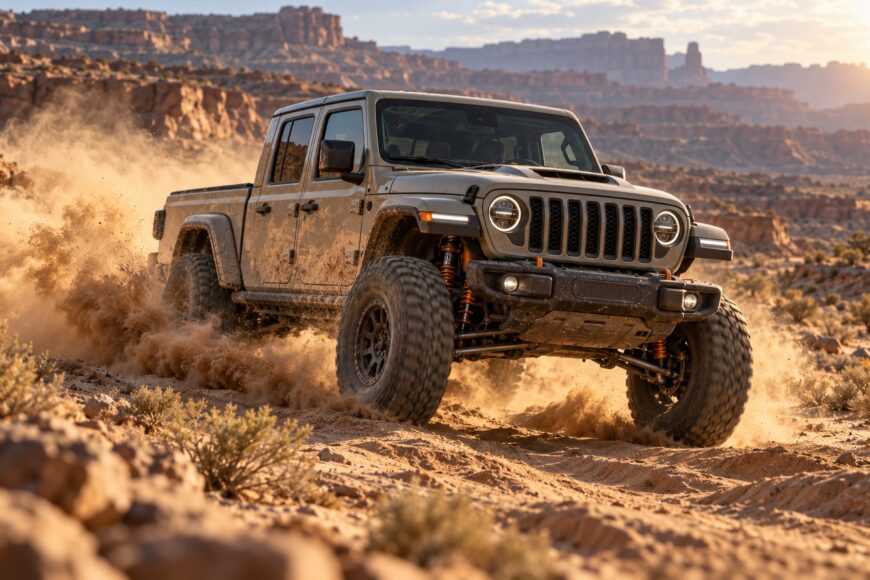
The Gladiator Mojave looks like an extreme trail truck, yet its engineering brief centers on high-speed desert running rather than maximum technical rock crawling. Its Desert Rated badge reflects sand, whoops, and impact control, while the Rubicon is configured around slow, technical obstacles.
The Mojave can handle many light and moderate rock trails with careful driving. Its limits appear sooner on diagonal ledges, steep steps, and tight rock transitions because it lacks a factory front locker, uses a fixed front sway bar, carries a long wheelbase, and may have less stock underbody protection than a Rubicon.
- What the Gladiator Mojave Is Actually Built For
- Stock Rock-Crawling Hardware: What Helps and What Does Not
- Mojave vs. Rubicon on Technical Rock Trails
- Where a Stock Mojave Runs Out of Margin
- How to Drive the Mojave on Rocks Without Forcing It
- The Smartest Mojave Rock-Crawling Upgrades
- Common Mojave Rock-Crawling Mistakes and Myths
- Should You Choose a Mojave for Rock Crawling?
- Frequently asked questions
- Which Jeep model is best for rock crawling?
- What is the lawsuit against the Jeep Gladiator?
- What years should you avoid for the Jeep Gladiator?
What the Gladiator Mojave Is Actually Built For
The Gladiator Mojave is the only Gladiator with a Desert Rated badge. Jeep uses that designation for a package aimed at high-speed desert terrain, sand, and whoops. It signals a specific type of off-road performance rather than a universal ranking above every other Jeep configuration.
Its FOX 2.5-inch internal-bypass shocks and FOX hydraulic jounce bumpers are designed to control repeated impacts at speed. The reinforced frame, strengthened axles, iron steering knuckles, approximately 1-inch front lift, and 33-inch all-terrain tires support that mission. On a fast dirt road or whooped-out desert section, those parts provide useful control and resistance to harsh bottoming.
Slow rock crawling demands a different balance. The suspension must keep tires loaded over uneven surfaces, the drivetrain must move the truck at a controlled pace, and the axles need to maintain traction when several wheels are lightly loaded. The Mojave remains capable in this environment, although its hardware and calibration give the Rubicon a clear advantage as the obstacles become more technical.
Desert Rated should therefore be read as a terrain-specific designation. It does not equal Rubicon-level technical rock-crawling capability, and it does not make the Mojave a poor off-road vehicle. It identifies a truck that prioritizes speed, impact absorption, and mixed desert travel.
Stock Rock-Crawling Hardware: What Helps and What Does Not
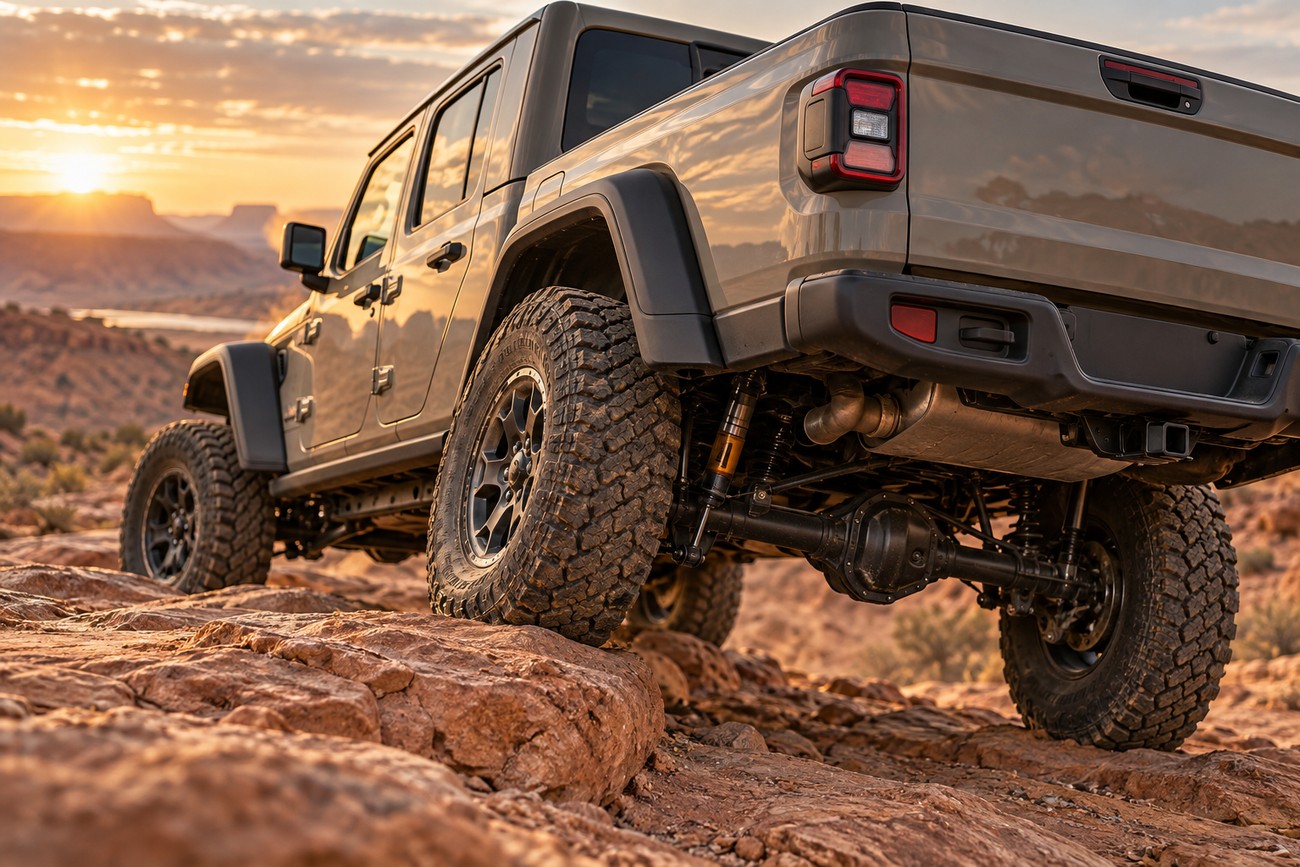
The Mojave has a useful foundation for moderate rocks. Its Command-Trac transfer case uses a 2.72:1 low-range ratio, producing an approximate crawl ratio of 57.3:1 with the manual transmission and 52.6:1 with the automatic. Those figures provide meaningful reduction, although they leave the truck moving faster at idle than a Rubicon in comparable conditions.
Front Dana M210 and rear Dana M220 axles use 4.10 gearing. The factory electronic rear locker can keep the rear axle driving when one rear tire loses traction, and the 33-inch all-terrain tires offer a sensible compromise for dirt, sand, and moderate rocks. The reinforced structure also gives the Mojave useful resistance to impacts from poor line choices.
The largest traction limitation is the missing factory front locker. On a diagonal obstacle, a steep ledge, or a technical climb, the front tire with the least load may spin while the rear locker continues to drive the back axle. The driver must then select a better line, use precise throttle, or accept a bypass instead of relying on the drivetrain to force the vehicle through.
The front sway bar is conventional and has no factory disconnect. That limits front-end articulation compared with a Rubicon, especially when one front wheel rises onto a rock while the opposite tire drops into a hole. The Mojave’s suspension remains strong and durable, yet its high-speed tuning can feel firmer and less compliant during very slow crawling.
Protection also requires a careful inspection before entering rocks. Rock rails and steel bumpers are present only on some Mojave X configurations and options, while stock underbody and rocker protection is generally less comprehensive than the Rubicon’s. A vehicle that appears ready for severe trails may still need proper rock rails and skid plates before its first serious rock section.
Mojave vs. Rubicon on Technical Rock Trails
The key differences are mechanical rather than cosmetic. The following comparison shows why the Rubicon has more control and traction margin on difficult technical obstacles, while the Mojave remains credible on lighter mixed-terrain routes.
| Feature | Gladiator Mojave | Gladiator Rubicon |
|---|---|---|
| Low-range ratio | Command-Trac, 2.72:1 | 4:1 low range |
| Approximate crawl ratio | 57.3:1 manual; 52.6:1 automatic | Up to approximately 84:1 |
| Factory lockers | Rear electronic locker only | Front and rear lockers |
| Front sway bar | Conventional bar with no factory disconnect | Factory sway-bar disconnect |
| Axles | Dana M210 front and M220 rear, 4.10 gearing | Rubicon-spec axles and gearing package |
| Suspension purpose | High-speed impact control for desert terrain | Technical trail control and articulation |
| Factory tires | 33-inch all-terrain tires | Rock-oriented factory tire package |
| Intended terrain | High-speed desert, sand, whoops, and mixed trails | Technical rocks and demanding trail work |
The Rubicon’s 4:1 low range gives it an approximate crawl ratio of up to 84:1. That lower gearing allows the vehicle to move more slowly with less throttle, which helps the driver place each tire and reduce drivetrain shock. The Mojave’s 52.6:1 to 57.3:1 range still works on moderate rocks, although it requires more careful pedal and brake control.
Front and rear lockers give the Rubicon a second major advantage. Its factory sway-bar disconnect also permits more front suspension movement when the trail lifts one wheel. These features reduce the number of situations where the driver must abandon a direct line or use wheel speed to maintain progress.
The Mojave is strongest on light and moderate rock trails, especially when the route includes sand, dirt, and faster connecting sections. The Rubicon is the stronger stock choice for difficult technical crawling, where traction, low-speed control, and articulation matter more than high-speed impact management.
Where a Stock Mojave Runs Out of Margin
A stock Mojave usually reaches its limits gradually. A difficult passage may require a bypass or a different line long before the vehicle suffers a mechanical failure. That distinction matters because the truck can complete many rock trails safely while still being the wrong tool for a particular ledge or breakover.
The long Gladiator wheelbase increases breakover and belly-drag risk on steep rock steps and abrupt transitions. A line that lets a shorter Wrangler clear the first and last tires may place the Mojave’s center section on the rock between them. Extra momentum rarely solves this problem; it can turn a clearance issue into underbody damage.
Diagonal obstacles expose the missing front locker and fixed sway bar. As the chassis twists, one front tire may unload while the other cannot reach the surface effectively. The rear locker helps the back axle, yet it cannot fully compensate for lost front traction or limited articulation.
Stop trying to power through a diagonal ledge when wheelspin begins to threaten bodywork. Changing the line, carefully unloading the suspension, or taking the bypass usually preserves more hardware than adding throttle.
The Mojave’s weight and body length also increase exposure in narrow rock sections. Bed sides, rear corners, and lights can meet the trail edge during a turn or side lean, particularly where a spotter has limited visibility. FOX high-speed suspension tuning can add another complication: at walking pace, it may feel less compliant and less “sticky” than a setup optimized for slow articulation.
How to Drive the Mojave on Rocks Without Forcing It
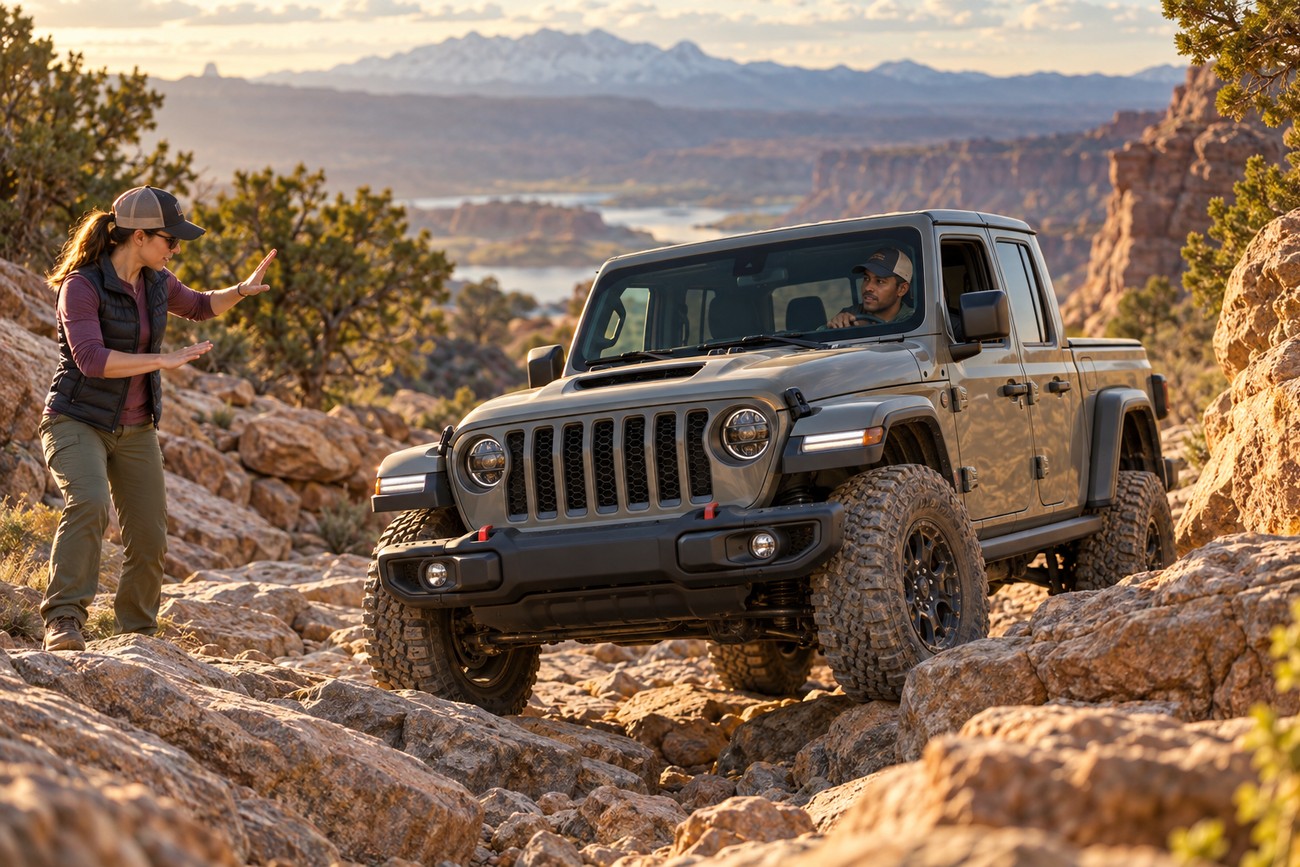
Begin with the line, not the throttle. Walk the obstacle when conditions allow, identify the highest points under the axle housings and frame, and use a spotter who can see the rear corners. The Mojave’s length makes rear clearance and breakover just as important as the approach to the first rock.
Use low range and apply throttle smoothly. The 2.72:1 low range gives the Mojave a higher crawl speed than the Rubicon’s 4:1 low range, which can help on mixed sand-and-rock routes. On a technical section, however, that speed demands more precision with both throttle and brake inputs.
Abrupt pedal movements create wheelspin, driveline jerks, and unnecessary heat in the brakes. If the truck begins to roll faster than the chosen line allows, use controlled braking rather than repeatedly lifting and stabbing the accelerator. Stop and reset when traction is lost instead of building momentum to compensate for an unsuitable line.
Accepting a bypass is part of competent trail driving. A conservative line, a spotter, and patient tire placement allow the Mojave to complete many light and moderate rock trails without modifications. The objective is controlled progress, not proving that every Rubicon obstacle can be forced with a different badge.
The Smartest Mojave Rock-Crawling Upgrades
Protection should come before power. Strong rock rails protect the sills and provide a predictable sliding surface, while skid plates reduce the consequences of contact under the engine, transfer case, and fuel system. Verify what is already fitted, because factory rock rails and steel bumpers vary by Mojave X configuration and options.
A front aftermarket locker directly addresses the Mojave’s largest technical-crawling limitation. A manual sway-bar disconnect can also improve articulation compared with the factory fixed setup. Together, these changes give the front axle more ability to stay engaged on diagonals and ledges.
A balanced build commonly centers on 35-inch tires, a light lift, stronger rock rails, and skid plates. The aim is additional clearance and protection without adding unnecessary weight to the bed or raising the center of gravity more than the trail requires. The Mojave’s desert suspension should remain part of the design rather than being replaced with an aggressive lift chosen only for appearance.
Moving to 35- to 37-inch tires can create follow-on work. Larger tires may require gearing and brake corrections, and aggressive lifts can reduce predictable control if suspension geometry, steering, and braking are not addressed. A 37-inch setup is a more demanding modification path, with greater stress, cost, and packaging concerns than a moderate 35-inch build.
Keep added armor purposeful. Every plate and accessory increases mass that the engine, brakes, suspension, and recovery equipment must manage. On a Mojave used for both desert running and rocks, selective protection usually preserves more of the truck’s original balance than covering every surface with heavy steel.
Common Mojave Rock-Crawling Mistakes and Myths
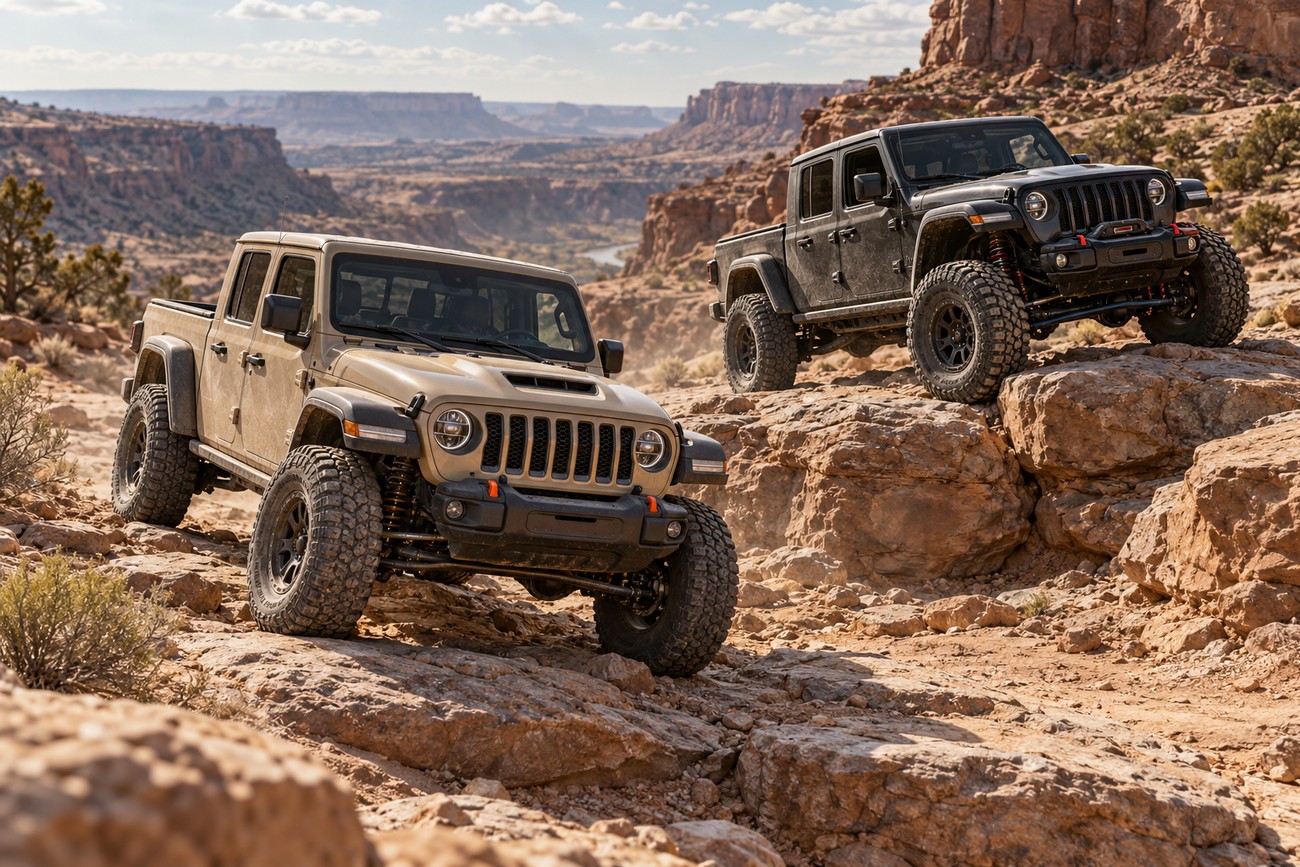
The Mojave is not mechanically equivalent to a Rubicon with FOX shocks added. It lacks the Rubicon’s 4:1 low range, front locker, and factory sway-bar disconnect. Its suspension and structure serve a different priority, so the Desert Rated badge should not be treated as proof of superior performance on every kind of trail.
Desert Rated measures suitability for a defined desert mission, including high-speed sand and whoops. It does not measure overall off-road ability or assign the Mojave a higher level of technical rock performance than a Rubicon. Dealer statements about “no loss of rock-crawling capability” are broad marketing language without a defined obstacle class or test method.
A rear locker is not always enough. It can maintain drive at the rear axle, yet diagonal ledges and steep climbs may still leave the front tire spinning or the front end unable to articulate. Drivers who treat the locker as permission to add throttle often convert a traction problem into wheelspin, brake heat, or body damage.
Buying a Mojave for maximum technical capability creates the wrong starting point. The same caution applies to large tires and aggressive lifts installed without correcting gearing and braking. Choose the vehicle and modifications around the dominant terrain, then build control and protection before chasing tire size.
Should You Choose a Mojave for Rock Crawling?
Choose the Mojave if desert speed, sand, whoops, and mixed terrain are central to your use. It offers a better factory compromise for fast desert running than a Rubicon, while still handling many light and moderate rock trails with suitable lines and driving technique.
Choose the Rubicon if difficult technical crawling is a regular priority and you want the strongest stock package. Its 4:1 low range, front and rear lockers, and factory sway-bar disconnect provide more control and traction margin before modifications become necessary.
The Mojave can become more versatile with a front locker, manual sway-bar disconnect, armor, and appropriately sized tires. Those changes improve its rock performance, although they do not erase the Gladiator’s long-wheelbase behavior or turn the truck into a factory Rubicon.
The decision rule is simple: prioritize the Mojave when the trail includes fast desert terrain and occasional rocks; prioritize the Rubicon when technical rock crawling is the main event. The right choice depends on the dominant trail type, not the vehicle’s visual toughness.
Frequently asked questions
The best choice depends on whether you mean the best stock technical crawler, the best Gladiator for mixed terrain, or the most suitable vehicle for a particular trail network. Model year, equipment, service history, and local regulations can also affect a purchase decision.
Which Jeep model is best for rock crawling?
For stock technical rock crawling, the Jeep Wrangler Rubicon is generally the strongest choice in the Jeep lineup because its design prioritizes low-speed control, axle traction, and articulation. The Gladiator Rubicon adds pickup-bed utility while retaining the core hardware that makes the Rubicon effective on difficult rocks.
The Gladiator Mojave suits drivers who combine desert running, sand, and faster trail work with light or moderate rocks. It can be a better mixed-use choice for that terrain pattern, while the Wrangler Rubicon is usually easier to place on tight, technical obstacles because of its shorter body and rock-focused equipment.
What is the lawsuit against the Jeep Gladiator?
There is no single universal “Jeep Gladiator lawsuit” that establishes a general defect affecting every Gladiator. Legal claims can involve specific model years, alleged defects, accident circumstances, or consumer-law issues, and their status depends on the jurisdiction and court record.
Before relying on a lawsuit headline, verify the case name, model years covered, allegations, and whether a court has approved a settlement or other resolution. Litigation status does not determine the Mojave’s rock-crawling capability. For a purchase, check the vehicle identification number for open recalls and review documented repairs with a qualified technician.
What years should you avoid for the Jeep Gladiator?
There is no responsible universal year to avoid without checking the individual vehicle. Early production examples and later model years can have different recalls, software updates, service campaigns, and owner histories, so a blanket year rule can exclude a well-maintained truck or overlook a neglected one.
Screen the specific Gladiator by VIN, confirm that recall work is complete, inspect the frame and suspension, and check for drivetrain, clutch, transmission, steering, and electrical repair records. A pre-purchase inspection is especially important for a Mojave that has been used on rocks, because aftermarket lifts, oversize tires, bent protection parts, and underbody impacts may matter more than the model year alone.







