
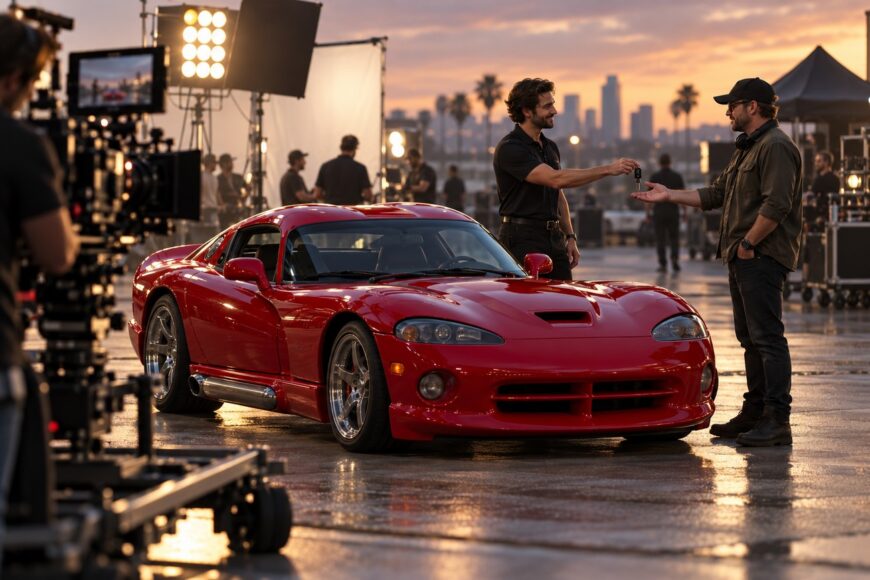
A Dodge Viper gives a music video a recognizable shape: a long hood, a low stance, and a cockpit that can carry a close-up without the engine ever starting. That makes it a strong hero car for portraits, performance shots, and night lighting. The harder booking is a Viper the production can actually drive on camera.
A low advertised hire rate can hide that distinction. The car may be available only for stationary display, while delivery, waiting time, a deposit, and damage exposure sit outside the headline price. Before committing to a location or building a driving sequence around the car, establish which shots the owner will approve and what it will take to deliver them safely.
- Decide what the Viper actually needs to do on camera
- Build a quote around the shoot, not the advertised rate
- Get driving permission, coverage, and filming terms in writing
- Scout the route for clearance before scouting the shot
- Keep the shoot moving without abusing the car
- Know when a stationary Viper is the better production choice
- Frequently asked questions
- How do I get my own Dodge Viper into a music video?
- How do I check that the Viper in the listing is the one insured for the shoot?
- What is the most rented supercar?
- How much does it cost to rent a Lamborghini for 4 hours?
- How do I get my car into a movie?
Decide what the Viper actually needs to do on camera
Separate the concept into parked beauty shots, controlled low-speed passes, and driving or stunt scenes. Those categories place different demands on the car, driver, location, and supplier. A stationary setup might deliver the essential image through lighting and camera movement, while a pass requires a defined route, stopping point, and permission to move.
Send prospective suppliers a shot list with the planned actions, surface, and location. “Music-video rental” tells an owner too little: opening a door for a close-up is different from repeated starts, and a slow pass is different from a hard launch. Ask which actions are approved for the specific vehicle and who may operate it.
Dodge Viper production ended in 2017, so available shoot cars generally come through owners or specialty suppliers rather than a mainstream rental fleet. A listing that welcomes video shoots may cover stationary display only; another owner may allow controlled driving under conditions. Availability for filming does not establish unrestricted movement or stunt permission.
The driving plan also has to fit the car. Depending on generation and version, SRT-10, Gen IV, and Gen V Vipers are roughly in the 500–645 hp range, with rear-wheel drive and a manual transmission. If the treatment depends on an inexperienced performer driving through a tight set, change the shot before asking a supplier to approve it.
Build a quote around the shoot, not the advertised rate
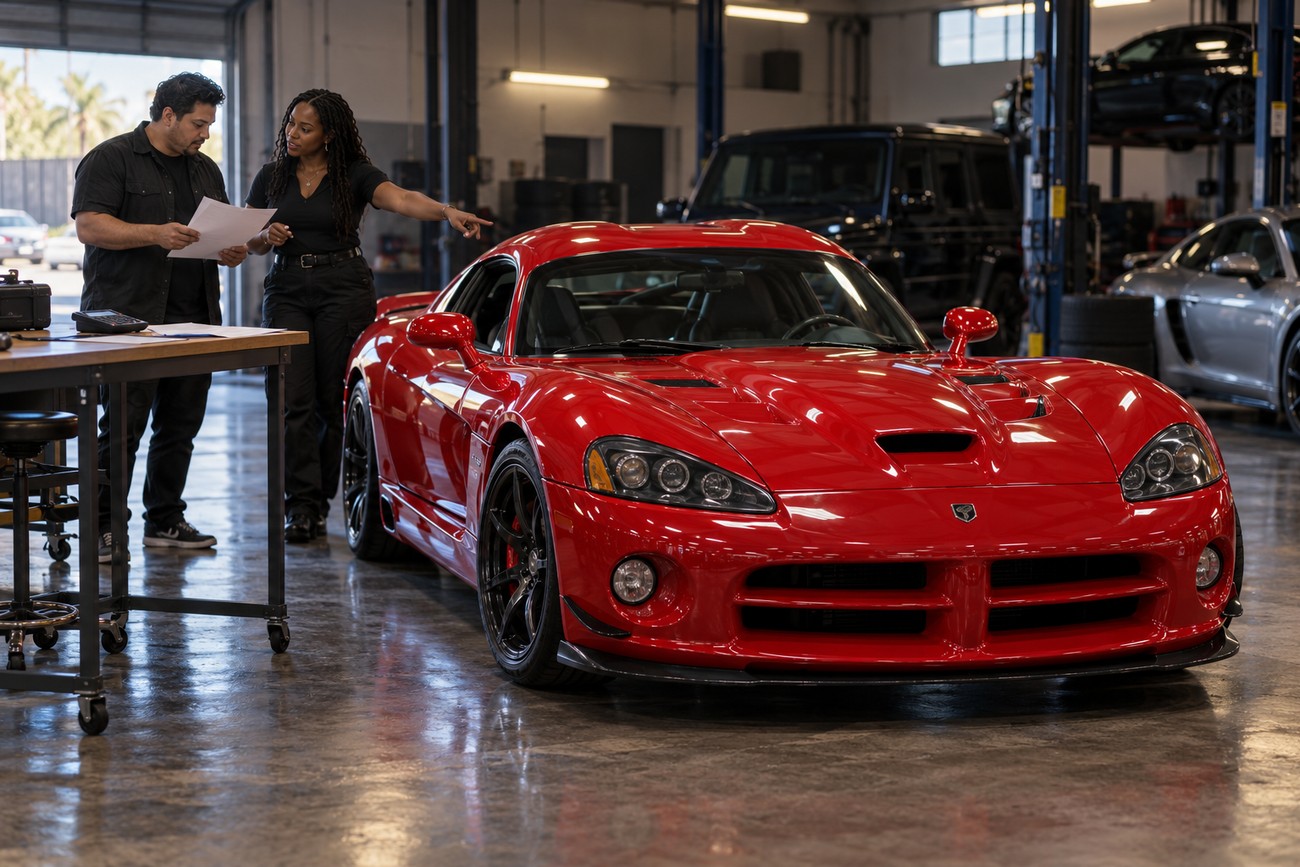
Request a written quote for the actual schedule and shot list. It should separate hire hours, travel and delivery, mileage, idle or standby time, the deposit, and the damage excess. Include any insurance-related cost and the cost of a supplier-provided driver or attendant, if required. There is no reliable universal Viper music-video rate to substitute for those details.
Check when paid time begins and ends. A car that arrives before lighting is ready may spend much of its booking waiting off camera; a late location handover can have the same effect. Ask how overtime is charged and whether travel, loading, and the return journey fall inside the quoted period.
Treat the deposit as money the production must have available, rather than the final cost of a mishap. The agreement should explain the damage excess, how condition is assessed, and when a deposit is returned. Stationary display and driving scenes may carry different prices and conditions, even when they use the same car for the same number of hours.
Weather and schedule changes need a line in the budget and the contract. Confirm the cancellation deadline, postponement terms, and what happens if the supplier withdraws the car because conditions change. If an owner requires an attendant throughout the day, agree on that person’s hours and authority before the crew builds a call sheet around the vehicle.
Get driving permission, coverage, and filming terms in writing
The supplier agreement should identify the car, any approved driver, filming location, schedule, and permitted maneuvers. Record who accepts the vehicle at handoff, who holds the keys, and how damage or a mechanical concern will be reported. Permission for a parked shoot does not extend automatically to driving, burnouts, hard launches, or drifting.
Public-road filming may require location or authority approvals and production liability coverage; the requirements depend on the jurisdiction and the activity. Speak with the relevant location contact and production insurer before promising a road shot. An ordinary rental agreement or verbal approval from an owner should not be assumed to cover filming use.
For moving shots, wet-road work, or stunts, give the insurer and any permitting authority the real action rather than a softened description of it. Driver eligibility and coverage may be stricter than for a stationary setup. If the proposed shot changes during prep, obtain approval for the revised maneuver before filming it.
Put vehicle-use limits alongside the creative permissions. Some owners prohibit revving, burnouts, or hard launches and may check tire or clutch condition at return. Confirm whether mounts, smoke, confetti, or other effects are allowed on the actual car, and agree on any release or screen-use terms the production needs before the vehicle reaches set.
Scout the route for clearance before scouting the shot
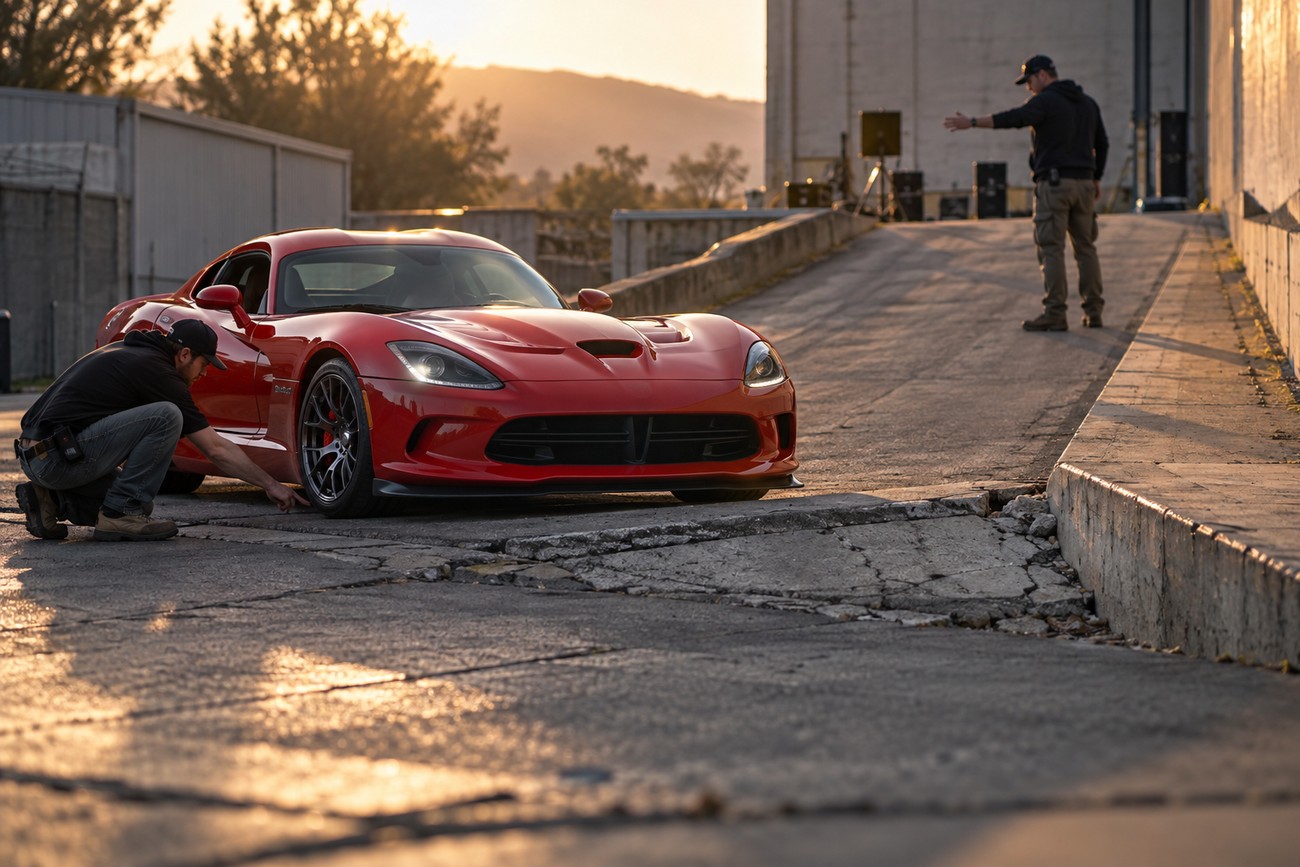
A location can frame the Viper well and still be impossible to enter without damage. Its low ground clearance and long front overhang make ramps, curbs, uneven asphalt, and loading access potential hazards. Walk the entire route from arrival to parking, including the exit the car will use after filming.
Check approach angles at each change in level, along with turning room and a safe place to stop or reverse. A narrow courtyard may accommodate the parked car yet leave no workable path for a repeatable pass. If the vehicle is being delivered, establish where the carrier can unload and how the Viper gets from that point to the set.
Low-angle location photos are useful before dispatch because they show the geometry a wide establishing image can conceal. Share the problem areas with the supplier and driver, then arrange a walk-through where practical. A car that runs reliably is not automatically suitable for the access route or the maneuver in the treatment.
Cold or wet conditions make a powerful rear-wheel-drive Viper less forgiving and may alter what the owner or insurer will allow. Keep a dry, accessible parking position available while the crew resets, and agree on a weather decision point. If a wet surface is central to the visual idea, resolve permission and coverage during prep rather than on the shoot morning.
Keep the shoot moving without abusing the car
At handoff, record the vehicle’s condition with the supplier: bodywork, front lip, wheels, tires, interior, and any existing marks. Note fuel and mileage where relevant, and clarify who may move the car between setups. Use a driver approved for the booking who is comfortable with a powerful rear-wheel-drive manual; a crew member with a license is not a suitable default.
Set the sequence of shots before the engine starts. Agree on warm-up, starts, engine-running time, and any rev limits, then group shots so the car is not repeatedly started for minor camera adjustments. Loud exhaust can interfere with clean dialogue or playback and may conflict with location noise limits, so plan sound-dependent takes accordingly.
Rehearse the exact approach, stop, restart, and exit without cameras before the first take. It can expose a clearance or clutch-control problem while there is still room to alter the setup.
Once the route works, capture the approved actions rather than improvising a more aggressive take. A slow pass repeated for coverage still puts wear on the vehicle, so keep the driver, supplier contact, and camera team aligned on the number and form of passes.
Inspect the actual car for condition-specific concerns before building a tight schedule around repeated starts or idling. An older example may need attention to its battery, tires, leaks, electronics, or behavior while stationary with the engine running; age alone does not prove a fault. If something changes on set, stop and follow the agreed reporting procedure rather than asking for another take.
Know when a stationary Viper is the better production choice
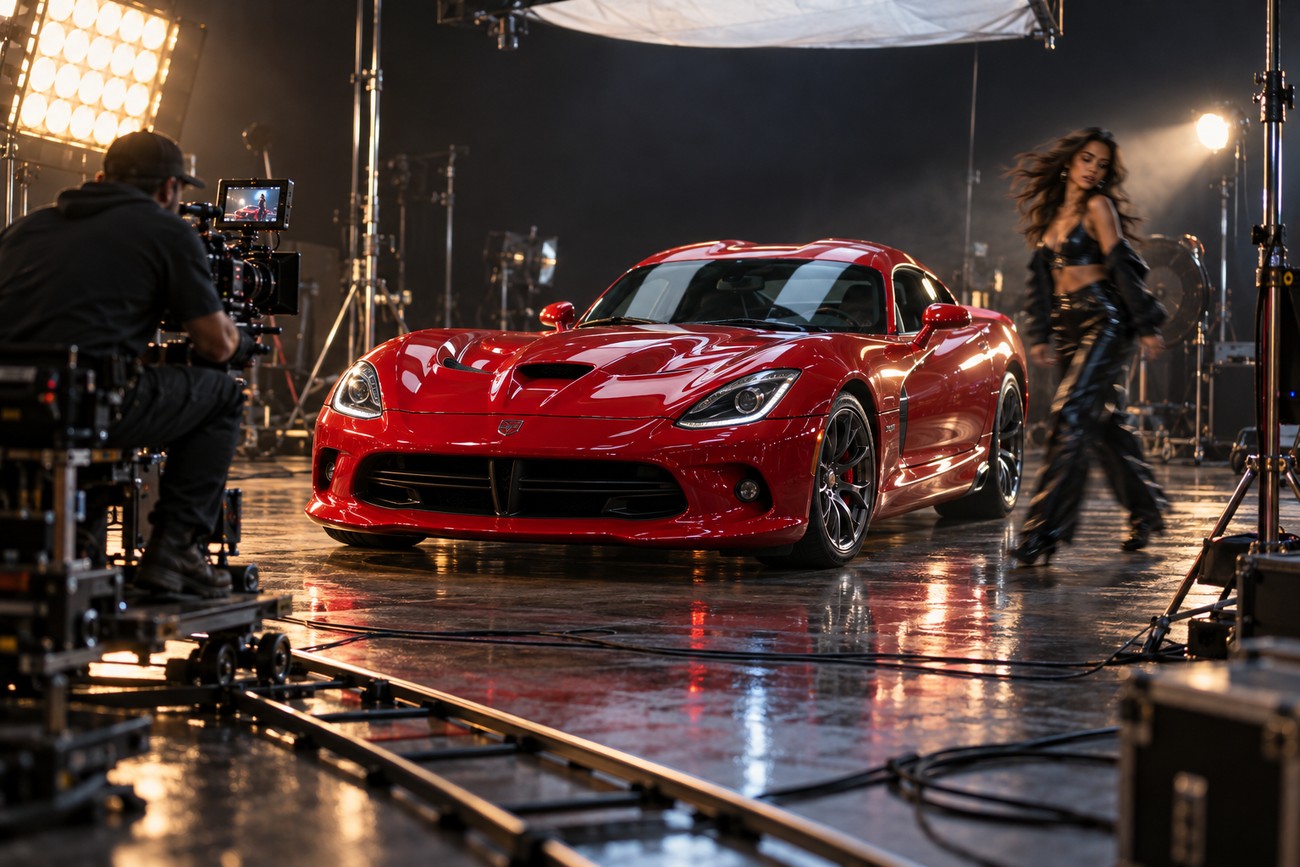
A parked Viper can carry the central image through close-ups of its profile, cockpit, wheels, and reflections. Movement can come from performers, lighting, and camera position without placing the car on an unsuitable route. This also gives the crew more control over continuity when performance coverage takes longer than planned.
If the edit needs road energy, consider whether a separately approved vehicle or camera-car setup can supply movement while the Viper remains the hero car in closer shots. Plan the cut honestly so the vehicles and actions do not create an obvious mismatch. Any vehicle used for moving footage still needs its own permissions and coverage.
Change the concept before booking if the owner will not approve the shot list, the location cannot be accessed safely, or the weather exposure is unacceptable. Driver eligibility and damage terms can also make a proposed pass impractical. Forcing a moving shot under those conditions risks both the car and the day’s remaining coverage.
Before paying, match recent photos to the offered car and confirm the permitted shots, any approved driver, written quote, insurance review, and any required location approvals. Keep a fallback shot list that works with the Viper parked, and record cancellation terms in case private-owner availability changes. That gives the production usable footage even if the planned movement cannot proceed.
Frequently asked questions
These checks cover vehicle sourcing beyond the immediate shoot plan. They are useful whether you are offering a car, verifying a booking, or comparing another specialty vehicle.
How do I get my own Dodge Viper into a music video?
Prepare current photos, vehicle details, and a dated condition record, then request the production’s shot list before offering the car. Agree in writing on payment, who may handle or drive it, applicable insurance, damage procedures, and release terms. Decide whether your offer covers display only.
How do I check that the Viper in the listing is the one insured for the shoot?
Request recent photos and identifying vehicle details, then compare them with the booking agreement and the insurer’s vehicle description. At handoff, verify that the arriving car matches those records before filming. Resolve a substitution with the supplier and insurer first.
What is the most rented supercar?
There is no dependable worldwide ranking of the most rented supercar. Fleets and demand vary by market, and rental companies do not publish one comparable set of booking figures. For a shoot, check local availability for the model and date you need instead of relying on a global claim.
How much does it cost to rent a Lamborghini for 4 hours?
There is no reliable single four-hour price: model, location, mileage, deposit, and whether filming is permitted all affect the quote. Ask suppliers to price the same four-hour schedule and usage, including delivery, waiting time, damage excess, and any production conditions.
How do I get my car into a movie?
Submit accurate photos and vehicle details to production vehicle suppliers or casting calls that seek picture cars. State whether the car may be driven, modified, or used only as a parked prop. Before accepting a booking, review handling, payment, insurance, damage, and cancellation terms.







