

I expected the compact footprint of a Kia Rio and received keys to a Cadillac Escalade instead. That kind of surprise at the counter can be welcome if you need space, luggage capacity, or a more comfortable highway ride. It can also be a poor match for a city itinerary built around narrow streets, tight garages, and modest fuel use.
The immediate choice is practical: enjoy the larger vehicle, or ask whether a smaller car is available and easier to use. A vehicle upgrade may carry no added rental charge without making the whole trip cheaper. Fuel, parking, the card hold, coverage, and damage exposure can all change the value of the deal.
- Why a Kia Rio booking can turn into an Escalade
- Should you take the Escalade or ask for a smaller car?
- The costs a free upgrade does not erase
- What to settle before leaving the rental counter
- Driving a full-size SUV on a compact-car itinerary
- Return it cleanly—and watch for later charges
- Frequently asked questions
- What rental car company rents Cadillac Escalades?
- How can I rent a Cadillac Escalade specifically?
- Which car rentals let you skip the counter?
Why a Kia Rio booking can turn into an Escalade
A US rental reservation generally secures a vehicle class, not a guaranteed Kia Rio or other specific model. The model shown during booking may be an example of the class, while the vehicle assigned at pickup depends on the fleet available at that location. This is why a compact booking can lead to an equivalent car, or sometimes a vehicle from a higher class.
If the booked class is unavailable, an equivalent or higher-class vehicle may be offered; confirm whether the agreed rental rate remains unchanged. A higher-class substitution is not automatically a mistake, and it does not mean you must accept every vehicle placed in front of you. The applicable agreement and the conversation at the counter determine what has actually been offered.
There is also a difference between an assignment at the existing rate and a paid upgrade. An employee may describe both as an “upgrade,” even though one is a fleet substitution and the other adds a charge or optional product. Read the revised agreement before signing, especially if the vehicle shown is far above the class you reserved.
Cadillac Escalade rentals are also a normal product offered by large rental networks, rather than a model that appears only through a counter error. Hertz lists Escalade rentals, subject to location and availability. That availability does not turn a compact reservation into an Escalade guarantee, and it does not guarantee that a requested Escalade will be waiting at every branch.
Should you take the Escalade or ask for a smaller car?

Start with the route rather than the badge on the grille. Extra seats and cargo room can help with several passengers, bulky luggage, or long highway stretches. The same space becomes a burden when the itinerary includes downtown streets, older hotels, narrow parking structures, or frequent stops where a compact sedan would be easy to place.
Consider who will drive, too. A person comfortable with large SUVs may find the Escalade manageable, while another driver may spend the trip judging clearances and searching for a suitable parking space. A larger vehicle can also affect fuel planning and the cost of parking, even when the rental rate itself has not changed.
Ask the counter agent whether an equivalent compact car is available, whether another smaller vehicle can be assigned, or whether an approved exchange can be arranged. A downgrade, refund, or immediate replacement may depend on inventory and company rules, so treat it as a request rather than an entitlement. Get any agreed change reflected in the rental paperwork before leaving.
A useful test is simple: if the vehicle makes the route, parking plan, or driver eligibility harder, its higher class may have little practical value. If the route is open, the garage can accommodate it, and the added space solves a real problem, keeping the Escalade may be reasonable. Either way, decide based on total use, not the word “free.”
The costs a free upgrade does not erase
A no-charge vehicle substitution can still increase fuel and parking costs. An Escalade-sized SUV may use more fuel than the compact car you planned to drive, and its larger footprint may limit cheaper or easier parking choices. Those costs come from using the assigned vehicle, even if the rental agreement shows no upgrade line.
Separate the rental rate from the card authorization or deposit, optional coverage, toll arrangements, and the fuel policy. Mileage limits may also matter alongside the quoted price. The deposit or card hold and any optional coverage charges depend on the rental terms and location, so confirm the actual amounts before signing rather than relying on a general expectation about luxury or full-size vehicles.
Counter add-ons require an informed choice. Personal auto insurance or credit-card benefits may help in some circumstances, but check whether they cover the assigned vehicle class, the country or state, and the relevant type of loss before declining the rental company’s product. A benefit that applies to an economy rental may have different limits for a large SUV.
Fuel is another place where assumptions become expensive. Check the starting fuel level, the return requirement, and the company’s charge if the tank is short. Ask how tolls are handled, whether mileage is limited, and which drivers and protections are included. These terms often matter more than the model name printed on the reservation.
What to settle before leaving the rental counter

First, confirm that the substitution does not change the agreed rental rate. Ask whether the vehicle was assigned at the existing rate or whether an upgrade, coverage product, or other option has been added. Then compare the vehicle description, class, and charges on the agreement with what the employee explained.
Next, check the practical terms: mileage, fuel level, authorized drivers, coverage, return location, return time, and the card hold. The driver collecting the car commonly needs a valid license and a payment card in their own name. Another person may have paid for the booking, but eligibility for the assigned class and the payment arrangement depend on company policy.
Verify the final agreement before taking the keys: assigning a higher-class vehicle at the existing rate is operationally different from adding a paid upgrade or optional product.
Do not assume that qualifying for an economy car automatically qualifies you for an Escalade. Some US rental classes may allow drivers aged 21 or older, while other categories may require age 25 or older; young-driver fees can apply. License rules also vary. International Driving Permit requirements depend on the state and rental company: some guidance says an IDP is not always legally required, while other guidance recommends carrying one.
Walk around the vehicle before departure and record existing damage with clear photos or video. Include wheels, tires, bumpers, mirrors, glass, and the roof where practical, then make sure the rental record reflects the damage. This takes a few minutes and gives you a contemporaneous record if the return inspection later raises a question.
Driving a full-size SUV on a compact-car itinerary
Translate the Escalade’s size into route decisions before you drive away. Check garage clearance and entry restrictions before following a navigation app into a hotel or parking facility. Allow more room to turn, reverse, and open doors, particularly in crowded lots and on older streets designed around smaller cars.
Parking deserves a separate plan. A space that easily fits a compact sedan may leave little room for an SUV’s body, wheels, and doors. If a stop depends on a tight garage, a narrow loading area, or street parking, consider changing the stop or asking the rental company again about an approved smaller vehicle.
Fuel planning should also change. Even without a higher daily rental rate, fuel spending can rise during a longer drive or a route with frequent stops. Check the gauge at pickup, understand the return policy, and avoid treating the larger tank or vehicle as proof that fuel use will be modest.
Documenting wheel and body condition is especially useful before driving an unfamiliar large vehicle. Damage to wheels, tires, or larger body panels can become a costly dispute even when the incident seems minor. Drive conservatively around curbs, ramps, narrow turns, and low barriers, and keep the pickup record with the rental agreement.
Return it cleanly—and watch for later charges
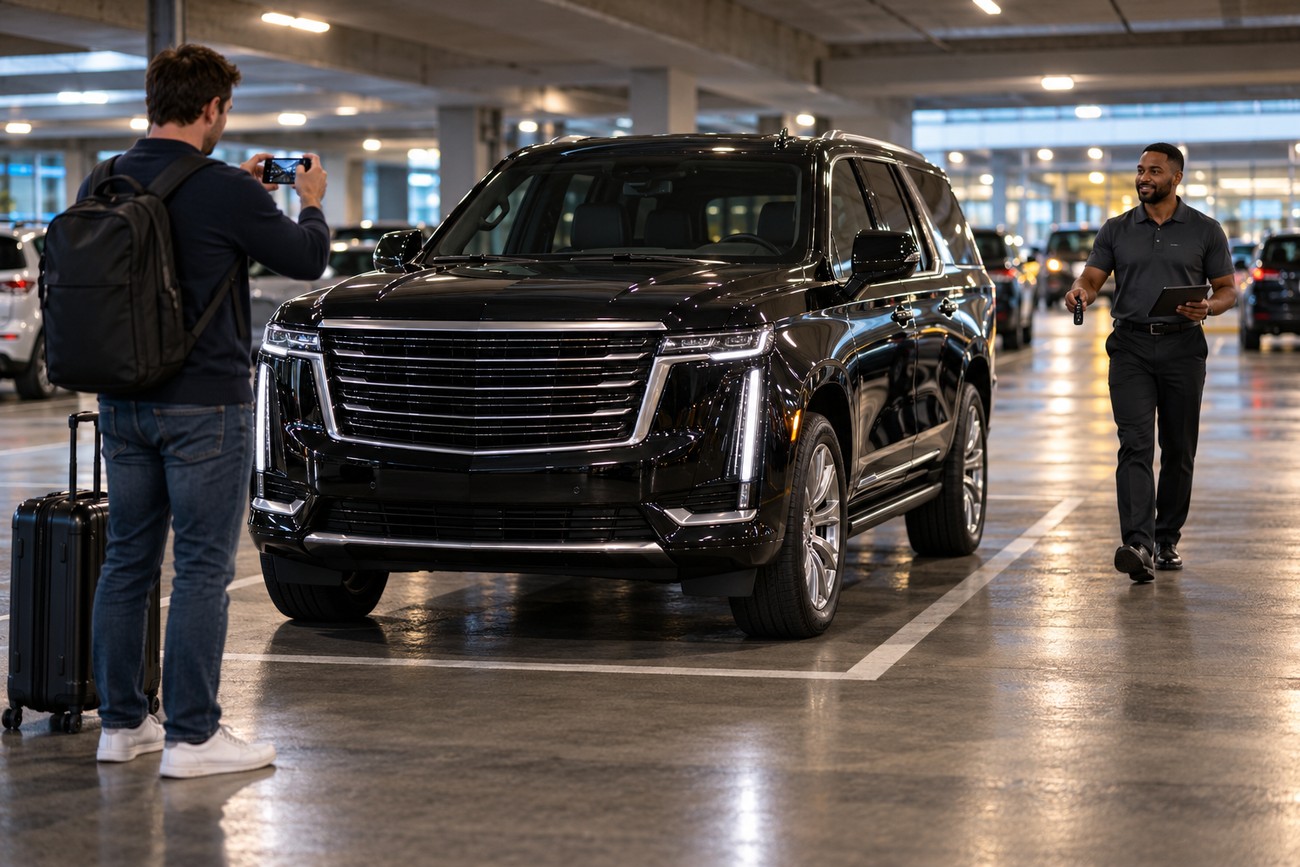
Return the vehicle to the agreed location at the stated time and follow the fuel policy in the agreement. A different branch, after-hours drop, or late arrival may have separate procedures. Do not rely on a universal grace period; return timing and late-fee rules must be checked in the applicable contract.
Before handing over the keys, take final photos of the exterior, interior, fuel level, mileage, and parking position when the location permits it. Keep the receipt, return confirmation, and rental agreement. If an employee notes new damage or a fuel difference, ask what is being recorded and retain a copy of the relevant document.
Tolls, traffic violations, and related processing charges may appear after the vehicle has been returned. Under the rental agreement, renters are generally responsible for violations incurred during their rental, and the company may process tolls or pass through a violation-related fee later. The end of the physical rental does not necessarily end every financial record associated with it.
If a later charge arrives, compare it with the supporting record, including the date, location, vehicle, toll or violation notice, and any contractual processing fee. A delayed charge is not automatically improper, but it should be traceable to the agreement and the period of your rental. Contact the company promptly if the record does not match your dates or the documented return condition.
Frequently asked questions
Model-specific requests, express pickup, and post-pickup changes follow separate rules. Check the reservation terms and the selected location before treating a listing or app feature as a guarantee.
What rental car company rents Cadillac Escalades?
Hertz lists Cadillac Escalade rentals, subject to location and current availability. The listing means the model can be offered through the company’s rental program; it does not mean every branch has one ready or that every reservation includes a specific vehicle guarantee.
How can I rent a Cadillac Escalade specifically?
Search for an Escalade-specific offering, select a location and date, and read the booking language carefully. Confirm whether the reservation names the Escalade as a guaranteed model or presents it as an example within a class. Contact the location before pickup to check availability, because requesting the model and receiving an explicit model guarantee are different arrangements.
Which car rentals let you skip the counter?
Check the rental company’s eligible express-pickup or app-based program for the specific reservation, driver, location, and vehicle class. Eligibility may depend on completing identity checks, holding the required payment card, and using a participating branch.
Skipping the counter changes the pickup process; it does not itself secure an Escalade. If a different vehicle is assigned through the app or pickup area, review the agreement and ask about the rate and terms before driving away. Exchanges after pickup depend on the company’s program and the location’s rules.







