

The Renault Avantime still looks like a design proposal that escaped into production. Its tall glasshouse, long doors, and three-door body combine the visual drama of a coupé with the space and seating position of an MPV. Few cars from the early 2000s have such a distinctive shape, and fewer still make their unusual packaging the main attraction.
That rarity creates a difficult buying decision. The Avantime may become more desirable as sound examples disappear, yet its specialized body, glazing, trim, and electrical systems can make restoration slow and expensive. The useful distinction is between a collectible car bought for character and an investment expected to deliver predictable appreciation or a quick resale.
- Why rarity has not settled the collectible question
- What makes one Avantime more desirable than another
- The costs a cheap example can conceal
- Buy, hold, or walk away?
- Frequently asked questions
- How should I insure an Avantime whose replacement cost is hard to establish?
- How should an Avantime be stored if it is driven only occasionally?
- How rare is the Renault Avantime?
- What is the coolest Renault car?
Why rarity has not settled the collectible question
Renault produced the Avantime from 2001 to 2003, with approximately 8,500 built. It used the Renault Espace III platform, then wrapped that practical architecture in a three-door coupé-MPV body. The result was technically related to a mainstream people carrier while looking unlike a conventional family vehicle.
That short production run gives the model genuine collectible appeal. Its design is easy to identify, its concept was unusual, and its commercial failure has created a small cult following. Enthusiasts may value it as a piece of automotive design history rather than as an ordinary used Renault.
Scarcity alone does not establish investment-grade appreciation. Demand remains concentrated among marque specialists and owners who appreciate the concept, so a sale can take time even when the asking price is reasonable. Values may move in steps as usable cars leave the market, but broad resale liquidity is still unproven.
What makes one Avantime more desirable than another
The strongest car is usually complete, substantially original, and supported by a transparent ownership and service history. Avantime-specific body panels, glass, trim, interior pieces, and wheels can be difficult to replace, which makes completeness more useful than a polished advert photograph. Low mileage helps only when the car has also been maintained and stored properly.
The 2.0 turbo petrol and 3.0 V6 petrol are the main engine examples buyers encounter, with manual and automatic configurations varying by market. A V6 or an unusual later configuration may attract additional collector interest, yet neither automatically earns a premium. Mechanical condition, documentation, and the absence of improvised repairs usually carry greater practical weight.
Check rare parts individually before treating a car as original: compare the interior trim, glass markings, exterior panels, wheels, and small fittings with period-correct examples. Missing items can be harder to source than major mechanical components.
Inspect the cabin closely for replaced plastics, damaged leather, mismatched inserts, and incomplete equipment. Ask for invoices rather than relying on the phrase “fully restored.” A fresh repaint can hide previous repairs, while a slightly used-looking car with its correct parts and clear history may be the more persuasive long-term purchase.
The costs a cheap example can conceal
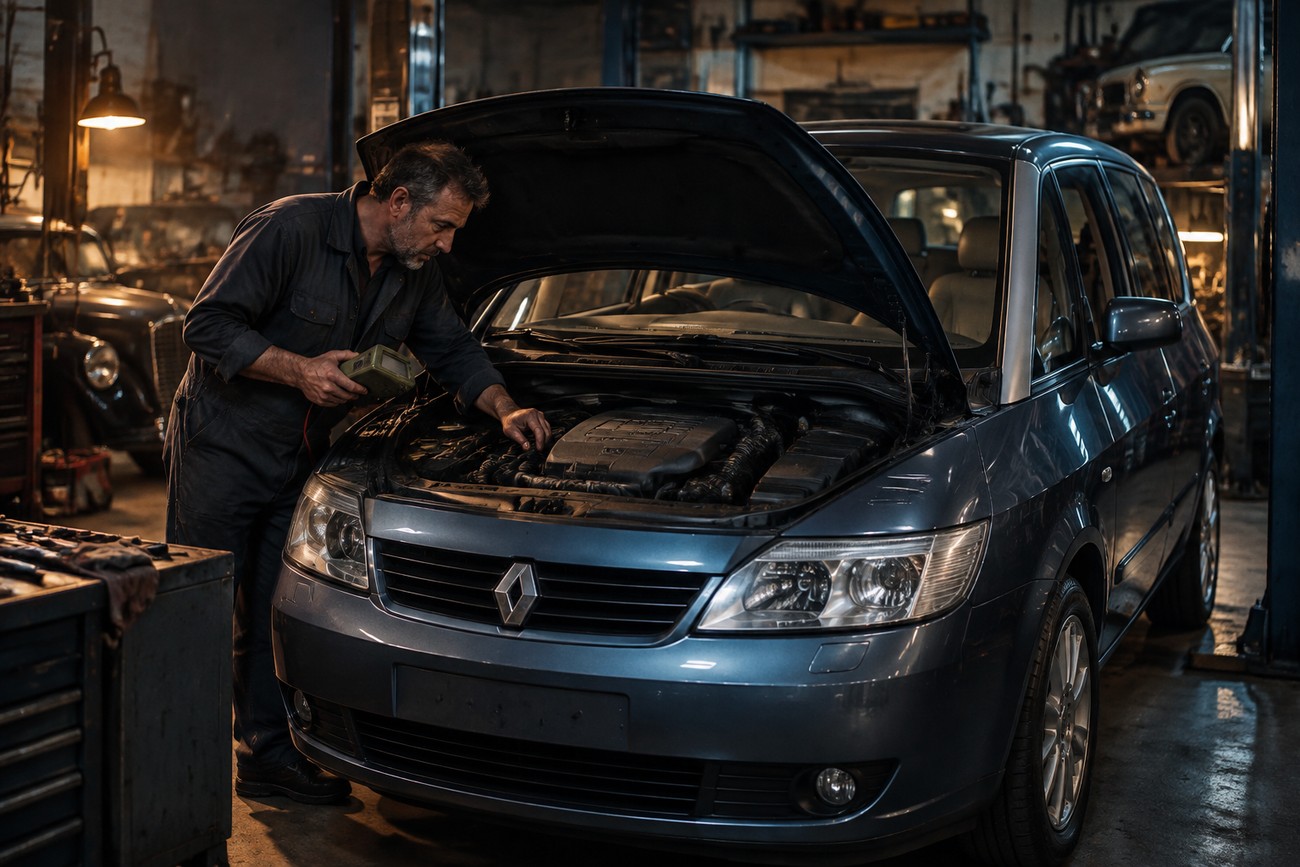
A low purchase price can reflect missing parts rather than a bargain. Specific exterior panels, large glass sections, seals, and interior components may require a prolonged search through specialists, dismantlers, or overseas listings. Waiting for one small trim piece can keep a car off the road while the rest of the restoration stands ready.
Age-related work deserves the same attention as mileage-related wear. Suspension components, rubber parts, cooling systems, electrical equipment, and glass mechanisms can all need attention on an older Avantime. Small electrical faults may appear as intermittent warnings, failed equipment, or unexplained glitches, making diagnosis more time-consuming than the symptom suggests.
The unusual body construction also raises the stakes after a collision. Even modest damage can involve difficult alignment, scarce panels, unusual glazing, and poor previous repairs that only become visible during disassembly. Look beneath attractive paint for uneven gaps, corrosion, disturbed fasteners, overspray, and evidence that the structure was repaired without the correct references.
Interior restoration is another common budget trap. Leather, plastics, switches, and distinctive trim can be expensive to rebuild, while a substitute part may reduce the car’s sense of originality. Storage, insurance, specialist labor, and downtime belong in the purchase calculation from the beginning.
Buy, hold, or walk away?
See the car in person before committing, preferably with someone familiar with unusual older Renaults. Verify the body panels, glass, wheels, interior fittings, and equipment against the seller’s description. Read service records for cooling-system work, engine maintenance, electrical repairs, and previous bodywork rather than treating mileage as a summary of condition.
A sensible purchase is a sound, complete enthusiast car that can be enjoyed without immediate reconstruction. A cheap incomplete project requires a separate budget for scarce parts, restoration labor, storage, and periods when the vehicle cannot be driven. The difference between those two choices is often larger than the initial price gap.
Allow for local insurance rules, secure dry storage, and the cost of maintaining a car used only occasionally. Registration schemes may recognize historic vehicles differently by jurisdiction, and insurance valuation may depend on evidence of condition and originality. The Avantime is easier to justify as a distinctive car for personal enjoyment than as a purchase made for a predictable return.
Frequently asked questions
The Avantime’s appeal is real, but ownership decisions depend on the individual car. These answers address practical issues that are easy to overlook when rarity dominates the discussion.
How should I insure an Avantime whose replacement cost is hard to establish?
Ask insurers whether an agreed-value policy is available and what evidence they require. Recent photographs, a detailed condition report, invoices, ownership records, and documentation of rare original parts can help establish the vehicle’s condition. The insurer may accept, adjust, or decline a stated value, so confirm the settlement terms in writing before relying on the valuation.
How should an Avantime be stored if it is driven only occasionally?
Keep it in a dry, ventilated space, use appropriate battery care, and inspect it regularly rather than leaving it untouched. Low use does not stop seals, fluids, tires, cooling components, or electrical connections from aging. Continue time-based servicing, exercise the car carefully, and check for dampness or pest damage before each longer drive.
How rare is the Renault Avantime?
Approximately 8,500 Avantimes were built between 2001 and 2003. That makes it rare for a mass-market model, although rarity varies by country and by surviving specification. The number alone does not determine value; completeness, condition, history, and local enthusiast demand remain decisive.
What is the coolest Renault car?
That is subjective, but the Avantime has a strong claim because its three-door coupé-MPV layout is almost impossible to confuse with another Renault. Its appeal comes from the complete design idea: unusual proportions, a spacious cabin, and a concept that failed commercially yet remains memorable. Buyers should still judge the individual car on condition and ownership costs.







