
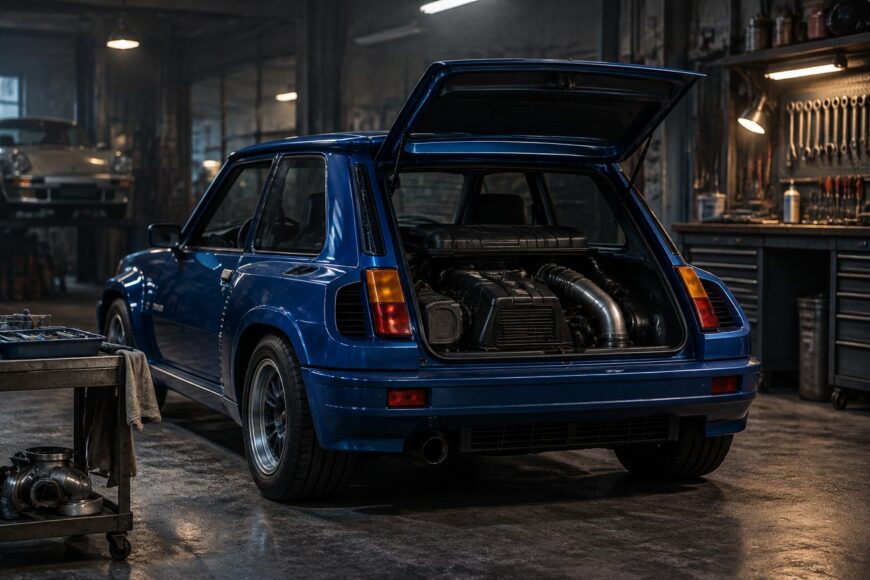
A mid-engined hatchback with rear-wheel drive, a five-speed manual gearbox, and a turbocharged four-cylinder engine still offers a driving experience few modern cars can reproduce. The Renault 5 Turbo 2 is compact, light by contemporary standards, and mechanically unusual enough to make every journey feel like an event. That appeal comes with a less visible choice for the buyer: a rare car can be thrilling on the road while taking considerable time and money to put right.
Paint quality and a low odometer reading tell only part of the story. Evidence of safe, regular use is often more valuable than a car that has spent years stored and recently received cosmetic attention. Fuel hoses, pumps, K-Jetronic components, wiring, rubber parts, body seams, and the identity of the major assemblies deserve greater weight than polished panels. Ownership becomes rewarding when the car’s condition, specification, and history are understood before purchase.
- What the Turbo 2 is—and what it is not
- Behind the wheel: why 160 ch does not feel like a modern hot hatch
- After storage, the fuel system comes before the first proper drive
- Pre-purchase inspection: look past paint and claimed mileage
- Living with it: access, parts, and the real repair burden
- The ownership decision: buy the evidence, not the story
- Frequently asked questions
- How many Renault 5 Turbo 2 cars were made?
- Which common Renault 5 problems are relevant to a Turbo 2?
- What should I request before traveling to view a Turbo 2?
- What should I confirm with an insurer before buying one?
What the Turbo 2 is—and what it is not
Renault Classic specifies a longitudinal mid-mounted 1,397 cc four-cylinder engine, a 7:1 compression ratio, 160 ch at 6,000 rpm, and 21.4 m·kg at 3,250 rpm. The standard drivetrain is rear-wheel drive through a five-speed manual gearbox, with Bosch K-Jetronic mechanical fuel injection. This layout places the engine behind the passenger compartment and gives the car a very different mechanical character from an ordinary front-engined Renault 5.
The Turbo 2 uses more steel panels and standard Renault 5 components than the original Turbo. That change made the later car less exclusive in construction and added weight, with about 970 kg often quoted for the Turbo 2 against about 900 kg for the earlier car. It did not turn the car into a routine economy hatchback: the central engine installation, wide bodywork, turbo system, rear-drive transmission, and specialist interior still create a rare and complex package.
Power figures require careful reading. Renault Classic confirms 160 ch as the factory reference, while some catalogues list 185 bhp. The higher figure should be treated as a claim requiring verification against the particular car’s engine, turbocharger, injection system, and documented specification. It may reflect a different source, conversion, or modified example rather than standard Turbo 2 output.
Published performance figures vary for similar reasons. Turbo 2 accounts give weights from approximately 970 to 1,012 kg and 0–62 mph times from about 6.7 to 7.7 seconds, depending on source, specification, and test method. Those figures help establish the car’s period performance, but they are poor substitutes for checking whether a specific example has the correct engine, healthy boost system, sound transmission, and usable brakes.
Behind the wheel: why 160 ch does not feel like a modern hot hatch

The stated 160 ch is delivered through a compact, rear-drive platform rather than the traction systems and electronic controls common in current hot hatches. Turbo response can make the delivery feel progressive at first and urgent once boost arrives. A short wheelbase and a responsive rear axle demand smooth inputs, especially when the road surface, tire condition, or suspension setup is uncertain.
That character is part of the attraction, though it leaves less room for careless driving. Steering, throttle, and braking should be treated as connected inputs because weight transfer matters greatly in a small mid-engined car. Individual cars can behave differently after decades of repairs, alignment changes, worn bushings, altered ride height, or non-standard tires, so a description of the model cannot guarantee the behavior of the car in front of you.
A first drive should begin with the condition of the tires, brakes, dampers, bushings, and steering components rather than an acceleration demonstration. The unusual original wheel and tire sizes complicate replacement choices, and an apparently suitable modern substitute can alter clearance, gearing, steering weight, or the balance of the chassis. Permissible dimensions and compatibility need to be checked against documentation for the individual vehicle.
Acceleration claims also need context. A mechanically healthy Turbo 2 may feel rapid because the cabin is close to the engine and the boost arrives with a distinct change in pace, even when the quoted test figures differ between sources. A road test should establish whether the car tracks straight, brakes evenly, changes gear cleanly, and responds predictably under boost, with the driver allowing for traffic, weather, and the car’s unknown history.
After storage, the fuel system comes before the first proper drive
A long-stored Turbo 2 should be recommissioned as a fuel-system project before it is treated as a running car. Inspect the tank area, fuel hoses, connections, pumps, filters, and visible wiring, then replace aged hoses and renew fluids and filters as the car’s condition requires. Owners report aging pumps and fuel hoses, and an old rubber line can create a safety problem before any engine fault becomes obvious.
K-Jetronic can also suffer after prolonged disuse. Difficult starting, an unstable idle, and weak response are reported symptoms, but they do not identify one failed component by themselves. The system depends on correct fuel pressure, clean fuel delivery, sound air control, and an absence of leaks, so replacing or adjusting parts at random can turn a manageable recommissioning job into a chain of unnecessary work.
The useful sequence includes measuring fuel pressure, checking for air leaks, and testing both cold and hot starting. The engine should be observed at idle, during warm-up, and under load where safe and practicable. Adjusting the injection “by ear” is a poor substitute for measurements, particularly when an apparently minor vacuum leak or weak pump is affecting the whole system.
There is limited detailed independent fleet-wide failure data for the Turbo 2. Reported problems with pumps, hoses, K-Jetronic, wiring, starting, clutch, brakes, and suspension should therefore be treated as practical inspection priorities rather than a quantified failure rate. A car that starts after years of storage has demonstrated only that it starts; it has not demonstrated safe fuel pressure, reliable hot restarting, or durable operation under boost.
Pre-purchase inspection: look past paint and claimed mileage
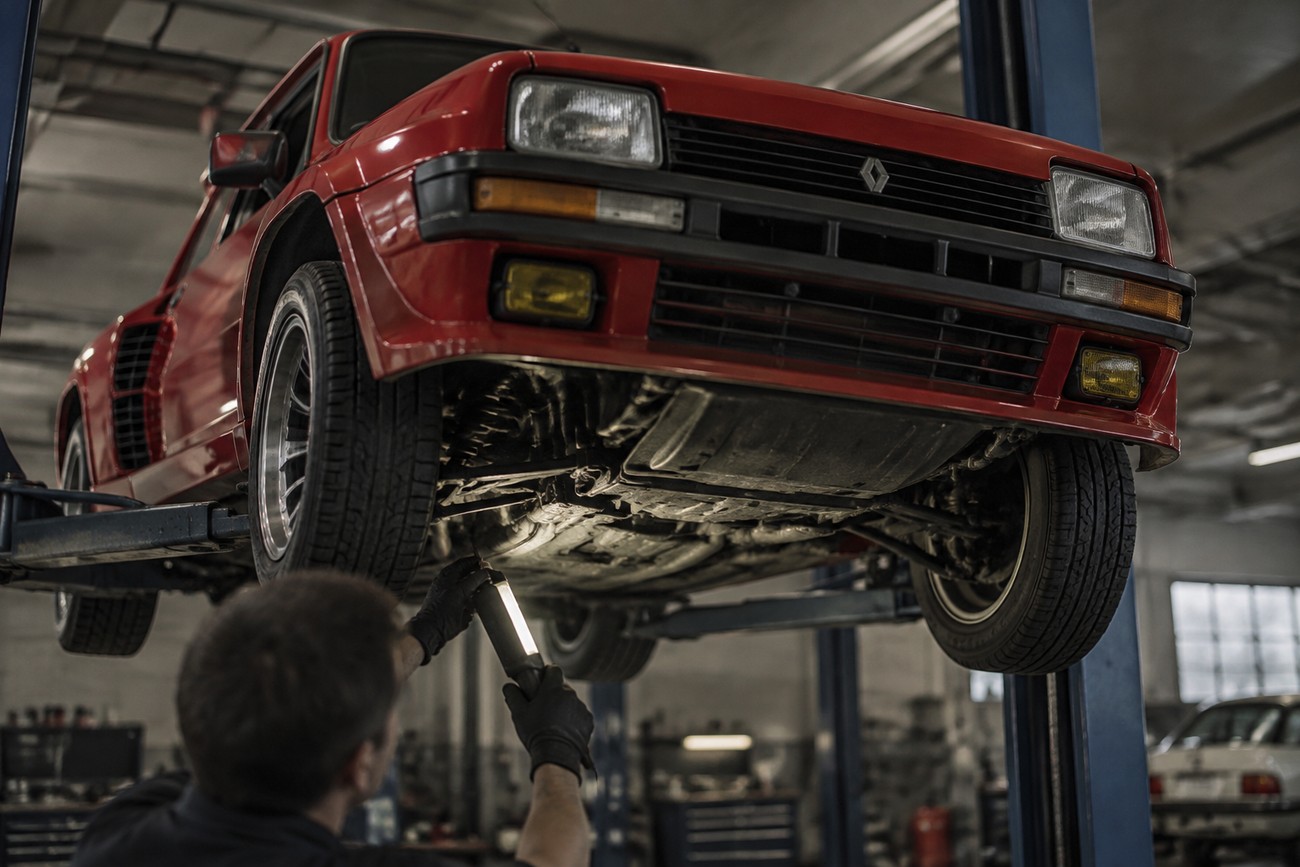
Begin with identity and history. Check the vehicle identity against its documents, then trace the engine, gearbox, turbocharger, injection system, wheels, and major restoration work as far as records allow. Low mileage and fresh paint do not establish that the underside, seams, wiring, fuel system, or structural repairs are sound. A history showing regular use and coherent maintenance can be more informative than a low figure supported by little paperwork.
Move underneath the car before becoming distracted by the bodywork. Inspect the floor, seams, suspension mounting areas, repairs, corrosion, fuel lines, and the routing of cooling and other systems. The steel content of the Turbo 2 does not remove the need to examine its distinctive bodywork: wide panels, air ducts, glass, interior components, and other model-specific parts can be difficult or expensive to replace when damaged or poorly repaired.
The engine bay and electrical system deserve deliberate attention. Look for brittle insulation, improvised grounds, overheated connectors, non-standard relays, fuel seepage, and evidence that a previous owner has bypassed a fault. Confirm that the engine, gearbox, turbocharger, injection equipment, wheels, and body or interior parts correspond with the documented specification; a running car can still contain a costly mixture of incorrect assemblies.
Insist on a genuinely cold start when circumstances permit, and remain with the car through warm running and a hot restart. Check idle quality, oil or fuel smells, smoke, clutch operation, gear selection, brake feel, steering response, and behavior under boost during a suitable road test. Fuel-pressure assessment and cold-start, hot-start, and under-boost checks provide information that a short driveway demonstration cannot.
A specialist familiar with Renault Turbo cars is worth involving before money changes hands. A general classic-car inspection may identify corrosion or obvious leaks while missing the significance of a non-original injection component, an incorrect wheel specification, or a poorly executed mid-engine repair. Club knowledge can help locate a competent inspector, though any advice on settings or compatibility still needs to be checked against factory information for the car being considered.
Living with it: access, parts, and the real repair burden
Mid-engine packaging changes the labor involved in ordinary diagnosis. Access to the engine and related components is less direct than in a conventional Renault 5, while cooling lines, fuel lines, wiring, and other systems must be routed through a compact body. A fault that sounds simple over the phone may require extended access, testing, and reassembly before its cause is confirmed.
Original Turbo 2-specific parts remain a major ownership consideration. More steel panels and standard Renault 5 components can make some items more familiar than those on the first Turbo, yet wide body panels, air ducts, glass, trim, cabin parts, turbo hardware, and specialist mechanical pieces are still rare. A missing or damaged part can turn a routine repair into a long search or a costly restoration exercise.
Wheel and tire fitment adds another layer of planning. Original dimensions are unusual by modern standards, and a replacement must provide suitable clearance and compatibility rather than merely fitting the hub. Confirm the approved dimensions for the individual vehicle, including any changes made during restoration, before ordering a set or accepting a seller’s assurance that a common substitute is harmless.
Club forums and marque networks are useful for locating parts, identifying known solutions, and finding people who understand the model’s particular systems. Their advice has limits: one car’s modified fuel setup, suspension geometry, or electrical repair may be unsuitable for another. Use community knowledge to generate leads, then verify settings, components, and compatibility against factory documentation and the actual specification of the car.
The ownership decision: buy the evidence, not the story
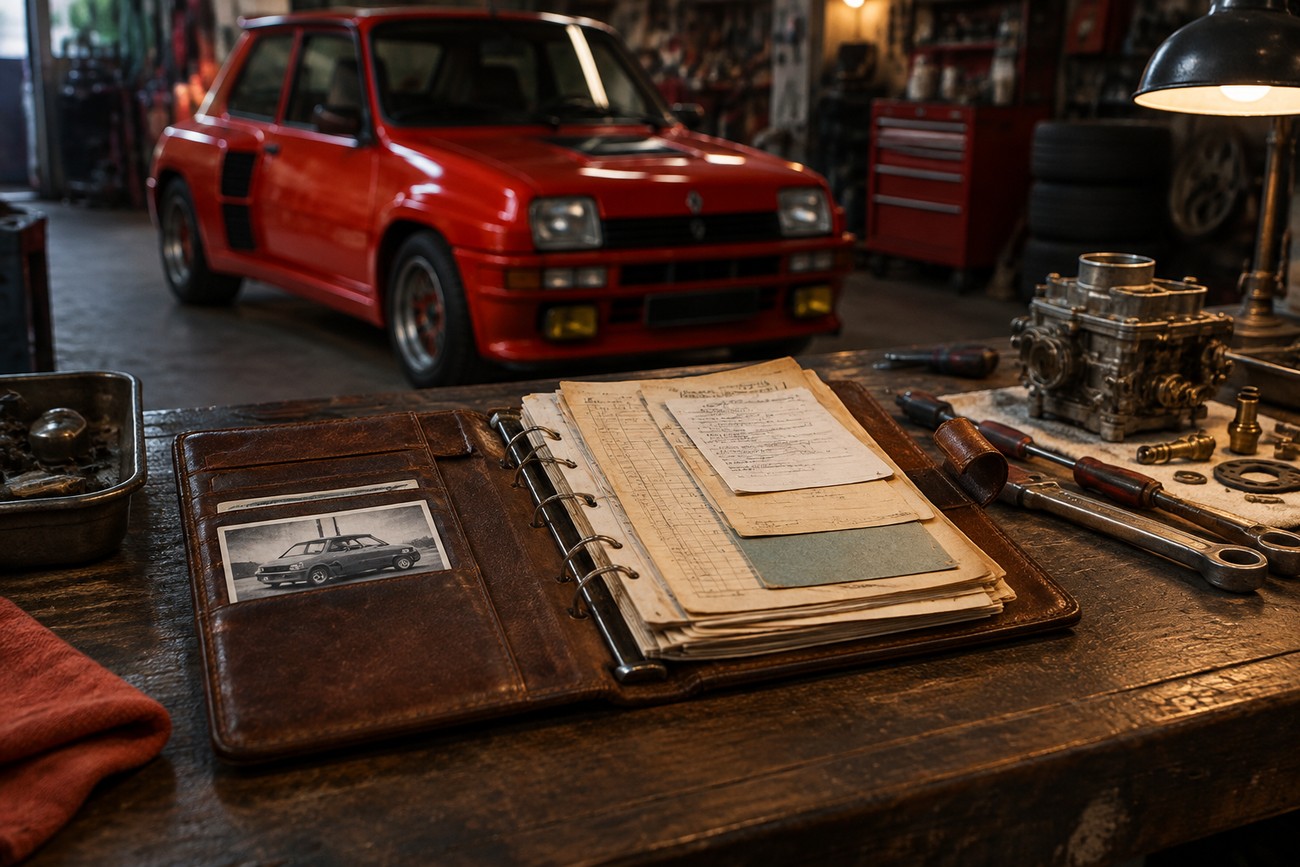
The strongest purchase case is built from several kinds of evidence: clear identity, consistent documentation, quality repairs, specialist inspection, and proof that the car has been exercised and maintained. A regularly used example with honest wear may need fewer immediate fuel-system and rubber-component interventions than a low-mileage car revived after long storage. Odometer readings matter, though they should sit below condition and history in the decision.
Budget for the car’s actual architecture and parts supply. Work on a Turbo 2 can involve specialist diagnosis, difficult access, scarce body or interior components, and original mechanical parts that cannot be replaced by selecting an item from a standard Renault 5 catalogue. The appropriate reserve depends on the individual inspection, yet a budget based on ordinary Renault 5 ownership leaves little protection against a hidden fuel, injection, wiring, or bodywork problem.
A superficially restored car deserves particular caution. New paint can conceal unfinished seams, unresolved wiring, incorrect panels, or a fuel system that has never been tested through proper cold and hot operation. A sound example with documented restoration may cost more to acquire, but its evidence reduces uncertainty in a way that cosmetic presentation alone cannot.
Resale and liquidity depend heavily on originality, restoration quality, and documented history. The model has no ordinary mass-market benchmark that makes every example easy to value or sell. Independent fleet-wide reliability statistics are limited, so the sensible decision is to assess the individual car, the quality of its work, and the availability of support before deciding whether its driving character justifies the ownership burden.
Frequently asked questions
The Turbo 2’s limited production and unusual specification make basic documentation especially important. These answers focus on ownership decisions that are easy to overlook when attention is fixed on performance or appearance.
How many Renault 5 Turbo 2 cars were made?
Renault states that 3,167 Renault 5 Turbo 2 cars were built from 1982 to 1986. That figure applies to the Turbo 2 and should not be combined with production totals for the earlier Renault 5 Turbo. A car’s individual identity and documentation still require checking, because production rarity does not prove that every surviving example retains its original specification.
Which common Renault 5 problems are relevant to a Turbo 2?
General aging-car concerns such as corrosion, deteriorated wiring, poor grounds, damaged seals, and neglected brakes remain relevant. Turbo 2 ownership adds fuel pumps and hoses, K-Jetronic after storage, difficult access around the mid-engine installation, and scarce model-specific parts. A standard Renault 5 repair list can therefore be a useful starting point, though it cannot replace a Turbo 2-specific inspection or establish that ordinary Renault 5 parts are compatible.
What should I request before traveling to view a Turbo 2?
Request identity and history documents, restoration invoices, records for the engine and major mechanical assemblies, clear photographs of the underside, and a continuous video showing an uncut cold start through warm running. Ask for evidence of the car’s actual wheels, bodywork, interior, and any declared modifications. This material can eliminate an unsuitable car before a long journey, though it cannot replace an in-person inspection, fuel-system assessment, or specialist road test.
What should I confirm with an insurer before buying one?
Ask the insurer how the car’s value will be established and whether the policy allows an agreed or otherwise documented insured value in your market. Confirm that declared modifications, non-standard engine or turbo components, wheel and tire changes, and restoration work are recorded accurately.
Also clarify intended use, storage requirements, mileage conditions, permitted drivers, and the evidence required after a claim. Terms differ between markets and policies, so obtain the conditions in writing before purchase rather than assuming that a rare classic receives identical cover everywhere.







