
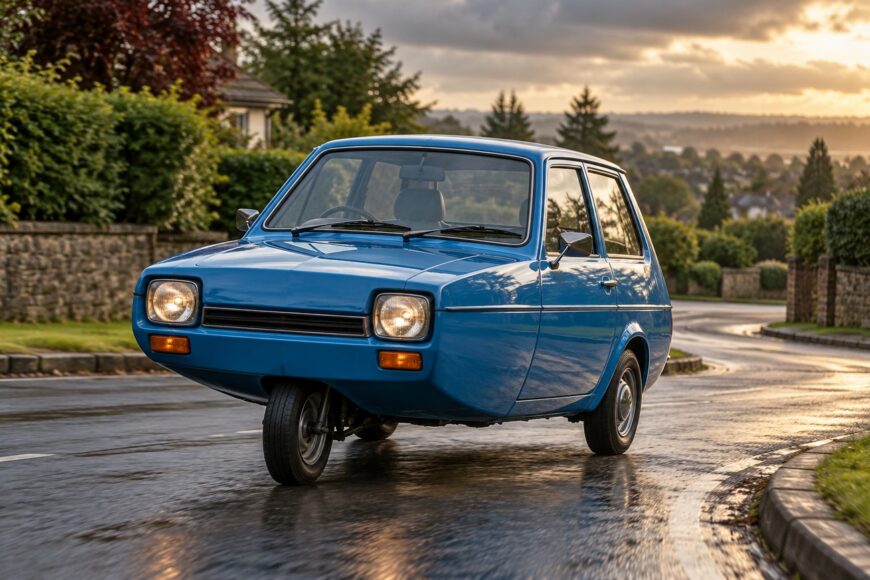
The Reliant Robin is often treated as a rolling punchline: a small car that supposedly falls over whenever its driver turns the steering wheel. That image is memorable, yet it does not answer the real safety question. Three wheels do not make tipping inevitable, although the Robin’s one-front-wheel-and-two-rear-wheel layout gives it less resistance to sideways lean than a conventional four-wheel car.
Its narrow track, very low mass, and sensitivity to loading demand more disciplined driving than many small cars. Rollover risk depends on track width, center-of-gravity height, speed, and tire grip acting together. A well-maintained Robin driven with smooth inputs can behave predictably; a worn, badly loaded, or abruptly driven example can become unsettling quickly.
- Why the Reliant Robin Became a Rollover Punchline
- What Actually Makes a Three-Wheeler Tip
- Why a Robin Can Feel Nervous on Real Roads
- The Driving and Maintenance Mistakes That Expose the Risk
- Is the Reliant Robin a Bad Car—or a Demanding One?
- Three Wheels, Licensing and Everyday Use
- Frequently asked questions
- What was the top speed of the Reliant Robin?
- Why did the Reliant Robin have three wheels?
Why the Reliant Robin Became a Rollover Punchline
The Robin’s public image was shaped by comedy, television, and exaggerated portrayals of extreme handling. The popular claim is that the Robin tips on almost every corner. The supplied evidence does not provide a mass-crash statistic confirming that description, so the joke should not be treated as a measurement of normal road use.
There is a real engineering reason for the reputation. A three-wheeler with one wheel at the front and two at the rear has a triangular support area, and that arrangement offers poorer resistance to a sideways lean than the support area of a conventional four-wheel car. A sharp steering input at excessive speed can therefore produce a serious stability event.
The outcome still depends on how the maneuver is made. Speed, steering rate, tire grip, road surface, loading, and the condition of the suspension all influence whether the tires slide, the vehicle runs onto two wheels, or the driver simply feels a pronounced body movement. Tipping is possible during an abrupt or poorly judged maneuver, but it is not inevitable in normal driving.
That distinction matters to owners and prospective buyers. A media scene may show a carefully selected, sharply provoked reaction because it is visually memorable. Ordinary use involves a much wider range of speeds, surfaces, and driver inputs, where a maintained Robin can be driven without reproducing the extreme behavior associated with its punchline.
What Actually Makes a Three-Wheeler Tip
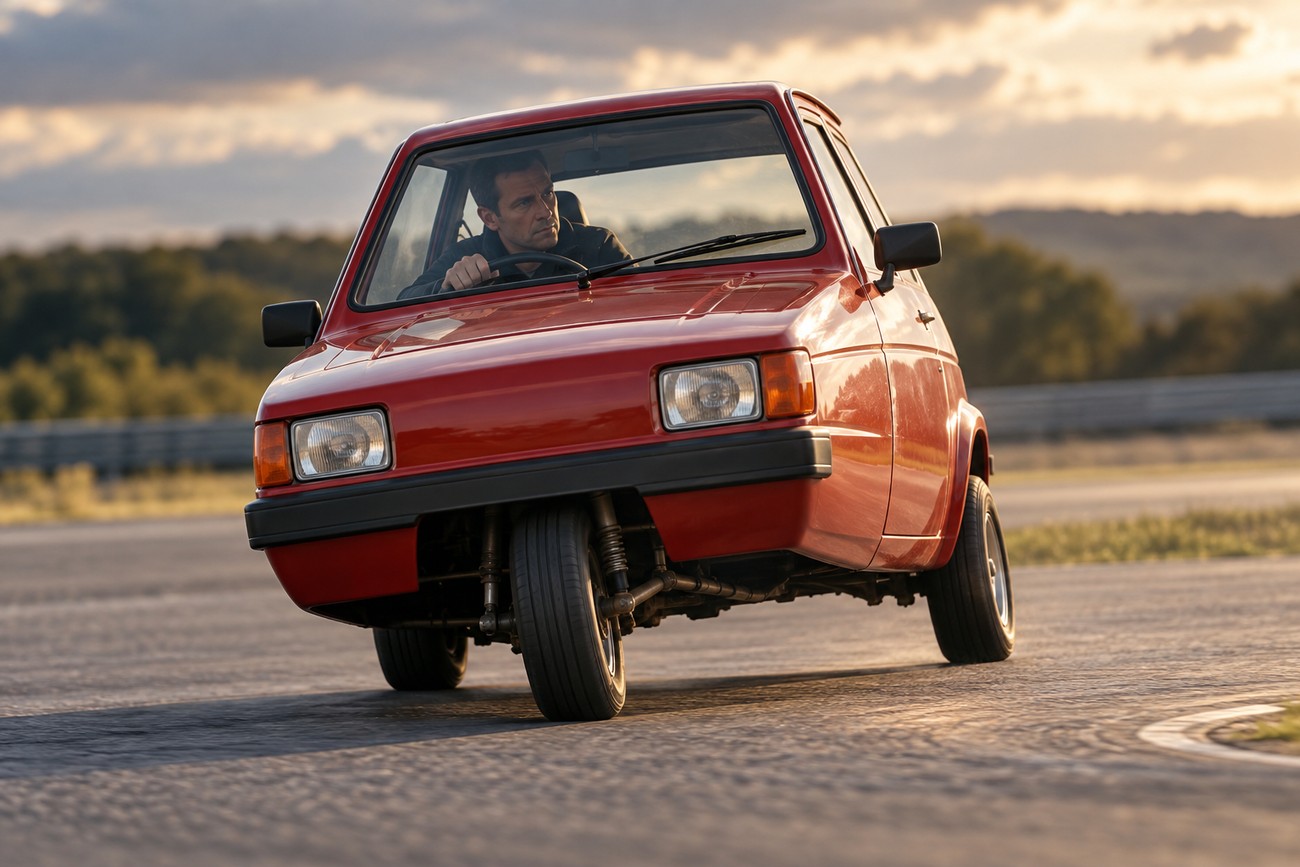
Every vehicle supports its weight through the contact patches of its tires. With one front wheel and two rear wheels, those contact points form a triangle. The vehicle remains stable while the combined forces acting through its center of mass stay within that support area; as cornering forces move the effective load toward an edge, the available margin decreases.
Lateral load transfer is the key process. During a turn, the vehicle’s mass resists the change in direction, creating a sideways load that shifts pressure between the tires. If the center of mass is high, the track is narrow, or the turn is taken quickly, the load shift becomes more demanding. A narrow track and tall body make two-wheel running more likely during a sharp turn.
Tire grip changes the picture as well. High grip can generate greater lateral force before a tire slides, which may sound desirable, but that force can also impose more load on the vehicle’s structure and support geometry. Lower grip may cause a controlled slide earlier, while a sudden change in grip between tires can make the vehicle’s response harder to predict.
The main rollover determinants are track width, center-of-gravity height, speed, and tire grip acting together. Wheel count alone cannot establish whether a vehicle will tip. A four-wheel car with a high center of mass can also roll in a severe maneuver, while a three-wheeler with a sound suspension, appropriate tires, and smooth inputs may remain composed in ordinary use.
The decisive issue is the center of mass relative to the contact patch during the specific phase of a turn. A steering correction halfway through a corner can move the load differently from the initial turn-in. Releasing the throttle, applying it suddenly, or crossing a bump can alter that balance again, which explains why a Robin may feel more sensitive to corrections than drivers expect from a conventional small car.
Why a Robin Can Feel Nervous on Real Roads
The Robin’s light plastic or fiberglass body and very low mass make passengers, cargo, and suspension condition more influential than they would be in a heavier car. Adding or removing weight changes the balance between the front and rear contact patches. An unladen rear can contribute to the impression that the back of the vehicle feels light, while poor loading can make the response less settled.
Road irregularities expose that sensitivity. Ruts, uneven surfaces, and raised or broken edges can disturb the steering and make the vehicle feel as though it has been repositioned in the lane. Drivers accustomed to a heavier small car may find the disturbance more immediate because the Robin has less mass to resist the initial movement.
Wet roads reduce the grip available for steering and braking, leaving less room for an inaccurate line or a late correction. The Robin may then feel nervous even when the underlying issue is a reduced margin for error rather than a sudden mechanical failure. Smooth steering and a measured approach to changing direction become especially important in those conditions.
Examples do not all behave alike. A worn or poorly adjusted suspension, incorrect tire pressure, or wheel imbalance can make one Robin substantially less predictable than another. This is why a road impression from a single car cannot automatically define every vehicle of the model.
The Driving and Maintenance Mistakes That Expose the Risk
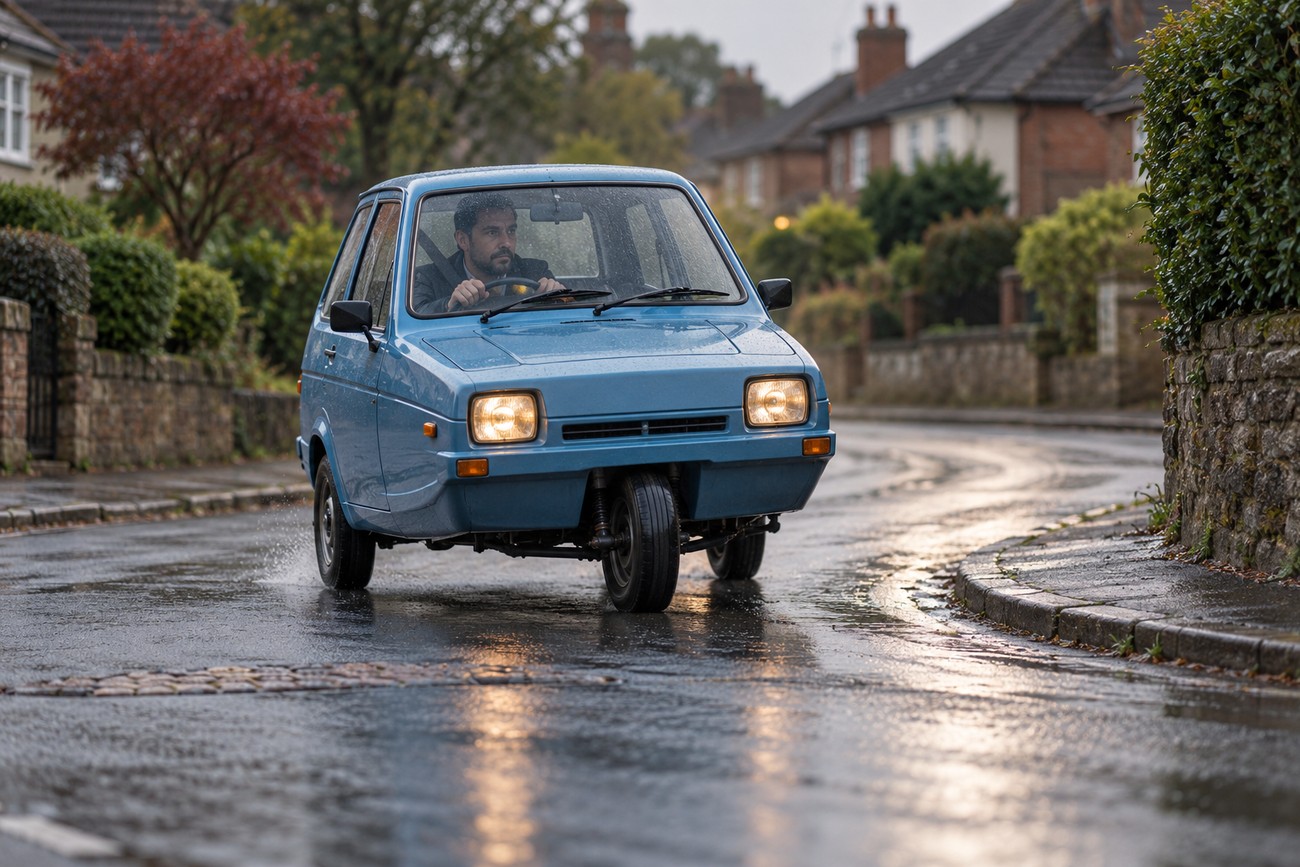
The most common driving error is entering a corner at a speed chosen for an ordinary small car. That approach can overestimate the Robin’s remaining stability margin, especially on a narrow road, a wet surface, or a bend with a bump. The safer response is to reduce speed before the turn and preserve a smooth, steady line rather than trying to test the vehicle’s limits.
Abrupt steering corrections are particularly important. A quick turn followed by an opposite correction can create a rapid sequence of mass transfers, while a sudden throttle change can alter the vehicle’s balance in the middle of the corner. The risk comes from the combined movement, speed, and available grip, rather than from steering angle in isolation.
Tire pressures, wheel balance, suspension sag, and load distribution should be assessed together because a single replacement tire or shock absorber can change the vehicle’s response without correcting the underlying balance.
Tire choice and pressure deserve the same care as steering technique. An unsuitable tire or incorrect pressure can make cornering reactions sharper and reduce the consistency of the contact patches. A small suspension sag or wheel imbalance may affect stability more strongly than it would on a typical car, particularly when the vehicle is lightly loaded.
Loading also changes the handling envelope. Excess weight at the front or rear shifts the balance and can make the Robin respond differently to the same steering input. Owners should follow the vehicle’s loading guidance, secure cargo properly, and avoid treating passengers or luggage as neutral additions.
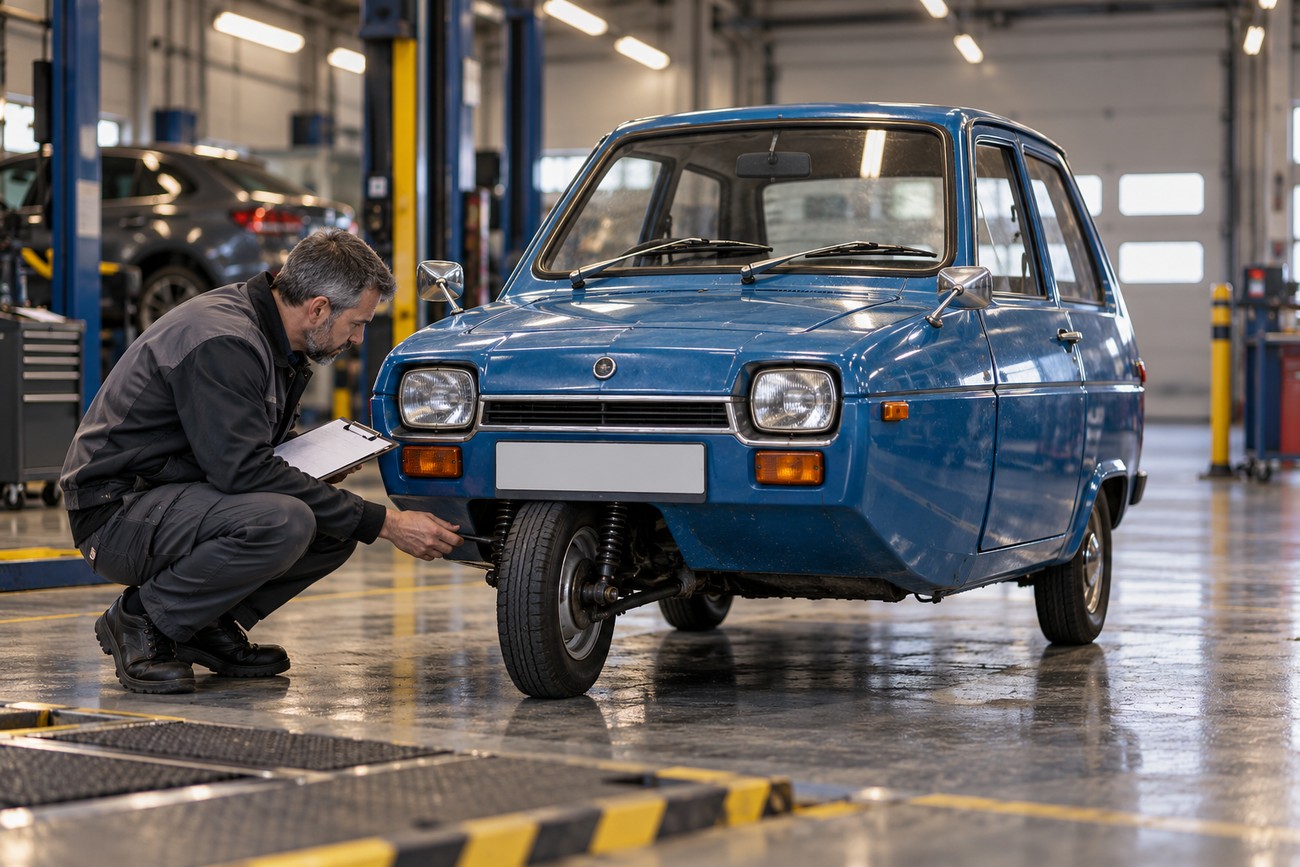
These issues make maintenance a handling matter rather than a cosmetic concern. Before buying or driving a Robin regularly, inspect the suspension, steering, wheel condition, tire specification, and pressures together. Deliberately provoking a rollover response on public roads is an unsafe way to assess the car; a competent inspection provides more useful information with less risk.
Is the Reliant Robin a Bad Car—or a Demanding One?
The fairest verdict is that the Robin is a demanding vehicle whose genuine geometric sensitivity was amplified by decades of jokes and extreme portrayals. Its design gives the driver less tolerance for abrupt inputs than many conventional cars. That characteristic deserves respect, while the claim that it tips on almost every corner goes beyond what the supplied evidence supports.
The individual vehicle matters greatly. A well-adjusted, unworn three-wheeler can feel calmer in a bend than a neglected car with a conventional four-wheel layout. Conversely, old suspension components, uneven tire pressures, wheel imbalance, or poor loading can turn a manageable vehicle into one that feels nervous and inconsistent.
Ownership also requires more preparation than the Robin’s comic image suggests. Many examples are old, the model is relatively rare, and parts, setup, and repairs may require specialist knowledge or careful sourcing. A buyer attracted by nostalgia or a joke may be disappointed if the car is expected to serve as an effortless daily commuter without a realistic maintenance plan.
For ownership, predictable suspension, suitable tires, correct pressures, and sensible load distribution matter more than chasing a headline top-speed figure. The Robin can be enjoyable as a distinctive lightweight vehicle, provided its limitations are part of the decision rather than an inconvenience discovered after purchase.
Three Wheels, Licensing and Everyday Use
Legal treatment of three-wheelers varies by jurisdiction. Some authorities apply separate registration, taxation, inspection, or driver-licensing rules, and those requirements may differ from the rules for ordinary M1 passenger cars. The vehicle’s exact configuration and local classification can both matter.
A license that covers a conventional passenger car may not automatically answer every question about a three-wheeled vehicle, particularly where local regulations distinguish between categories. Registration documents may also describe the Robin differently from a standard four-wheel car. These are administrative issues with practical consequences for lawful use and insurance.
Check the rules with the relevant licensing and registration authority before buying, importing, or regularly driving one. Confirm the required license category, roadworthiness obligations, insurance treatment, and any restrictions that apply to the specific Robin configuration. General descriptions of three-wheelers cannot replace a jurisdiction-specific check.
That legal classification should form part of the ownership decision alongside handling and maintenance. A Robin used occasionally for enjoyment may suit someone prepared to manage its age and sensitivity. Regular transport demands a closer look at parts availability, inspection requirements, weather exposure, loading needs, and the driver’s willingness to use smooth, deliberate inputs every day.
Frequently asked questions
The Robin’s handling, maintenance needs, and legal status all affect the ownership decision. The answers below address common questions about the model’s specifications, design, and everyday use. As with any older vehicle, details may vary by version and condition.
What was the top speed of the Reliant Robin?
There is no single top-speed figure established by the supplied brief for every Reliant Robin. Published figures must be tied to a specific version, model year, engine, gearing, and reliable source, while real-world performance also depends on vehicle condition, load, road, and weather.
A headline specification should therefore be treated as version-specific information rather than a universal description of the model. For an individual car, mechanical condition and predictable handling are more useful ownership measures than relying on an unqualified top-speed claim.
Why did the Reliant Robin have three wheels?
The three-wheel layout was connected to compact construction and the vehicle’s classification history. A narrow, lightweight design could serve a different market and regulatory position from a conventional passenger car, while using fewer components and less body structure.
That historical and packaging context does not mean three wheels are inherently safer. The layout shaped the Robin’s size, mass, and legal treatment, while its cornering behavior still depends on the support geometry, center of mass, tires, suspension, speed, and driver inputs.







