
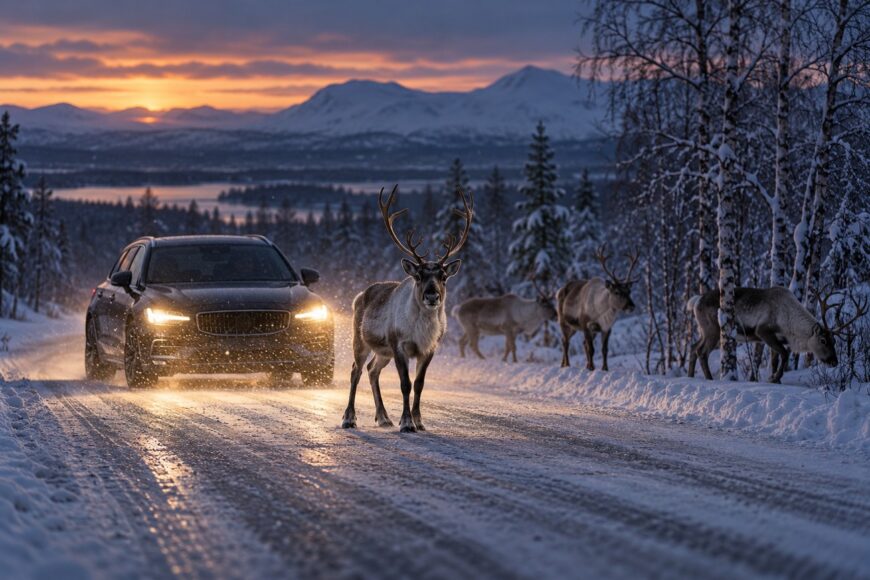
A Volvo V90 can feel composed on a Lapland road, even when snow is falling and the surface looks manageable. That confidence can disappear quickly when a reindeer steps from a dark verge, a bend, or a shallow dip in the road. Ice lengthens braking distance, while darkness and the animal’s stillness can reduce the reaction time you expected to have.
Reindeer on the road are a normal risk in Lapland, not an unusual sightseeing moment. All-wheel drive, electronic assistance, and the V90’s size cannot replace winter tires, controlled speed, and continuous observation. The safest response is usually calm and conservative: reduce speed early, leave room to stop, and wait rather than attempt a clever maneuver.
- Why Reindeer Appear on Lapland Roads
- Prepare the Volvo V90 Before Leaving
- What to Do When a Reindeer Enters the Road
- Ice, Snow and the Limits of AWD and Driver Assistance
- Visibility, Road Signs and Safe Observation
- After a Collision or an Unplanned Stop
- Common Winter-Driving Mistakes in a Volvo V90
- Frequently asked questions
- How much does a reindeer ride cost in Rovaniemi?
- What emergency items should I carry in a Volvo V90 for a remote winter drive?
- What should I do after hitting a reindeer in Finland?
Why Reindeer Appear on Lapland Roads
Reindeer may be on the lane, shoulder, bends, and low areas in Lapland. Roadside vegetation, snow tracks, and access routes can lead animals toward the carriageway, especially where the road crosses open grazing ground. A clear lane one moment does not mean the next bend is clear.
If one reindeer is visible, a herd may be nearby because reindeer move in groups. The first animal may cross slowly, stop, or turn back while others follow. Treat the sighting as a warning to reduce speed for the whole area, rather than as a single obstacle that can be passed and forgotten.
Dusk and dawn require extra scanning of both verges. In low light, a reindeer can blend into snow, brush, and shadow, then become visible only when it reaches the lane. A horn often does not make a reindeer leave the road; the animal may remain still or react unpredictably. Avoid stopping in the roadway to watch or photograph it.
Prepare the Volvo V90 Before Leaving
Begin with the tires. Volvo recommends winter tires on all V90 wheels when snow or ice is possible. The legal winter-tire period in Finland runs from 1 December to 1 March, but winter conditions can require winter tires outside those dates. AWD can help the car move away from a snowy surface; it cannot create grip where the tires have little contact with ice.
Before a remote trip, check the battery, engine oil, coolant, and screenwash. Cold reduces battery capacity, so a weak battery may show its problem at the start of the journey rather than during a routine local drive. Use suitable screenwash and remove ice properly instead of relying on the wipers to clear a frozen surface.
Volvo states that a 50% glycol coolant mixture protects to approximately −35 °C. Different glycol types must not be mixed. If the coolant history is unclear, confirm the specification before topping up, because a convenient-looking mixture can be unsuitable for the system.
A plug-in hybrid may lose electric range and heating efficiency in severe cold; the exact effect depends on the battery, temperature, and driving mode. Plan the journey around available charging and fuel options, and allow extra time for a cold vehicle, snow clearing, and slower roads. Preparation should include the conditions you are likely to meet, not only the vehicle’s drive system.
What to Do When a Reindeer Enters the Road
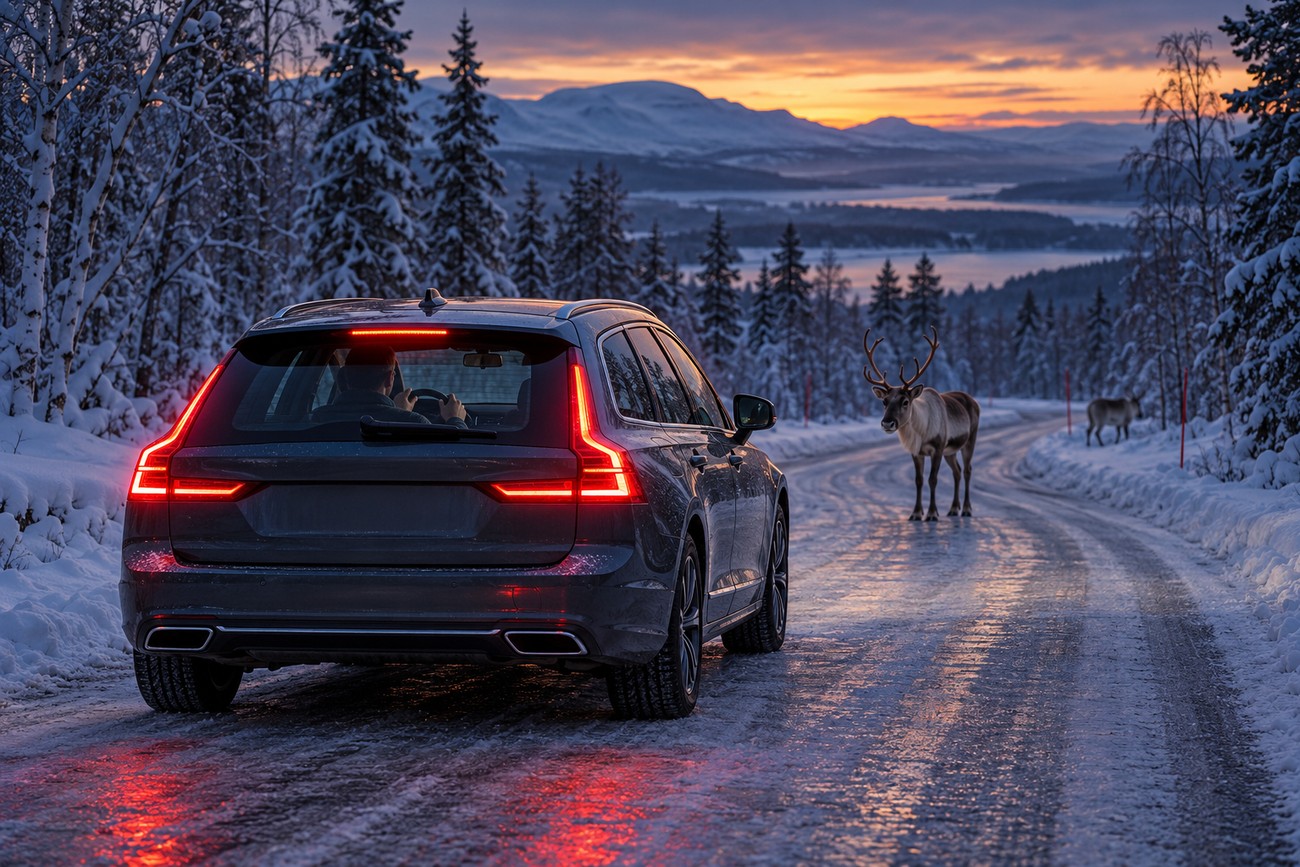
Lift off the accelerator as soon as you see a reindeer, reduce speed smoothly, and be ready to stop completely. Keep a large safety margin because the animal may move toward the lane, stop without warning, or be followed by another animal. Look beyond the first reindeer before deciding that the road is open.
Avoid passing in front of the animal. Driving around its nose leaves little room for a sudden step into your path, and the rest of the herd may be hidden by darkness, a bend, or roadside vegetation. A horn often does not clear the road, so use it only as a secondary warning and never as a reason to continue at speed.
On ice, abrupt steering, braking, or acceleration can cause loss of traction. Keep the steering controlled, brake progressively, and accept that a complete stop may take longer than expected. If an evasive maneuver becomes unavoidable, the safest direction depends on traffic, road width, the shoulder, obstacles, and available grip; there is no universal maneuver that can be applied safely everywhere.
Once stopped, keep watching the verges and the road behind you. A vehicle approaching from the rear may have less time to react than you do, particularly on a slippery surface. Continue only when the animals have moved well clear and you can see enough of the road to proceed slowly.
Ice, Snow and the Limits of AWD and Driver Assistance
AWD helps with acceleration but does not replace tire grip or substantially shorten braking on ice. The mass of a large V90 can make the car feel stable, yet that feeling can encourage a pace the surface cannot support. Long braking distances on ice require lower speed and greater following distance.
Snow and ice can obstruct cameras, radar, headlights, and other sensors, limiting driver assistance. These systems cannot be expected to recognize every reindeer in darkness or snowfall, or with an obstructed sensor. Clean the vehicle before departure, then check it again after driving through slush or wet snow.
After slush, clear the wheel arches, headlights, and sensor surfaces before relying on braking, lane, or collision-warning assistance. Snow packed into a wheel arch can also interfere with steering.
The same check applies to the roof, hood, mirrors, lamps, and windows. A narrow cleared patch may give the impression of visibility while leaving important areas covered. Drive below the pace suggested by the V90’s composure, particularly on shaded sections where wet-looking pavement may be ice.
Visibility, Road Signs and Safe Observation
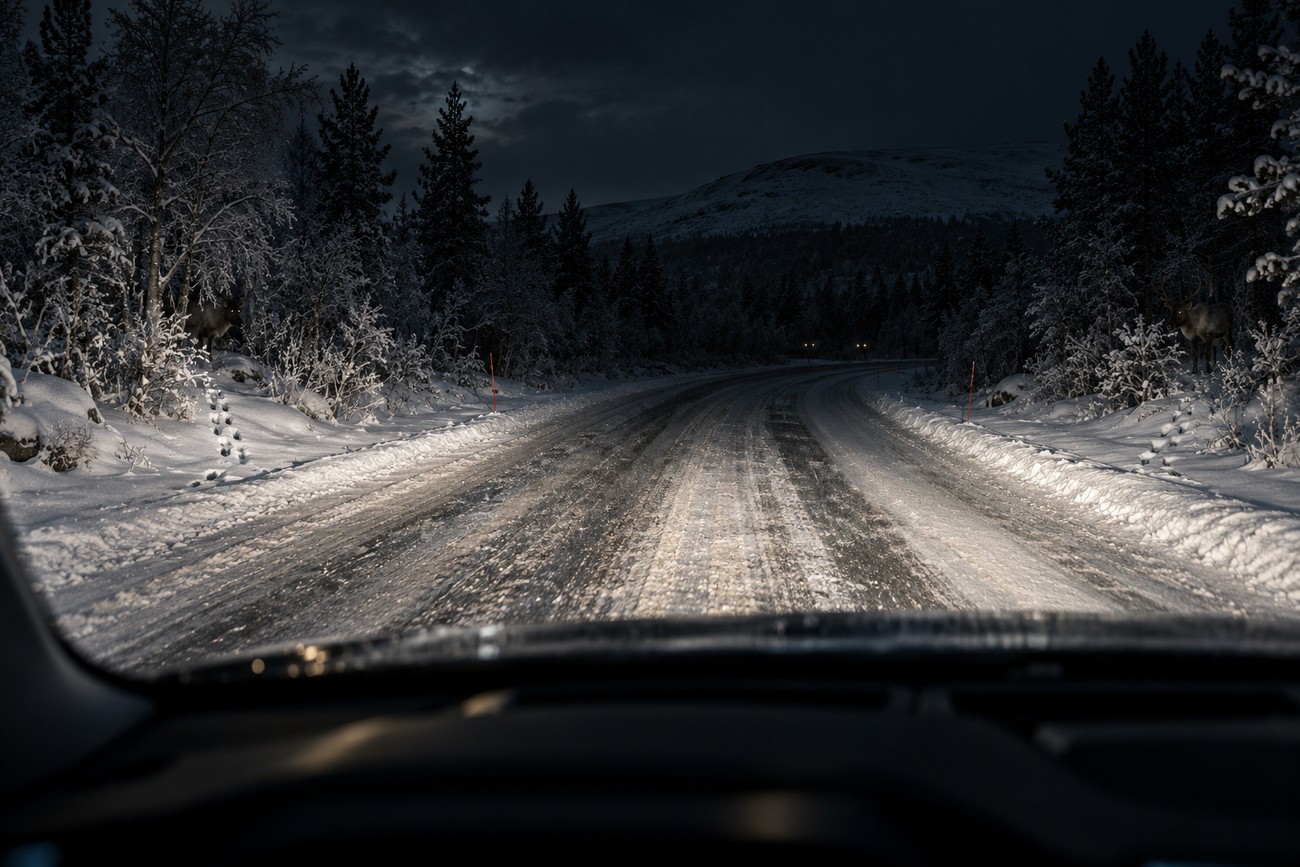
Scan both road edges, not only the lane ahead. Pay particular attention to bends, dips, low ground, shrub lines, and places where tracks lead toward the road. Tracks in snow near the road may indicate reindeer before the animals are visible, giving you an early reason to lift off and prepare for a stop.
Use high beam where appropriate to improve forward visibility and spot reflected eyes, but dip it for oncoming or preceding traffic. Reflections are only a clue; they do not show how many animals are present or where they will move. In dusk and dawn, deliberate scanning is more useful than staring into the brightest part of the road.
A herd can be interesting to watch, but the carriageway is not a safe viewing platform. Do not stop to photograph reindeer from a live roadway. If you need to pull over, use a safe stopping place, activate the hazard lights when appropriate, and leave enough distance from moving traffic. On a slippery road, a vehicle stopped partly in the lane can become a second hazard within seconds.
After a Collision or an Unplanned Stop
After a collision, stop as safely as the road allows and protect people from further traffic. Turn on the hazard lights, assess whether the vehicle is blocking the lane, and move occupants away from immediate danger only when doing so is safer. An injured person, damaged vehicle, or blocked road takes priority over inspecting or photographing the animal.
In Finland, call 112 after a collision with an animal even if the impact seems minor. A small mark on the bumper does not prove that the vehicle is safe to drive, and damage may affect lights, cooling, steering, or sensors. Follow the operator’s instructions and avoid approaching a frightened animal unnecessarily.
An emergency triangle may help warn approaching drivers, but placing it must account for traffic, visibility, and slippery conditions. Do not stand in an exposed lane simply to set it out. If the vehicle can be moved safely, use a suitable position away from traffic; if it cannot, remain alert to vehicles approaching from behind.
A normal sighting also deserves patience after the first animal passes. The presence of one reindeer does not mean the road is clear. Reduce speed until you have checked both verges and the next section of road, especially near bends, dips, and vegetation.
Common Winter-Driving Mistakes in a Volvo V90
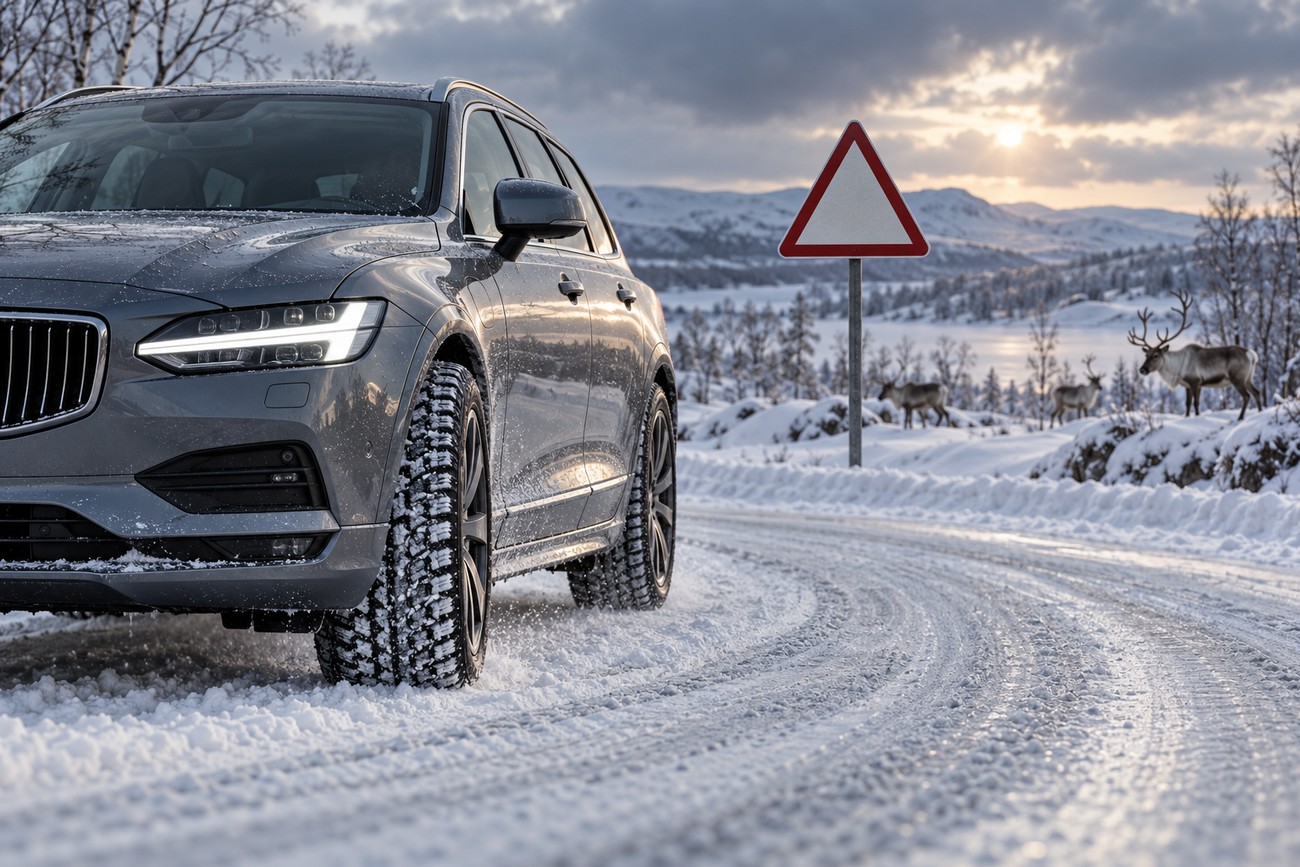
The first myth is that a large Volvo can compensate for unsuitable tires. Summer or unsuitable all-season tires cannot be offset by V90 mass, AWD, or stability control. Winter tires are required by conditions, not merely by confidence in the vehicle or by the calendar.
The second mistake is accelerating after a warning sign. A sign identifies a risk area; it does not mark the only point where speed must change. Reduce speed before bends, low areas, and vegetation-lined sections, where a reindeer may already be close to the road and where the available sight distance is limited.
A large V90 does not guarantee protection from damage in a reindeer collision. The animal’s height and movement can damage the hood, windshield, roof, lights, or sensors. Clean assistance hardware, a clear view, and conservative speed provide a better margin than attempting to rely on the vehicle’s size.
The safest drive may involve waiting. If an animal remains on the road, keep the car controlled and give it time rather than forcing an evasive maneuver. Preparation, lower speed, clean sensors, and patience are less dramatic than a quick correction, but they are better suited to Lapland’s narrow margins.
Frequently asked questions
These practical questions cover the difference between meeting reindeer on a public road and arranging a planned visitor activity. Check current operator information before setting out, because conditions, availability, and services can change.
How much does a reindeer ride cost in Rovaniemi?
The price depends on the operator, season, duration, and what the package includes. An advertised price should clearly state the ride length, transport arrangements, guide or farm visit, clothing provisions, and any meals or other activities included.
Compare like with like before booking. A short ride at a reindeer farm is a different product from a longer excursion with transfers and several activities, so the lowest headline price may not represent the same experience.
What emergency items should I carry in a Volvo V90 for a remote winter drive?
Carry warm clothing, a charged phone or power bank, reflective equipment, and an ice scraper. Keep essential items accessible from the cabin rather than buried under luggage, particularly if opening the trunk in snow or traffic would be unsafe.
It is also sensible to have water, basic food, a flashlight, and a first-aid kit, subject to the journey and local conditions. Check the weather and route before departure, tell someone your plan, and keep enough battery power to call for help if a delay or collision occurs.
What should I do after hitting a reindeer in Finland?
Stop as safely as possible, turn on the hazard lights, protect occupants from approaching traffic, and call 112 even if the damage appears minor. Follow the operator’s instructions and avoid approaching the animal.
Do not assume the Volvo V90 is safe to drive after a collision. Damage may affect the lights, cooling system, steering, or sensors, so move the vehicle only when it is safe and instructed or clearly necessary to avoid immediate danger.







