
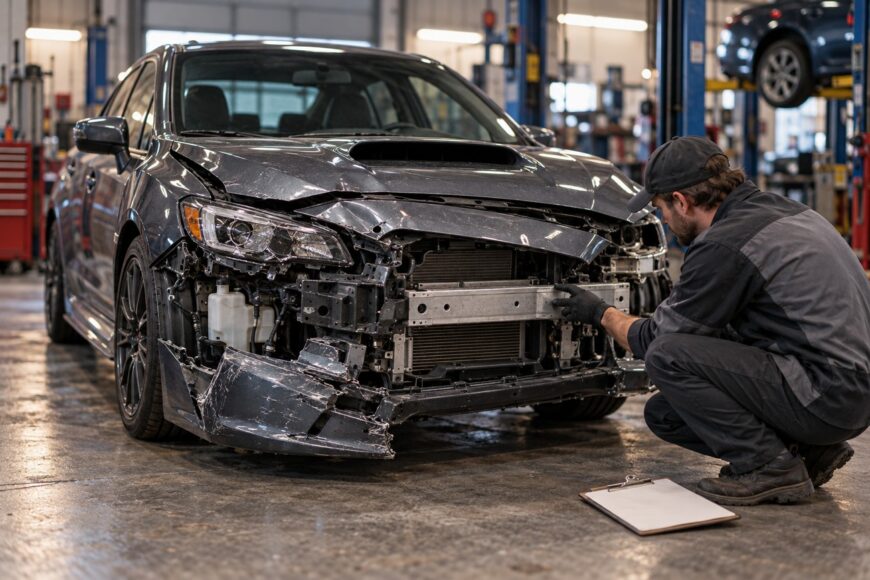
A discounted Subaru WRX can make an auction listing look promising, especially when the visible damage appears limited to a bumper, fender, or wheel. A modest-looking hit can conceal bent suspension mounting points, damaged cooling parts, wiring faults, or deployed safety-system components. Even after the bodywork looks straight, the car may pull, make new noises, or resist proper alignment.
The decision is whether this particular WRX can be repaired safely, registered under the applicable rules, and owned at a defensible total cost. That calls for a verified history, a hands-on inspection, and a budget based on a finished rebuilt-title car. The auction price alone cannot answer those questions.
- What a salvage title means for a WRX rebuild
- Investigate the car before placing a bid
- WRX salvage damage types: what to inspect first
- Build the full budget, not just the repair estimate
- Repair in an order that exposes hidden damage
- Check the engine, cooling system, wiring, and airbags separately
- Plan for inspection, insurance, and eventual resale
- Frequently asked questions
- How much does it cost to rebuild a Subaru WRX engine?
- Which donor Subaru parts will fit a salvage WRX?
What a salvage title means for a WRX rebuild
A salvage title records a total-loss designation. It does not identify every damaged component or establish that the WRX is beyond repair. An insurer’s decision can reflect the vehicle’s value and the expected cost of a claim, so treat the title as a warning to investigate rather than a repair diagnosis.
There is no single nationwide percentage at which a vehicle becomes a total loss. Published thresholds include more than 50% and 75% or higher, but the applicable standard depends on state rules and insurer or regulator criteria. Check the title rules where the car is currently recorded and where you intend to register it before assuming a path back to the road.
A rebuilt or reconstructed title follows repair and the applicable state process. A salvage vehicle may return to public-road use after the required repair, inspection, and titling steps, which vary by state. Passing that process does not erase the prior brand from the vehicle’s history or, by itself, prove factory-equivalent handling.
That distinction matters when estimating value. A finished WRX with a rebuilt brand generally has lower resale value than a comparable clean-title car. Its handling, safety-system repairs, and mechanical condition still need independent assessment, regardless of what the new title says.
Investigate the car before placing a bid
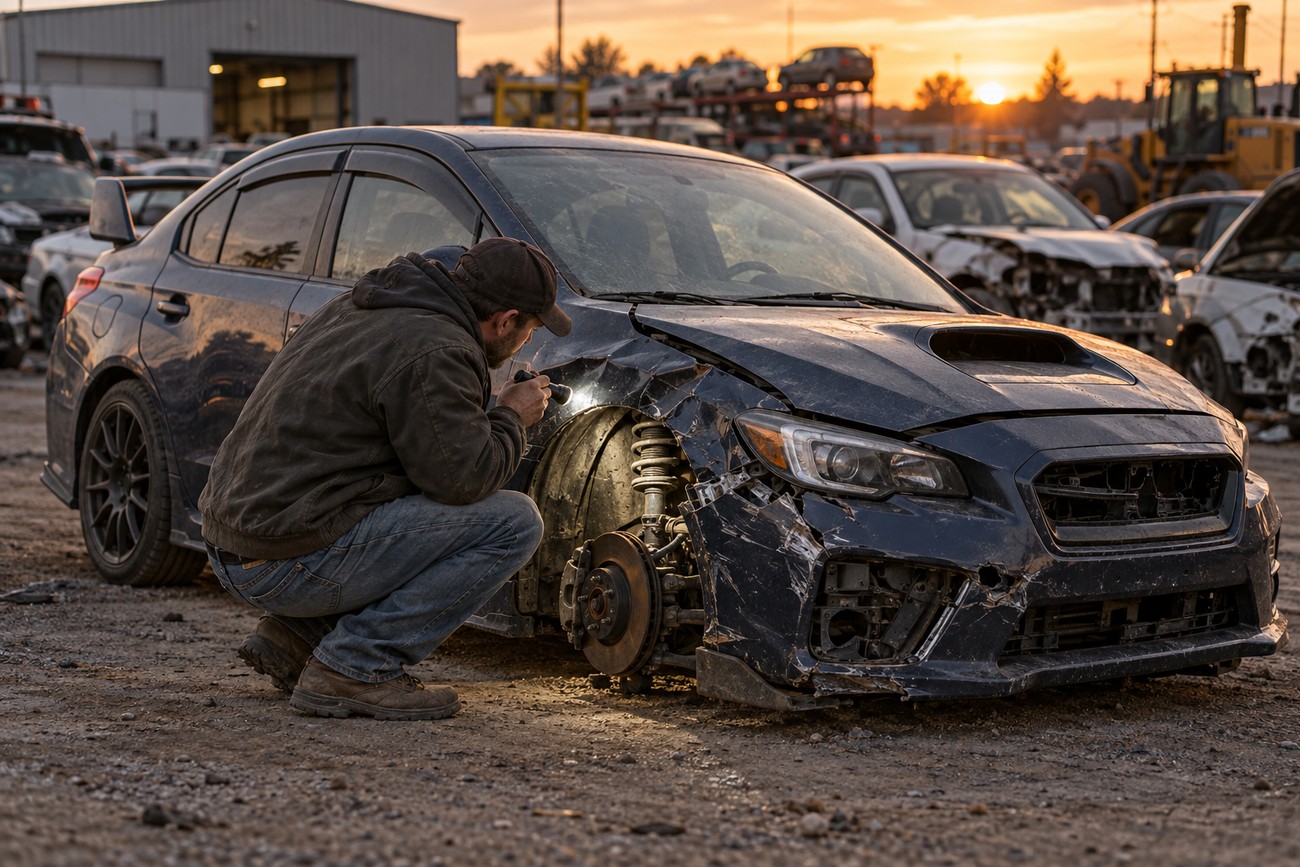
Start by matching the VIN on the listing, vehicle, and available title documents, then confirm the current title status. Obtain an NMVTIS-based report and, where useful, comparable history reports. These can reveal recorded title brands and damage events, although gaps in reporting mean a clean-looking report is no substitute for inspection.
Compare each recorded event with auction photos, earlier listing images if available, and the seller’s description. Look for signs of multiple damage events, earlier repairs, or modifications, and establish whether the primary loss was a collision, flood, or fire. Flood and fire damage can leave persistent electrical and diagnostic uncertainty that exterior photos scarcely convey.
Arrange an independent in-person inspection before bidding whenever access allows. A qualified inspector should look beyond painted panels at structure, suspension, cooling components, wiring, and restraint-system evidence. Auction photos can understate damage, while an engine that starts only establishes that it ran under those limited conditions.
Ask for repair records and clear photographs of any previous work. Missing documentation does not prove poor repairs, but it shifts more verification onto you and your inspector. If access is restricted or the seller cannot substantiate key claims, reflect that uncertainty in the maximum bid rather than assuming the best case.
WRX salvage damage types: what to inspect first
Use the reported loss type to set inspection priorities, while leaving the diagnosis to hands-on testing.
| Damage type | Visible clues | Likely hidden checks | Uncertainty added to the rebuild |
|---|---|---|---|
| Front impact | Damaged bumper, hood, lamps, or front panels | Cooling components, intercooler-related parts, mounts, wiring, and SRS components | Damage behind replaceable panels may become clear only after dismantling. |
| Side or suspension impact | Damaged doors, quarter panel, wheel, or tire position | Structural geometry, suspension pickup points, steering and suspension parts, and alignment | Visible bodywork may be complete while the car still pulls, wears tires unevenly, or produces new noise and vibration. |
| Flood damage | Water marks, staining, or residue | Connectors, wiring, control modules, and signs of moisture inside trim and cavities | Electrical faults may be intermittent and difficult to trace during a short inspection. |
| Fire damage | Heat marks, soot, or replaced trim and components | Heat-affected wiring, connectors, nearby systems, and the extent of prior cleanup | Visible cleanup may obscure the boundaries of heat and electrical damage. |
These are inspection priorities, not diagnoses or universal cost rankings. A relatively small-looking side impact can matter more to the finished car’s behavior than extensive damage to bolt-on panels. Measurements and functional checks determine which parts of the estimate are credible.
Pay particular attention to damage that crosses systems. A front impact may require body, cooling, electrical, and SRS work, each with a separate diagnosis. Until those checks are complete, an estimate based only on visible sheet metal has limited value.
Build the full budget, not just the repair estimate
Work backward from a realistic value for a finished rebuilt-title WRX. Subtract the purchase price, transaction fees, transport costs, documented repairs, required inspections and titling, expected downtime, and a contingency for discoveries after disassembly. The result is a maximum bid, rather than a target to exceed because the lot looks cheap.
Break the repair estimate into systems so omissions are visible. Include electrical diagnosis, SRS components, sensors, body hardware, mechanical labor, alignment, and any work needed to verify structural repairs. Parts freight and the time spent waiting for components also matter when a disabled car occupies workspace or delays completion.
Used donor parts may control costs, particularly when new body or mechanical components are expensive or difficult to source. Verify the donor part’s condition and exact fitment before counting the saving; related Subaru platforms do not guarantee interchangeability. Safety-related repairs also need to follow applicable manufacturer procedures.
Use a rebuilt-title resale assumption even if you plan to keep the car. Hidden repairs, repeated diagnostics, and parts delays can consume an auction discount, while the title brand generally reduces eventual resale value. If the project works financially only at a clean-title exit price, the bid is too dependent on an outcome the car cannot deliver.
Repair in an order that exposes hidden damage
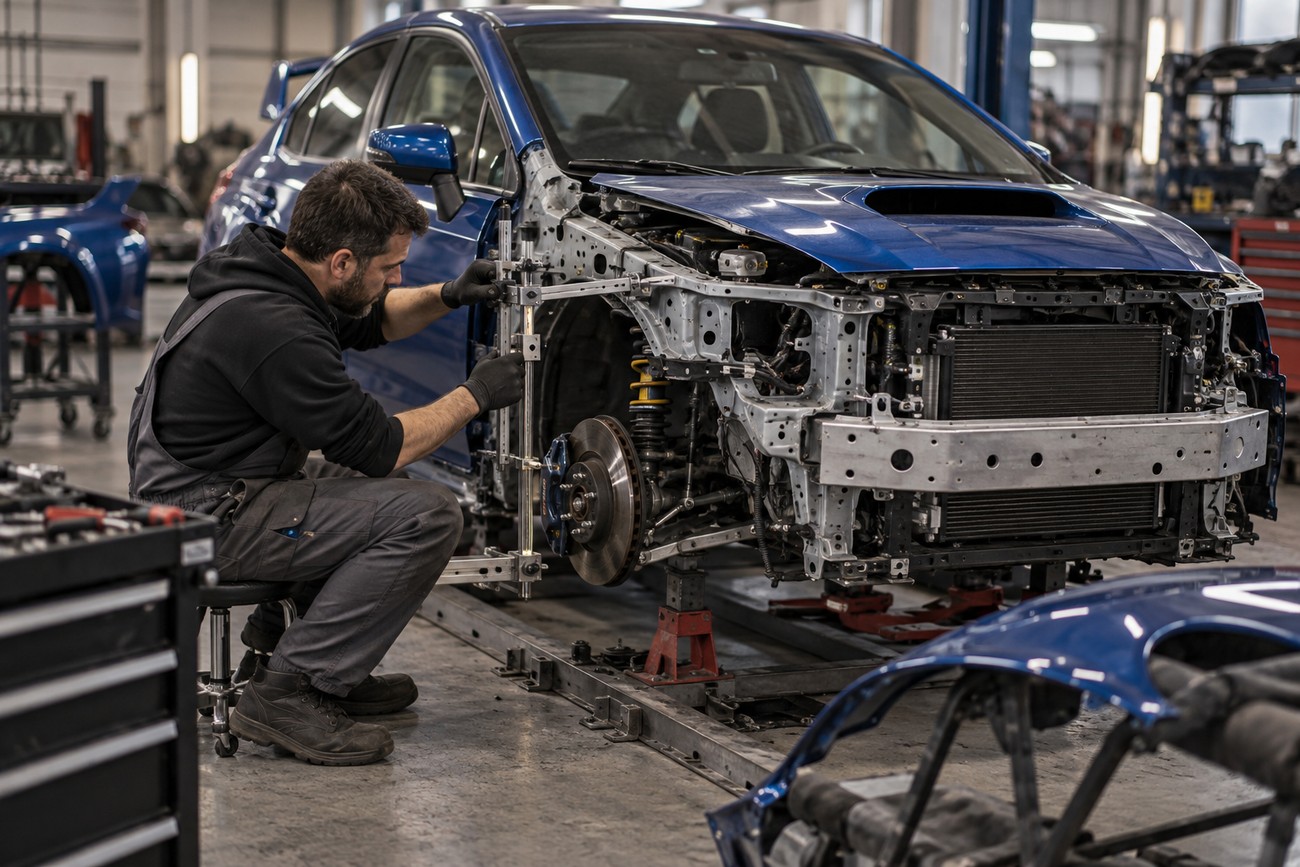
Document the car’s condition before removing parts, including gaps, broken mounts, warning lights, and the damaged area from several angles. Then dismantle far enough to see what the exterior panels hide. This is the point to revise the estimate, rather than committing to paint and replacement panels on the basis of auction photos.
Have a qualified body or alignment specialist establish the condition of the structure and suspension mounting points before major reassembly. Confirm replacement-part fitment against the actual car, including any evidence of earlier repairs or modifications. Structural correction needs appropriate equipment and measurements; replacing a visible panel cannot correct a displaced mounting point.
Complete structural and mechanical repairs before final alignment and finish work. Repeatedly adjusting alignment to compensate for bent or misplaced parts can mask the source of a problem without resolving it. Cosmetic repairs alone do not establish structural safety or roadworthiness.
Once repairs and the applicable legal steps permit road use, validate alignment, straight-line behavior, steering response, and new noises or vibration. Stop and investigate a persistent pull or abnormal tire wear rather than accepting it as a quirk of a rebuilt car. SRS faults and structural concerns belong with qualified specialists, not a casual do-it-yourself reset or visual check.
Check the engine, cooling system, wiring, and airbags separately
A collision-damaged WRX needs separate assessments of crash damage and engine health. For a front hit, inspect the cooling package, intercooler-related parts, mounts, wiring, and SRS components before relying on a brief engine start. A running engine does not show whether cooling performance or nearby components will remain sound under normal use.
Trace faults to their causes rather than clearing codes and assuming the repair is complete. Damaged wiring, sensors, and connectors can create problems that return after a short test. Record the diagnosis and the completed repair so later faults can be distinguished from unfinished collision work.
Engine condition also deserves its own inspection, especially if the car has modifications or an uncertain maintenance history. A salvage title does not automatically call for an engine rebuild. If testing points to internal damage, get an engine-specific diagnosis and estimate instead of folding an assumed rebuild into the body-repair budget.
Airbags and other SRS components require particular care because a warning light alone cannot describe the full repair scope. Have the system inspected and repaired under the applicable manufacturer procedures, with the required components and documentation. Electrical work, sensors, safety-system parts, and the time needed to verify them can materially change the project budget.
Plan for inspection, insurance, and eventual resale
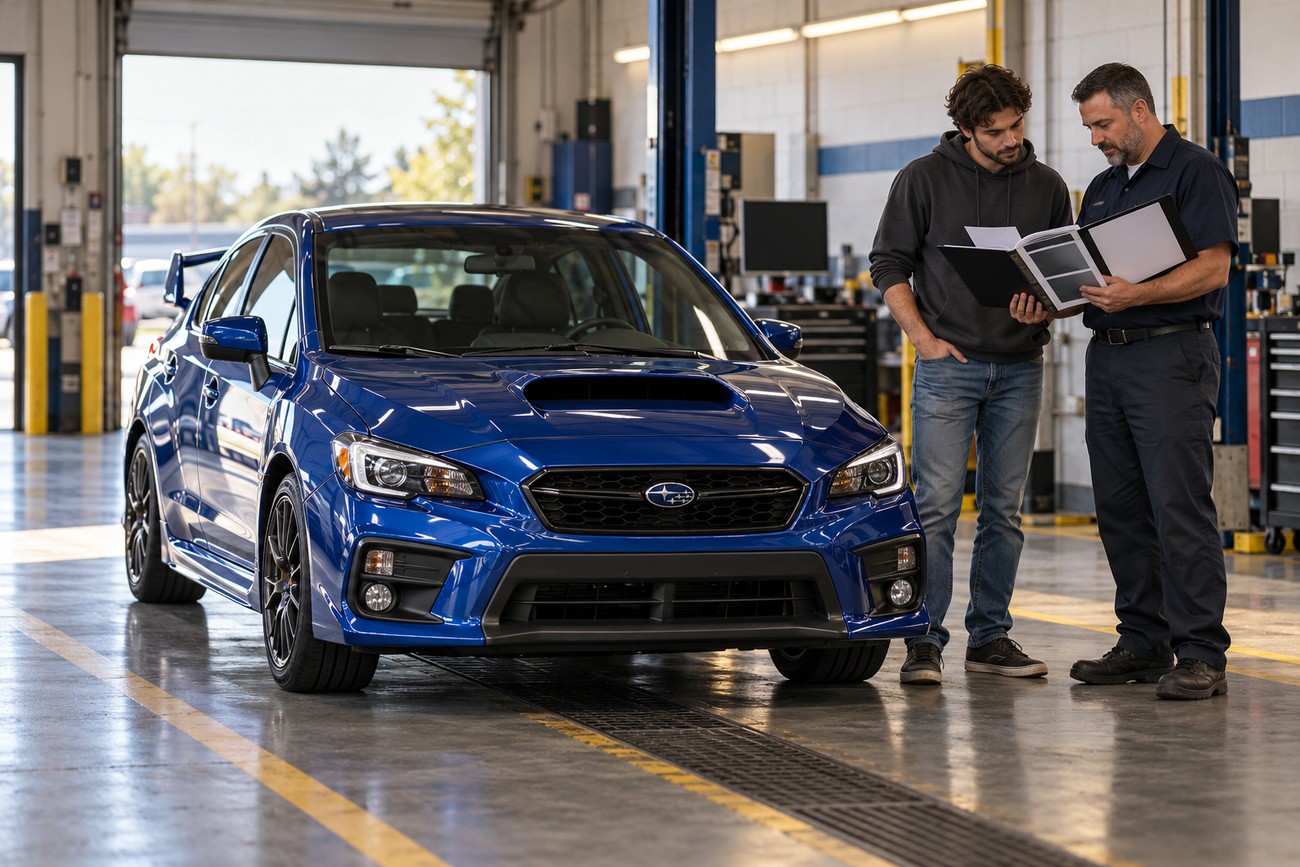
Before purchasing, identify the state process needed to return the salvage WRX to public-road use. Repair, inspection, and titling requirements vary by jurisdiction, and a salvage designation alone is not permission to drive the car on public roads. Confirm which documents and inspections apply to this vehicle rather than relying on general auction advice.
Keep the purchase paperwork, parts receipts, repair invoices, and photographs showing work before and after disassembly. Those records can support the applicable title process and help a future inspector or buyer understand what was repaired. A passed state inspection should not be treated as a substitute for independent structural and mechanical verification.
Check insurance and financing availability before committing to the purchase. Coverage or a loan for a salvage or rebuilt vehicle may be unavailable or offered on less favorable terms, depending on the provider and the vehicle. Confirm the terms you need for the finished car rather than assuming approval will follow a rebuilt title.
The prior brand remains in the WRX’s history after it receives a rebuilt or reconstructed title. That generally reduces resale value, and passing an inspection does not guarantee full insurance coverage or easy financing. A sound purchase decision accounts for those ownership limits alongside the quality and cost of the repair.
Frequently asked questions
Two decisions often remain after the collision-repair scope is clear: whether the engine needs internal work and whether a donor part will actually fit. Both require evidence specific to the car. Neither can be settled from the salvage title or a broad Subaru parts listing alone.
How much does it cost to rebuild a Subaru WRX engine?
There is no defensible flat price without an engine diagnosis. An engine-specific quote depends on test results, what teardown reveals, required machining, replacement parts, labor, and checks of related components. Ask the shop to identify the failed parts and the work needed before authorizing a rebuild.
Keep that quote separate from the collision-repair estimate. A salvage title does not mean the engine needs rebuilding, and a front-hit car may need cooling or wiring repairs even when its engine internals are sound.
Which donor Subaru parts will fit a salvage WRX?
Verify donor parts against the WRX’s VIN, model year, and manufacturer part numbers, then compare connectors, mounting points, and any relevant manufacturer procedures. Check the actual part’s condition before purchase, particularly when damage or previous repairs could affect its use.
Parts from a related Subaru platform are not automatically interchangeable. A component that appears to bolt on may have different electrical connections or application requirements, so obtain a fitment confirmation before treating a donor part as a budget saving.







