
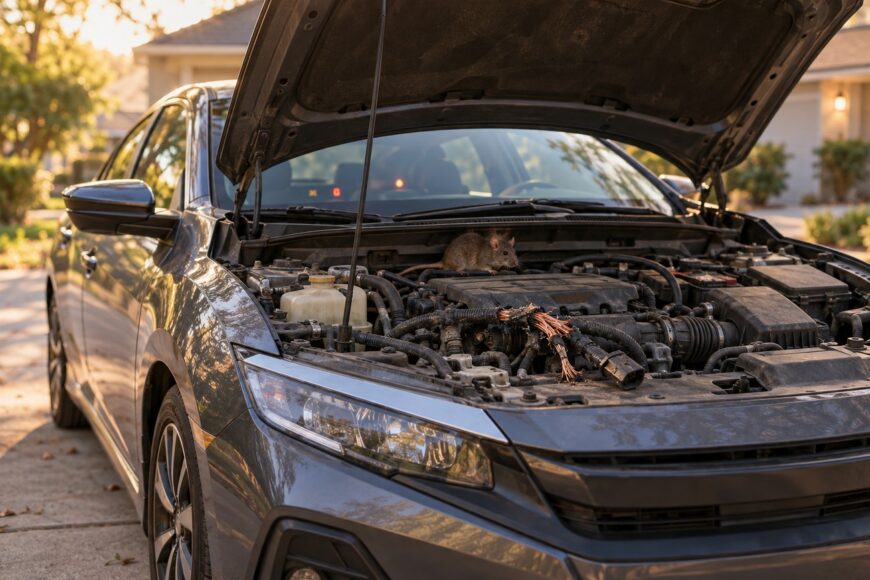
One chewed wire can leave a Honda Civic with a dashboard full of warnings. The same damage may cause misfires, hard starting, transmission errors, electric power steering failure, or several systems to stop communicating at once.
The repair decision depends on what testing finds: a localized wire repair, a replacement pigtail, or a complete harness replacement. Recurring damage also matters because a correctly repaired Civic can suffer the same failure again if rodents still have access to the parked vehicle.
Owners often mention soybean-based insulation as a possible reason, but there is no reliable confirmation that Honda, or soybean insulation specifically, attracts rats. Reports about scents, repellents, and ultrasonic devices are also mixed, so prevention requires more than relying on one product or theory.
- What Rat-Damaged Wiring Can Do to a Honda Civic
- How to Diagnose Rat Damage Before Replacing Parts
- Repairing a Civic Wiring Harness: Local Fix or Replacement?
- Why a Repair May Not Solve the Problem
- How to Stop Rats from Chewing Civic Wiring Again
- Common Myths About Rats and Honda Civic Wires
- Warranty, Insurance, and Repair Documentation
- Frequently asked questions
- Why does rat damage sometimes appear only during winter or after the Civic sits overnight?
- What should I document before filing an insurance claim for rodent damage?
- Why are rodents eating my car wires?
- How can I stop rats from chewing car wires?
What Rat-Damaged Wiring Can Do to a Honda Civic
Rodent-damaged wiring can cause misfires, hard starting, transmission errors, electric power steering failure, and multiple dashboard warnings. The symptoms depend on which circuit was damaged and whether the bite affected power, ground, sensor input, or communication between control modules.
One damaged common power, ground, or communication line can create several apparent system failures. That pattern can make a Civic appear to have multiple failed modules when the underlying fault is a single break or high-resistance connection in the harness.
Owners report damage in engine and transmission harnesses, ignition-coil wiring, sensors, and electric power steering circuits. These reports identify areas worth inspecting, though they do not establish that every Civic will be damaged in the same location.
Steering-related warnings and engine misfires deserve priority because they can affect safe driving and vehicle control. If the Civic runs poorly, will not start, or shows EPS, transmission, or other system warnings after rodent activity, avoid assuming that replacing the battery will resolve the problem.
How to Diagnose Rat Damage Before Replacing Parts
Diagnosis should begin with a visual inspection. Look for chewed insulation, droppings, nesting material, odor, disturbed debris, and damaged connectors around the engine bay, battery area, fuse boxes, and accessible harness branches.
Next, inspect the harness and connectors carefully. A visible bite may be only one part of the damage; additional cuts can remain inside the insulation or on a neighboring branch that was not obvious during a quick inspection.
After the visual check, test the affected circuits against factory wiring diagrams and stored diagnostic trouble codes. This helps identify shared power, ground, and communication paths and prevents several warning lights from being mistaken for several unrelated component failures.
Changing the battery or clearing codes before inspecting the harness can remove useful evidence without repairing the cause. A proper assessment should record the original codes, identify damaged conductors and terminals, and test continuity, resistance, power, and ground where the circuit design requires it.
Repairing a Civic Wiring Harness: Local Fix or Replacement?
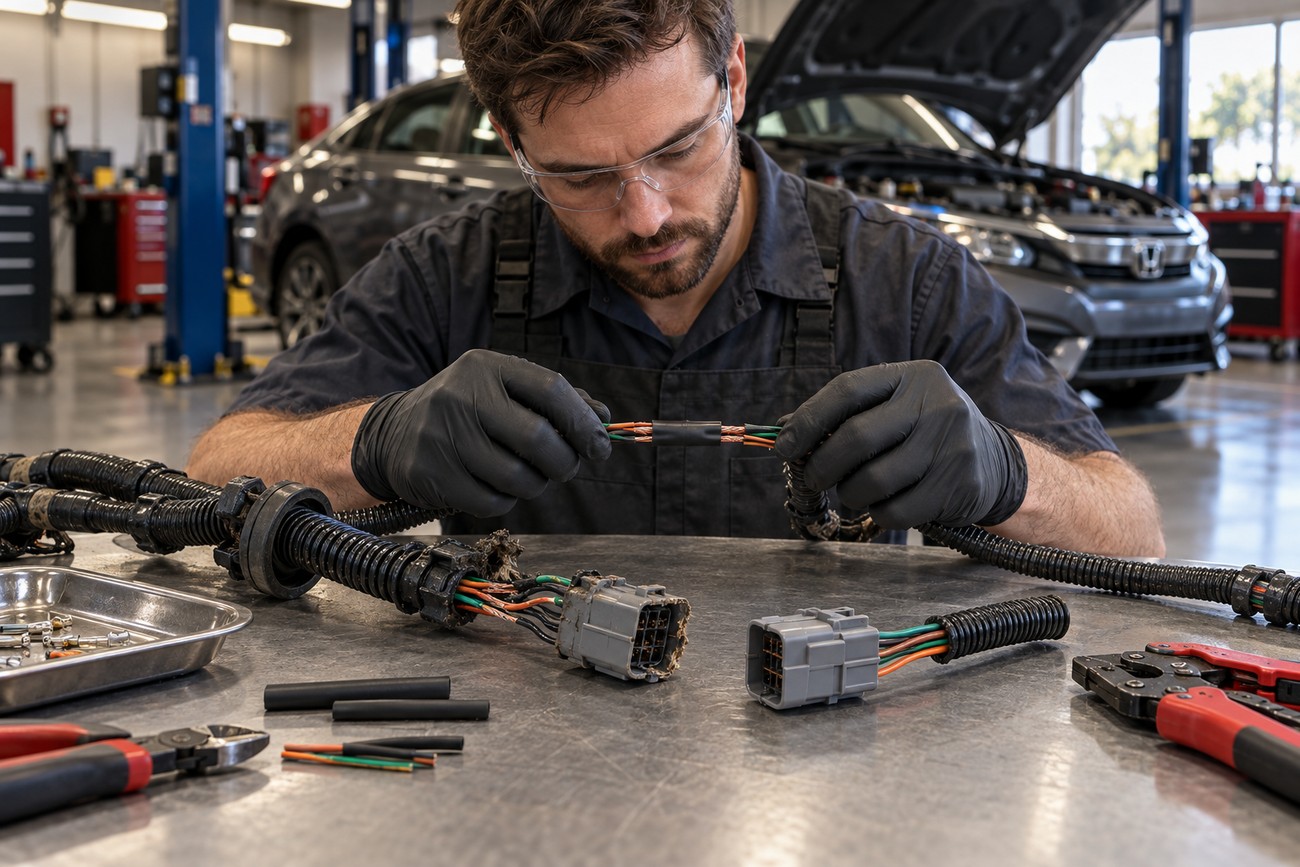
Honda and independent repair shops distinguish between localized wire repair and complete harness replacement. The appropriate choice depends on the damage location, the number of affected wires, connector condition, circuit requirements, and applicable manufacturer repair procedures.
A properly restored wire may be suitable when the damage is limited and the connector and surrounding harness remain serviceable. A short damaged section near an ignition coil or sensor may instead require a replacement pigtail, which replaces the connector and its attached wires without replacing the entire engine harness.
Complete harness replacement becomes more reasonable when damage is widespread, several branches are affected, connectors cannot be reliably restored, or the repair procedure calls for replacing the assembly. Reported dealer examples for harness replacement are approximately $800–$2,700, though these figures are examples rather than a standard price.
Shared power, ground, and communication circuits should be tested before several control modules are condemned. A damaged connector pigtail can be the better repair when the fault is confined to a short branch and the remaining harness is sound.
Repair quality depends on circuit type, wire gauge, polarity, shielding, connector sealing, and the location of the damage. Ordinary electrical tape over cut strands does not restore the conductor and may not adequately protect a moisture-prone automotive connection, while improvised splices can create intermittent faults that are difficult to trace.
Do not order a complete harness before diagnosis confirms that it is necessary. The fault may be limited to several wires or a replaceable pigtail, while a harness replacement may still be required when the damage reaches sealed connectors, multiple branches, or circuits with special shielding or repair requirements.
Why a Repair May Not Solve the Problem
A repaired outer surface can hide conductors that were partially cut by teeth. Those strands may later break under engine vibration, heat cycles, or movement, producing a delayed misfire, warning light, or intermittent communication fault.
Visible damage also does not exclude hidden bites on adjacent harness branches. A careful inspection should extend beyond the first damaged point, especially when nesting material or droppings show that rodents spent time in the engine compartment.
Moisture can enter damaged insulation and accelerate corrosion at the conductor or connector. The result may be a fault that appears days or weeks after the repair, even though the Civic initially starts and drives normally.
After repair, verification should cover starting and charging, plus ABS, SRS, EPS, and transmission faults. Replacing a harness does not remove the access route, nesting area, or food source that allowed rodents to reach the vehicle, so new damage can occur after an otherwise correct repair.
How to Stop Rats from Chewing Civic Wiring Again
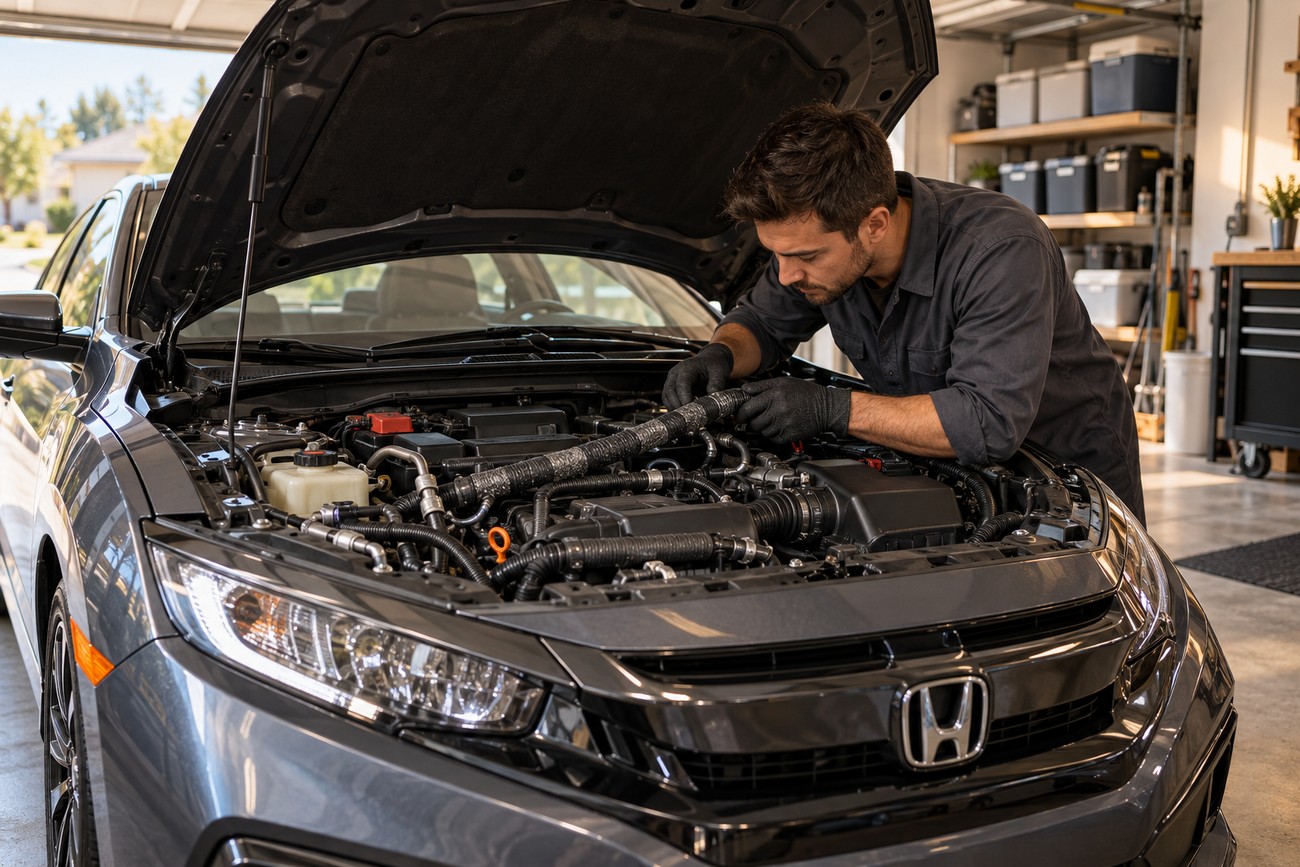
Effective prevention starts with the surroundings. Remove nesting material and food sources, reduce access to the garage or parking area, keep storage areas orderly, and inspect the Civic regularly for fresh droppings, odor, or disturbed material.
Honda offers specialized tape with a repellent coating for wiring protection. It protects only the wiring sections it covers; it does not protect exposed wiring, connectors, hoses, or other materials, and it does not remove the rodent access route.
Scents, commercial repellents, and ultrasonic devices have inconsistent owner reports. Some owners report improvement, while others report repeat damage after using these measures, so they should be treated as supplementary tools rather than guaranteed protection.
Physical rodent control may include suitable traps and sealing likely entry points around the garage or storage area. The placement and effectiveness of any trap arrangement depend on the site, and no single setup can be presented as universally effective.
A short inspection before driving can reveal a new problem before it becomes a larger electrical failure. Check the same vulnerable areas after the Civic has sat unused, particularly when there is evidence that rodents are active nearby.
Common Myths About Rats and Honda Civic Wires
The soybean-insulation claim is a common owner theory, yet the available material provides no reliable confirmation that Honda or soybean-based insulation specifically attracts rats. Rodent behavior can vary with shelter, food, temperature, and access, so the theory should not replace an inspection of the vehicle and its surroundings.
Deterrent tape does not protect an entire harness. It works only on wrapped sections, leaving connectors, exposed sections, hoses, and other materials outside its coverage, while the infestation itself can continue.
Ultrasonic devices do not guarantee success. Owner reports are mixed, and repeat damage has been reported after scents, repellents, or ultrasonic treatments, which supports using broader rodent-control measures.
Every chewed wire should not automatically be soldered. The correct repair depends on the circuit, wire gauge, polarity, shielding, connector sealing, damage location, and applicable repair requirements; some cases call for a pigtail or complete harness replacement.
Warranty, Insurance, and Repair Documentation
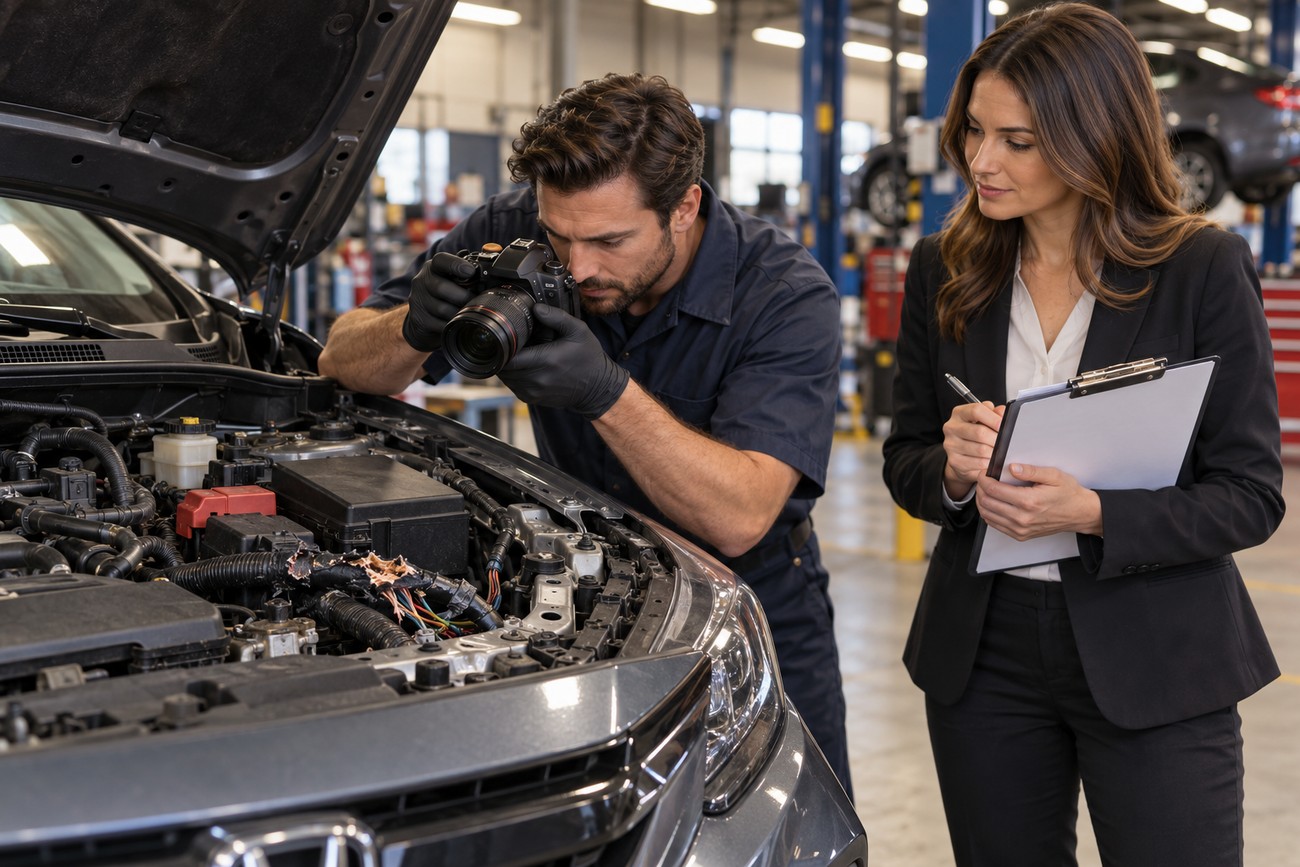
Rodent damage is generally not treated as a factory-warranty defect because it results from an outside animal-related event. Warranty decisions remain subject to the vehicle’s specific coverage and the manufacturer’s inspection.
Insurance may respond when the policy covers animal-related damage. Coverage, deductibles, exclusions, and claim outcomes depend on the individual policy, so confirm the terms before authorizing a costly repair.
Document the condition before cleanup or disassembly. Photograph the nesting material, droppings, chewed insulation, damaged connectors, and the wider engine-compartment area, then keep copies of diagnostic codes, test results, estimates, and repair recommendations.
Dealer totals vary because access labor, connector damage, the number of affected branches, and complete harness replacement can significantly change the estimate. Ask whether the recommendation is for a localized repair, a replacement pigtail, or a complete harness, and request the reason for that choice in writing.
Frequently asked questions
Rodent damage can appear under different parking and weather conditions, and documenting the evidence can help with diagnosis and insurance discussions. The questions below address seasonal patterns, claim preparation, possible causes, and prevention. If damage is already present, repair and inspection should come before deterrent measures.
Why does rat damage sometimes appear only during winter or after the Civic sits overnight?
A parked vehicle can provide a sheltered, warm, and undisturbed space, especially during colder weather or long overnight periods. Rodents may use the engine compartment or nearby garage area for shelter, which can make damage appear seasonal even though the wiring itself has no seasonal fault.
This pattern does not prove that winter or overnight parking caused the damage. Inspect for nesting evidence and fresh activity, then compare the vehicle’s parking conditions with the timing of the symptoms.
What should I document before filing an insurance claim for rodent damage?
Take clear photographs before removing nesting material or repairing the vehicle. Include close views of chewed insulation, connectors, droppings, and damaged components, along with wider images showing where the material was found.
Keep the diagnostic report, stored codes, circuit-test results, repair estimates, and the recommended repair type. If parts are replaced, retain the damaged parts when practical and record whether the work involved a wire repair, pigtail, or complete harness.
Why are rodents eating my car wires?
Rodents may chew or disturb vehicle wiring while seeking nesting material, shelter, or access to a protected space. Food sources, nearby nesting areas, garage access, and environmental conditions can influence the behavior.
There is no reliable confirmation that Honda or soybean-based insulation specifically attracts rats. Finding and reducing local access, shelter, and food conditions is more useful than relying on that explanation alone.
How can I stop rats from chewing car wires?
Remove nesting material and food sources, reduce access to the parking area, inspect the vehicle regularly, and protect vulnerable covered sections with suitable deterrent tape. Combine these steps with broader rodent control rather than depending on one smell, device, or coating.
Because tape covers only the sections it surrounds, inspect connectors, exposed wiring, hoses, and nearby branches separately. If damage has already occurred, repair the harness before applying prevention measures.







